Screening Plant
ProductOverview
A screening plant uses vibrating screen decks to separate run-of-mine aggregate into multiple market-grade product sizes. Raw material from a quarry or mine (ranging from dust to 100+ mm boulders) is fed into the plant, where a series of increasingly fine screens classify it into saleable products: large stone (50–75+ mm), coarse aggregate (10–20 mm), fine aggregate (5–10 mm), sand (1–5 mm), and fines (<1 mm). Screening plants are essential in aggregate mining and quarrying operations, converting otherwise mixed, low-value raw material into uniform, premium products for concrete, asphalt, and drainage applications.
How it works
Raw aggregate is dumped into a receiving hopper (30–50 ton capacity) where a vibrating feeder meters it onto the primary screen. The primary screen is a heavy-duty vibrating deck with openings of 50–75 mm, separating large material (oversize) from finer material. Oversize material (typically only 5–10% of the feed) is conveyed away; undersize material falls through to the secondary screen.
The secondary screen has finer openings (e.g., 25 mm, 20 mm), making another split. Material above the opening travels to a coarse stockpile; undersize falls to the tertiary screen. The tertiary screen (or multiple screens in parallel) further divides material into sand and fines using 4 mm, 1 mm, or cloth mesh (200-micron) openings.
Each vibrating screen operates at 1200–3600 rpm (depending on the deck); higher frequency improves separation of fine materials but requires lighter frames and smaller deck area. The plant achieves 100–500 tons/hour throughput depending on the input material, moisture content, and screen sizes. All separated fractions are conveyed to separate stockpiles, ready for sale or further processing.
Components and subsystems
Feed Hopper
A large steel hopper (30–50 ton capacity) receives raw aggregate from trucks or loaders. A vibrating feeder mounted beneath the hopper opening controls the feed rate, preventing bridging (where material jams above the opening) and allowing the operator to adjust throughput. The feeder discharges material into a chute that guides it centrally onto the primary screen.
Primary Screen Deck
The first and largest deck, typically 2–3 m wide and 5–7 m long. It is mounted on heavy-duty springs or elastomers to isolate vibration from the tower structure. The deck openings are large (50–75 mm), allowing most material to pass through while oversized boulders and cobbles remain on the surface, traveling the length of the screen to a discharge chute. Oversize material may be conveyed to a crusher for size reduction. The vibrator is powerful (20–30 kW) because this screen handles the highest throughput and coarser particles require more vigorous motion to separate effectively.
Secondary Screen Decks
These are often stacked two-high or run in parallel, with openings of 25 mm, 20 mm, or smaller. Material undersize from the primary falls through one or more secondary decks. For example, a two-deck secondary might have a 20 mm opening on the upper deck and a 10 mm opening on the lower deck. The secondary screens are lighter-duty than primary but still robust, with vibrators of 10–15 kW each. Different configurations allow producers to make 3, 4, or 5 product sizes in a single pass.
Tertiary Screen Deck
Fine screens (1–1.5 m wide, 3–4 m long) with openings of 4 mm, 1 mm, or even 200-micron mesh cloth. These screens operate at higher frequency (1000–1200 rpm) and lighter mass to efficiently separate sand and fines. Because fine material tends to "blind" (clog) the screen with dust and clay, some producers use multiple fine screens in series or add a dewatering deck for wet applications. Tertiary screens are often run at angles of 15–25° to promote material flow and reduce blinding.
Conveyor System
Each output stream from the screens is conveyed to a separate stockpile. A typical plant might have 3–4 conveyors, each 30–50 m long and 1–1.5 m wide, inclined 15–20° to lift material. Conveyors can be belt-type (standard) or apron/pan-type (for heavy, wet material). Drive motors (10–15 kW each) power the belts at speeds of 1–2 m/s. Idler rollers support the belt and distribute the load.
Frame Structure
The tower is a tall welded steel structure (12–18 m high) that positions feed hopper, screens, and conveyors in a cascading arrangement. The main frame is built from H-beams (W12x50 or larger) and is heavily braced with angle iron or tubing to resist vibration loads. The frame is anchored to concrete foundations with large anchor bolts.
Drive and Control System
Electric motors powering the vibrators and conveyors are controlled via soft-starters and variable frequency drives (VFDs). Soft-starters reduce inrush current during startup, protecting the electrical system. VFDs allow operators to adjust vibrator frequency and conveyor speed, fine-tuning throughput and product gradation. A main switchboard distributes 480V 3-phase power to all motors.
Engineering considerations
Screening efficiency: The fraction of material smaller than the screen opening that actually passes through is called "efficiency" or "recovery." Wet, sticky materials (clay) require aggressive screen motion and sometimes washers (water spray) to prevent blinding. Dry materials screen efficiently at high frequency. Typical recovery is 85–95% for standard sizes, lower for fine cloth screens.
Moisture content: Wet aggregate clogs screen meshes, reducing throughput dramatically. Many plants include dryers upstream of screens, or operate screens at higher angles to speed drainage. Some operators even use vibrating washers (screens + water) to clean and dewater fines before final screening.
Wear and maintenance: Screen mesh and grating wear quickly and require replacement every 6–12 months, depending on abrasiveness and throughput. Vibrator motors, bearings, and belts are also consumables. Well-designed plants allow rapid deck changeout (typically 30 minutes) to switch product gradations.
Size gradation: Controlling product size distribution is critical. Concrete and asphalt specifications define acceptable gradation ranges (e.g., ASTM C33 for concrete sand). Screen opening selection and adjustment of vibrator frequency allow operators to dial in the correct gradation. A too-coarse product fails strength specs; too-fine reduces concrete workability and increases water demand.
Dust and emissions: Fine screening generates considerable dust, especially with dry feed. Many plants include baghouse dust collectors downstream of the fine screens. Some designs use wet screening (water spray) to suppress dust, producing a different product (washed aggregate) with slightly different properties.
Capital and operating costs: Screening plant capital cost ranges from $500K–$2M depending on size and complexity. Operating cost is typically $1–3 per ton for electricity, wear parts, and labor. The payoff comes from the price premium: raw run-of-mine aggregate might fetch $3–5/ton, while sized product commands $8–15/ton.
Mobile vs. stationary
Stationary plants like this are used for high-volume, long-duration mining operations at quarries. Mobile screening plants (trailer-mounted, with folding conveyors) are preferred for temporary sites or contract crushing. Mobile plants are less efficient and have lower throughput but offer flexibility.
Screening Plant parts and their functions
7 top-level parts · 57 parts in total · full bill of materials below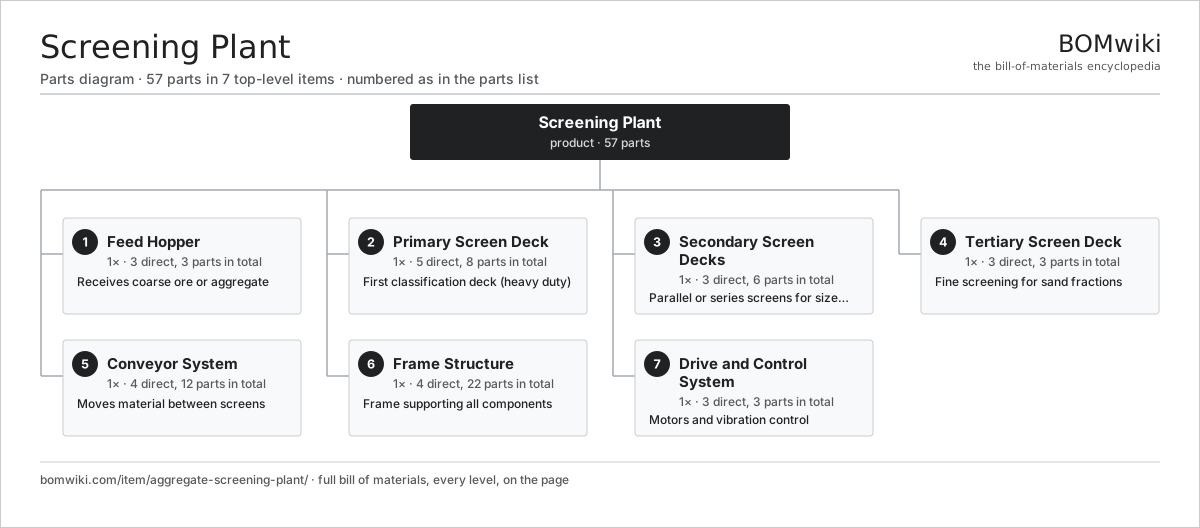
| # | Part | Qty | What it does |
|---|---|---|---|
| 1 | Feed Hopper 3 parts | 1× | Receives coarse ore or aggregate |
| 2 | Primary Screen Deck 5 parts | 1× | First classification deck (heavy duty) |
| 3 | Secondary Screen Decks 3 parts | 1× | Parallel or series screens for size fractions |
| 4 | Tertiary Screen Deck 3 parts | 1× | Fine screening for sand fractions |
| 5 | Conveyor System 4 parts | 1× | Moves material between screens |
| 6 | Frame Structure 4 parts | 1× | Frame supporting all components |
| 7 | Drive and Control System 3 parts | 1× | Motors and vibration control |
3D model
No 3D model yet. Have a CAD file of this? Add a 3D model. STL renders right on this page; STEP, FreeCAD, and OpenSCAD sources are welcome too (openly licensed, like all 3D models on BOMwiki).
Build & assembly graph
expand / collapse · shared sub-assemblies converge · links to related products · est. labourTap an assembly to expand/collapse · tap a part to open it · use “Open page” for any node · drag to pan, scroll to zoom.
Bill of materials for Screening Plant
7 top-level lines · 32 rows shown · 57 parts total · indented to 3 levels| # | Item / sub-assembly | Part no. | Qty/assy | Ext. qty | Parts | Type |
|---|---|---|---|---|---|---|
| 1 | Feed Hopper 3 parts | aggregate-screening-plant-feed-hopper | 1× | 1 | 3 | assembly |
| 1.1 | Hopper Storage Bin | aggregate-screening-plant-hopper-bin | 1× | 1 | · | part |
| 1.2 | Vibrating Feeder | aggregate-screening-plant-vibrating-feeder | 1× | 1 | · | part |
| 1.3 | Feed Chute | aggregate-screening-plant-feed-chute | 1× | 1 | · | part |
| 2 | Primary Screen Deck 5 parts | aggregate-screening-plant-primary-screen | 1× | 1 | 8 | assembly |
| 2.1 | Primary Screen Frame | aggregate-screening-plant-screen-frame-1 | 1× | 1 | · | part |
| 2.2 | Primary Screen Grating | aggregate-screening-plant-deck-1-material | 1× | 1 | · | part |
| 2.3 | Primary Vibrator Motor | aggregate-screening-plant-vibrator-1 | 1× | 1 | · | part |
| 2.4 | Vibration Isolator Spring | aggregate-screening-plant-support-springs | 4× | 4 | · | part |
| 2.5 | Screen Side Walls | aggregate-screening-plant-side-walls-1 | 1× | 1 | · | part |
| 3 | Secondary Screen Decks 3 parts | aggregate-screening-plant-secondary-screens | 1× | 1 | 6 | assembly |
| 3.1 | Secondary Screen Frame | aggregate-screening-plant-screen-frame-2 | 2× | 2 | · | part |
| 3.2 | Secondary Screen Mesh | aggregate-screening-plant-deck-2-material | 2× | 2 | · | part |
| 3.3 | Secondary Vibrator | aggregate-screening-plant-vibrator-2 | 2× | 2 | · | part |
| 4 | Tertiary Screen Deck 3 parts | aggregate-screening-plant-tertiary-screens | 1× | 1 | 3 | assembly |
| 4.1 | Tertiary Screen Frame | aggregate-screening-plant-screen-frame-3 | 1× | 1 | · | part |
| 4.2 | Fine Screen Cloth | aggregate-screening-plant-deck-3-material | 1× | 1 | · | part |
| 4.3 | Fine Screen Vibrator | aggregate-screening-plant-vibrator-3 | 1× | 1 | · | part |
| 5 | Conveyor System 4 parts | aggregate-screening-plant-conveyor-system | 1× | 1 | 12 | assembly |
| 5.1 | Oversize Conveyor | aggregate-screening-plant-belt-conveyor-a | 1× | 1 | · | part |
| 5.2 | Intermediate Conveyor | aggregate-screening-plant-belt-conveyor-b | 2× | 2 | · | part |
| 5.3 | Conveyor Motor | aggregate-screening-plant-conveyor-motors | 3× | 3 | · | part |
| 5.4 | Idler Roller Assembly | aggregate-screening-plant-conveyor-supports | 6× | 6 | · | part |
| 6 | Frame Structure 4 parts | aggregate-screening-plant-structure | 1× | 1 | 22 | assembly |
| 6.1 | Main Tower Frame | aggregate-screening-plant-main-frame | 1× | 1 | · | part |
| 6.2 | Tower Bracing | aggregate-screening-plant-cross-bracing | 8× | 8 | · | part |
| 6.3 | Foundation Pad | aggregate-screening-plant-foundation-pads | 12× | 12 | · | part |
| 6.4 | Fastener Set | fastener-set | 1× | 1 | · | part |
| 7 | Drive and Control System 3 parts | aggregate-screening-plant-drive-system | 1× | 1 | 3 | assembly |
| 7.1 | Main Switchboard | aggregate-screening-plant-power-distribution | 1× | 1 | · | part |
| 7.2 | Soft Starter | aggregate-screening-plant-soft-starter | 1× | 1 | · | part |
| 7.3 | VFD Module | aggregate-screening-plant-vibration-control | 1× | 1 | · | part |
Something wrong in this list? Report a problem with this BOM.
Sourcing: possible vendors
Browse the supplier directory → Prices, MOQ, and lead times are algorithmic estimates, not quotes, and not claims about these companies. Company mappings are curated by keyword; est. price band $15k–$2M. How estimates work| Vendor | HQ | Specialty | MOQ | Lead time |
|---|---|---|---|---|
| caterpillar.com ↗ | Irving, US | Construction & mining equipment | made to order | 16–28 wks |
|
🇯🇵Komatsu
komatsu.com ↗
|
Tokyo, JP | Construction & mining equipment | made to order | 16–28 wks |
|
🇸🇪Volvo CE
volvoce.com ↗
|
Gothenburg, SE | Construction equipment | made to order | 16–28 wks |
|
🇨🇭Liebherr
liebherr.com ↗
|
Bulle, CH | Cranes & heavy equipment | made to order | 16–28 wks |
|
🇨🇳XCMG
xcmg.com ↗
|
Xuzhou, CN | Construction machinery | made to order | 16–28 wks |
1,185-word article