Alpine Coaster
ProductOverview
An alpine coaster (also called a mountain coaster or summer bobsled) is a gravity-powered coaster designed for warm-weather operation on sloped terrain. Riders control two-seat sleds that descend a stainless-steel track on the side of a mountain. Each rider has manual brake controls (handbrake and footbrake levers) to regulate speed, allowing individual choice between a leisurely descent and a thrilling high-speed run. Built-in safety features include automatic anti-collision braking (if a sled approaches the one ahead too quickly) and fixed magnetic or friction brake zones positioned at critical curves.
Alpine coasters are popular in mountain resorts worldwide, attracting families and thrill-seekers alike. The attraction combines control (riders manage their own speed), scenery (descent through mountain forests or open slopes), and moderate risk (speed is limited, and backup brakes prevent collisions).
How It Works
Gravity-Powered Descent
A sled weighing 80–120 kg loaded (30–50 kg empty plus 50–70 kg riders) begins at the top station. Released by the operator, gravity accelerates the sled down the track. With no braking, the sled would accelerate to 50–70 km/h by the bottom (limited by air resistance and wheel rolling friction, ~0.1 %). However, riders control descent speed via two brake inputs:
Handbrake: A lever-operated brake that the rider can modulate continuously. Pulling the lever engages brake pads against the wheels (or the rail), creating proportional friction. Moderate handbrake use allows speeds of 15–25 km/h; full handbrake locks the sled to nearly zero speed.
Footbrake: A pedal or lever-operated secondary brake, providing additional stopping power if the handbrake is insufficient.
With both brakes, a skilled rider can maintain any desired speed from standstill to maximum.
Track Design and Guidance
The track is two parallel stainless-steel I-beams running downhill on elevated concrete or steel support piers spaced every 10–20 meters. The track geometry includes:
- Straight sections: Allowing acceleration and providing scenic vistas.
- Banked turns: Slopes up to 20–30° from horizontal, allowing high-speed cornering (up to 1.5 g lateral).
- Magnetic lane-following: Embedded neodymium magnets in the rail profile create a magnetic field detected by an onboard Hall-effect sensor on the sled. If the sled drifts left or right, the rider naturally compensates (the sensation is subtle, like a gentle tug) to keep centered. This guidance is passive, it does not mechanically constrain the sled, but the rider feels it.
Anti-Collision System
A key safety feature is automatic anti-collision braking. Each sled is equipped with proximity sensors (typically magnetic or infrared) that continuously detect the sled ahead. A wireless transceiver on each sled communicates with the next sled, reporting position and velocity.
If a sled detects that the gap to the sled ahead is shrinking below a safe minimum (typically 5–10 meters), an electromagnetic brake solenoid engages automatically, applying braking force without rider input. This prevents rear-end collisions from occurring due to operator error (e.g., a rider falling asleep on the handbrake).
The automatic braking is proportional: if the sleds are 15 meters apart and closing slowly, the braking is gentle; if they are 5 meters apart and closing quickly, full braking is applied. This system ensures that even with multiple sleds on the course simultaneously, collisions cannot occur.
Manual Brake Control
The handbrake is typically a lever-operated friction brake. Pulling the lever pulls a cable that pushes brake pads against a rotor or the rail surface. The amount of braking is proportional to lever position: slight pull = light braking; full pull = full braking.
Some modern sleds use hydraulic brake systems, where pulling the lever activates a small onboard pump that pressurizes brake cylinders. This provides more progressive and consistent braking across varying temperatures.
Fixed Brake Zones
Additional safety comes from fixed brake zones positioned throughout the course, especially at:
- Sharp curves: Magnetic or friction brakes slow sleds before tight turns.
- Steep sections: Brakes prevent excessive speed buildup on steep downhill grades.
- Run-out zone: At the bottom, a long magnetic brake zone brings sleds to rest before the lift mechanism engages.
These fixed brakes are passive (no operator or rider action required) and are calibrated so that an unbraked sled (if all manual brakes fail) will still stop safely before exiting the track.
Lift System and Return to Top
At the base, a motorized lift system (cable tow or conveyor) pulls sleds back up to the top station. Sleds are engaged onto the cable by a gate mechanism at the bottom and automatically released when they reach the top. The lift travels at a constant speed (typically 1–2 m/s), and the ascent takes 10–20 minutes depending on course length and elevation gain.
Some Alpine coasters use a separate track for the return journey (skiers call this "lift line"), with the return track positioned adjacent to the downhill track. This allows more frequent sled dispatch and higher throughput.
Sled Design and Components
Frame and Seating
The sled frame is lightweight aluminum or welded steel, 1.5–2 meters long and 0.8–1 meter wide. It accommodates two passengers in a tandem arrangement (one behind the other). Seats are typically simple molded-plastic or foam-padded shells, bolted to the frame.
No formal restraints are required in most jurisdictions (unlike amusement rides); instead, riders hold onto grab handles and lean their weight naturally. Some sleds include simple lap belts or shoulder harnesses for young children or nervous riders.
Wheels and Bearings
The sled has four polyurethane wheels on sealed ball-bearing axles:
- Two road wheels: Run on the outer edge of the top rail, bearing the sled's weight.
- Two guide wheels: Run on the inner edge or side of the rail, preventing lateral drift.
Wheel material is polyurethane (hardness 80–95 Shore A) to provide grip while rolling smoothly. Rolling resistance is typically 0.1–0.2 % (very low). Wheels are replaced every 2–5 years depending on usage.
Brake System Mechanical Design
The brake lever is typically a simple mechanical linkage:
- Pulling the lever rotates a pivot arm.
- The pivot arm pulls a cable (or actuates a hydraulic pump) that applies pressure to brake pads.
- Brake pads press against a friction surface (rotor or rail profile).
Braking force is proportional to lever position, allowing modulation. Full-pull applies maximum braking force (typically capable of decelerating at 1 g or more).
Some sleds use hydraulic brakes instead: pulling the lever activates a small hand pump that pressurizes a brake cylinder. The rider can "pump" to apply braking progressively. Hydraulic brakes are less affected by weather (rain, ice) than mechanical cable brakes.
Wheel Bearings and Maintenance
Sealed ball bearings in the wheels require minimal maintenance (they are pre-greased and sealed). Bearing life is typically 10,000–20,000 kilometers or 5–10 years of continuous operation. Wheel bearings are replaced as a set when any bearing begins to show play or noise.
Brake pads (if mechanical disc brakes) or brake pad material (if friction brake against rail) wears over time and is inspected every 500 operating hours and replaced as needed.
Track Infrastructure and Support Structure
Rail Profile and Stainless Steel Choice
The track is made from stainless steel (typically 304 or 316 grade) for corrosion resistance in mountain environments (rain, snow, salt air in coastal mountains). Stainless steel adds cost compared to painted carbon steel, but eliminates rust and maintenance burden in outdoor settings.
The rail profile is typically an I-beam or box-beam shape, with:
- Top surface: Smooth rolling surface for road wheels.
- Side flange: Guidance surface for guide wheels.
- Embedded magnets: Located in recessed slots in the rail profile, creating the magnetic lane-following signal detected by onboard sled sensors.
Support Piers and Foundations
The track is supported on concrete or steel piers spaced every 10–20 meters vertically down the slope. Each pier is anchored to bedrock or deep soil via:
- Concrete piers: Drilled-in anchor bolts or helical piles.
- Steel piers: Welded base plates bolted to concrete foundations via large anchor bolts.
Pier height varies with terrain slope: on steep slopes, piers may be 5–10 meters tall; on gentler slopes, they may be 1–2 meters. The entire track structure is designed to accommodate thermal expansion (stainless steel expands ~15 mm per 100 meters per 50°C temperature change) via sliding bearings or expansion joints.
Drainage and Environmental Considerations
The track structure includes integrated drainage to prevent water pooling under the rail (which could cause sleds to hydroplane or ice formation in winter). Piers are positioned to minimize environmental impact, and the track layout avoids steep slopes prone to rockslides or avalanches (in alpine regions).
Safety Systems and Operational Procedures
Sled Inspection
Before each day of operation, all sleds are inspected for:
- Wheel bearing play or noise.
- Brake lever function (full range of motion, no sticking).
- Crack or deformation in frame or wheels.
- Proper engagement with lift cable (if cable-tow system).
A failed sled is removed from service and repaired or replaced.
Operator Training
Operators at the top station are trained to:
- Verify that riders are seated properly and understand brake controls.
- Check that two riders of similar weight are paired (to avoid imbalance).
- Manage dispatch interval (typically 2–5 minute gaps between sleds) to allow safe spacing.
- Monitor the course via video or line-of-sight to detect jams or incidents.
- Execute emergency stop procedures (cut lift motor power, activate fixed brakes).
Emergency Procedures
If a sled stalls on the course or a rider requires assistance:
- The operator stops the lift motor.
- Fixed magnetic brakes activate to prevent other sleds from sliding into the stopped sled.
- Recovery personnel (with safety harnesses) walk/climb the track to assist the stuck sled or rider.
- Egress is on foot; typical recovery time is 10–20 minutes.
Standards and Regulations
Alpine coasters are not classified as amusement rides in most jurisdictions, they are considered "mountain equipment" or "recreational devices." However, they are subject to:
- ASTM F24 voluntary guidance: While not legally required in all regions, manufacturers typically design to ASTM F2291 (drop/falling rides) and ASTM F2374 (fixed rides) as a best practice.
- Local building codes: Structural design of support piers follows local building codes (snow load, wind load, seismic design where applicable).
- Occupational safety: Operators are trained per ISO 17842 (skiing and mountaineering safety standards).
Key design factors:
- Sled structural strength: Designed for 3:1 safety factor on welds and bolts.
- Brake stopping distance: Maximum 50 meters from full speed to full stop (with manual braking).
- Automatic anti-collision: Prevents collisions even if riders fall asleep or lose control.
Operational Economics
A typical Alpine coaster (1,500 meter course, 800 meter vertical drop, 10-sled capacity) costs $2–8 million including design, fabrication, installation, and infrastructure (lift building, operator booth, parking).
Annual operating costs are $150,000–$500,000 (labor, electricity, sled maintenance, wheel replacement). Revenue potential is $300,000–$1.5 million per season, depending on location, rider fee, and operating season length.
Alpine coasters are economically attractive because:
- Low operational complexity: Gravity-powered, minimal active systems (lift motor is the only main power draw).
- High capacity: 8–12 sleds on course, dispatch every 2–3 minutes = 200–400 riders per hour.
- Seasonal operation: Many alpine coasters operate summer-only (June–September in Northern Hemisphere mountains), reducing annual operating costs.
- Tourism draw: Alpine coasters are major attractions at mountain resorts, driving season-pass sales and resort visitation.
Alpine coasters are especially popular in:
- Alpine regions (Swiss Alps, Austrian Alps, French Alps, US Rockies, Canadian Rockies).
- Ski resorts in off-season (summer revenue stream for ski areas).
- Theme parks with integrated outdoor terrain (Six Flags parks with mountain locations).
- Adventure parks and outdoor recreation destinations.
The category continues to grow globally, with new installations opening in China, Japan, and South America. Modern innovations include:
- Track-switching: Riders choose a path at junctions, branching the course (requires operator intervention to set track switches).
- Night operation: LED lighting along the track allows evening rides with enhanced visual effect.
- Integrated video: Onboard cameras record the ride experience, which riders can purchase post-ride.
- Weather protection: Covered sections for winter operation or rainy climates.
Alpine coasters remain one of the few amusement attractions where rider skill and decision-making directly affect the experience, making them highly re-rideable and engaging across repeated visits.
Alpine Coaster parts and their functions
7 top-level parts · 1,850 parts in total · full bill of materials below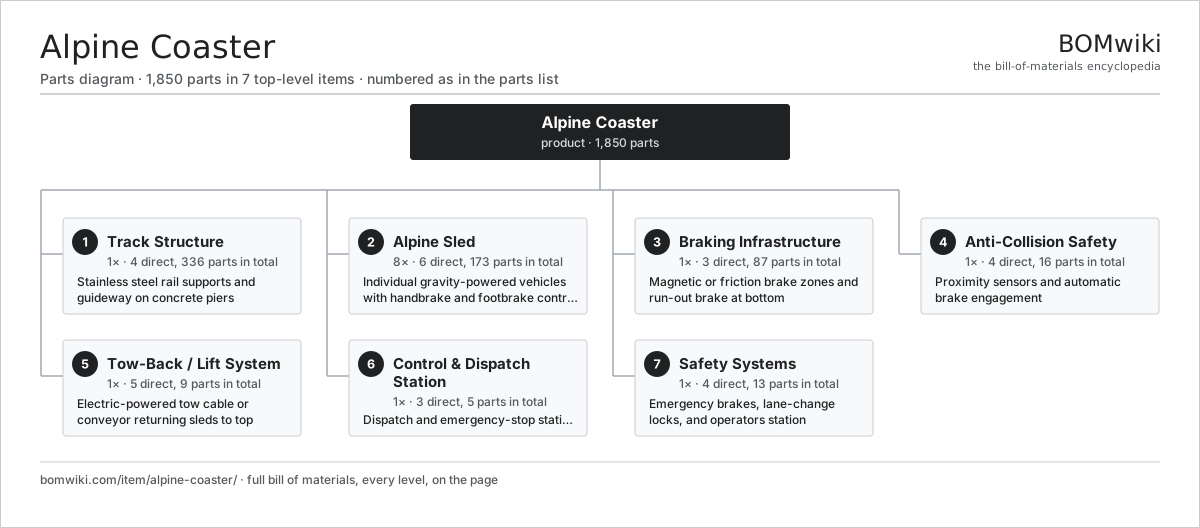
| # | Part | Qty | What it does |
|---|---|---|---|
| 1 | Track Structure 4 parts | 1× | Stainless steel rail supports and guideway on concrete piers |
| 2 | Alpine Sled 6 parts | 8× | Individual gravity-powered vehicles with handbrake and footbrake controls |
| 3 | Braking Infrastructure 3 parts | 1× | Magnetic or friction brake zones and run-out brake at bottom |
| 4 | Anti-Collision Safety 4 parts | 1× | Proximity sensors and automatic brake engagement |
| 5 | Tow-Back / Lift System 5 parts | 1× | Electric-powered tow cable or conveyor returning sleds to top |
| 6 | Control & Dispatch Station 3 parts | 1× | Dispatch and emergency-stop station at top station |
| 7 | Safety Systems 4 parts | 1× | Emergency brakes, lane-change locks, and operators station |
Diagrams & photos

-08ASD.jpg)
-04ASD.jpg)
-02ASD.jpg)
3D model
No 3D model yet. Have a CAD file of this? Add a 3D model. STL renders right on this page; STEP, FreeCAD, and OpenSCAD sources are welcome too (openly licensed, like all 3D models on BOMwiki).
Build & assembly graph
expand / collapse · shared sub-assemblies converge · links to related products · est. labourTap an assembly to expand/collapse · tap a part to open it · use “Open page” for any node · drag to pan, scroll to zoom.
Bill of materials for Alpine Coaster
7 top-level lines · 41 rows shown · 1,850 parts total · indented to 3 levels| # | Item / sub-assembly | Part no. | Qty/assy | Ext. qty | Parts | Type |
|---|---|---|---|---|---|---|
| 1 | Track Structure 4 parts | alpine-coaster-track-structure | 1× | 1 | 336 | assembly |
| 1.1 | Sheet Metal Panel | sheet-panel | 100× | 100 | · | part |
| 1.2 | Fastener Set | fastener-set | 12× | 12 | · | part |
| 1.3 | Ball Bearing | ball-bearing | 24× | 24 | · | part |
| 1.4 | Neodymium Magnet | neodymium-magnet | 200× | 200 | · | part |
| 2 | Alpine Sled 6 parts | alpine-coaster-sled-assembly | 8× | 8 | 173 | assembly |
| 2.1 | Sled Frame | alpine-coaster-sled-frame | 1× | 8 | · | part |
| 2.2 | Sled Wheel Set 3 parts | alpine-coaster-sled-wheels | 4× | 32 | 41 | assembly |
| 2.2.1 | Ball Bearing | ball-bearing | 4× | 128 | · | part |
| 2.2.2 | Wheel Assembly 5 parts + deeper › | wheel-assembly | 4× | 128 | 9 | assembly |
| 2.2.3 | Fastener Set | fastener-set | 1× | 32 | · | part |
| 2.3 | Brake Control Lever 2 parts | alpine-coaster-brake-lever-assembly | 2× | 16 | 2 | assembly |
| 2.3.1 | Fastener Set | fastener-set | 1× | 16 | · | part |
| 2.3.2 | Connector | connector | 1× | 16 | · | part |
| 2.4 | Hall Sensor | hall-sensor | 1× | 8 | · | part |
| 2.5 | Fastener Set | fastener-set | 2× | 16 | · | part |
| 2.6 | O-Ring Set | oring-set | 1× | 8 | · | part |
| 3 | Braking Infrastructure 3 parts | alpine-coaster-braking-system | 1× | 1 | 87 | assembly |
| 3.1 | Neodymium Magnet | neodymium-magnet | 80× | 80 | · | part |
| 3.2 | Fastener Set | fastener-set | 6× | 6 | · | part |
| 3.3 | Pressure Sensor | pressure-sensor | 1× | 1 | · | part |
| 4 | Anti-Collision Safety 4 parts | alpine-coaster-anti-collision-system | 1× | 1 | 16 | assembly |
| 4.1 | Hall Sensor | hall-sensor | 8× | 8 | · | part |
| 4.2 | Solenoid Valve | solenoid-valve | 4× | 4 | · | part |
| 4.3 | Fastener Set | fastener-set | 2× | 2 | · | part |
| 4.4 | Connector | connector | 2× | 2 | · | part |
| 5 | Tow-Back / Lift System 5 parts | alpine-coaster-lift-system | 1× | 1 | 9 | assembly |
| 5.1 | Blower Motor | blower-motor | 1× | 1 | · | part |
| 5.2 | Gearbox Housing | gearbox-housing | 1× | 1 | · | part |
| 5.3 | Drive Belt | drive-belt | 1× | 1 | · | part |
| 5.4 | Ball Bearing | ball-bearing | 4× | 4 | · | part |
| 5.5 | Fastener Set | fastener-set | 2× | 2 | · | part |
| 6 | Control & Dispatch Station 3 parts | alpine-coaster-control-cabin | 1× | 1 | 5 | assembly |
| 6.1 | Relay | relay | 2× | 2 | · | part |
| 6.2 | Push Button Switch | button-switch | 2× | 2 | · | part |
| 6.3 | Fastener Set | fastener-set | 1× | 1 | · | part |
| 7 | Safety Systems 4 parts | alpine-coaster-safety-system | 1× | 1 | 13 | assembly |
| 7.1 | Relay | relay | 6× | 6 | · | part |
| 7.2 | Hall Sensor | hall-sensor | 4× | 4 | · | part |
| 7.3 | Encoder | encoder | 1× | 1 | · | part |
| 7.4 | Connector | connector | 2× | 2 | · | part |
Something wrong in this list? Report a problem with this BOM.
Related products
same domain, ranked by shared parts Roller Coaster
657 parts · shares 15 with this page
Roller Coaster
657 parts · shares 15 with this page
 Dark Ride System
1,005 parts · shares 14 with this page
Dark Ride System
1,005 parts · shares 14 with this page
 Hobby RC Car
114 parts · shares 10 with this page
Hobby RC Car
114 parts · shares 10 with this page
 Ferris Wheel
3,547 parts · shares 10 with this page
Ferris Wheel
3,547 parts · shares 10 with this page
 Kids Electric Balance Bike
129 parts · shares 6 with this page
Kids Electric Balance Bike
129 parts · shares 6 with this page
 Wave Swinger
244 parts · shares 7 with this page
Wave Swinger
244 parts · shares 7 with this page
Sourcing: possible vendors
Browse the supplier directory → Prices, MOQ, and lead times are algorithmic estimates, not quotes, and not claims about these companies. Company mappings are curated by keyword; est. price band $20–$3k. How estimates work| Vendor | HQ | Specialty | MOQ | Lead time |
|---|---|---|---|---|
|
🇩🇰LEGO
lego.com ↗
|
Billund, DK | Construction toys | 2,000 units | 6–10 wks |
|
🇺🇸Mattel
mattel.com ↗
|
El Segundo, US | Toys | 2,000 units | 6–10 wks |
|
🇺🇸Hasbro
hasbro.com ↗
|
Pawtucket, US | Toys & games | 2,000 units | 6–10 wks |
| bandainamco.co.jp ↗ | Tokyo, JP | Toys & amusement | 2,000 units | 6–10 wks |
| spinmaster.com ↗ | Toronto, CA | Toys | 2,000 units | 6–10 wks |
2,090-word article