Bacon Press/Former
ProductOverview
A bacon press is an industrial machine that transforms loose cured pork bellies (or other meat trim) into uniform pressed slabs for slicing. The machine continuously feeds loose product from a hopper onto a conveyor belt, carries it under heated pressing plates (60–80 °C), applies 50–150 bar hydraulic pressure for 10–30 seconds to compress and knit the product together, then ejects the pressed slab onto a discharge conveyor. The final product is a cohesive, dense block suitable for slicing into individual bacon rashers (2–4 mm slices).
Bacon pressing is performed in two contexts:
Rendered bacon: Cured pork belly (fresh or previously smoked) is trimmed, diced into small pieces (10–50 mm), mixed with fat and binders, then pressed into a slab. This economical approach recovers trim (which would otherwise be rendered separately) into a consumable bacon product.
Whole-muscle bacon restructuring: Premium whole muscle (e.g., beef brisket, turkey breast) is diced, cured, bound with binders (soy protein, carrageenan), and pressed into a bacon-like slab for slicing.
Both applications benefit from precision pressing: uniform slab density ensures consistent slicing thickness and yield.
How it Works
The process begins with loose cured product (pork belly trim, brined and smoked) loaded into the hopper. A low-speed paddle or auger (5–30 rpm) meters product from the hopper onto the motorized feed conveyor at a controlled rate.
The feed conveyor advances the loose product at 0.5–2 m/min toward the upper and lower heated pressing plates (typically 400–800 mm long, 300–600 mm wide, maintained at 60–80 °C). As the product travels under the plates, a large hydraulic cylinder (150–250 mm bore) descends, pressing the product with 50–150 bar force. The heat from the plates begins to bind fat and protein, knitting loose fragments into a cohesive slab. Hold time (typically 15–20 seconds) allows sufficient bonding.
After the dwell, the cylinder retracts (upstroke), and the now-pressed slab continues on the feed conveyor toward a discharge conveyor. The cycle repeats as the next batch of product enters the press zone. The final pressed slab (a few centimeters thick, with uniform density) is transferred to a meat slicer or packaging line.
The PLC coordinator manages all stages: feed auger speed, conveyor speed (feed and discharge synchronized), press cylinder timing (down, hold, up), mold plate temperature (60–80 °C setpoint maintained by a temperature controller), and safety interlocks.
Mold Plate Design and Thermal Function
The upper and lower plates are typically aluminum (lightweight, excellent thermal conductivity) or steel (durable, precise). Plate surface finish is critical: smooth (Ra <1.6 micrometers) prevents product from sticking; if plates are rough or corroded, pressed slab may adhere, requiring frequent cleaning or re-working.
The heating element (3–6 kW electric immersion heater or steam coil) warms the plates to 60–80 °C. This temperature range serves multiple functions:
Protein denaturation: Heat denatures myosin and collagen, causing muscle fibers to bind more readily at grain interfaces.
Fat softening: Heat softens fat (tallow melts at ~40 °C, lard at ~35 °C), allowing it to flow and fill gaps between muscle particles, improving cohesion.
Moisture reduction: Gentle heating (60–80 °C, not 100+ °C) evaporates some surface moisture, reducing stickiness and improving slicing texture.
Curing reaction acceleration: Heat accelerates curing reactions (nitrite fixation, Maillard browning), improving color and flavor.
Higher temperatures (>80 °C) risk cooking the product surface (partial cooking changes texture) and may break down muscle fiber structure. Lower temperatures (<50 °C) result in poor bonding and loose, crumbly slabs.
The thermal insulation (25–50 mm mineral wool or foam) around plates and cavity reduces heat loss to ambient, improving efficiency and allowing smaller heaters.
Pressing Force and Compaction
Hydraulic pressure (50–150 bar) is applied via a fixed or variable pump (20–40 cc/rev) driven by a 3–7.5 kW motor. The force depends on cylinder bore:
- 150 mm bore at 100 bar = (π × 0.075²) × 100 bar = 1767 kN ≈ 180 metric tons pressing force
This enormous force compacts loose product to high density (approaching pâté-like consistency). Dwell time (15–30 seconds) is sufficient for protein-fat bonding at these pressures. Longer dwell times (>30 seconds) don't improve bonding significantly and reduce throughput; shorter times (<10 seconds) produce weak, crumbly slabs prone to breaking during slicing.
Pressing force is adjustable: reducing pressure (50 bar) produces a lighter, more tender slab; increasing pressure (150 bar) produces a denser, more uniform slab. Product formulation determines optimal pressure: high-fat products require less pressure (fat provides lubrication and binding); lean products require higher pressure (more mechanical compaction needed).
Conveyor Synchronization and Flow Control
Feed and discharge conveyor speeds must be synchronized. If the discharge conveyor is slower than the feed conveyor, pressed slabs accumulate under the press plates, causing backup and incomplete pressing. If discharge is faster, the press plates won't engage fully on the product.
Most systems use synchronized variable-frequency drives on both motors, maintaining a constant ratio (e.g., both at 50% speed = 0.5 m/min, or both at 100% speed = 1.5 m/min). The PLC coordinates the speeds so that the press cycle (10–30 seconds) aligns with product advancement.
Feed rate (kg/min) is controlled by hopper auger speed: faster auger (30 rpm) = more product per minute; slower auger (5 rpm) = less. Combined with conveyor speed, total throughput is:
Throughput = (Conveyor speed m/min) × (Pressed slab width m) × (Product density kg/m³ × depth m)
Example: 1 m/min conveyor, 0.5 m wide slab, 0.05 m thick, density 800 kg/m³ → 1 × 0.5 × 0.05 × 800 = 20 kg/min = 1200 kg/hour.
Heat Transfer and Pressing Effectiveness
Pressing effectiveness depends on heat transfer. The top plate conducts heat to the product surface; the bottom plate conducts heat through the conveyor belt. Heat penetration is slow in thick products (>100 mm), so dwell time must be longer (20–30 seconds) than for thin products (10–15 seconds).
Some advanced systems use a lower plate with mold cavity (shallow depression) to guide product shape and increase plate-product contact area. This improves heat transfer and ensures uniform thickness across the slab width. Flat lower plates are simpler but result in variable thickness (thicker at edges, thinner in center) if the conveyor belt is not perfectly level.
Thermal efficiency: a 60–80 °C mold plate loses ~1–2 °C of heat per second to ambient (depending on insulation), requiring heater power to maintain temperature. At full production (continuous pressing), the heater is modulated to balance input power and heat loss. During idle periods (no product flowing), heater power can be reduced, saving energy.
Product Quality and Binding
Pressing quality (cohesion, sliceability) depends on:
Curing level: Product must be adequately cured (minimum 10–12% salt) and have some residual brine for protein solubility. Under-cured product is loose and weak; over-cured product is dry and salty.
Binder content: Soy protein isolate (2–3%) or carrageenan (0.5–1%) is often added to enhance binding. Binders absorb water and form a gel matrix, improving cohesion.
Pressing temperature: 60–80 °C is optimal; below 50 °C, poor bonding; above 90 °C, risk of overcooking.
Pressing force and time: 100 bar for 15 seconds is typical for most pork belly formulations. Increase force or time for lean products; decrease for high-fat products.
Product particle size: Finely diced product (10–20 mm) binds better than coarse chunks (>50 mm), as smaller pieces have more surface area for protein-fat interaction.
Well-pressed bacon slab should slice cleanly (no crumbling or tearing) at 2–4 mm thickness and have uniform color and texture throughout.
Integration in Bacon Production
Typical flow for rendered bacon:
Cured pork belly trim → Dicing → Pressing → Slicing (meat slicer) → Chilling → Packaging
Typical flow for structured bacon:
Ground cured beef/turkey + binders → Chopping → Pressing → Slicing → Chilling → Packaging
A single bacon press line can handle 50–200 kg/hour depending on cycle time and slab thickness. Small producers (100 kg/day) run one press with manual slicing; large producers (500+ kg/day) operate 2–4 presses feeding multiple automated slicers on parallel lines.
Yield is typically 95–99% (vs. 85–90% for rendered fat, which is labor-intensive and produces lower-value tallow). At €2–3/kg pork belly trim cost and €6–8/kg pressed bacon retail value, margin is substantial: 3–5 kg trim → ~2.9–4.9 kg pressed bacon (with 2–3% moisture loss during pressing and slicing).
Maintenance and Cleaning
The mold plates accumulate protein residue (especially on the upper plate, which contacts hot product). Daily cleaning (spraying with hot water and food-safe cleaner) is necessary; neglect causes plate corrosion and product sticking. Weekly deep cleaning (soaking in caustic solution pH >13) removes burnt-on residue.
The conveyor belt also accumulates product; it must be cleaned and sanitized daily per food safety regulations (HACCP, FSMA). Food-safe detergent and 70% ethanol spray are typical.
The hydraulic cylinder and pump require regular maintenance: hydraulic oil (ISO VG 46 mineral or synthetic) is changed annually, and seals are inspected for leakage. Contamination (dust, water) can damage the pump; a proportional control valve is more susceptible to particles than simple on/off valves, requiring finer hydraulic filtration (10 microns).
The temperature controller and heater element are routine electrical components; heater life is typically 3–5 years before scale buildup (from hard water) or electrical resistance change requires replacement (~1000 EUR).
Safety Considerations
The high pressing force (100–180 metric tons) presents a crush hazard. Safety measures:
- Hinged guards around the press zone with solenoid interlocks stopping press operation when opened.
- Hardwired emergency stop button at multiple positions.
- Guard design prevents hands from reaching between mold plates; guards must meet ISO 4413 machinery safety standards.
- Pressure relief valve (System Relief Valve) set to max 150 bar to limit force and prevent equipment damage if cylinders jam.
Despite these protections, pressed bacon machinery ranks as moderate-risk equipment; operator training and adherence to lockout/tag-out procedures (LOTO) during maintenance are essential.
Capital and Operating Costs
A mid-size bacon press (100–150 kg/hour capacity, 0.5–1 m/min conveyor) costs €50,000–€120,000. Operating costs are ~€5–10 per 100 kg production (energy, water, cleaning supplies, maintenance).
ROI: A 100 kg/day bacon producer (20 working days/month = 2000 kg/month) generates €12,000–16,000 revenue/month at €6–8/kg retail. Machine cost of €80,000 divided by net margin (€2–3/kg after material and labor = €4000–6000/month) yields payback of 13–20 months in favorable market conditions. In commodity markets with lower margins, payback extends to 2–3 years.
Flexibility: A single press can accommodate multiple products (pork belly bacon, beef bacon, turkey bacon, ham), requiring only formulation changes and potential mold plate swaps if different slab dimensions are desired. This multi-product capability justifies the capital investment in many mid-size meat plants.
Bacon Press/Former parts and their functions
7 top-level parts · 42 parts in total · full bill of materials below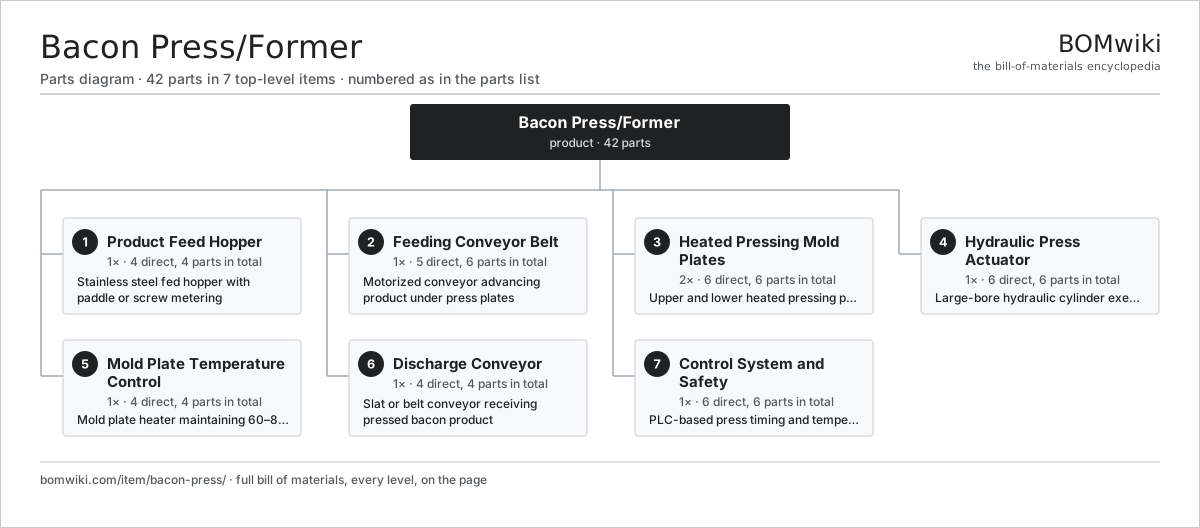
| # | Part | Qty | What it does |
|---|---|---|---|
| 1 | Product Feed Hopper 4 parts | 1× | Stainless steel fed hopper with paddle or screw metering |
| 2 | Feeding Conveyor Belt 5 parts | 1× | Motorized conveyor advancing product under press plates |
| 3 | Heated Pressing Mold Plates 6 parts | 2× | Upper and lower heated pressing plates with forming cavity |
| 4 | Hydraulic Press Actuator 6 parts | 1× | Large-bore hydraulic cylinder exerting 50–150 bar press force |
| 5 | Mold Plate Temperature Control 4 parts | 1× | Mold plate heater maintaining 60–80 °C |
| 6 | Discharge Conveyor 4 parts | 1× | Slat or belt conveyor receiving pressed bacon product |
| 7 | Control System and Safety 6 parts | 1× | PLC-based press timing and temperature controller |
3D model
No 3D model yet. Have a CAD file of this? Add a 3D model. STL renders right on this page; STEP, FreeCAD, and OpenSCAD sources are welcome too (openly licensed, like all 3D models on BOMwiki).
Build & assembly graph
expand / collapse · shared sub-assemblies converge · links to related products · est. labourTap an assembly to expand/collapse · tap a part to open it · use “Open page” for any node · drag to pan, scroll to zoom.
Bill of materials for Bacon Press/Former
7 top-level lines · 42 rows shown · 42 parts total · indented to 3 levels| # | Item / sub-assembly | Part no. | Qty/assy | Ext. qty | Parts | Type |
|---|---|---|---|---|---|---|
| 1 | Product Feed Hopper 4 parts | bacon-press-hopper | 1× | 1 | 4 | assembly |
| 1.1 | Hopper Vessel | bacon-press-hopper-body | 1× | 1 | · | part |
| 1.2 | Metering Paddle or Screw | bacon-press-feed-screw | 1× | 1 | · | part |
| 1.3 | Feed Motor | bacon-press-feed-motor | 1× | 1 | · | part |
| 1.4 | Outlet Gate | bacon-press-hopper-outlet | 1× | 1 | · | part |
| 2 | Feeding Conveyor Belt 5 parts | bacon-press-feed-conveyor | 1× | 1 | 6 | assembly |
| 2.1 | Conveyor Belt Surface | bacon-press-conveyor-belt | 1× | 1 | · | part |
| 2.2 | Conveyor Drive Motor | bacon-press-conveyor-motor | 1× | 1 | · | part |
| 2.3 | Drive Transmission | bacon-press-conveyor-drive | 1× | 1 | · | part |
| 2.4 | Drive and Idler Rollers | bacon-press-conveyor-roller | 2× | 2 | · | part |
| 2.5 | Total Machine Length | bacon-press-conveyor-length | 1× | 1 | · | part |
| 3 | Heated Pressing Mold Plates 6 parts | bacon-press-mold-plates | 2× | 2 | 6 | assembly |
| 3.1 | Upper Pressing Plate | bacon-press-plate-upper | 1× | 2 | · | part |
| 3.2 | Lower Forming Plate | bacon-press-plate-lower | 1× | 2 | · | part |
| 3.3 | Plate Heating Elements | bacon-press-plate-heating | 1× | 2 | · | part |
| 3.4 | Temperature Sensor | bacon-press-plate-sensor | 1× | 2 | · | part |
| 3.5 | Plate Dimensions | bacon-press-plate-width | 1× | 2 | · | part |
| 3.6 | Thermal Insulation | bacon-press-plate-insulation | 1× | 2 | · | part |
| 4 | Hydraulic Press Actuator 6 parts | bacon-press-press-cylinder | 1× | 1 | 6 | assembly |
| 4.1 | Press Cylinder | bacon-press-cylinder-main | 1× | 1 | · | part |
| 4.2 | Hydraulic Pump | bacon-press-pump | 1× | 1 | · | part |
| 4.3 | Pump Prime Mover | bacon-press-pump-motor | 1× | 1 | · | part |
| 4.4 | Control Directional Valve | bacon-press-directional-valve | 1× | 1 | · | part |
| 4.5 | Hydraulic Accumulator | bacon-press-accumulator | 1× | 1 | · | part |
| 4.6 | System Relief Valve | bacon-press-pressure-relief | 1× | 1 | · | part |
| 5 | Mold Plate Temperature Control 4 parts | bacon-press-temperature-control | 1× | 1 | 4 | assembly |
| 5.1 | Heater Element | bacon-press-heater-element | 1× | 1 | · | part |
| 5.2 | Temperature Controller | bacon-press-thermostat | 1× | 1 | · | part |
| 5.3 | Heater Soft-Start | bacon-press-contactors | 1× | 1 | · | part |
| 5.4 | Thermal Insulation Wrap | bacon-press-insulation-wrap | 1× | 1 | · | part |
| 6 | Discharge Conveyor 4 parts | bacon-press-discharge-conveyor | 1× | 1 | 4 | assembly |
| 6.1 | Discharge Belt Surface | bacon-press-discharge-belt | 1× | 1 | · | part |
| 6.2 | Discharge Motor | bacon-press-discharge-motor | 1× | 1 | · | part |
| 6.3 | Discharge Length | bacon-press-discharge-length | 1× | 1 | · | part |
| 6.4 | Speed Synchronization | bacon-press-discharge-speed-control | 1× | 1 | · | part |
| 7 | Control System and Safety 6 parts | bacon-press-controls | 1× | 1 | 6 | assembly |
| 7.1 | Main Control PLC | bacon-press-main-plc | 1× | 1 | · | part |
| 7.2 | Press Cycle Timer | bacon-press-cycle-timer | 1× | 1 | · | part |
| 7.3 | Temperature Setpoint Control | bacon-press-temperature-setpoint | 1× | 1 | · | part |
| 7.4 | Solenoid Directional Valve | bacon-press-solenoid-valve | 1× | 1 | · | part |
| 7.5 | Safety Guard Interlocks | bacon-press-safety-interlocks | 1× | 1 | · | part |
| 7.6 | Emergency Stop Button | bacon-press-emergency-stop | 1× | 1 | · | part |
Something wrong in this list? Report a problem with this BOM.
Sourcing: possible vendors
Browse the supplier directory → Prices, MOQ, and lead times are algorithmic estimates, not quotes, and not claims about these companies. Company mappings are curated by keyword; est. price band $1k–$500k. How estimates work| Vendor | HQ | Specialty | MOQ | Lead time |
|---|---|---|---|---|
| gea.com ↗ | Düsseldorf, DE | Process technology | 20 units | 12–20 wks |
| buhlergroup.com ↗ | Uzwil, CH | Food & materials processing | 20 units | 12–20 wks |
| tetrapak.com ↗ | Pully, CH | Food packaging & processing | 20 units | 12–20 wks |
| jbtc.com ↗ | Chicago, US | Food processing equipment | 20 units | 12–20 wks |
| alfalaval.com ↗ | Lund, SE | Heat transfer & separation | 20 units | 12–20 wks |
1,956-word article