Bike Shelter
ProductOverview
A bicycle shelter is a modular, weather-protected parking structure designed for residential, commercial, or institutional settings. Unlike simple bike racks (exposed to sun and rain), shelters protect bicycles from precipitation, UV degradation, and theft (when combined with locking racks).
Modern shelters typically accommodate 8–12 bicycles, with footprints of 2.5 m × 1.5 m, and can be expanded by adding multiple units. Installation is straightforward: four ground anchors secure the structure, electrical connections (if lighting is specified) are minimal. No permanent building modifications are required, allowing relocation or removal without residual damage.
Market demand has grown significantly due to e-bike adoption (higher-value vehicles requiring protection) and city ordinances requiring parking for residents of multi-unit buildings. Cost ranges from $3,500–6,000 per shelter installed, justified by 20+ year durability and minimal maintenance.
Structural Components
Frame Assembly
The primary frame is a welded steel or aluminum post-and-beam structure comprising four vertical posts (80 mm × 80 mm tube, 2.4 m tall) and four horizontal roof beams (100 mm × 50 mm, spanning post-to-post).
Diagonal cross-bracing (50 mm × 50 mm angle or tube) prevents frame twist (racking) under lateral wind loads. In a typical shelter configuration, wind load at 100 mph is approximately 10 kN, distributed to the four posts (2.5 kN per post). The 80 mm × 80 mm post, when properly braced, resists 2.5 kN lateral force without exceeding design stress limits.
Post base plates (200 mm × 200 mm × 12 mm steel) distribute concentrated loads over a larger area, reducing bearing stress on concrete foundations. Plates are welded to post bottoms or bolted for modular assembly.
Steel frames are painted (industrial-grade epoxy or polyurethane, 100+ µm dry film thickness) for corrosion protection. Aluminum frames are anodized (20+ µm layer per ASTM B244) for similar corrosion resistance. In coastal (salt-spray) environments, stainless steel fasteners (316 grade) are specified; standard galvanized hardware is adequate in inland areas.
Roof Panel System
The roof assembly typically spans 2.5 m and employs polycarbonate or aluminum composite panels (20 mm thickness) for weight and durability balance.
Polycarbonate panels (standard option) offer:
- Light transmission: 80–90% (translucent, allows diffused natural light into parking area).
- Impact resistance: 200x stronger than glass (resists hail, falling branches).
- Insulation value: Hollow multi-wall polycarbonate has some thermal resistance (R-value ~1.5 per inch), reducing temperature extremes.
- Cost: ~$50–100 per m² material.
Panels are mounted on aluminum support rails running perpendicular to the roof slope. Stainless fasteners with EPDM sealing washers compress against the polycarbonate, creating a weathertight seal. Proper torque (5–8 N⋅m) is critical: under-torqued fasteners leak; over-torqued fasteners crack the polycarbonate.
Metal flashing at the junction between roof panels and frame members diverts water outward, preventing pooling or infiltration at structural connections.
Bicycle Rack Configuration
The bicycle rack system secures individual bikes and prevents frame-to-frame contact (which causes cosmetic damage). Standard racks accommodate two types of positioning:
- U-frame racks: A steel U-shaped channel (80 mm wide) accepts the bicycle frame. Bikes are oriented vertically or at 45°. Capacity: 2–3 bikes per unit.
- Wheel-tray racks: Individual wheel cradles support the bicycle by its wheels, preventing frame rocking. Capacity: 1 bike per position (more space required per bike, but better protection).
Most shelter designs use hybrid racks combining U-frames and wheel trays. Spacing between adjacent bike positions is maintained at minimum 300 mm (center-to-center) by adjustable spacer blocks, preventing handlebars from interfering.
The rack base plate is welded steel or aluminum, bolted to the shelter floor with M12 fasteners. Load rating is 150 kg per bike position (150% of typical 100 kg loaded bike weight), providing safety margin.
Anchoring & Foundation
Ground anchors secure the shelter against wind overturning and vibration-induced movement. Four M16 chemical anchors (epoxy-bonded, 150 mm embedment depth) are installed into concrete foundations. Each anchor is rated 30 kN tensile capacity (total system capacity: 120 kN).
Installation requires precision:
- Concrete is drilled at four locations corresponding to post locations (spacing 2.5 m × 1.5 m typical).
- Holes are cleaned (dust blown out with compressed air).
- Two-part epoxy is injected into holes per anchor manufacturer protocol.
- Anchor studs are twisted into the wet epoxy, ensuring proper seating.
- Epoxy cures per specifications (typically 24 hours before load application).
- Posts are positioned over studs and bolted with M16 hex bolts and lock nuts.
In areas with poor soil (clay, organic matter) or near waterways (saturated ground), anchor performance degrades. Pre-drilling test holes and performing cone pullout tests is recommended. Alternatively, surface-mounted anchors (wedge-bolt or screw-type) can be used if embedment is impossible.
Weather Protection & Drainage
The drainage system is critical to preventing water pooling beneath the shelter, which accelerates corrosion and creates slip hazards.
A roof gutter (aluminum K-style, 100 mm nominal width) runs along the roof perimeter, sloped 2° for gravity drainage toward downspouts (50 mm aluminum tubes). Downspouts exit at two corners, directing water at least 1 m away from the shelter base via 90° outlet elbows.
In climates with annual rainfall >500 mm, larger gutters (150 mm) or underground drain pipes may be specified to handle runoff from intense storms. Gutter capacity calculation: for a 2.5 m × 1.5 m shelter roof (3.75 m² area), a 1 cm rainfall event = 37.5 liters. At a gutter slope of 2° and a K-style channel, drainage rate is approximately 60 liters/minute, adequate for most storm intensities.
Optional Enhancements
Side Wall Cladding
Optional side panels provide wind protection, partial privacy, and theft deterrence. Polycarbonate side panels (1200 mm × 2400 mm) are translucent; expanded metal mesh panels offer better visibility but less wind protection.
Side panels are bolted to vertical posts via aluminum frame rails. Hinged panels on one or both sides create a gate, allowing controlled entry/exit. Optional lock or latch mechanisms prevent unauthorized access.
Cost for side cladding: +$500–1500 per shelter (materials only).
Lighting
LED lighting (20 W, IP65 rated) mounted under the roof beam improves visibility and perceived security. A twilight sensor auto-activates the light at dusk, and a timer can enforce shutoff at late night (e.g., 10 PM) to save energy.
Power options:
- 24 VDC with transformer: Safer low-voltage option, requires wall outlet within 10 m of shelter.
- 110 VAC direct: Requires GFCI-protected outlet; less safe but simpler wiring.
Light output: 2000+ lumens provides comfortable visibility for bike retrieval and identification.
Cost: +$300–500 per shelter (including fixture, sensor, and wiring).
Installation & Commissioning
Site Assessment
- Foundation location is selected (proximity to building, accessibility, drainage).
- Ground surface is evaluated: concrete, asphalt, or unprepared soil. If soil, compaction and sand leveling may be required.
- Anchor hole locations are marked using a positioning jig.
- Utility clearance is verified (overhead power lines, underground utilities) per local codes.
Foundation Preparation
- Concrete pad (optional) is poured if ground is unprepared. Pad dimensions: 2.7 m × 1.7 m × 150 mm thick, sloped 1–2° for drainage.
- Anchor holes are drilled to 150 mm depth using a hammer drill with concrete bit.
- Holes are cleaned and chemical anchors are installed per manufacturer instructions.
Frame Assembly & Installation
- Shelter frame is assembled (if modular) or delivered fully welded.
- Posts are positioned over anchor studs and M16 bolts are installed and hand-tightened.
- Frame is leveled using a laser level or transit; adjustment shims are placed under base plates if needed (typical tolerance: ±5 mm over the shelter footprint).
- All bolts are torqued to specification (M16 structural bolts: 150–180 N⋅m).
- Diagonal cross-bracing is installed and secured.
Roof & Finish Installation
- Roof panels are positioned on support rails, overlapping adjacent panels by ~100 mm.
- Sealing strips are placed in the lap joints.
- Fasteners with sealing washers are installed and torqued (5–8 N⋅m; critical step).
- Gutters are installed along roof perimeter and sealed at seams.
- Downspouts are connected and positioned to direct water away from base.
- Racks are bolted to the floor or concrete pad.
- Optional lighting is wired (24 VDC preferred; if 110 VAC, GFCI protection required).
Final Inspection
- All fasteners are verified torqued to specification.
- Roof is inspected for gaps or sealing defects.
- Racks are tested loaded with 150 kg per position (no shifting or deflection >5 mm).
- Lighting is tested (if installed).
- Drainage is tested by simulating water flow from roof.
Total installation time: 4–6 hours for a single shelter (two technicians).
Maintenance Schedule
Quarterly
- Visually inspect frame for rust, paint chipping, or loose fasteners.
- Verify all anchor bolts are tight; retorque if necessary (M16 bolts: 150–180 N⋅m).
- Check roof panels for cracks or discoloration (polycarbonate yellowing after 15+ years is normal but indicates UV degradation; replacement required if light transmission drops >20%).
Annually
- Inspect gutters for debris accumulation; clean if needed.
- Test drainage by pouring water into the gutter and verifying flow toward downspouts.
- Inspect racks for rust, bent members, or wheel-cradle wear.
- Test any lighting and replace bulbs if output is reduced.
Every 5 Years
- Inspect anchor bolts for corrosion; if significant rust is visible, bolts should be replaced.
- Repaint steel frame if industrial paint is chipped or faded (protective topcoat application, not full repaint, is usually sufficient).
- Replace roof panels if polycarbonate is severely yellowed or cracked (cost: ~$500 per shelter).
Performance & Durability
Structural Lifespan
Steel frames properly painted last 30+ years in temperate climates, 15–20 years in coastal salt-spray environments. Aluminum frames anodized last 40+ years in most climates.
Polycarbonate roof panels degrade under UV exposure: initial light transmission drops 5–10% in the first 5 years, then stabilizes. After 20 years, transmission may drop 20–30%, reducing light infiltration noticeably. Replacement is straightforward (four fasteners per panel).
Chemical anchors have a service life of 40+ years in non-corrosive environments; in aggressive environments (high-chloride soil, saturated conditions), 20–30 years is realistic.
Bicycle Security
Shelters with side walls and lighting deter casual theft but do not prevent determined thieves. Combination with cable locks (occupant responsibility) is recommended. Some institutional shelters incorporate CCTV monitoring or access gates for enhanced security.
Standards & Best Practices
- NFPA 1: Safety and accessibility standards for structures.
- ADA Accessibility Guidelines: Parking space width (typically 200 mm wider than standard racks), height clearance (2.4 m minimum), and maneuvering space.
- ASHTO (American Association of State Highway and Transportation Officials): Bicycle parking design recommendations.
- Local Building Codes: Wind load, snow load, and foundation requirements vary by region.
Economic Considerations
A basic shelter (8–12 bikes, no cladding, no lighting) costs $3,500–5,000 installed. Enhanced versions with side walls and lighting: $5,000–7,000.
For apartment buildings or corporate campuses, cost per parking space is $400–600, compared to automobile parking at $3,000–5,000 per space. Shelter ROI is achieved through reduced land consumption and occupant retention (bike-friendly amenities improve employee satisfaction).
Maintenance cost: $100–200 annually (mostly fastener inspection and paint touch-up).
Bike Shelter parts and their functions
7 top-level parts · 163 parts in total · full bill of materials below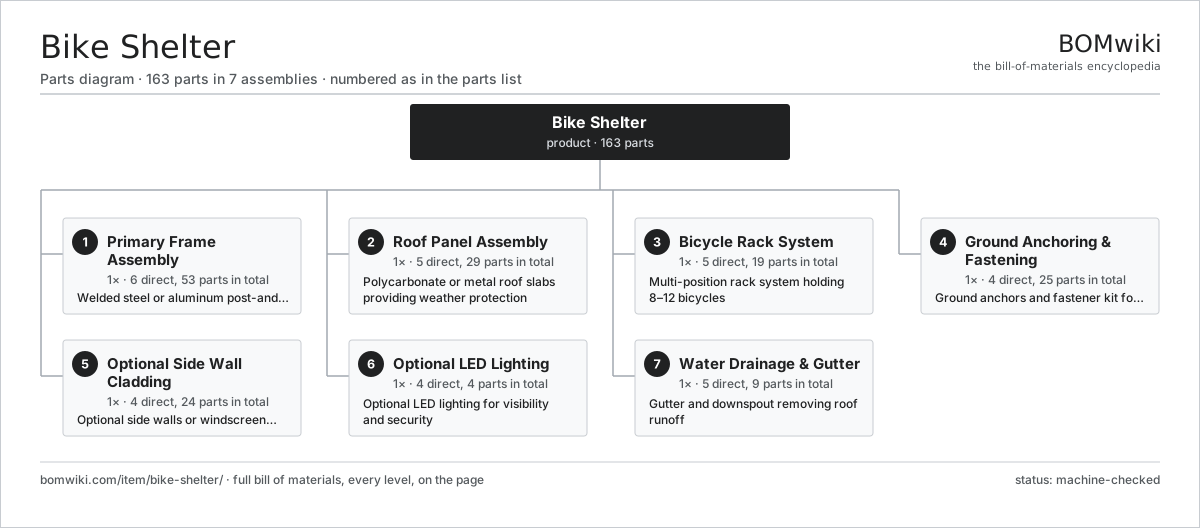
| # | Part | Qty | What it does |
|---|---|---|---|
| 1 | Primary Frame Assembly 6 parts | 1× | Welded steel or aluminum post-and-beam frame |
| 2 | Roof Panel Assembly 5 parts | 1× | Polycarbonate or metal roof slabs providing weather protection |
| 3 | Bicycle Rack System 5 parts | 1× | Multi-position rack system holding 8–12 bicycles |
| 4 | Ground Anchoring & Fastening 4 parts | 1× | Ground anchors and fastener kit for structural stability |
| 5 | Optional Side Wall Cladding 4 parts | 1× | Optional side walls or windscreen panels |
| 6 | Optional LED Lighting 4 parts | 1× | Optional LED lighting for visibility and security |
| 7 | Water Drainage & Gutter 5 parts | 1× | Gutter and downspout removing roof runoff |
3D model
No 3D model yet. Have a CAD file of this? Add a 3D model — STL renders right on this page; STEP, FreeCAD, and OpenSCAD sources are welcome too (openly licensed, like all 3D models on BOMwiki).
Build & assembly graph
expand / collapse · shared sub-assemblies converge · links to related products · est. labourTap an assembly to expand/collapse · tap a part to open it · use “Open page” for any node · drag to pan, scroll to zoom.
Bill of materials for Bike Shelter
7 top-level lines · 40 rows shown · 163 parts total · indented to 3 levels| # | Item / sub-assembly | Part no. | Qty/assy | Ext. qty | Parts | Type |
|---|---|---|---|---|---|---|
| 1 | Primary Frame Assembly 6 parts | bike-shelter-frame-structure | 1× | 1 | 53 | assembly |
| 1.1 | Vertical Support Post | bike-shelter-vertical-post | 4× | 4 | · | part |
| 1.2 | Roof Spanning Beam | bike-shelter-roof-beam | 4× | 4 | · | part |
| 1.3 | Diagonal Wind Brace | bike-shelter-cross-brace | 8× | 8 | · | part |
| 1.4 | Post Base Plate | bike-shelter-base-plate | 4× | 4 | · | part |
| 1.5 | Fastener Set | fastener-set | 32× | 32 | · | part |
| 1.6 | Protective Paint/Powder Coat | bike-shelter-paint-coating | 1× | 1 | · | part |
| 2 | Roof Panel Assembly 5 parts | bike-shelter-roof-panel | 1× | 1 | 29 | assembly |
| 2.1 | Roof Panel Sheet | bike-shelter-roof-slab | 1× | 1 | · | part |
| 2.2 | Roof Support Rail | bike-shelter-roof-mounting-rail | 2× | 2 | · | part |
| 2.3 | Panel Fastener with Seal | bike-shelter-roof-fastener | 24× | 24 | · | part |
| 2.4 | Roof-to-Frame Flashing | bike-shelter-roof-flashing | 1× | 1 | · | part |
| 2.5 | Panel Seam Seal | bike-shelter-roof-seal-strip | 1× | 1 | · | part |
| 3 | Bicycle Rack System 5 parts | bike-shelter-bike-rack | 1× | 1 | 19 | assembly |
| 3.1 | Bicycle U-Frame Rack | bike-shelter-rack-unit | 1× | 1 | · | part |
| 3.2 | Rack Base Plate | bike-shelter-rack-mounting-plate | 1× | 1 | · | part |
| 3.3 | Wheel Cradle Tray | bike-shelter-wheel-tray | 4× | 4 | · | part |
| 3.4 | Adjustable Frame Spacer | bike-shelter-rack-spacing | 1× | 1 | · | part |
| 3.5 | Fastener Set | fastener-set | 12× | 12 | · | part |
| 4 | Ground Anchoring & Fastening 4 parts | bike-shelter-anchoring-system | 1× | 1 | 25 | assembly |
| 4.1 | Chemical Epoxy Anchor | bike-shelter-chemical-anchor | 4× | 4 | · | part |
| 4.2 | Anchor Installation Kit | bike-shelter-foundation-kit | 1× | 1 | · | part |
| 4.3 | Fastener Set | fastener-set | 16× | 16 | · | part |
| 4.4 | Large Bearing Washer | bike-shelter-anti-heave-washer | 4× | 4 | · | part |
| 5 | Optional Side Wall Cladding 4 parts | bike-shelter-cladding-option | 1× | 1 | 24 | assembly |
| 5.1 | Side Panel Sheet | bike-shelter-side-panel | 2× | 2 | · | part |
| 5.2 | Panel Frame Rail | bike-shelter-panel-frame-rail | 4× | 4 | · | part |
| 5.3 | Panel Mounting Fastener | bike-shelter-panel-fastener | 16× | 16 | · | part |
| 5.4 | Gate Hinge (Optional) | bike-shelter-panel-hinge | 2× | 2 | · | part |
| 6 | Optional LED Lighting 4 parts | bike-shelter-lighting-option | 1× | 1 | 4 | assembly |
| 6.1 | LED Lighting Fixture | bike-shelter-led-fixture | 1× | 1 | · | part |
| 6.2 | Light Fixture Mounting Bracket | bike-shelter-fixture-mount | 1× | 1 | · | part |
| 6.3 | Twilight Sensor Switch | bike-shelter-light-sensor | 1× | 1 | · | part |
| 6.4 | LED Power Supply Transformer | bike-shelter-light-transformer | 1× | 1 | · | part |
| 7 | Water Drainage & Gutter 5 parts | bike-shelter-drainage-system | 1× | 1 | 9 | assembly |
| 7.1 | Roof Gutter Channel | bike-shelter-gutter-channel | 1× | 1 | · | part |
| 7.2 | Gutter Mounting Bracket | bike-shelter-gutter-bracket | 4× | 4 | · | part |
| 7.3 | Downspout Tube | bike-shelter-downspout | 2× | 2 | · | part |
| 7.4 | Drain Outlet Elbow | bike-shelter-drain-outlet | 1× | 1 | · | part |
| 7.5 | Gutter Joint Sealant | bike-shelter-gutter-seal | 1× | 1 | · | part |
Sourcing: possible vendors
Prices, MOQ, and lead times are algorithmic estimates, not quotes, and not claims about these companies. Company mappings are curated by keyword; est. price band $50–$10k. How estimates work| Vendor | HQ | Specialty | MOQ | Lead time |
|---|---|---|---|---|
| assaabloy.com ↗ | Stockholm, SE | Locks & access | 1,000 units | 8–12 wks |
|
🇺🇸Allegion
allegion.com ↗
|
Dublin, US | Security products (Schlage) | 1,000 units | 8–12 wks |
| dormakaba.com ↗ | Rümlang, CH | Access & door systems | 1,000 units | 8–12 wks |
| honeywell.com ↗ | Charlotte, US | Building & safety tech | 1,000 units | 8–12 wks |
| hikvision.com ↗ | Hangzhou, CN | Surveillance & security | 1,000 units | 8–12 wks |
2,034-word article