Boxing Ring
ProductOverview
A boxing ring is an elevated platform surrounded by ropes, designed as a stage for boxing matches and training. The term "ring" is archaic (boxing rings are square, not round), but the name persists. A regulation professional ring is 20×20 feet (6.1×6.1 meters); training rings are often smaller (18×18 feet) to fit gym spaces. The Platform Structure is built on a steel frame elevated 1.0–1.5 meters above the floor, with a resilient hardwood surface and shock-absorbing underlayment. The four Corner Post Assembly posts at the corners anchor the Rope and Cable Assembly, four parallel ropes spaced at heights of approximately 46, 107, 137, and 168 centimeters.
The ropes define the fighting area and protect athletes from falling. The Canvas Floor Covering covering the platform is heavy cotton duck, providing foot grip and visual contrast (professional rings use red or blue canvas; amateur and training rings use neutral grey or black). Padding around the posts and turnbuckles cushions impacts when a fighter is driven into the corner.
Platform and structural design
The Platform Structure must absorb impact energy from fighters jumping, pivoting, and being knocked down. The shock absorption comes from a multi-layer design: a Steel Base Frame of steel I-beams or tubes forms the skeletal structure; steel Support Beam members cross-brace the frame for rigidity. Above this, a Shock Padding of 25–50 mm closed-cell foam or synthetic rubber sits, a material chosen for its ability to dissipate energy quickly without storing "memory" (bouncing back too much and making the floor unstable).
The Wood Floor Deck is hardwood plank flooring, typically 25–40 mm thick maple or oak, nailed to the frame. Maple is preferred because it has low shear strength, allowing some gliding action as a fighter pivots, but high impact resistance. The Underlay Mat layer beneath helps distribute point loads from a fighter's foot, preventing punch-through and extending floor life.
The height of 1.0–1.5 meters above the floor is a practical choice: high enough that officials and corner teams can stand and see the action at eye level, low enough that the platform is safe to climb or step onto. A ladder or stairs provides access; some rings have removable corners on the apron to allow ring entry from the corner.
Post and rope system
The four Corner Post Assembly posts are positioned at the corners, rising 1.5–2.0 meters above the platform. The posts are made of steel tube (50–75 mm square or round), anchored to the platform with a heavy Post Base Plate bolted through the platform into the underlying frame. Post design must be robust: a 100 kg fighter thrown hard into a corner exerts multi-ton impact loads, and the post must not yield or bend.
The Professional Boxing Rope is professional-grade polypropylene or nylon, 40–50 mm in diameter, twisted construction, with a minimum tensile strength of ~500 kg (1100 lb) break-load. Rope choice is regulated in professional boxing: natural fiber (jute or hemp) is historically used but rarely now; synthetic is standard due to weather resistance and consistent performance. Each rope is spliced at both ends with a Rope Eye Splice forming a loop for attachment.
The four ropes on a professional ring hang at fixed heights: 46, 107, 137, and 168 centimeters from the canvas. These dimensions date to amateur boxing rules and are now conventional. The spacing ensures that a fallen fighter is between ropes and a standing fighter can hold the second rope for stability or leverage. In training gyms, some rings simplify to three ropes (eliminating the lowest) for visibility.
The Rope Height Spacer components (vertical standoffs bolted to the posts) position each rope at the correct height. Ropes are attached via Rope Connector stainless steel shackles bolted to the turnbuckles. The Rope Turnbuckle at the post top is an adjustable threaded coupler; turning it tightens or loosens the rope, allowing leveling of the ring and compensation for temperature-induced rope stretch.
Canvas and friction
The Canvas Floor Covering is heavy cotton duck, 18–20 ounces per square yard (600–680 g/m²). Professional rings use 20 oz or higher for durability. The canvas is stapled to the wood deck around the perimeter and seamed at the center where two sheets meet. The Canvas Seam Tape (adhesive or stitched fiber tape) reinforces seams to prevent splitting from the stress of footwork and pivot movements.
Friction between the canvas and a fighter's shoe is critical. Too little friction (a slippery surface) makes movement unstable; too much friction (a sticky surface) leads to foot catches and ankle injuries. A properly maintained canvas provides moderate friction when dry; water or moisture reduces friction sharply, which is why outdoor or poorly-ventilated rings are hazardous in humid conditions. Some rings apply a thin coat of rosin (a friction-enhancing powder) to the canvas to improve traction if slip is an issue.
The Corner Reinforcement Patch at each corner is a double or triple layer of canvas, reinforced with stitching or adhesive, because corner areas experience the highest stress from rope tension and fighter footwork.
Corner padding and safety
The Corner Pad Assembly assembly surrounds the post and turnbuckle, providing a cushioned barrier between a fighter and the hard metal. The Foam Padding is typically 50–100 mm closed-cell or open-cell foam, chosen to absorb impact without bottoming out. Regulation professional rings specify minimum padding thickness and density per sanctioning body (e.g., WBC, IBF); training rings may have lighter padding.
The Padding Cover Fabric is vinyl or canvas, stapled or glued over the foam. Vinyl is preferred because it is washable, durable, and easy to maintain. Corner pad condition is a regular safety check before each event: torn covers expose foam that can catch on clothing or gloves; compressed or thin padding loses protective effect.
The Pad Mounting Bracket or fastening system holds the pad in place. Some designs wrap the pad around the post and secure with bolts; others use a split tube design that clamps around the post. Professional rings may use elaborate corner pads that extend 1–1.5 meters along the ropes to protect not only the post area but also the rope strand.
Apron and accessibility
The Platform Apron and Edge is a 0.5–1.0 meter platform overhang around the ring perimeter, where the referee, judges, corner teams, and medical personnel stand. The apron is supported by Apron Frame Support cantilever beams from the main ring frame. The Apron Deck Boards is hardwood planking, typically the same maple or oak as the ring surface, for consistency and safety.
The Edge Safety Guard is a beveled or padded lip at the outer edge, preventing official feet from catching on the edge if they step forward or pivot suddenly. In modern rings, the apron may also feature recessed areas at each corner to allow corner team members to crouch or duck if a fighter is being driven toward them.
Maintenance and inspection
Ropes are inspected before each event for fraying, cuts, or discoloration indicating sun or moisture damage. Professional events require rope replacement every 1–2 years; training rings may go 3–5 years. Rope replacement is a skilled task: the old rope is unbolted from the turnbuckles, the new rope spliced with factory-made eyes, and then re-installed and tensioned.
The Canvas Floor Covering is swept and cleaned after each use. Professional rings are re-sized and re-canvas'd every 2–3 years or sooner if damage occurs. A training gym might keep the same canvas for 5+ years, patching small tears with canvas tape as needed.
Rope tension is checked and adjusted regularly. As ropes age or sit in the sun, they stretch. Turnbuckles are adjusted to maintain even tension across all four ropes, if one rope is loose, a fighter can more easily be driven against it, and uneven tension can cause the ring to appear "sagging" on one side.
Padding is inspected for damage; torn vinyl covers are re-covered or patched. Compressed foam padding (no longer spongy) should be replaced, as it no longer provides impact protection.
The floor is inspected for splintering, rot, or gaps between planks. If the floor is resilient and safe, refinishing is a cosmetic option every 10–15 years. If structural damage exists, plank replacement or frame repair is needed, a rare occurrence if the ring is indoors and well-maintained.
Variants and training rings
A "speedbag platform" is a small, elevated stage similar to a training ring, often 10×10 or 12×12 feet, used for solo work with heavy bags or focus pads. It may have fewer ropes or none at all, as the intent is footwork and solo conditioning rather than competition.
"Freestanding" ring systems on wheels or with folding legs allow portable rings for touring events or small venues. These trade structural rigidity for portability; a permanent installation is always preferred for safety and performance.
A "smart ring" (modern innovation) embeds floor sensors to track footwork patterns and punch telemetry during training, but the physical structure remains unchanged from a traditional ring.
Boxing Ring parts and their functions
7 top-level parts · 78 parts in total · full bill of materials below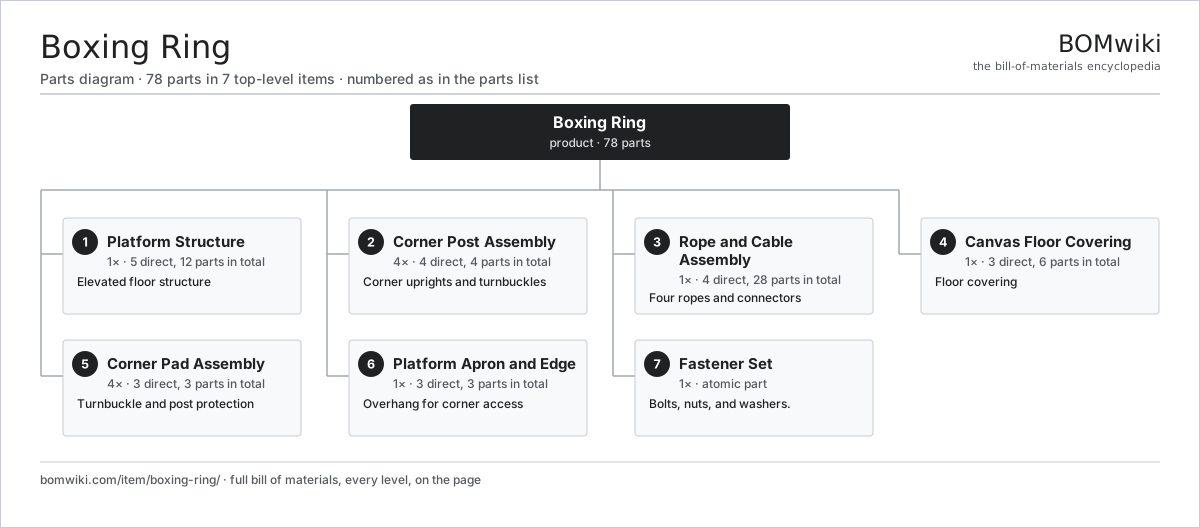
| # | Part | Qty | What it does |
|---|---|---|---|
| 1 | Platform Structure 5 parts | 1× | Elevated floor structure |
| 2 | Corner Post Assembly 4 parts | 4× | Corner uprights and turnbuckles |
| 3 | Rope and Cable Assembly 4 parts | 1× | Four ropes and connectors |
| 4 | Canvas Floor Covering 3 parts | 1× | Floor covering |
| 5 | Corner Pad Assembly 3 parts | 4× | Turnbuckle and post protection |
| 6 | Platform Apron and Edge 3 parts | 1× | Overhang for corner access |
| 7 | Fastener Set | 1× | Bolts, nuts, and washers. |
3D model
No 3D model yet. Have a CAD file of this? Add a 3D model. STL renders right on this page; STEP, FreeCAD, and OpenSCAD sources are welcome too (openly licensed, like all 3D models on BOMwiki).
Build & assembly graph
expand / collapse · shared sub-assemblies converge · links to related products · est. labourTap an assembly to expand/collapse · tap a part to open it · use “Open page” for any node · drag to pan, scroll to zoom.
Bill of materials for Boxing Ring
7 top-level lines · 29 rows shown · 78 parts total · indented to 3 levels| # | Item / sub-assembly | Part no. | Qty/assy | Ext. qty | Parts | Type |
|---|---|---|---|---|---|---|
| 1 | Platform Structure 5 parts | boxing-ring-platform | 1× | 1 | 12 | assembly |
| 1.1 | Steel Base Frame | boxing-ring-frame-base | 1× | 1 | · | part |
| 1.2 | Support Beam | boxing-ring-frame-beam | 8× | 8 | · | part |
| 1.3 | Wood Floor Deck | boxing-ring-floor-deck | 1× | 1 | · | part |
| 1.4 | Shock Padding | boxing-ring-padding-layer | 1× | 1 | · | part |
| 1.5 | Underlay Mat | boxing-ring-carpet-underlay | 1× | 1 | · | part |
| 2 | Corner Post Assembly 4 parts | boxing-ring-post-assembly | 4× | 4 | 4 | assembly |
| 2.1 | Corner Post Tube | boxing-ring-post-tube | 1× | 4 | · | part |
| 2.2 | Post Base Plate | boxing-ring-post-base-plate | 1× | 4 | · | part |
| 2.3 | Rope Turnbuckle | boxing-ring-turnbuckle | 1× | 4 | · | part |
| 2.4 | Post Cap | boxing-ring-post-cap | 1× | 4 | · | part |
| 3 | Rope and Cable Assembly 4 parts | boxing-ring-rope-system | 1× | 1 | 28 | assembly |
| 3.1 | Professional Boxing Rope | boxing-ring-rope | 4× | 4 | · | part |
| 3.2 | Rope Eye Splice | boxing-ring-rope-splice | 8× | 8 | · | part |
| 3.3 | Rope Connector | boxing-ring-rope-connector | 8× | 8 | · | part |
| 3.4 | Rope Height Spacer | boxing-ring-rope-spacer | 8× | 8 | · | part |
| 4 | Canvas Floor Covering 3 parts | boxing-ring-canvas | 1× | 1 | 6 | assembly |
| 4.1 | Canvas Fabric | boxing-ring-canvas-material | 1× | 1 | · | part |
| 4.2 | Canvas Seam Tape | boxing-ring-canvas-seam-tape | 1× | 1 | · | part |
| 4.3 | Corner Reinforcement Patch | boxing-ring-canvas-corner-patch | 4× | 4 | · | part |
| 5 | Corner Pad Assembly 3 parts | boxing-ring-corner-padding | 4× | 4 | 3 | assembly |
| 5.1 | Foam Padding | boxing-ring-pad-foam | 1× | 4 | · | part |
| 5.2 | Padding Cover Fabric | boxing-ring-pad-cover | 1× | 4 | · | part |
| 5.3 | Pad Mounting Bracket | boxing-ring-pad-bracket | 1× | 4 | · | part |
| 6 | Platform Apron and Edge 3 parts | boxing-ring-apron | 1× | 1 | 3 | assembly |
| 6.1 | Apron Frame Support | boxing-ring-apron-frame | 1× | 1 | · | part |
| 6.2 | Apron Deck Boards | boxing-ring-apron-decking | 1× | 1 | · | part |
| 6.3 | Edge Safety Guard | boxing-ring-apron-edge-guard | 1× | 1 | · | part |
| 7 | Fastener Set | fastener-set | 1× | 1 | · | part |
Something wrong in this list? Report a problem with this BOM.
Sourcing: possible vendors
Browse the supplier directory → Prices, MOQ, and lead times are algorithmic estimates, not quotes, and not claims about these companies. Company mappings are curated by keyword; est. price band $100–$10k. How estimates work| Vendor | HQ | Specialty | MOQ | Lead time |
|---|---|---|---|---|
| lifefitness.com ↗ | Rosemont, US | Fitness equipment | 200 units | 8–14 wks |
| technogym.com ↗ | Cesena, IT | Fitness equipment | 200 units | 8–14 wks |
|
🇺🇸Peloton
onepeloton.com ↗
|
New York, US | Connected fitness | 200 units | 8–14 wks |
| johnsonhealthtech.com ↗ | Taichung, TW | Fitness (Matrix) | 200 units | 8–14 wks |
|
🇺🇸Precor
precor.com ↗
|
Woodinville, US | Fitness equipment | 200 units | 8–14 wks |
1,569-word article