Briefcase
ProductOverview
A briefcase is a rigid rectangular container designed to carry business documents, a laptop, and executive essentials. Unlike soft laptop bags or messenger styles, the briefcase maintains its structured shape and projects formality through a clamshell (top-opening) design, leather construction, and organized interior compartments.
The classic briefcase originated in the early 20th century as a replacement for the leather satchel; modern versions blend traditional aesthetics (leather exterior, brass hardware) with functional design (laptop slots, document organization, weather resistance). A quality leather briefcase is an investment piece, appreciating in character through use and patina development.
Exterior Construction
The Leather Exterior Shell comprises two panels of full-grain leather, top and bottom, joined by a Clamshell Hinge running the full width at the center. Full-grain leather is chosen for durability: the entire surface of the hide (including natural marks and grain patterns) is retained, making it stronger than split leather or bonded alternatives.
Leather properties:
- Full-grain: 1.0–1.5 mm thickness (thicker than split leather, less prone to tearing).
- Tensile strength: ~50 MPa (comparable to light aluminum alloys).
- Water resistance: Untreated leather absorbs water, but wax finishes (common on briefcases) provide temporary repellency (1–2 hours protection before saturation).
- Patina: Develops a rich brown or amber tone over years as oils oxidize; highly valued by users.
Panel construction:
- Top Panel and Bottom Panel are cut from a single hide or matched pair for consistent color.
- Edge Binding (piping or binding strips) reinforce the perimeter, preventing edge fraying and adding visual appeal.
- Corner patches (doubled leather) absorb impact stress where the case is most likely to be dropped (corners).
Finishes:
- Waxed finish: Saddle soap and beeswax applied; water-beads for 1–2 hours; must be reapplied annually.
- Glazed finish: Polyurethane or acrylic topcoat; glossy appearance; less natural feel but lower maintenance.
- Oil-tanned: Treated with vegetable oils; ages gracefully but requires conditioning every 6–12 months.
Hinge Assembly
The Clamshell Hinge is the mechanical centerline of the briefcase, allowing the top panel to swing open 180° or beyond. Most briefcases use a single large dual-leaf hinge:
- Hinge Barrel: Cast iron or brass barrel with a stainless steel pin, forming the pivot axis.
- Hinge leaves: Steel strips bolted to both top and bottom panels, receiving the barrel pin.
- Hinge Gasket: Rubber or cork seal around the pivot, preventing dust and moisture ingress.
Mechanical design:
- The hinge must support the weight of the top panel (1–2 kg) when fully open, plus internal contents sliding against internal walls.
- Friction detent (subtle spring in the pin) holds the lid at intermediate angles (45°, 90°) for hands-free standing.
- Dual-leaf design distributes stress across two bolt lines, preventing rotation failure common in single-leaf designs.
Failure modes:
- Hinge wear: Years of opening/closing causes play; lid develops side-to-side wobble.
- Corrosion: Non-stainless pins rust from humid environments; hinge becomes stiff, then seizes.
- Bolt loosening: Vibration during transport loosens bolts; eventually a bolt shears, causing asymmetric opening.
Closure System
Two combination latches provide primary closure security:
- Latch Body: Zinc-alloy toggle mechanism with a thumb lever; available in simple "flip-and-push" designs or numbered dial locks.
- Latch Spring: Spring-loaded mechanism that returns the toggle to center after opening.
- Latch Catch: Strike plate on the bottom panel that receives and holds the latch toggle.
Latch mechanics:
- Downward pressure on the toggle lever releases the spring, allowing the top panel to lift.
- The catch is positioned directly below the latch, ensuring the top panel sits flush against the bottom panel.
- Two latches are necessary: a single latch would allow the opposite end to lift, breaking the seal.
Security: Basic combination latches provide visual security but are not theft-proof; they deter casual opening but not a determined person. Many professional briefcases add a Center Lock Mechanism (keyed lock at center front) that engages both latches simultaneously.
Handle System
The Top Handle Assembly is a reinforced top handle enabling one-handed carrying:
- Handle Core: Wooden dowel (typical) or polycarbonate tube providing structure.
- Handle Wrap: Leather strips glued and stitched around the core, matching the exterior.
- Mounting brackets: Riveted or bolted to the top panel, distributing handle load across a wider area.
- Handle Rivet: Stainless steel rivets securing the leather wrap to the core.
Ergonomic design:
- Diameter: Typically 30–40 mm, comfortable for four-finger grip.
- Curve: Slight upward curve near the center, reducing strain during extended carrying.
- Padding: Optional leather or fabric over the core, preventing pinching of palm skin.
Load distribution:
- Handle loading: An executive carrying a 3–4 kg briefcase plus documents (5–8 kg total) exerts ~40–60 newtons on the handle.
- Stress concentration at mounting points (where bracket meets top panel) requires reinforcement; weak designs tear through the leather.
Interior Lining
The Interior Lining System organizes contents and protects sensitive documents:
- Fabric Lining: Cotton sateen or canvas fabric glued to interior panels; warm color (tan, chocolate) contrasts with dark leather exterior.
- Document Pocket: Open-top slots (typically 2–4) sized for letter-size (8.5×11 inch) papers.
- Interior Divider: Cardboard or plastic separators creating compartments (common: 2–3 dividers for documents, electronics, accessories).
- Interior Pocket: Small stitched pouches for pens, business cards, USB drives.
Interior layout (typical):
- Upper section (under top panel): Document pockets and pen holder on each side.
- Main section: Open bin for documents and files.
- Bottom section: Elastic loops or a card pocket for business cards, contacts.
Organizational strategy:
- Document pockets slope slightly outward, using gravity to keep papers seated.
- Dividers are mounted at slight angles, preventing papers from sliding sideways.
- The elastic pen holders accommodate 2–4 pens without rolling.
Base Feet & Hardware
The Base Feet and Hardware comprises:
- Metal feet: Four brass or nickel-plated feet mounted at corners on the bottom panel.
- Center studs: Two additional studs at midpoint on the long sides, providing a tripod-like contact pattern when the case is set on a table.
Functional purpose:
- Feet protect the leather bottom from scuffing and moisture absorption from floors.
- Studs allow the briefcase to stand upright when opened, displaying contents clearly during presentations.
- Without feet, leather absorbs dirt and moisture, degrading the base material within 2–3 years.
Material choice:
- Brass: Develops a patina matching aged leather; some manufacturers use antique brass for a pre-aged appearance.
- Nickel: High polish, professional appearance; resists tarnish.
- Stainless steel: Modern, understated; never tarnishes but doesn't age gracefully.
Lock Plate
Premium briefcases include an optional Center Lock Mechanism (keyed lock) at the center front:
- Lock Plate: Brass or nickel plate with a single keyhole.
- Lock Cylinder: Mechanical lock cylinder with tumbler pins.
- Lock Bolt: When the key is turned, a bolt retracts, releasing both combination latches simultaneously.
Security level: Keyed locks prevent casual opening and signal professionalism; they are not high-security and can be bypassed by someone with bolt cutters. The purpose is deterrence and convenience (key is faster than fiddling with two latches).
Leather Care & Maintenance
Full-grain leather develops character but requires periodic maintenance:
Conditioning:
- Annual application of leather conditioner (saddle soap, mink oil, or commercial products) replenishes oils.
- Frequency increases in dry climates; decreases in humid regions.
- Neglected leather becomes brittle and cracks.
Water protection:
- Waxed finish lasts 1–2 seasons; reapply by hand-rubbing beeswax annually.
- Glazed finish: Topcoat gradually dulls; re-polishing restores luster.
- Heavy rain: A quality briefcase survives light showers but is not waterproof; dry promptly with a soft cloth.
Patina development:
- Desirable: Rich brown tones, subtle darkening of creases, soft leather sheen.
- Undesirable: Stains (ink, wine), deep gouges, separation of corner patches.
- Time frame: Visible patina develops over 2–5 years of regular use.
Durability & Lifespan
A quality leather briefcase can last 20–30+ years, outlasting multiple laptops and career moves. Failure modes:
| Component | Lifespan | Failure |
|---|---|---|
| Leather panels | 20+ years | Cracking, darkening (cosmetic) |
| Hinge | 15–20 years | Wear, corrosion, bolt loosening |
| Latches | 10–15 years | Spring fatigue, latch jamming |
| Interior fabric | 10–15 years | Fading, seam separation |
| Handle | 10–15 years | Stitching tears, leather cracking |
| Metal hardware | 20+ years | Tarnish (brass), corrosion (steel) |
Cost of ownership:
- Entry: $300–800 (quality leather briefcase).
- Maintenance: $20–40 annually (conditioner, repairs).
- 25-year cost: ~$300 + $50×25 = ~$1,550 (amortized $62/year).
Compare to disposable nylon briefcases ($50–100, lasting 2–3 years): leather is a long-term investment.
Briefcase vs. Alternatives
| Style | Weight | Formality | Organization | Lifespan |
|---|---|---|---|---|
| Leather briefcase | 2.5–4 kg | Highest | Excellent (dividers) | 20+ years |
| Messenger bag | 1–2 kg | Medium | Good (laptop pocket) | 5–10 years |
| Backpack | 1.5–2.5 kg | Low | Excellent (many pockets) | 5–10 years |
| Nylon roller bag | 3–5 kg | Low | Good (many pockets) | 3–5 years |
The briefcase remains the gold standard for business contexts (law offices, executive presentations) where appearance and permanence matter. Modern alternatives appeal to IT professionals and casual commuters willing to sacrifice tradition for functionality.
Briefcase parts and their functions
7 top-level parts · 52 parts in total · full bill of materials below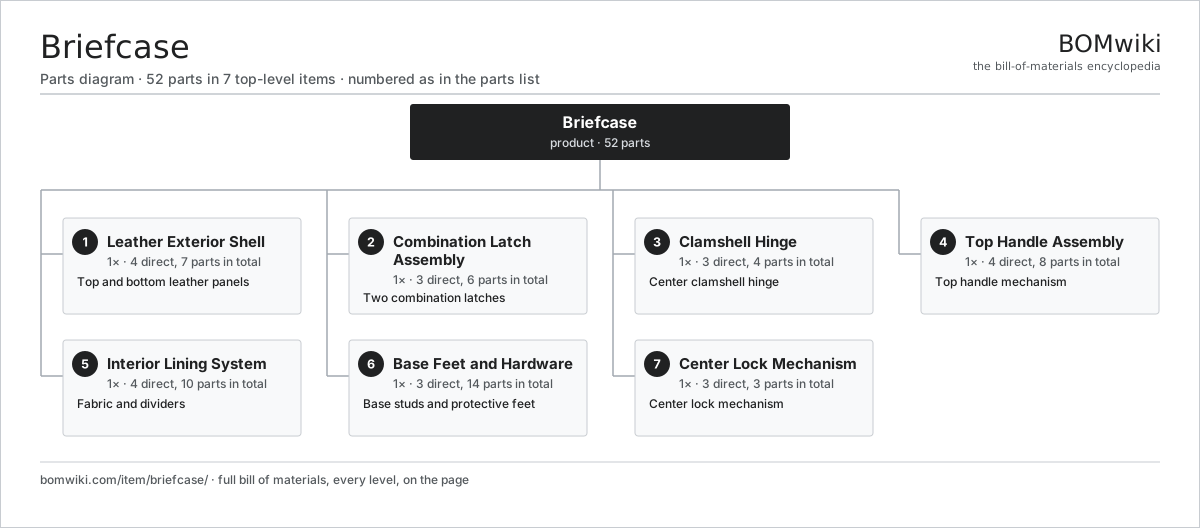
| # | Part | Qty | What it does |
|---|---|---|---|
| 1 | Leather Exterior Shell 4 parts | 1× | Top and bottom leather panels |
| 2 | Combination Latch Assembly 3 parts | 1× | Two combination latches |
| 3 | Clamshell Hinge 3 parts | 1× | Center clamshell hinge |
| 4 | Top Handle Assembly 4 parts | 1× | Top handle mechanism |
| 5 | Interior Lining System 4 parts | 1× | Fabric and dividers |
| 6 | Base Feet and Hardware 3 parts | 1× | Base studs and protective feet |
| 7 | Center Lock Mechanism 3 parts | 1× | Center lock mechanism |
3D model
No 3D model yet. Have a CAD file of this? Add a 3D model. STL renders right on this page; STEP, FreeCAD, and OpenSCAD sources are welcome too (openly licensed, like all 3D models on BOMwiki).
Build & assembly graph
expand / collapse · shared sub-assemblies converge · links to related products · est. labourTap an assembly to expand/collapse · tap a part to open it · use “Open page” for any node · drag to pan, scroll to zoom.
Bill of materials for Briefcase
7 top-level lines · 31 rows shown · 52 parts total · indented to 3 levels| # | Item / sub-assembly | Part no. | Qty/assy | Ext. qty | Parts | Type |
|---|---|---|---|---|---|---|
| 1 | Leather Exterior Shell 4 parts | briefcase-exterior-shell | 1× | 1 | 7 | assembly |
| 1.1 | Top Panel | briefcase-top-panel | 1× | 1 | · | part |
| 1.2 | Bottom Panel | briefcase-bottom-panel | 1× | 1 | · | part |
| 1.3 | Edge Binding | briefcase-leather-edge-binding | 1× | 1 | · | part |
| 1.4 | Corner Patch | briefcase-corner-reinforcement | 4× | 4 | · | part |
| 2 | Combination Latch Assembly 3 parts | briefcase-latch-system | 1× | 1 | 6 | assembly |
| 2.1 | Latch Body | briefcase-latch-body | 2× | 2 | · | part |
| 2.2 | Latch Spring | briefcase-latch-spring | 2× | 2 | · | part |
| 2.3 | Latch Catch | briefcase-latch-catch | 2× | 2 | · | part |
| 3 | Clamshell Hinge 3 parts | briefcase-hinge-assembly | 1× | 1 | 4 | assembly |
| 3.1 | Hinge Barrel | briefcase-hinge-barrel | 1× | 1 | · | part |
| 3.2 | Hinge Leaf | briefcase-hinge-leaf | 2× | 2 | · | part |
| 3.3 | Hinge Gasket | briefcase-hinge-gasket | 1× | 1 | · | part |
| 4 | Top Handle Assembly 4 parts | briefcase-handle-system | 1× | 1 | 8 | assembly |
| 4.1 | Handle Core | briefcase-handle-core | 1× | 1 | · | part |
| 4.2 | Handle Wrap | briefcase-handle-wrap | 1× | 1 | · | part |
| 4.3 | Handle Rivet | briefcase-handle-rivet | 4× | 4 | · | part |
| 4.4 | Handle Bracket | briefcase-handle-bracket | 2× | 2 | · | part |
| 5 | Interior Lining System 4 parts | briefcase-interior-lining | 1× | 1 | 10 | assembly |
| 5.1 | Fabric Lining | briefcase-fabric-lining | 1× | 1 | · | part |
| 5.2 | Document Pocket | briefcase-document-pockets | 2× | 2 | · | part |
| 5.3 | Interior Divider | briefcase-interior-dividers | 3× | 3 | · | part |
| 5.4 | Interior Pocket | briefcase-interior-pockets | 4× | 4 | · | part |
| 6 | Base Feet and Hardware 3 parts | briefcase-feet-hardware | 1× | 1 | 14 | assembly |
| 6.1 | Metal Foot | briefcase-metal-foot | 4× | 4 | · | part |
| 6.2 | Corner Stud | briefcase-corner-stud | 2× | 2 | · | part |
| 6.3 | Foot Rivet | briefcase-foot-rivet | 8× | 8 | · | part |
| 7 | Center Lock Mechanism 3 parts | briefcase-lock-plate | 1× | 1 | 3 | assembly |
| 7.1 | Lock Plate | briefcase-lock-keyhole-plate | 1× | 1 | · | part |
| 7.2 | Lock Cylinder | briefcase-lock-cylinder | 1× | 1 | · | part |
| 7.3 | Lock Bolt | briefcase-lock-catch-bolt | 1× | 1 | · | part |
Something wrong in this list? Report a problem with this BOM.
Sourcing: possible vendors
Browse the supplier directory → Prices, MOQ, and lead times are algorithmic estimates, not quotes, and not claims about these companies. Company mappings are curated by keyword; est. price band $20–$2k. How estimates work| Vendor | HQ | Specialty | MOQ | Lead time |
|---|---|---|---|---|
|
🇺🇸Coleman
coleman.com ↗
|
Chicago, US | Camping gear | 1,000 units | 6–10 wks |
| thenorthface.com ↗ | Denver, US | Outdoor apparel & gear | 1,000 units | 6–10 wks |
|
🇺🇸YETI
yeti.com ↗
|
Austin, US | Coolers & drinkware | 1,000 units | 6–10 wks |
| decathlon.com ↗ | Villeneuve-d'Ascq, FR | Sporting goods | 1,000 units | 6–10 wks |
|
🇺🇸Garmin
garmin.com ↗
|
Olathe, US | GPS & wearables | 1,000 units | 6–10 wks |
1,515-word article