Ceiling Bike Hoist
ProductOverview
A ceiling bike hoist is a mechanical pulley system that lifts a bicycle overhead for storage, freeing valuable floor or wall space in homes, apartments, and small workshops. The system uses a hand-operated rope with a locking cleat, allowing a single person to raise a 30–50 kg (60–110 lb) bike to ceiling height using 2:1 mechanical advantage. Once raised, a cam-action cleat locks the rope in place, holding the bike without active effort.
This is a low-tech, purely mechanical solution, no electricity, batteries, or moving parts beyond rope and pulleys, making it reliable and maintenance-free. Modern hoists have been in use since the 1980s and remain popular for space-constrained living.
Mechanical design
The hoist operates on the principle of a movable pulley system. Two pulleys are used: a fixed upper block anchored to the ceiling, and a traveling lower block that moves up and down with the bike.
The rope is threaded through the pulleys in a continuous loop (or a long single rope with both ends coming down). As you pull one end of the rope downward, the mechanical advantage of the pulley arrangement lifts the bike upward at half the distance traveled but with double the lifting force. This 2:1 advantage means pulling 15 kg of force on the rope lifts a 30 kg bike.
The rope comes down to a wall-mounted locking cleat (cam mechanism). Pushing the cleat lever downward engages a cam that grips the rope, locking it in place. The bike remains suspended until the cam lever is lifted, releasing the rope.
Components
Upper pulley block: A single pulley housed in a metal bracket, bolted to the ceiling rafter. This pulley is stationary and changes the direction of the rope, redirecting hand pulling downward.
Lower pulley block: A single pulley suspended by the rope, moving vertically as the rope is pulled. This block is attached to the bike cradle via nylon straps, supporting the bike weight.
Rope: Braided nylon or polyester, 1/4 inch (6 mm) diameter, 30–40 feet long. Non-stretch rope is critical, elastic rope would store energy and bounce the bike uncomfortably. Tensile strength is typically 50+ pounds per strand, rated for 200–300 pounds total system load with safety factor.
Locking cleat: A wall-mounted cam mechanism with a spring-loaded lever. Pressing downward engages a cam tooth that grips the rope. The grip is remarkably strong (1000+ pounds of holding force possible) despite the simple design. Lifting the lever disengages the cam, releasing the rope.
Bike cradle: A wide nylon strap supporting the bike frame below the seat tube. The strap is padded with closed-cell foam or rubber to prevent paint damage. The cradle distributes weight across the frame, preventing localized stress.
Ceiling hook and mounting plate: A heavy-duty eye bolt screwed into a ceiling rafter, with a steel plate spreading load across multiple bolts. The rafter must be solid wood, at least 2×6 inches, capable of supporting concentrated loads of 150–200 pounds (bike plus user pulling force).
Installation
Finding the rafter: Ceiling hoists must be anchored to solid wood (rafter or joist), not drywall. Using a stud finder, locate and mark joist locations. Avoid areas directly above living/work spaces where a falling rope could be hazardous.
Pilot holes and bolts: Drill a 3/8 inch pilot hole into the rafter, then screw in a 3/8 inch lag bolt (3–4 inches long) with a large washer. The washer distributes load and prevents the bolt from pulling through wood fibers. Mounting plate spreads load across multiple bolts (4–6 bolts) for even greater safety margin.
Upper block installation: Bolt the upper pulley block directly to the lag bolt or mounting plate, ensuring it is perfectly vertical and centered.
Cleat installation: Mount the wall cleat at a comfortable reach height (roughly 5–6 feet above ground, accessible without ladder). Use drywall toggle anchors if studs are not available, or lag bolts into studs for maximum reliability.
Rope routing: Thread the rope through both pulleys (upper first, then lower), leaving ~15–20 feet of rope hanging down toward the wall cleat. If using two separate ropes, tie them together at the lower block with a bowline or figure-eight knot. Secure rope runs along ceiling and wall with adhesive clips every 2–3 feet to prevent tangling.
Bike cradle attachment: Sew or bolt the cradle straps to the lower block eye bolt, ensuring the strap is centered and supports the frame below the seat tube (minimizing deflection of the fork or chainstays).
Operation and safety
Raising: Grab the rope with both hands and pull downward using smooth, even strokes. The bike rises steadily. Typical time to raise a bike 6–8 feet is 10–15 seconds. Watch the rope position and stop when the bike reaches desired height (typically just below the ceiling, 1–2 feet clearance).
Locking: Once at height, walk to the wall cleat and push the cam lever downward sharply. The cam grips the rope, locking it in place. The grip is immediate and very secure, the rope will not slip even under sustained load.
Lowering: To lower the bike, simply lift the cam lever (requires minimal force). The cam disengages, and the bike descends under its own weight. Lower hand-over-hand, controlling speed. The rope will slide through the cleat smoothly. Stop at the desired height by engaging the cleat again.
Safety considerations:
- Install the system only into solid joists, never into drywall or ceiling tile alone.
- The bike must not hang directly above sleeping areas, work areas, or doorways.
- Regularly inspect the rope for fraying, wear, or damage. Replace if significant wear is visible.
- Ensure the cleat lever returns freely and does not stick.
- Do not leave a bike suspended overnight if the building is occupied by children or pets (risk of accidental rope release).
Reliability and maintenance
The mechanical design is simple and has virtually no failure modes. Rope splices should be checked annually; if the splice is fraying, the rope end can be re-spliced or tied with a new knot.
Pulley bearings may develop slight friction after years of use but will continue to function. If a pulley seizes completely (very rare), it can be replaced by un-bolting the block and sliding in a new pulley.
The cleat mechanism is mechanical and not prone to failure. If the cam lever becomes sticky, a light application of silicone lubricant will restore smooth operation.
Rope elongation is minimal with braided nylon (far less than with elastic rope). After several years, rope may lose ~1–2% of original length, but this is imperceptible in normal use.
Cost and alternatives
A complete ceiling bike hoist kit costs $50–$150 from retailers like Gladiator, Rubbermaid, or generic hardware brands. Professional installation adds $100–$300 if you do not want to drill into ceilings yourself.
Wall-mounted hooks (simple alternatives) cost $10–$30 and hang one or two bikes on vertical hooks bolted to studs. These take less space but are slower to install/remove and don't raise bikes as high overhead.
Ceiling-mount brackets (single-hook designs) cost $15–$40 but support only one bike at a time and require higher ceiling clearance.
Motor-driven hoists (electric alternatives) cost $500–$2000 but offer faster raise/lower and push-button control. They are overkill for casual use and introduce electrical hazards.
For small homes and apartments, a mechanical pulley hoist remains the best value and most reliable option.
Historical context
Ceiling hoists were popularized by professional mechanics and serious cyclists in the 1980s. DIY versions using rope and blocks predated modern kits. Modern plastic-housing kits (Rubbermaid, Gladiator) emerged in the 2000s, making installation more user-friendly.
Electric hoists were introduced by specialty cycling brands but never gained traction due to cost and complexity. The mechanical system is so effective that it remains the standard for home bike storage.
Ceiling Bike Hoist parts and their functions
7 top-level parts · 37 parts in total · full bill of materials below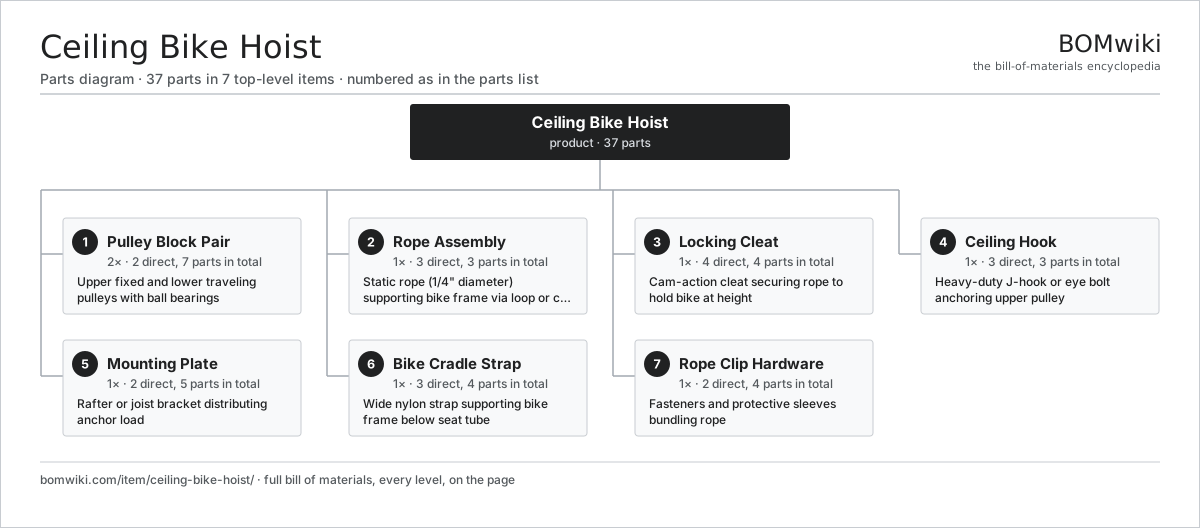
| # | Part | Qty | What it does |
|---|---|---|---|
| 1 | Pulley Block Pair 2 parts | 2× | Upper fixed and lower traveling pulleys with ball bearings |
| 2 | Rope Assembly 3 parts | 1× | Static rope (1/4" diameter) supporting bike frame via loop or cradle |
| 3 | Locking Cleat 4 parts | 1× | Cam-action cleat securing rope to hold bike at height |
| 4 | Ceiling Hook 3 parts | 1× | Heavy-duty J-hook or eye bolt anchoring upper pulley |
| 5 | Mounting Plate 2 parts | 1× | Rafter or joist bracket distributing anchor load |
| 6 | Bike Cradle Strap 3 parts | 1× | Wide nylon strap supporting bike frame below seat tube |
| 7 | Rope Clip Hardware 2 parts | 1× | Fasteners and protective sleeves bundling rope |
3D model
No 3D model yet. Have a CAD file of this? Add a 3D model. STL renders right on this page; STEP, FreeCAD, and OpenSCAD sources are welcome too (openly licensed, like all 3D models on BOMwiki).
Build & assembly graph
expand / collapse · shared sub-assemblies converge · links to related products · est. labourTap an assembly to expand/collapse · tap a part to open it · use “Open page” for any node · drag to pan, scroll to zoom.
Bill of materials for Ceiling Bike Hoist
7 top-level lines · 32 rows shown · 37 parts total · indented to 3 levels| # | Item / sub-assembly | Part no. | Qty/assy | Ext. qty | Parts | Type |
|---|---|---|---|---|---|---|
| 1 | Pulley Block Pair 2 parts | ceiling-bike-hoist-pulley-block-pair | 2× | 2 | 7 | assembly |
| 1.1 | Upper Fixed Block 3 parts | ceiling-bike-hoist-upper-fixed-block | 1× | 2 | 4 | assembly |
| 1.1.1 | Upper Pulley Wheel | ceiling-bike-hoist-upper-pulley-wheel | 1× | 2 | · | part |
| 1.1.2 | Upper Block Housing | ceiling-bike-hoist-upper-block-housing | 1× | 2 | · | part |
| 1.1.3 | Upper Mounting Bolt | ceiling-bike-hoist-upper-mounting-bolt | 2× | 4 | · | part |
| 1.2 | Lower Traveling Block 3 parts | ceiling-bike-hoist-lower-traveling-block | 1× | 2 | 3 | assembly |
| 1.2.1 | Lower Pulley Wheel | ceiling-bike-hoist-lower-pulley-wheel | 1× | 2 | · | part |
| 1.2.2 | Lower Block Housing | ceiling-bike-hoist-lower-block-housing | 1× | 2 | · | part |
| 1.2.3 | Lower Swivel Connection | ceiling-bike-hoist-lower-swivel-connection | 1× | 2 | · | part |
| 2 | Rope Assembly 3 parts | ceiling-bike-hoist-rope-assembly | 1× | 1 | 3 | assembly |
| 2.1 | Rope Core | ceiling-bike-hoist-rope-core | 1× | 1 | · | part |
| 2.2 | Rope Splice Knot | ceiling-bike-hoist-rope-splice-knot | 1× | 1 | · | part |
| 2.3 | Rope Length Marker | ceiling-bike-hoist-rope-length-marker | 1× | 1 | · | part |
| 3 | Locking Cleat 4 parts | ceiling-bike-hoist-locking-cleat | 1× | 1 | 4 | assembly |
| 3.1 | Cleat Body | ceiling-bike-hoist-cleat-body | 1× | 1 | · | part |
| 3.2 | Cleat Cam Lever | ceiling-bike-hoist-cleat-cam-lever | 1× | 1 | · | part |
| 3.3 | Cleat Mounting Bracket | ceiling-bike-hoist-cleat-mounting-bracket | 1× | 1 | · | part |
| 3.4 | Cleat Lever Return Spring | ceiling-bike-hoist-cleat-lever-return-spring | 1× | 1 | · | part |
| 4 | Ceiling Hook 3 parts | ceiling-bike-hoist-ceiling-hook | 1× | 1 | 3 | assembly |
| 4.1 | Hook Body | ceiling-bike-hoist-hook-body | 1× | 1 | · | part |
| 4.2 | Hook Lag Washer | ceiling-bike-hoist-hook-lag-washer | 1× | 1 | · | part |
| 4.3 | Hook Fastening Screw | ceiling-bike-hoist-hook-fastening-screw | 1× | 1 | · | part |
| 5 | Mounting Plate 2 parts | ceiling-bike-hoist-mounting-plate | 1× | 1 | 5 | assembly |
| 5.1 | Plate Body | ceiling-bike-hoist-plate-body | 1× | 1 | · | part |
| 5.2 | Plate Fastening Hardware | ceiling-bike-hoist-plate-fastening-hardware | 4× | 4 | · | part |
| 6 | Bike Cradle Strap 3 parts | ceiling-bike-hoist-bike-cradle-strap | 1× | 1 | 4 | assembly |
| 6.1 | Strap Webbing | ceiling-bike-hoist-strap-webbing | 1× | 1 | · | part |
| 6.2 | Strap Attachment Loop | ceiling-bike-hoist-strap-attachment-loop | 2× | 2 | · | part |
| 6.3 | Strap Padding | ceiling-bike-hoist-strap-padding | 1× | 1 | · | part |
| 7 | Rope Clip Hardware 2 parts | ceiling-bike-hoist-rope-clip-hardware | 1× | 1 | 4 | assembly |
| 7.1 | Rope Clip Strap | ceiling-bike-hoist-rope-clip-strap | 3× | 3 | · | part |
| 7.2 | Rope Protective Sleeve | ceiling-bike-hoist-rope-protective-sleeve | 1× | 1 | · | part |
Something wrong in this list? Report a problem with this BOM.
Sourcing: possible vendors
Browse the supplier directory → Prices, MOQ, and lead times are algorithmic estimates, not quotes, and not claims about these companies. Company mappings are curated by keyword; est. price band $200–$12k. How estimates work| Vendor | HQ | Specialty | MOQ | Lead time |
|---|---|---|---|---|
|
🇹🇼Giant
giant-bicycles.com ↗
|
Taichung, TW | Bicycles | 500 units | 6–12 wks |
|
🇺🇸Trek
trekbikes.com ↗
|
Waterloo, US | Bicycles | 500 units | 6–12 wks |
| specialized.com ↗ | Morgan Hill, US | Bicycles | 500 units | 6–12 wks |
|
🇹🇼Merida
merida-bikes.com ↗
|
Yuanlin, TW | Bicycles | 500 units | 6–12 wks |
| cannondale.com ↗ | Wilton, US | Bicycles | 500 units | 6–12 wks |
1,330-word article