Active Chilled Beam
ProductOverview
Active chilled beams are ceiling-mounted radiant cooling units that use water-cooled coils and air induction to condition building spaces with minimal visible ductwork and exceptional noise performance. The beam contains a small aluminum-finned copper coil fed with chilled water (42–50 °F) from a central plant chiller; high-velocity primary air jets (supplied from the air handling unit at low pressure, typically 50–200 CFM per beam) are discharged through nozzles along the beam's length. These jets induce surrounding room air to flow across the cold coil in a 2:1 or 3:1 ratio (room air to primary air), cooling it by 4–8 °F before mixing with the primary air and returning to the space. A single beam can condition 400–800 sq ft of open office or similar space, achieving cooling capacities of 2–8 kW per beam.
The appeal of chilled beams lies in their efficiency, simplicity, and aesthetic integration. Unlike VAV terminal boxes that require multiple dampers and reheat coils and must maintain minimum ventilation airflows at all times, chilled beams allow very low primary air supply rates and rely on radiant heat transfer and room air induction rather than high-volume air movement. This results in 15–25 dB quieter operation and significant fan energy savings. However, condensation risk (if room humidity is too high) and the need for carefully controlled chilled water temperature are limiting factors.
How it works
Induction principle: The primary air jet's high velocity creates a low-pressure zone around the nozzle outlet, inducting room air into the beam. This induced air flows across the cold coil and exits the beam mixed with the primary air. Sensible cooling (room air temperature drop across the coil) represents the majority of cooling delivered; the chilled water absorbs the sensible heat, raising its outlet temperature by 6–8 °F.
Water-side heat exchange: Chilled water flowing through the aluminum-finned copper coil absorbs heat from both the primary air (first contact) and the inducted room air (across the fins). The coil is sized such that the outlet water temperature is 48–58 °F, ensuring it can be returned to the plant chiller for re-cooling.
Condensation prevention: If room air is too humid (dew point >55 °F), water will condense on the cold coil surface. To prevent dripping onto occupants below, the chilled water is carefully controlled (typically via a proportional valve) to maintain the coil surface temperature slightly above the room dew point. Many systems employ dehumidification via primary air moisture removal or mandate humidity control setpoints (max 50% RH) in occupied spaces.
Control modulation: A proportional two-way water valve modulates chilled water flow to the beam based on space temperature feedback. As cooling demand decreases, flow is reduced, allowing outlet water temperature to rise (as sensible heat pickup decreases), and the coil surface temperature naturally rises. Conversely, if space temperature rises, flow is increased, and the coil cools further.
Primary air distribution: Low-pressure primary air from the AHU is distributed via flexible ductwork to a plenum chamber inside each beam. A damper (or a common return plenum duct) can modulate primary airflow to match ventilation requirements. This allows the primary air supply to be independent of cooling load, providing continuous fresh air for IAQ.
Condensate drainage: Condensate from the coil (if any) drains to a collection pan with a condensate trap. The trap prevents siphoning and allows air relief, essential for positive drainage. Drain blockages (from mold or sediment) must be cleared promptly to prevent water spillage.
Subsystems and integration
Chilled Water Coil is the thermal engine; aluminum fins maximize surface area and heat transfer. Induction Nozzle Array are precision-manufactured to a specific design; changes in nozzle geometry significantly affect induction ratio and noise. Water Modulation Control Valve must be carefully sized and tuned; oversized valves lead to hunting, undersized valves produce insufficient cooling.
Common failures
Condensation and dripping is the most common problem, typically caused by supply air humidity being too high (dew point >55 °F). Adding dehumidification capacity (via the primary air AHU or a separate dehumidifier) is the remedy. Nozzle plugging from dust or mold growth reduces induction and cooling; nozzle disassembly and cleaning is required. Coil tube corrosion (in chilled water loops with poor water treatment) reduces heat transfer and can cause pinhole leaks. Proper water treatment inhibitor concentration must be maintained. Condensate drain blockage causes water spillage; drain line cleaning and a drain pan overflow alarm are mitigating measures.
Installation and commissioning
Chilled beams are suspended from the ceiling structure via vibration isolation hangers and require three main connections: low-pressure primary air ductwork (often a return plenum), chilled water supply and return piping, and a condensate drain line. Each beam is typically provided with a manual isolation ball valve on both inlet and outlet for service. The proportional control valve is mounted on the outlet piping. Primary air dampers (if used per space) must be balanced to deliver design CFM. Commissioning includes a leak test of all water connections, condensate drain verification, balance of primary air to design CFM, and confirmation that room humidity stays <50% RH to prevent condensation risk.
System integration and scalability
A chilled beam system scales from a single beam (conditioning one room) to dozens of beams distributed across a large floor, all fed from a central plant chiller. The primary air is often supplied by a dedicated low-pressure AHU or a return plenum from the building's main AHU. Multi-zone control is achieved by installing proportional control valves on individual beams or groups of beams, each responding to its own space temperature sensor. Building automation system integration via BACnet allows remote monitoring of each beam's water temperature, flow, and condensation risk.
Energy and operational benefits
Chilled beams reduce HVAC energy by 20–40% compared to VAV systems due to lower primary air volumes and eliminating most of the recirculation ductwork. However, the benefits are only realized with excellent water temperature control and humidity management; a poorly commissioned chilled beam system can perform worse than a well-tuned VAV system.
Active Chilled Beam parts and their functions
8 top-level parts · 43 parts in total · full bill of materials below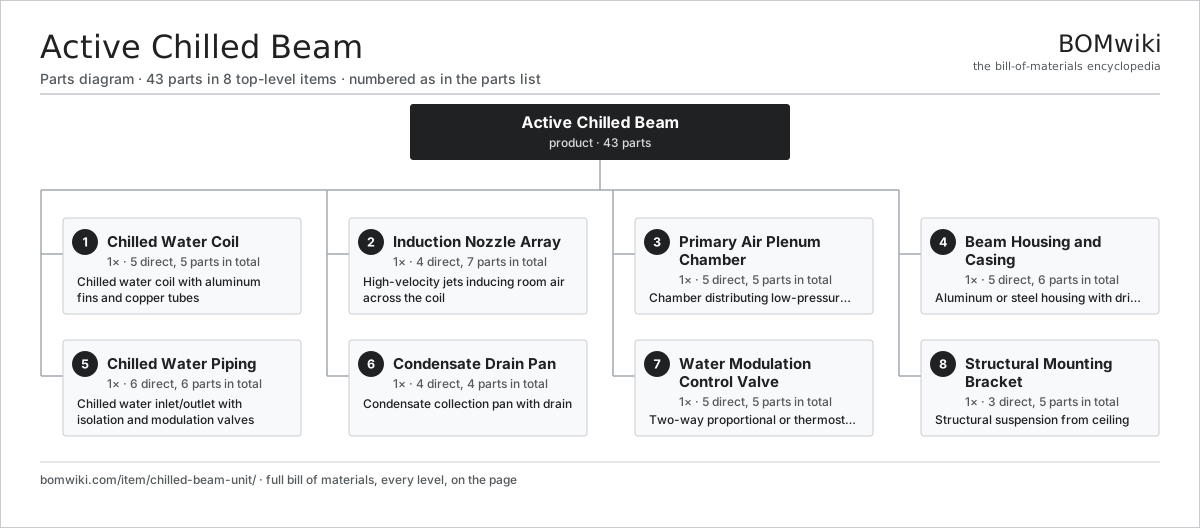
| # | Part | Qty | What it does |
|---|---|---|---|
| 1 | Chilled Water Coil 5 parts | 1× | Chilled water coil with aluminum fins and copper tubes |
| 2 | Induction Nozzle Array 4 parts | 1× | High-velocity jets inducing room air across the coil |
| 3 | Primary Air Plenum Chamber 5 parts | 1× | Chamber distributing low-pressure primary air |
| 4 | Beam Housing and Casing 5 parts | 1× | Aluminum or steel housing with drip pan |
| 5 | Chilled Water Piping 6 parts | 1× | Chilled water inlet/outlet with isolation and modulation valves |
| 6 | Condensate Drain Pan 4 parts | 1× | Condensate collection pan with drain |
| 7 | Water Modulation Control Valve 5 parts | 1× | Two-way proportional or thermostatic valve modulating flow |
| 8 | Structural Mounting Bracket 3 parts | 1× | Structural suspension from ceiling |
3D model
No 3D model yet. Have a CAD file of this? Add a 3D model. STL renders right on this page; STEP, FreeCAD, and OpenSCAD sources are welcome too (openly licensed, like all 3D models on BOMwiki).
Build & assembly graph
expand / collapse · shared sub-assemblies converge · links to related products · est. labourTap an assembly to expand/collapse · tap a part to open it · use “Open page” for any node · drag to pan, scroll to zoom.
Bill of materials for Active Chilled Beam
8 top-level lines · 45 rows shown · 43 parts total · indented to 3 levels| # | Item / sub-assembly | Part no. | Qty/assy | Ext. qty | Parts | Type |
|---|---|---|---|---|---|---|
| 1 | Chilled Water Coil 5 parts | chilled-beam-unit-coil | 1× | 1 | 5 | assembly |
| 1.1 | Coil Tubes | chilled-beam-unit-coil-tubes | 1× | 1 | · | part |
| 1.2 | Coil Fins | chilled-beam-unit-coil-fins | 1× | 1 | · | part |
| 1.3 | Coil Inlet Header | chilled-beam-unit-coil-header-inlet | 1× | 1 | · | part |
| 1.4 | Coil Outlet Header | chilled-beam-unit-coil-header-outlet | 1× | 1 | · | part |
| 1.5 | Coil Support Frame | chilled-beam-unit-coil-support-frame | 1× | 1 | · | part |
| 2 | Induction Nozzle Array 4 parts | chilled-beam-unit-induction-nozzles | 1× | 1 | 7 | assembly |
| 2.1 | Nozzle Element | chilled-beam-unit-nozzle-element | 4× | 4 | · | part |
| 2.2 | Nozzle Manifold | chilled-beam-unit-nozzle-manifold | 1× | 1 | · | part |
| 2.3 | Nozzle Baffle | chilled-beam-unit-nozzle-baffle | 1× | 1 | · | part |
| 2.4 | Mixing Chamber | chilled-beam-unit-nozzle-mixing-chamber | 1× | 1 | · | part |
| 3 | Primary Air Plenum Chamber 5 parts | chilled-beam-unit-primary-air-plenum | 1× | 1 | 5 | assembly |
| 3.1 | Plenum Body | chilled-beam-unit-plenum-body | 1× | 1 | · | part |
| 3.2 | Plenum Inlet Port | chilled-beam-unit-plenum-inlet | 1× | 1 | · | part |
| 3.3 | Plenum Damper | chilled-beam-unit-plenum-damper | 1× | 1 | · | part |
| 3.4 | Plenum Baffle | chilled-beam-unit-plenum-baffle | 1× | 1 | · | part |
| 3.5 | Plenum Filter | chilled-beam-unit-plenum-filter | 1× | 1 | · | part |
| 4 | Beam Housing and Casing 5 parts | chilled-beam-unit-casing | 1× | 1 | 6 | assembly |
| 4.1 | Side Panel | chilled-beam-unit-casing-side-panel | 2× | 2 | · | part |
| 4.2 | Top Panel | chilled-beam-unit-casing-top-panel | 1× | 1 | · | part |
| 4.3 | Bottom Soffit Panel | chilled-beam-unit-casing-bottom-panel | 1× | 1 | · | part |
| 4.4 | Induction Air Inlet | chilled-beam-unit-casing-inlet-opening | 1× | 1 | · | part |
| 4.5 | Nozzle Outlet Bank | chilled-beam-unit-casing-outlet-nozzle-bank | 1× | 1 | · | part |
| 5 | Chilled Water Piping 6 parts | chilled-beam-unit-piping | 1× | 1 | 6 | assembly |
| 5.1 | Water Inlet Connection | chilled-beam-unit-water-inlet | 1× | 1 | · | part |
| 5.2 | Water Outlet Connection | chilled-beam-unit-water-outlet | 1× | 1 | · | part |
| 5.3 | Inlet Isolation Valve | chilled-beam-unit-isolation-valve-inlet | 1× | 1 | · | part |
| 5.4 | Outlet Isolation Valve | chilled-beam-unit-isolation-valve-outlet | 1× | 1 | · | part |
| 5.5 | Inline Strainer | chilled-beam-unit-strainer | 1× | 1 | · | part |
| 5.6 | Test Port | chilled-beam-unit-test-port | 1× | 1 | · | part |
| 6 | Condensate Drain Pan 4 parts | chilled-beam-unit-drain-pan | 1× | 1 | 4 | assembly |
| 6.1 | Pan Body | chilled-beam-unit-pan-body | 1× | 1 | · | part |
| 6.2 | Pan Drain Port | chilled-beam-unit-pan-drain-outlet | 1× | 1 | · | part |
| 6.3 | Condensate Trap | chilled-beam-unit-pan-trap | 1× | 1 | · | part |
| 6.4 | Overflow Port | chilled-beam-unit-pan-overflow-port | 1× | 1 | · | part |
| 7 | Water Modulation Control Valve 5 parts | chilled-beam-unit-control-valve | 1× | 1 | 5 | assembly |
| 7.1 | Valve Body | chilled-beam-unit-valve-body | 1× | 1 | · | part |
| 7.2 | Proportional Solenoid Coil | chilled-beam-unit-valve-solenoid | 1× | 1 | · | part |
| 7.3 | Valve Actuator | chilled-beam-unit-valve-actuator | 1× | 1 | · | part |
| 7.4 | Valve Spring | chilled-beam-unit-valve-spring | 1× | 1 | · | part |
| 7.5 | Valve Mount Bracket | chilled-beam-unit-valve-mount-bracket | 1× | 1 | · | part |
| 8 | Structural Mounting Bracket 3 parts | chilled-beam-unit-mounting-bracket | 1× | 1 | 5 | assembly |
| 8.1 | Support Rod | chilled-beam-unit-bracket-rod | 2× | 2 | · | part |
| 8.2 | Isolation Clamp | chilled-beam-unit-bracket-clamp | 2× | 2 | · | part |
| 8.3 | Fastener | chilled-beam-unit-bracket-fastener | 1× | 1 | · | part |
Something wrong in this list? Report a problem with this BOM.
Sourcing: possible vendors
Browse the supplier directory → Prices, MOQ, and lead times are algorithmic estimates, not quotes, and not claims about these companies. Company mappings are curated by keyword; est. price band $100–$20k. How estimates work| Vendor | HQ | Specialty | MOQ | Lead time |
|---|---|---|---|---|
|
🇺🇸Carrier
carrier.com ↗
|
Palm Beach Gardens, US | HVAC | 500 units | 8–14 wks |
| tranetechnologies.com ↗ | Davidson, US | HVAC | 500 units | 8–14 wks |
|
🇯🇵Daikin
daikin.com ↗
|
Osaka, JP | HVAC | 500 units | 8–14 wks |
|
🇺🇸Lennox
lennox.com ↗
|
Richardson, US | HVAC | 500 units | 8–14 wks |
| johnsoncontrols.com ↗ | Milwaukee, US | Building systems | 500 units | 8–14 wks |
1,025-word article