Combi Oven
ProductOverview
A combi oven is a multi-functional cooking appliance that combines a high-capacity convection oven with a built-in steam generator. By varying the ratio of dry convection air to steam injection, a single combi oven can bake bread, roast vegetables, poach fish, steam rice, braise meats, and smoke items, a versatility that has made it the centerpiece of modern professional kitchens.
The core principle is moisture control. In a traditional convection oven, heated air circulates but remains dry, so items bake and brown through evaporation from their surface. In a pure steam environment, food cooks through moisture transfer and conduction, perfect for delicate items like fish and vegetables, but too gentle for browning. A combi oven lets the chef dial in any combination: 0 % steam for dry baking, 50 % steam for balanced cooking, or 100 % steam for gentle poaching, all within the same piece of equipment.
The Cooking Chamber is a large, insulated stainless-steel box, typically 10–30 cubic feet, large enough to hold 4–6 full-size hotel pans. Wire Cooking Rack guides on the sides allow the chef to load multiple levels of food simultaneously. A large Chamber Door with a magnetic gasket and cool-touch handle provides access and visibility.
Inside, a powerful Circulation Fan drives hot air in complex patterns, eliminating dead zones and ensuring every item cooks uniformly. At the top and bottom, electric Heating Element resistors warm the air. A sealed Steam Generator boiler produces dry steam on demand, injecting it through Steam Nozzle to elevate humidity. A motorized Damper System exhaust valve vents excess moisture to prevent the chamber from becoming a sauna.
The entire system is controlled by a large Touchscreen Display display that guides the operator through recipe selection, sets temperature and humidity targets, and logs cooking times and temperatures. Many models include a self-cleaning cycle: hot water from the steam generator and spray nozzles clean the chamber interior automatically, saving hours of manual labor per week.
How it works
The chef selects a recipe or custom program on the Touchscreen Display. The display shows target temperature, humidity level, and estimated cooking time. When the chef presses START, the Main Controller begins heating and steam generation.
During the heat-up phase, the Circulation Fan draws cold air from the chamber, passes it over the top and bottom Heating Element, and blows it back into the chamber. The combi-oven-thermostat mounted inside the chamber senses temperature and signals the controller when the setpoint is reached. This takes 10–15 minutes from a cold start.
Once the chamber is at temperature, the chef loads food on Cooking Rack trays and slides them into the Rack Guide. If the recipe calls for humidity, the Steam Generator boils water in a sealed chamber and forces the resulting dry steam through Steam Nozzle into the cooking space. A Humidity Sensor (capacitive) measures the actual relative humidity and reports it to the controller, which modulates the Steam Valve to maintain the programmed humidity setpoint.
The Damper System is crucial: as steam fills the chamber, some of it must be vented or the chamber becomes fog-filled and condensation drips on food. The damper is a motorized louver that opens and closes based on humidity feedback, striking a balance between humidity retention and visibility.
Food cooks according to the combination of temperature, humidity, and time. Dry baking (0 % humidity) produces crispy crust on bread. 50 % humidity cooks vegetables evenly without drying them. 100 % humidity gently poaches fish so the flesh stays moist. The convection fan ensures that no corner of the chamber is cooler or warmer than the setpoint, so results are repeatable batch after batch.
When the timer expires, the chef removes the food. The controller can automatically hold the chamber at a lower temperature for resting, or trigger the Cleaning System: hot water sprays from internal nozzles and drains via a Drain Pan, removing food debris and grease.
Combi ovens are often the most expensive single piece of cooking equipment in a professional kitchen, $5,000 to $20,000, but they return that investment in flexibility, consistency, and labor savings. A chef can produce 50 different dishes without switching appliances, and the repeatability of results (thanks to sensor feedback and precise control) means reduced training time and more consistent customer experience.
Combi Oven parts and their functions
6 top-level parts · 39 parts in total · full bill of materials below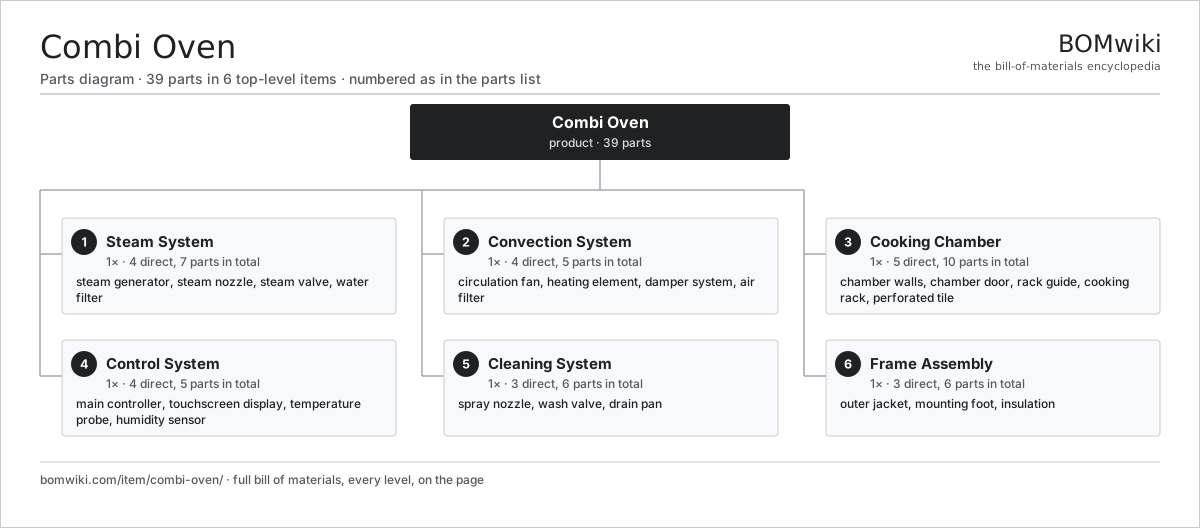
| # | Part | Qty | What it does |
|---|---|---|---|
| 1 | Steam System 4 parts | 1× | Boiler that generates pressurized steam and injects it into the chamber through nozzles for humidity control. |
| 2 | Convection System 4 parts | 1× | Powerful fan and heating elements that circulate hot air throughout the chamber for even cooking. |
| 3 | Cooking Chamber 5 parts | 1× | Stainless-steel compartment where food cooks, with adjustable wire racks and removable perforated tiles. |
| 4 | Control System 4 parts | 1× | Programmable touchscreen controller that manages temperature, steam level, timing, and cooking programs. |
| 5 | Cleaning System 3 parts | 1× | Automatic spray system that injects hot water and steam to clean the chamber after cooking. |
| 6 | Frame Assembly 3 parts | 1× | Stainless-steel structural enclosure that houses all systems and mounts to a counter or stand. |
3D model
No 3D model yet. Have a CAD file of this? Add a 3D model. STL renders right on this page; STEP, FreeCAD, and OpenSCAD sources are welcome too (openly licensed, like all 3D models on BOMwiki).
Build & assembly graph
expand / collapse · shared sub-assemblies converge · links to related products · est. labourTap an assembly to expand/collapse · tap a part to open it · use “Open page” for any node · drag to pan, scroll to zoom.
Bill of materials for Combi Oven
6 top-level lines · 29 rows shown · 39 parts total · indented to 3 levels| # | Item / sub-assembly | Part no. | Qty/assy | Ext. qty | Parts | Type |
|---|---|---|---|---|---|---|
| 1 | Steam System 4 parts | combi-oven-steam-system | 1× | 1 | 7 | assembly |
| 1.1 | Steam Generator | combi-oven-steam-generator | 1× | 1 | · | part |
| 1.2 | Steam Nozzle | combi-oven-steam-nozzle | 4× | 4 | · | part |
| 1.3 | Steam Valve | combi-oven-steam-valve | 1× | 1 | · | part |
| 1.4 | Water Filter | combi-oven-water-filter | 1× | 1 | · | part |
| 2 | Convection System 4 parts | combi-oven-convection-system | 1× | 1 | 5 | assembly |
| 2.1 | Circulation Fan | combi-oven-circulation-fan | 1× | 1 | · | part |
| 2.2 | Heating Element | combi-oven-heating-element | 2× | 2 | · | part |
| 2.3 | Damper System | combi-oven-damper-system | 1× | 1 | · | part |
| 2.4 | Air Filter | combi-oven-air-filter | 1× | 1 | · | part |
| 3 | Cooking Chamber 5 parts | combi-oven-cooking-chamber | 1× | 1 | 10 | assembly |
| 3.1 | Chamber Walls | combi-oven-chamber-walls | 1× | 1 | · | part |
| 3.2 | Chamber Door | combi-oven-chamber-door | 1× | 1 | · | part |
| 3.3 | Rack Guide | combi-oven-rack-guides | 1× | 1 | · | part |
| 3.4 | Cooking Rack | combi-oven-cooking-rack | 3× | 3 | · | part |
| 3.5 | Perforated Tile | combi-oven-perforated-tile | 4× | 4 | · | part |
| 4 | Control System 4 parts | combi-oven-control-system | 1× | 1 | 5 | assembly |
| 4.1 | Main Controller | combi-oven-main-controller | 1× | 1 | · | part |
| 4.2 | Touchscreen Display | combi-oven-touchscreen | 1× | 1 | · | part |
| 4.3 | Temperature Probe | combi-oven-temperature-probe | 2× | 2 | · | part |
| 4.4 | Humidity Sensor | combi-oven-humidity-sensor | 1× | 1 | · | part |
| 5 | Cleaning System 3 parts | combi-oven-cleaning-system | 1× | 1 | 6 | assembly |
| 5.1 | Spray Nozzle | combi-oven-spray-nozzle | 4× | 4 | · | part |
| 5.2 | Wash Valve | combi-oven-wash-valve | 1× | 1 | · | part |
| 5.3 | Drain Pan | combi-oven-drain-pan | 1× | 1 | · | part |
| 6 | Frame Assembly 3 parts | combi-oven-frame | 1× | 1 | 6 | assembly |
| 6.1 | Outer Jacket | combi-oven-outer-jacket | 1× | 1 | · | part |
| 6.2 | Mounting Foot | combi-oven-mounting-feet | 4× | 4 | · | part |
| 6.3 | Insulation | combi-oven-insulation-layer | 1× | 1 | · | part |
Something wrong in this list? Report a problem with this BOM.
Sourcing: possible vendors
Browse the supplier directory → Prices, MOQ, and lead times are algorithmic estimates, not quotes, and not claims about these companies. Company mappings are curated by keyword; est. price band $1k–$500k. How estimates work| Vendor | HQ | Specialty | MOQ | Lead time |
|---|---|---|---|---|
| gea.com ↗ | Düsseldorf, DE | Process technology | 20 units | 12–20 wks |
| buhlergroup.com ↗ | Uzwil, CH | Food & materials processing | 20 units | 12–20 wks |
| tetrapak.com ↗ | Pully, CH | Food packaging & processing | 20 units | 12–20 wks |
| jbtc.com ↗ | Chicago, US | Food processing equipment | 20 units | 12–20 wks |
| alfalaval.com ↗ | Lund, SE | Heat transfer & separation | 20 units | 12–20 wks |
763-word article