Crowd Barrier
ProductOverview
The crowd control barrier is a modular steel panel system designed for temporary event perimeter management, queue lines, and audience flow direction. Each panel measures 2.4 m wide by 1.1 m high and weighs 55 kg, standing independently on weighted feet and interlocking with adjacent sections via cast iron hooks and safety pins. The frame is constructed from cold-rolled steel tubing with diagonal bracing, providing lateral rigidity and a 100 kg static push rating, sufficient to withstand typical crowd pressure at concerts, festivals, and sporting events. Panels can be deployed in straight lines, curved configurations, or L-shapes by rotating and interlocking successive sections. Optional gate panels permit directional traffic control, and wheeled versions allow repositioning without lifting. A two-part epoxy finish protects the steel from rust and UV degradation for 15+ years of outdoor service.
Frame structure and materials
The Frame Panel comprises four vertical steel tubes (40 × 40 × 2 mm wall, 1.1 m height) as corner posts, two horizontal members (40 × 40 mm wall, 2.4 m width) as top and bottom rails, and four diagonal bracing tubes (30 × 30 × 1.5 mm wall) spanning corner-to-corner. All connections are fully welded, forming a rigid box truss. The diagonal bracing distributes lateral loads (horizontal crowd pressure) to the vertical posts, preventing the panel from racking (skewing) under stress. The 40 mm square tube provides sufficient bending stiffness; testing shows less than 5 mm deflection at midspan under a 100 kg horizontal point load applied at the top rail. The 2 mm wall thickness balances weight (55 kg total) and durability; thinner walls (1.5 mm) are used for non-critical bracing members to save mass.
Interlocking mechanism
Adjoining panels are connected using the Interlocking Hook, a cast iron hook welded to the left vertical post of each panel and engaging a corresponding female socket (also cast iron, welded to the right vertical post of the adjacent panel). The hook is designed with a 20 mm cylindrical pin hole; a Connector Pin (stainless steel rod) is inserted through both the male hook and the female socket, creating a rigid joint. The pin is retained by a spring clip or cotter pin, preventing accidental withdrawal. The fit between hook and socket is precision-cast to maintain a 0.5 mm clearance, allowing operators to slide panels together by hand without hammering or forcing. The hook design is inclined 15 degrees to the panel face, creating a mechanical advantage that tightens under lateral load; as crowd pressure pushes against the panel line, the hook is pulled deeper into the socket, strengthening the joint.
Stability through weighted feet
Each panel is supported by two Weighted Foot assemblies, one at the bottom left and one at the bottom right of the frame. Each foot is a fabricated steel plate (250 × 250 × 15 mm), bolted to the frame base, with a hollow interior that can be filled with sand, lead shot, or concrete. Filled feet weigh approximately 25 kg each, providing 50 kg total support per panel. This weight is sufficient to stabilize a panel against 100 kg static horizontal push; the foot width (250 mm) ensures a moment arm that prevents tipping. No ground anchoring (bolts, stakes) is required, making the barrier suitable for temporary deployment on paved surfaces, grass, or sand. However, on loose soil or sloped ground, the Weight Fill may need to be increased or supplemented with sandbags. The foot is designed with rounded bottom corners to protect flooring and prevent catching on debris.
Paint and corrosion protection
All steel components are coated with a Paint Finish, a two-part epoxy applied post-welding. The epoxy provides both aesthetic appeal and corrosion protection; typical color options are galvanized silver, steel gray, bright red, white, or black. The two-part application (epoxy primer + topcoat) achieves a 300+ micron dry film thickness, protecting the steel for 15+ years in typical outdoor conditions. In salt-fog or marine environments, additional protection (hot-dip galvanizing or powder-coat) may be warranted. The coating is UV-stable and does not chalk or fade significantly over 5 years of continuous outdoor exposure. Minor scratches or dings expose bare steel; these should be touched up with epoxy spray or brush-coat within days to prevent rust initiation.
Gate sections and traffic control
A Gate Section is constructed from a standard panel with one vertical post replaced by a Hinge Bracket (stainless steel, rated for the full 55 kg panel weight). A Gate Latch is mounted on the lower rail, allowing the gate to swing open in one or both directions. The latch is typically a spring-loaded or magnetic mechanism that permits entry and snaps closed when released; optional key-locking versions control access to restricted areas. Hinged gates are used to channel crowd flow, for example, creating a serpentine queue at an entrance or controlling egress flow during emergencies. The gate opens smoothly and closes with minimal noise, reducing startlement among tightly packed crowds.
Banner and signage integration
The Banner Clips are spring or screw-mounted brackets positioned along the top rail at 0.6 m intervals. Vinyl banners or directional signage can be inserted into these clips, displaying event names, sponsor logos, or directional arrows (→ QUEUE TO THE LEFT). Banners are typically 2.4 m × 0.4 m and are printed on 13 oz polyester with grommets at the corners. The clip design allows single-handed installation and removal, enabling rapid reconfiguration between events. Banners are removable and can be re-used across multiple events if generic logos are used.
Wheeled configurations
The Wheel Kit consists of four swivel casters (100 mm polyurethane wheels, 50 kg load capacity each) bolted to the frame feet, allowing a panel to be repositioned by rolling rather than lifting. Each caster includes a Connector brake pedal or hand lever; operators press the brake to lock the wheel in place once the barrier is positioned. Wheeled barriers are heavier (approximately 80 kg total, due to the caster assembly) and are preferred for temporary facilities where frequent repositioning is anticipated (e.g., concert venues with changing stage configurations). The polyurethane wheels are quiet and do not mark polished floors, making them suitable for indoor event spaces.
Installation and layout
A typical event layout consists of 10–50 barrier panels forming a rectangular perimeter, a straight queue line, or a serpentine entry funnel. Setup is rapid: panels are unloaded from a transport truck and laid out on the ground in the desired configuration. The operator aligns two adjacent panels, hooks them together, and inserts the Connector Pin through the mating holes. The pin is secured with a spring clip. The next panel is hooked on, and the process repeats. A single operator can connect four panels per minute; a full perimeter of 40 panels (96 m total length) requires 10 minutes to assemble. Once the line is formed, the Banner Clips are fitted with signage or sponsor banners if desired. The barrier is immediately ready to control crowd movement.
Breakdown is equally rapid: banners are removed, safety pins are withdrawn, panels are unhooked, and panels are stacked on the transport truck. A trained two-person crew can break down 40 panels in 15 minutes.
Maintenance and service life
Monthly (or after each event): inspect the Paint Finish for chips or rust spots; touch up with epoxy spray if damage is visible. Check all welds for cracks, especially around the diagonal bracing and corner gussets; visible cracks indicate the panel is unsafe for use and must be re-welded. Annually: clean the entire barrier system with warm soapy water to remove salt deposits (especially for coastal events). Inspect the Interlocking Hook for burrs or deformation that might prevent smooth panel engagement; file away any burrs. Check the Connector Pin for rust or bent threads; replace if corroded. If wheeled, lubricate the caster swivels with light oil and ensure the brake levers engage fully.
The barrier system has a typical service life of 15–20 years with proper maintenance. Panels removed from service can often be refurbished (re-welding cracked braces, re-coating) at a cost of approximately 20% of new panel cost, making refurbishment economical for rental operators. Scrap value of old steel is approximately 0.20 per kg, so a 55 kg panel retains about USD 11 in scrap metal value at end-of-life.
Customization and accessories
Standard colors (red, white, black) suit most events. Custom powder-coat colors can be ordered at additional cost (lead times 4–6 weeks). Branded panels with printed logos can be configured as banner-backed panels: the frame is fitted with a half-height backing panel (plywood or metal) printed with the sponsor logo, integrated into the frame itself. Acoustic barrier versions (fitted with foam or fiberglass panels) reduce sound reflection and are used in concert venues. Transparency or see-through versions (fitted with clear polycarbonate panels) are used in event production to allow audience sightlines while maintaining crowd separation.
Crowd Barrier parts and their functions
8 top-level parts · 113 parts in total · full bill of materials below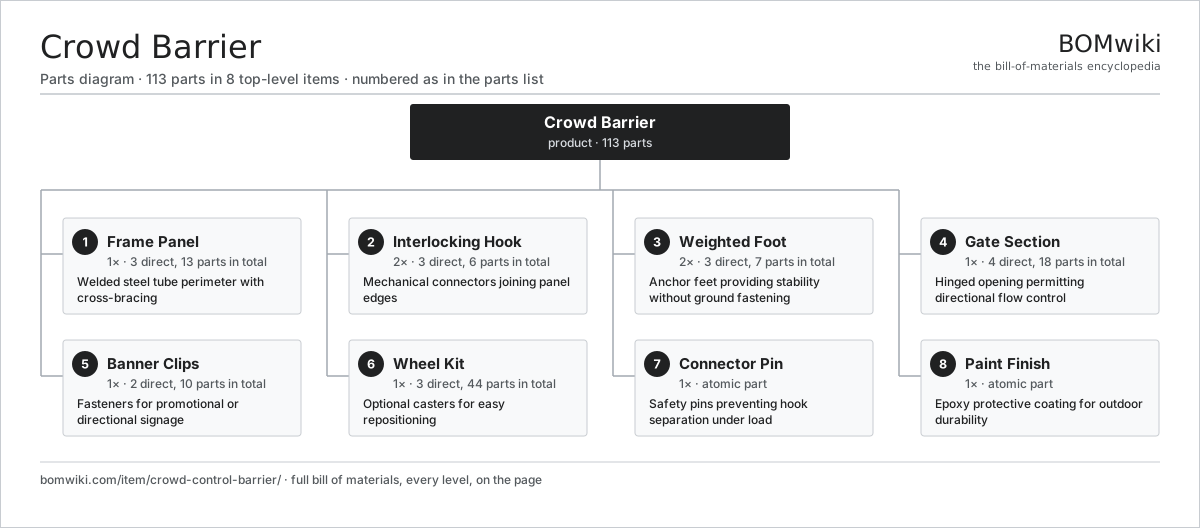
| # | Part | Qty | What it does |
|---|---|---|---|
| 1 | Frame Panel 3 parts | 1× | Welded steel tube perimeter with cross-bracing |
| 2 | Interlocking Hook 3 parts | 2× | Mechanical connectors joining panel edges |
| 3 | Weighted Foot 3 parts | 2× | Anchor feet providing stability without ground fastening |
| 4 | Gate Section 4 parts | 1× | Hinged opening permitting directional flow control |
| 5 | Banner Clips 2 parts | 1× | Fasteners for promotional or directional signage |
| 6 | Wheel Kit 3 parts | 1× | Optional casters for easy repositioning |
| 7 | Connector Pin | 1× | Safety pins preventing hook separation under load |
| 8 | Paint Finish | 1× | Epoxy protective coating for outdoor durability |
3D model
No 3D model yet. Have a CAD file of this? Add a 3D model. STL renders right on this page; STEP, FreeCAD, and OpenSCAD sources are welcome too (openly licensed, like all 3D models on BOMwiki).
Build & assembly graph
expand / collapse · shared sub-assemblies converge · links to related products · est. labourTap an assembly to expand/collapse · tap a part to open it · use “Open page” for any node · drag to pan, scroll to zoom.
Bill of materials for Crowd Barrier
8 top-level lines · 34 rows shown · 113 parts total · indented to 3 levels| # | Item / sub-assembly | Part no. | Qty/assy | Ext. qty | Parts | Type |
|---|---|---|---|---|---|---|
| 1 | Frame Panel 3 parts | crowd-control-barrier-frame-panel | 1× | 1 | 13 | assembly |
| 1.1 | Motor Housing | motor-housing | 10× | 10 | · | part |
| 1.2 | Fastener Set | fastener-set | 2× | 2 | · | part |
| 1.3 | Paint Finish | crowd-control-barrier-paint-finish | 1× | 1 | · | part |
| 2 | Interlocking Hook 3 parts | crowd-control-barrier-interlocking-hook | 2× | 2 | 6 | assembly |
| 2.1 | Motor Housing | motor-housing | 2× | 4 | · | part |
| 2.2 | Connector Pin | crowd-control-barrier-connector-pin | 2× | 4 | · | part |
| 2.3 | Fastener Set | fastener-set | 2× | 4 | · | part |
| 3 | Weighted Foot 3 parts | crowd-control-barrier-weighted-foot | 2× | 2 | 7 | assembly |
| 3.1 | Sheet Metal Panel | sheet-panel | 2× | 4 | · | part |
| 3.2 | Fastener Set | fastener-set | 4× | 8 | · | part |
| 3.3 | Weight Fill | crowd-control-barrier-weight-fill | 1× | 2 | · | part |
| 4 | Gate Section 4 parts | crowd-control-barrier-gate-section | 1× | 1 | 18 | assembly |
| 4.1 | Frame Panel 3 parts | crowd-control-barrier-frame-panel | 1× | 1 | 13 | assembly |
| 4.1.1 | Motor Housing | motor-housing | 10× | 10 | · | part |
| 4.1.2 | Fastener Set | fastener-set | 2× | 2 | · | part |
| 4.1.3 | Paint Finish | crowd-control-barrier-paint-finish | 1× | 1 | · | part |
| 4.2 | Hinge Bracket | crowd-control-barrier-hinge-bracket | 2× | 2 | · | part |
| 4.3 | Gate Latch | crowd-control-barrier-gate-latch | 1× | 1 | · | part |
| 4.4 | Fastener Set | fastener-set | 2× | 2 | · | part |
| 5 | Banner Clips 2 parts | crowd-control-barrier-banner-clips | 1× | 1 | 10 | assembly |
| 5.1 | Fastener Set | fastener-set | 8× | 8 | · | part |
| 5.2 | Connector | connector | 2× | 2 | · | part |
| 6 | Wheel Kit 3 parts | crowd-control-barrier-wheel-kit | 1× | 1 | 44 | assembly |
| 6.1 | Wheel Assembly 5 parts | wheel-assembly | 4× | 4 | 9 | assembly |
| 6.1.1 | Alloy Wheel | alloy-wheel | 1× | 4 | · | part |
| 6.1.2 | Tire | tire | 1× | 4 | · | part |
| 6.1.3 | TPMS Sensor | tpms-sensor | 1× | 4 | · | part |
| 6.1.4 | Lug Nut | lug-nut | 5× | 20 | · | part |
| 6.1.5 | Valve Stem | valve-stem | 1× | 4 | · | part |
| 6.2 | Fastener Set | fastener-set | 4× | 4 | · | part |
| 6.3 | Connector | connector | 4× | 4 | · | part |
| 7 | Connector Pin | crowd-control-barrier-connector-pin | 1× | 1 | · | part |
| 8 | Paint Finish | crowd-control-barrier-paint-finish | 1× | 1 | · | part |
Something wrong in this list? Report a problem with this BOM.
Related products
same domain, ranked by shared parts Portable Dance Floor
72 parts · shares 8 with this page
Portable Dance Floor
72 parts · shares 8 with this page
 Retractable Stanchion
193 parts · shares 8 with this page
Retractable Stanchion
193 parts · shares 8 with this page
 Horse Starting Gate
179 parts · shares 6 with this page
Telescopic Bleachers
274 parts · shares 6 with this page
Horse Starting Gate
179 parts · shares 6 with this page
Telescopic Bleachers
274 parts · shares 6 with this page
 Air Dancer
46 parts · shares 2 with this page
Electric Strike
23 parts · shares 2 with this page
Air Dancer
46 parts · shares 2 with this page
Electric Strike
23 parts · shares 2 with this page
Sourcing: possible vendors
Browse the supplier directory → Prices, MOQ, and lead times are algorithmic estimates, not quotes, and not claims about these companies. Company mappings are curated by keyword; est. price band $50–$10k. How estimates work| Vendor | HQ | Specialty | MOQ | Lead time |
|---|---|---|---|---|
| assaabloy.com ↗ | Stockholm, SE | Locks & access | 1,000 units | 8–12 wks |
|
🇺🇸Allegion
allegion.com ↗
|
Dublin, US | Security products (Schlage) | 1,000 units | 8–12 wks |
| dormakaba.com ↗ | Rümlang, CH | Access & door systems | 1,000 units | 8–12 wks |
| honeywell.com ↗ | Charlotte, US | Building & safety tech | 1,000 units | 8–12 wks |
| hikvision.com ↗ | Hangzhou, CN | Surveillance & security | 1,000 units | 8–12 wks |
1,550-word article