E-Waste Collection Truck
ProductOverview
The e-waste collection truck is a specialized vehicle for the safe, secure, and organized collection of discarded electronics and hazardous waste (WEEE, Waste Electrical and Electronic Equipment). Unlike general refuse vehicles, which treat all waste indiscriminately, e-waste trucks employ modular shelving, secure locking, GPS tracking, and climate monitoring to protect valuable materials (copper, gold, precious metals) from theft, environmental contamination from hazardous substances (lead, mercury, cadmium), and physical damage.
E-waste collection became critical following global WEEE directives (EU 2002/96/EC and successors, Extended Producer Responsibility mandates in North America and Asia) requiring responsible disposal of electronics. Specialized collectors now operate dedicated fleets, serving businesses, municipalities, and retailers. The vehicles are optimized for rapid, organized collection: shelving allows efficient organization by device type (monitors, keyboards, printers), liftgates reduce manual handling strain, and security systems prevent theft of valuable scrap metals.
Modern e-waste trucks combine logistics efficiency with environmental stewardship and worker safety, transforming a hazardous waste stream into a valuable materials recovery operation.
How it Works
The truck arrives at a collection point: a corporate office building, municipal e-waste depot, retail electronics store, or industrial facility where discarded electronics are staged. Collection staff and driver assess the inventory: desktop monitors, keyboards, mice, cables, printers, circuit boards, mobile phones, and other devices.
The truck features a modular shelving system (3–4 tiers) organized by material type. Heavy items (monitors, printers, full computers) are placed on lower shelves; lighter items (keyboards, mice, cables) on upper shelves. Specialized collection bins, colour-coded or labelled, sort small components (circuit boards, hard drives, batteries) from larger items, preventing mixed contamination.
A hydraulic liftgate at the truck's rear eliminates manual lifting of monitors and other heavy devices. The liftgate platform is lowered to ground level, operators place heavy items on the platform, and the driver engages a control switch in the cabin, raising the platform smoothly (0.6–1.0 m). Once raised, the platform locks mechanically, and items are slid onto a lower shelf with minimal manual strain.
Once collection is complete, the cage side door is secured with heavy-duty mechanical locks and padlocks. The truck's security system, comprising GPS tracker, motion sensors, and a high-decibel alarm, activates: if anyone attempts to open the door while the vehicle is in motion or parked unattended, a 110+ dB siren sounds and a cellular modem transmits an alert to fleet management. GPS tracking provides real-time location, and a fleet manager can remotely track the truck to ensure safe transit to the recycling facility.
Climate monitoring sensors (temperature and humidity) are optional but valuable: sensitive electronics (lithium batteries, hard drives) degrade under extreme temperatures. Sensors alert the driver if cabin temperature exceeds safe limits (e.g., >45 °C), triggering increased ventilation or shortened collection routes on hot days.
The truck's hydraulic system is minimal: a small 15 cc/rev pump (far smaller than garbage truck systems) supplies proportional flow to the liftgate cylinders. A proportional directional control valve meters flow smoothly, preventing sudden platform jerks. A mechanical safety latch prevents platform drop if hydraulic pressure is lost during transit, a critical failsafe for operator and public safety.
At the recycling facility, the truck's shelves and bins are unloaded in organized fashion: operators remove individual bins and shelves, expediting discharge and enabling the facility to pre-sort incoming materials by type (reducing their internal handling). Some modern e-waste trucks include QR code labels and barcode scanning, enabling real-time inventory tracking per collection stop and automatic facility intake documentation.
Safety features are extensive:
- Interlocks preventing liftgate operation if the truck is moving (>5 km/h) or the side door is open.
- Surge barrier at the truck's forward end preventing cargo from sliding toward the cab during braking.
- Tie-down straps and ratchet anchors securing high-value or heavy items (5,000 N breaking strength per strap).
- Non-slip liftgate platform surface reducing item sliding.
- Mechanical safety latch on liftgate (redundancy against hydraulic failure).
- Backup alarm (97 dB) and amber beacon during reverse motion.
Subsystems
The chassis is light-to-medium duty: 4 or 6-cylinder diesel (120–180 kW) and 18 tonne GVW. City-optimized transmission and suspension suit frequent stop-and-start collection routes. The cab is climate-controlled, reducing operator exposure to temperature extremes during summer collection.
The shelved container body is the core innovation: a cage or enclosed structure with 3–4 adjustable steel shelves, colour-coded collection bins, and dividers. Modular design allows quick shelf replacement or reconfiguration per facility needs.
The hydraulic liftgate is a compact vertical lifting platform (0.6–1.0 m stroke, 1,000 kg capacity) with mechanical safety latch, eliminating manual lifting of monitors and printers. A proportional directional control valve ensures smooth, controlled motion.
Security integrates GPS tracking, cellular modem, alarm siren, motion sensors, and multiple door locks. Real-time alerts notify fleet management of unauthorized access attempts or vehicle deviations.
Cargo restraints include ratchet tie-down straps, surge barrier, and eye-bolt anchors preventing item shift during transit and sudden braking.
Optional climate monitoring tracks cabin temperature and humidity, alerting if conditions exceed safe ranges for sensitive electronics (particularly lithium batteries).
The hydraulic system is minimal: a 15 cc/rev pump, single proportional directional valve, 0.5 L accumulator, and 60 L reservoir. Low flow demand matches the light-duty liftgate operation.
The control interface includes cabin-mounted liftgate switch, security keypad for door access, door status sensor, interlocks preventing unsafe operations, and climate display (if equipped).
Applications and Variants
E-waste collection serves multiple channels:
- Corporate/office electronics: Desktop computers, monitors, printers, servers from businesses upgrading IT infrastructure.
- Retail take-back programs: Electronics stores accepting old devices at point-of-sale, requiring organized back-of-house collection.
- Municipal e-waste depots: Public collection points where residents drop off old televisions, computers, and appliances.
- Industrial/manufacturing: Obsolete machinery, circuit boards, and process control systems.
- Refurbishment streams: Lightly used, repairable electronics destined for resale or remanufacturing (requiring extra care against damage).
Variants include:
- High-security models: Banks-grade locks, dual GPS trackers, live camera feeds, and geofencing alerts preventing off-route deviations.
- Refurbishment-optimized trucks: Extra padding on shelves, specialized tool racks, and separate compartments for fragile items (screens, hard drives).
- Hazardous materials compartment: Segregated sealed container for batteries, mercury lamps, and other hazardous components requiring special handling.
- Dual-temperature zones: Separate climatized compartments: ambient for non-sensitive items, temperature-controlled for lithium batteries and hard drives.
- Automated barcode scanning: Integrated inventory system scanning QR codes at collection stops and automatically uploading to facility management software.
Materials Recovery Economics
E-waste contains valuable metals: copper (printed circuit boards, motors), gold (circuit board plating), silver (contacts), aluminium (housings), and precious metals in small quantities. A single discarded desktop computer contains ~$1–3 of recoverable metals; a monitor may yield $0.50–1.00. Theft prevention is critical: unescorted trucks can lose value through organized metal scavenging, particularly in dense urban areas where trucks are parked overnight.
GPS tracking, motion sensors, and cellular alerts significantly reduce theft, making secure e-waste collection economically viable.
Hazardous Substance Management
E-waste contains regulated hazardous materials: lead solder (circuit boards), mercury (fluorescent lamps in old monitors), cadmium (batteries), and asbestos (older equipment). Improper handling contaminates soil and groundwater. Professional e-waste trucks minimize spillage through sealed containers, drip trays under collection bins, and careful handling protocols. Climate monitoring prevents thermal damage to batteries (risk of fire or chemical release).
Some trucks include a sealed compartment for batteries and hazardous items, segregating them from other electronics for safe transport to specialized processing facilities.
Operator Training and Occupational Health
E-waste collection involves exposure to hazardous substances if items are damaged or disassembled improperly. Operators must be trained in:
- Identification of hazardous electronics (mercury lamps, batteries, capacitors).
- Proper packaging and segregation procedures.
- Basic first aid for chemical exposure.
- Ergonomic handling (liftgate use reduces repetitive strain injuries).
Modern e-waste trucks prioritize operator safety through liftgates (reducing manual lifting), climate control (preventing heat stress), and secure cargo management (preventing sudden item shift and crushing hazards).
Maintenance and Design Life
Hydraulic liftgate cylinders are low-wear due to low cycle rates (typically 20–30 lifts per 8-hour shift). Seal replacement is needed every 5–7 years. The shelving system is modular and durable; individual shelves are replaced as-needed. GPS and cellular modules require battery or solar maintenance; firmware updates monthly.
A well-maintained e-waste collection truck achieves 12–18 years in service. The security and telematics systems (GPS, modem, alarms) have shorter refresh cycles (5–10 years) due to technology evolution.
Industry Standards and Certification
Design follows NFPA 1901 (refuse vehicle safety), ISO 4413 (hydraulic systems), and local hazardous goods transportation regulations (especially for trucks carrying batteries or mercury lamps). Vehicles may require certification as hazardous materials transporters, depending on payload. Security systems must comply with fleet management industry standards (e.g., ISO 27001 for data protection if telematics data is transmitted).
E-waste trucks are increasingly subject to extended producer responsibility (EPR) audits: manufacturers of electronics pay to support collection, requiring transparent tracking of collected items from truck to recycling facility. Barcode scanning and digital documentation are becoming mandatory.
E-Waste Collection Truck parts and their functions
8 top-level parts · 114 parts in total · full bill of materials below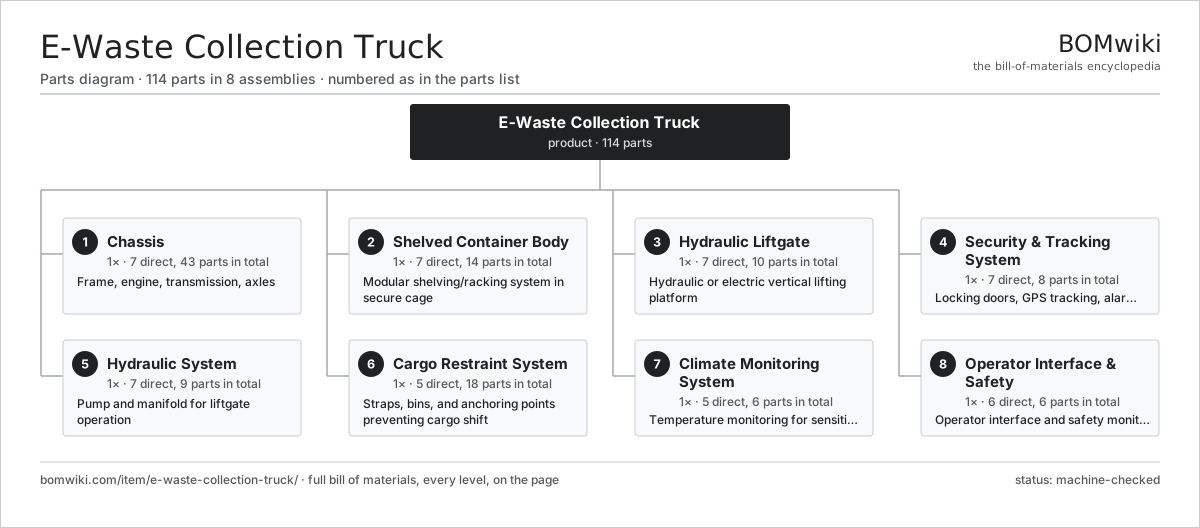
| # | Part | Qty | What it does |
|---|---|---|---|
| 1 | Chassis 7 parts | 1× | Frame, engine, transmission, axles |
| 2 | Shelved Container Body 7 parts | 1× | Modular shelving/racking system in secure cage |
| 3 | Hydraulic Liftgate 7 parts | 1× | Hydraulic or electric vertical lifting platform |
| 4 | Security & Tracking System 7 parts | 1× | Locking doors, GPS tracking, alarm system |
| 5 | Hydraulic System 7 parts | 1× | Pump and manifold for liftgate operation |
| 6 | Cargo Restraint System 5 parts | 1× | Straps, bins, and anchoring points preventing cargo shift |
| 7 | Climate Monitoring System 5 parts | 1× | Temperature monitoring for sensitive electronics |
| 8 | Operator Interface & Safety 6 parts | 1× | Operator interface and safety monitoring |
3D model
No 3D model yet. Have a CAD file of this? Add a 3D model — STL renders right on this page; STEP, FreeCAD, and OpenSCAD sources are welcome too (openly licensed, like all 3D models on BOMwiki).
Build & assembly graph
expand / collapse · shared sub-assemblies converge · links to related products · est. labourTap an assembly to expand/collapse · tap a part to open it · use “Open page” for any node · drag to pan, scroll to zoom.
Bill of materials for E-Waste Collection Truck
8 top-level lines · 64 rows shown · 114 parts total · indented to 3 levels| # | Item / sub-assembly | Part no. | Qty/assy | Ext. qty | Parts | Type |
|---|---|---|---|---|---|---|
| 1 | Chassis 7 parts | e-waste-collection-truck-chassis | 1× | 1 | 43 | assembly |
| 1.1 | Steel Frame Assembly | e-waste-collection-truck-frame | 1× | 1 | · | part |
| 1.2 | Diesel Engine | e-waste-collection-truck-engine | 1× | 1 | · | part |
| 1.3 | Transmission | e-waste-collection-truck-transmission | 1× | 1 | · | part |
| 1.4 | Axles | e-waste-collection-truck-axles | 2× | 2 | · | part |
| 1.5 | Operator Cabin | e-waste-collection-truck-cab | 1× | 1 | · | part |
| 1.6 | Wheel Assembly 5 parts | wheel-assembly | 4× | 4 | 9 | assembly |
| 1.6.1 | Alloy Wheel | alloy-wheel | 1× | 4 | · | part |
| 1.6.2 | Tire | tire | 1× | 4 | · | part |
| 1.6.3 | TPMS Sensor | tpms-sensor | 1× | 4 | · | part |
| 1.6.4 | Lug Nut | lug-nut | 5× | 20 | · | part |
| 1.6.5 | Valve Stem | valve-stem | 1× | 4 | · | part |
| 1.7 | Fuel Tank | e-waste-collection-truck-fuel-tank | 1× | 1 | · | part |
| 2 | Shelved Container Body 7 parts | e-waste-collection-truck-shelved-body | 1× | 1 | 14 | assembly |
| 2.1 | Body Frame Structure | e-waste-collection-truck-body-frame | 1× | 1 | · | part |
| 2.2 | Adjustable Shelf | e-waste-collection-truck-shelving-rack | 3× | 3 | · | part |
| 2.3 | Cage Mesh Walls | e-waste-collection-truck-cage-walls | 1× | 1 | · | part |
| 2.4 | Cage Side Door | e-waste-collection-truck-cage-door | 1× | 1 | · | part |
| 2.5 | Shelf Dividers | e-waste-collection-truck-shelf-dividers | 2× | 2 | · | part |
| 2.6 | Collection Bin | e-waste-collection-truck-collection-bins | 4× | 4 | · | part |
| 2.7 | Fastener Set | fastener-set | 2× | 2 | · | part |
| 3 | Hydraulic Liftgate 7 parts | e-waste-collection-truck-liftgate | 1× | 1 | 10 | assembly |
| 3.1 | Liftgate Platform | e-waste-collection-truck-liftgate-platform | 1× | 1 | · | part |
| 3.2 | Liftgate Cylinders | e-waste-collection-truck-liftgate-cylinders | 2× | 2 | · | part |
| 3.3 | Liftgate Guide Rails | e-waste-collection-truck-liftgate-guides | 2× | 2 | · | part |
| 3.4 | Safety Latch Pin | e-waste-collection-truck-liftgate-safety-latch | 1× | 1 | · | part |
| 3.5 | Liftgate Load Sensor | e-waste-collection-truck-liftgate-pressure-sensor | 1× | 1 | · | part |
| 3.6 | Liftgate Control Box | e-waste-collection-truck-liftgate-control-panel | 1× | 1 | · | part |
| 3.7 | Connector | connector | 2× | 2 | · | part |
| 4 | Security & Tracking System 7 parts | e-waste-collection-truck-security-system | 1× | 1 | 8 | assembly |
| 4.1 | Primary Door Lock | e-waste-collection-truck-door-lock-primary | 1× | 1 | · | part |
| 4.2 | Secondary Padlock | e-waste-collection-truck-door-lock-secondary | 1× | 1 | · | part |
| 4.3 | GPS Tracker Module | e-waste-collection-truck-gps-tracker | 1× | 1 | · | part |
| 4.4 | Alarm Siren | e-waste-collection-truck-alarm-siren | 1× | 1 | · | part |
| 4.5 | Motion Sensor | e-waste-collection-truck-motion-sensor | 1× | 1 | · | part |
| 4.6 | Wireless Modem | e-waste-collection-truck-wireless-transmitter | 1× | 1 | · | part |
| 4.7 | Connector | connector | 2× | 2 | · | part |
| 5 | Hydraulic System 7 parts | e-waste-collection-truck-hydraulics | 1× | 1 | 9 | assembly |
| 5.1 | Hydraulic Pump | e-waste-collection-truck-pump | 1× | 1 | · | part |
| 5.2 | Directional Valve | e-waste-collection-truck-valve-block | 1× | 1 | · | part |
| 5.3 | Hydraulic Filter | e-waste-collection-truck-filter | 1× | 1 | · | part |
| 5.4 | Gas Accumulator | e-waste-collection-truck-accumulator | 1× | 1 | · | part |
| 5.5 | Hydraulic Reservoir | e-waste-collection-truck-tank | 1× | 1 | · | part |
| 5.6 | Pressure Sensor | pressure-sensor | 1× | 1 | · | part |
| 5.7 | Connector | connector | 3× | 3 | · | part |
| 6 | Cargo Restraint System 5 parts | e-waste-collection-truck-restraint-system | 1× | 1 | 18 | assembly |
| 6.1 | Tie-Down Strap | e-waste-collection-truck-tie-down-strap | 4× | 4 | · | part |
| 6.2 | Ratchet Tensioner | e-waste-collection-truck-ratchet-anchor | 4× | 4 | · | part |
| 6.3 | Surge Barrier | e-waste-collection-truck-surge-barrier | 1× | 1 | · | part |
| 6.4 | Anchor Eye Bolt | e-waste-collection-truck-eye-bolt | 8× | 8 | · | part |
| 6.5 | Fastener Set | fastener-set | 1× | 1 | · | part |
| 7 | Climate Monitoring System 5 parts | e-waste-collection-truck-climate-control | 1× | 1 | 6 | assembly |
| 7.1 | Temperature Sensor | e-waste-collection-truck-temperature-sensor | 1× | 1 | · | part |
| 7.2 | Humidity Sensor | e-waste-collection-truck-humidity-sensor | 1× | 1 | · | part |
| 7.3 | Climate Display | e-waste-collection-truck-climate-display | 1× | 1 | · | part |
| 7.4 | Climate Alarm | e-waste-collection-truck-climate-alarm | 1× | 1 | · | part |
| 7.5 | Connector | connector | 2× | 2 | · | part |
| 8 | Operator Interface & Safety 6 parts | e-waste-collection-truck-controls | 1× | 1 | 6 | assembly |
| 8.1 | Liftgate Control Switch | e-waste-collection-truck-control-switch | 1× | 1 | · | part |
| 8.2 | Security Keypad | e-waste-collection-truck-security-keypad | 1× | 1 | · | part |
| 8.3 | Door Status Sensor | e-waste-collection-truck-door-open-sensor | 1× | 1 | · | part |
| 8.4 | Safety Interlock Relay | e-waste-collection-truck-interlock-relay | 1× | 1 | · | part |
| 8.5 | Backup Alarm | e-waste-collection-truck-audible-alarm | 1× | 1 | · | part |
| 8.6 | Microcontroller | mcu | 1× | 1 | · | part |
Related products
same domain, ranked by shared parts Coupe Car
1,617 parts · shares 7 with this page
Coupe Car
1,617 parts · shares 7 with this page
 Food Truck
197 parts · shares 7 with this page
Food Truck
197 parts · shares 7 with this page
 Food Waste Collection Truck
95 parts · shares 7 with this page
Food Waste Collection Truck
95 parts · shares 7 with this page
 Front Loader Refuse Truck
131 parts · shares 7 with this page
Front Loader Refuse Truck
131 parts · shares 7 with this page
 Grapple Truck
146 parts · shares 7 with this page
Grapple Truck
146 parts · shares 7 with this page
 Ice Cream Truck
88 parts · shares 7 with this page
Ice Cream Truck
88 parts · shares 7 with this page
Sourcing: possible vendors
Prices, MOQ, and lead times are algorithmic estimates, not quotes, and not claims about these companies. Company mappings are curated by keyword; est. price band $8k–$90k. How estimates work| Vendor | HQ | Specialty | MOQ | Lead time |
|---|---|---|---|---|
|
🇯🇵Toyota
global.toyota ↗
|
Toyota City, JP | Automaker | made to order | 16–28 wks |
| volkswagen-group.com ↗ | Wolfsburg, DE | Automaker | made to order | 16–28 wks |
| gm.com ↗ | Detroit, US | Automaker | made to order | 16–28 wks |
| hyundai.com ↗ | Seoul, KR | Automaker | made to order | 16–28 wks |
|
🇨🇳BYD
byd.com ↗
|
Shenzhen, CN | EV & battery manufacturer | made to order | 16–28 wks |
1,584-word article