Heated Holding Cabinet
ProductOverview
A heated holding cabinet is a insulated electric cabinet that keeps prepared hot food at safe serving temperature (140 °F or above) until it is plated and served. It is not a cooking appliance, food arrives pre-cooked, but an essential buffer in high-volume or banquet kitchens where multiple dishes must be held at different stages of readiness.
The cabinet is a stainless-steel box, typically 24–36 inches wide, with two or three full-size hotel pan racks inside. The walls are heavily insulated with fiberglass or polyurethane to minimize heat loss. A Heating Element (usually 3–5 kW) sits in a sealed chamber beneath the cooking area, away from food contact. The element heats air inside the cabinet, which circulates via natural convection (warm air rises, cool air sinks) or a small fan if the unit is equipped with forced circulation.
A Thermostat maintains the cabinet at a set temperature, typically 160–180 °F for most foods. The thermostat cycles the heating element on and off to prevent overheating, which would dry or toughen the food. A Door Assembly with double-pane insulated glass and a rubber gasket allows the chef to see what is ready without opening the cabinet and losing heat.
A Water Pan sits on the floor of the heating chamber, above the element. As the element warms, the water evaporates, adding moisture to the air and preventing food from drying out. The water pan is refilled daily or as needed.
How it works
The chef switches on the holding cabinet 15–20 minutes before service. The Heating Element begins to draw current, warming the sealed heating chamber. Hot air rises into the cooking area, and the cabinet temperature climbs toward 160 °F. A holding-cabinet-indicator-lamp glows to show that the element is energized.
Once the cabinet is ready, the chef transfers hot pre-cooked food onto holding-cabinet-cooking-rack pans and slides them into the holding-cabinet-rack-guides. Multiple dishes at different temperatures can go in together, the cabinet will hold them all at the same safe temperature. The Door Gasket seals tightly, preventing heat from escaping.
As the food sits in the warm, humid environment, its temperature stabilizes at the cabinet setpoint. The Moisture Vent is left slightly ajar, allowing some steam to escape; if closed completely, condensation builds up. If opened fully, moisture escapes and the food dries. Experience and local humidity dictate the right setting.
When a dish is needed, the chef pulls open the Door Handle, slides the corresponding pan out, and plates the food. The cabinet door closes quickly to retain heat for the remaining items. Total hold time varies by food type, 24 hours is safe for most prepared items, but quality is best within 2–4 hours of plating.
At the end of service, the element is switched off. The cabinet cools slowly due to insulation and usually retains enough warmth that dishes remain hot for 30–60 minutes after power is cut.
Holding cabinets are unglamorous but essential infrastructure in high-volume kitchens. They enable a kitchen to batch-prep sauces, proteins, and sides in advance, then hold them ready for rapid assembly and plating during the dinner rush. In a busy restaurant, a single holding cabinet might keep 50–100 portions organized and at temperature for several hours, a productivity multiplier that pays for the equipment many times over.
Heated Holding Cabinet parts and their functions
6 top-level parts · 30 parts in total · full bill of materials below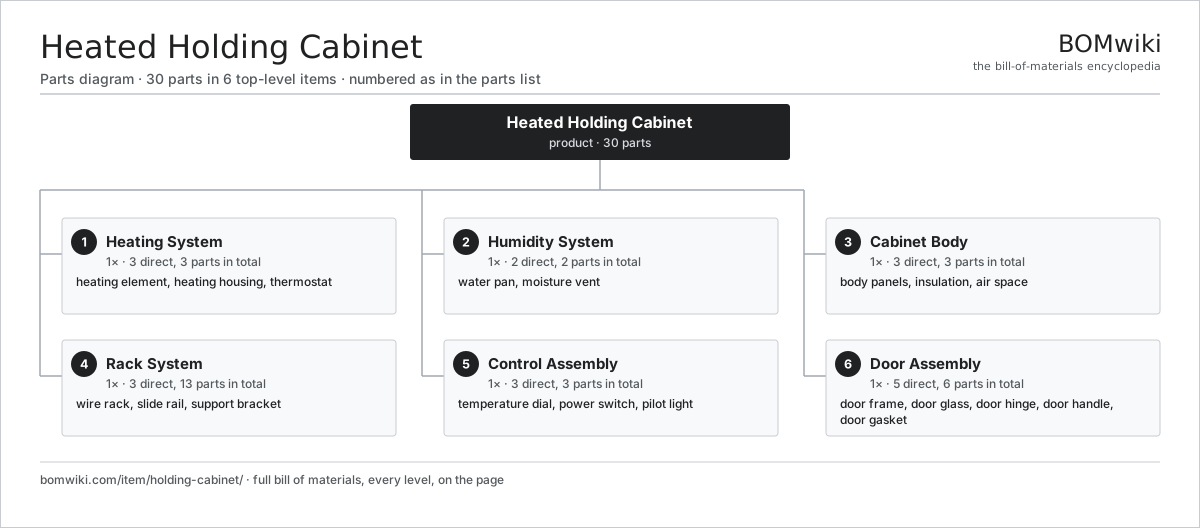
| # | Part | Qty | What it does |
|---|---|---|---|
| 1 | Heating System 3 parts | 1× | Electric resistance heating element mounted in the lower section that warms air throughout the cabinet. |
| 2 | Humidity System 2 parts | 1× | Water pan that evaporates to add moisture and prevent food from drying out. |
| 3 | Cabinet Body 3 parts | 1× | Stainless-steel exterior with thermal insulation that minimizes heat loss. |
| 4 | Rack System 3 parts | 1× | Adjustable wire racks and slides that hold food pans at multiple levels. |
| 5 | Control Assembly 3 parts | 1× | Simple dial or digital display that allows setting of holding temperature. |
| 6 | Door Assembly 5 parts | 1× | Hinged insulated door with gasket and double-pane glass for visibility and heat retention. |
3D model
No 3D model yet. Have a CAD file of this? Add a 3D model. STL renders right on this page; STEP, FreeCAD, and OpenSCAD sources are welcome too (openly licensed, like all 3D models on BOMwiki).
Build & assembly graph
expand / collapse · shared sub-assemblies converge · links to related products · est. labourTap an assembly to expand/collapse · tap a part to open it · use “Open page” for any node · drag to pan, scroll to zoom.
Bill of materials for Heated Holding Cabinet
6 top-level lines · 25 rows shown · 30 parts total · indented to 3 levels| # | Item / sub-assembly | Part no. | Qty/assy | Ext. qty | Parts | Type |
|---|---|---|---|---|---|---|
| 1 | Heating System 3 parts | holding-cabinet-heating-system | 1× | 1 | 3 | assembly |
| 1.1 | Heating Element | holding-cabinet-heating-element | 1× | 1 | · | part |
| 1.2 | Heating Housing | holding-cabinet-heating-housing | 1× | 1 | · | part |
| 1.3 | Thermostat | holding-cabinet-thermostat | 1× | 1 | · | part |
| 2 | Humidity System 2 parts | holding-cabinet-humidity-system | 1× | 1 | 2 | assembly |
| 2.1 | Water Pan | holding-cabinet-water-pan | 1× | 1 | · | part |
| 2.2 | Moisture Vent | holding-cabinet-moisture-vent | 1× | 1 | · | part |
| 3 | Cabinet Body 3 parts | holding-cabinet-cabinet-body | 1× | 1 | 3 | assembly |
| 3.1 | Body Panels | holding-cabinet-body-panels | 1× | 1 | · | part |
| 3.2 | Insulation | holding-cabinet-insulation | 1× | 1 | · | part |
| 3.3 | Air Space | holding-cabinet-air-space | 1× | 1 | · | part |
| 4 | Rack System 3 parts | holding-cabinet-rack-system | 1× | 1 | 13 | assembly |
| 4.1 | Wire Rack | holding-cabinet-wire-rack | 3× | 3 | · | part |
| 4.2 | Slide Rail | holding-cabinet-slide-rail | 6× | 6 | · | part |
| 4.3 | Support Bracket | holding-cabinet-support-bracket | 4× | 4 | · | part |
| 5 | Control Assembly 3 parts | holding-cabinet-controls | 1× | 1 | 3 | assembly |
| 5.1 | Temperature Dial | holding-cabinet-temperature-dial | 1× | 1 | · | part |
| 5.2 | Power Switch | holding-cabinet-power-switch | 1× | 1 | · | part |
| 5.3 | Pilot Light | holding-cabinet-pilot-light | 1× | 1 | · | part |
| 6 | Door Assembly 5 parts | holding-cabinet-door | 1× | 1 | 6 | assembly |
| 6.1 | Door Frame | holding-cabinet-door-frame | 1× | 1 | · | part |
| 6.2 | Door Glass | holding-cabinet-door-glass | 1× | 1 | · | part |
| 6.3 | Door Hinge | holding-cabinet-door-hinge | 2× | 2 | · | part |
| 6.4 | Door Handle | holding-cabinet-door-handle | 1× | 1 | · | part |
| 6.5 | Door Gasket | holding-cabinet-door-gasket | 1× | 1 | · | part |
Something wrong in this list? Report a problem with this BOM.
Sourcing: possible vendors
Browse the supplier directory → Prices, MOQ, and lead times are algorithmic estimates, not quotes, and not claims about these companies. Company mappings are curated by keyword; est. price band $1k–$500k. How estimates work| Vendor | HQ | Specialty | MOQ | Lead time |
|---|---|---|---|---|
| gea.com ↗ | Düsseldorf, DE | Process technology | 20 units | 12–20 wks |
| buhlergroup.com ↗ | Uzwil, CH | Food & materials processing | 20 units | 12–20 wks |
| tetrapak.com ↗ | Pully, CH | Food packaging & processing | 20 units | 12–20 wks |
| jbtc.com ↗ | Chicago, US | Food processing equipment | 20 units | 12–20 wks |
| alfalaval.com ↗ | Lund, SE | Heat transfer & separation | 20 units | 12–20 wks |
585-word article