Hydrogen Refueling Station
ProductOverview
A hydrogen refueling station is specialized fueling infrastructure that compresses hydrogen gas from low-pressure sources (electrolyzers, steam reformers, or bulk storage) to 350–700 bar for dispensing into fuel-cell vehicles. A typical station fills a 5 kg vehicle tank in 5–10 minutes, providing 400–500 km range.
Unlike gasoline stations (which dispense liquid at <10 bar), hydrogen stations must achieve ultra-high pressures (350 or 700 bar per SAE J2601 protocol) and maintain strict hydrogen purity (>99.99%) to avoid fuel-cell cathode fouling. The infrastructure is significantly more complex than conventional fueling, requiring multi-stage compression, cryogenic chilling, and safety systems for a flammable gas.
As of 2024, ~600 public hydrogen stations operate globally (Japan 170, Germany 100, US 60, South Korea 70, others). Capital cost is 400,000–2,000,000 USD depending on size and supply chain. Hydrogen fuel cost is 10–15 USD/kg in developed markets, equivalent to gasoline on an energy basis.
How it works
Hydrogen enters the station at low pressure (1–5 bar) from an on-site Compressor fed by either:
- Dedicated electrolyzer (producing H₂ on-site from water + electricity)
- Steam reformer (producing H₂ from natural gas, releasing CO₂)
- Bulk delivery (H₂ trucks delivering liquid or high-pressure gas)
The Compressor is a multi-stage reciprocating unit (piston or screw type) with 2–4 stages. Each stage compresses and cools via Compressor Cooling intercoolers. A typical sequence:
- Stage 1: 1 bar → 50 bar
- Intercooler: Cool to <80°C
- Stage 2: 50 bar → 150 bar
- Intercooler
- Stage 3: 150 bar → 350 bar (or further to 700 bar in Stage 4)
Oil-free compressor design is essential; hydrogen leaks past oil-lubricated pistons, contaminating H₂. Specialty compressors use PTFE or graphite seals and dry-running technology.
Compressed gas flows through an Oil Separator removing any residual oil aerosols (<1 ppm target), then into the Storage Banks, a cascade of high-pressure tanks at 250, 350, and 700 bar. The cascade arrangement allows the dispenser to:
- Fill at 350 bar from the 350 bar tank (fast fill, <10 min)
- Refill the station tanks from compressor between fills
- Provide emergency storage for peak demand
The Chiller cools hydrogen from ~50°C post-compression to -40°C before dispensing. This pre-cooling is critical: fuel-cell vehicle onboard regulators expect cold hydrogen entering the tank; warm hydrogen would expand after filling and press against tank walls, overpressurizing the vehicle tank.
The Dispenser delivers hydrogen per SAE J2601 protocol:
- Driver connects vehicle nozzle to dispenser pump
- Pressure Control solenoid valves open, routing 350 bar hydrogen
- Dispenser Pump ramps pressure in vehicle tank from ambient to 350 bar (or 700 bar on newer vehicles)
- Dispenser Flow Meter measures total mass (kg) dispensed
- On reaching target pressure, the Dispenser Nozzle auto-shuts off (pressure-sensing or time-limit)
- Driver disconnects; Purge System nitrogen purges the dispenser hose and nozzle, recovering residual hydrogen
The entire station is monitored by Metering Integration, logging fill volumes, pressures, and temperatures for diagnostics and billing.
Safety Features
Safety Systems protect against hydrogen leaks and deflagration:
- Flame Arrestor: Sintered bronze barriers on compressor inlet and vent lines prevent flame propagation if hydrogen ignites (LEL 4–75%).
- Pressure Relief Valve: Pilot-operated valves on all tanks vent to atmosphere if pressure exceeds 1.1× rated capacity.
- Hydrogen Sensor: Continuous monitoring at 0–100% LEL (lower explosive limit); alarm triggers at 20% LEL.
- Emergency Vent Line: High vent stack (5+ m above grade) directs any vented hydrogen safely away from personnel and structures.
All wetted parts are stainless steel; carbon steel corrodes in hydrogen service (hydrogen-induced cracking). Seals and soft goods are Viton or PTFE (Teflon), avoiding elastomers vulnerable to hydrogen permeation.
Hydrogen Purity
ISO 14687-2 grade D specifies <99.99% purity for fuel-cell vehicles. Allowable contamination limits:
- CO: <10 ppm (catalyst poison)
- CO₂: <10 ppm (corrosion risk)
- H₂O: <5 ppm (electrolyte damage)
- Hydrocarbons: <2 ppm
- Particulates: <0.1 mg/m³
Electrolyzers naturally produce >99.9% H₂; steam reformers (producing H₂ from methane) require PSA (pressure swing adsorption) or membrane separation to reach grade D. On-site purification adds cost but ensures fuel-cell longevity.
Fill Protocol (SAE J2601)
350 bar vehicle: Fill time 5–10 minutes, 5 kg hydrogen capacity, ~400 km range. 700 bar vehicle: Fill time 3–5 minutes, 5–6 kg capacity, ~500 km range.
Both protocols incorporate feedback loops: vehicle tank pressure is monitored by dispenser via pilot signal. If vehicle pressure jumps (indicating full tank), dispenser shuts off. This prevents over-pressurization and avoids hydrogen expulsion.
Station Configurations
Type A (Gaseous onboard storage):
- Compressor fills station tanks, dispenser directly feeds vehicles
- Simple, low capital cost
- Slower refueling (pressure ramp) due to tank interaction
Type B (Liquid hydrogen pre-cooler):
- Liquid H₂ tank on-site, vaporized and dispensed
- Fast fill, consistent quality
- Requires cryogenic storage and safety protocols
Type C (Hybrid electrolyzer + dispenser):
- Electrolyzer produces H₂ on-site from renewable electricity
- Station operates off-grid; 0 carbon footprint
- Higher capital, lower fuel cost ($5–8/kg vs. $10–15/kg delivered)
Economics & Market
- Capital: 400,000 USD (small, 100 kg/day) to 2,000,000 USD (large, 500+ kg/day)
- Operating: Hydrogen cost 8–15 USD/kg (including compressor electricity, maintenance)
- Payback: 10–15 years serving 50–100 vehicles/day (high utilization required for economic viability)
Early stations are subsidized by governments targeting zero-emission transport. As FCV fleets grow, station economics improve via higher throughput.
Challenges
- Chicken-and-egg problem: Drivers want range and convenience (many stations); stations open only where vehicle adoption exists.
- Station availability: 2024 global map shows stations clustered in Germany, Japan, US West Coast; vast regions have zero infrastructure.
- Hydrogen cost parity: Hydrogen at $15/kg costs 2× gasoline energy-equivalent; reaching parity requires commodity H₂ production cost to drop (via renewable electrolysis) and scale.
- Safety perception: Public perception of hydrogen as ultra-hazardous is outdated; modern stations have better safety records than gasoline facilities, but regulatory hurdles remain.
Future Trajectory
Forecasts project 1500–3000 stations by 2030 in high-adoption markets (Japan, Germany, US, Korea, UK). Deep decarbonization of heavy transport (trucks, buses, shipping) will accelerate H₂ infrastructure, as FCVs excel in high-utilization fleets where hydrogen range and fast refueling justify upfront costs.
Hydrogen Refueling Station parts and their functions
8 top-level parts · 64 parts in total · full bill of materials below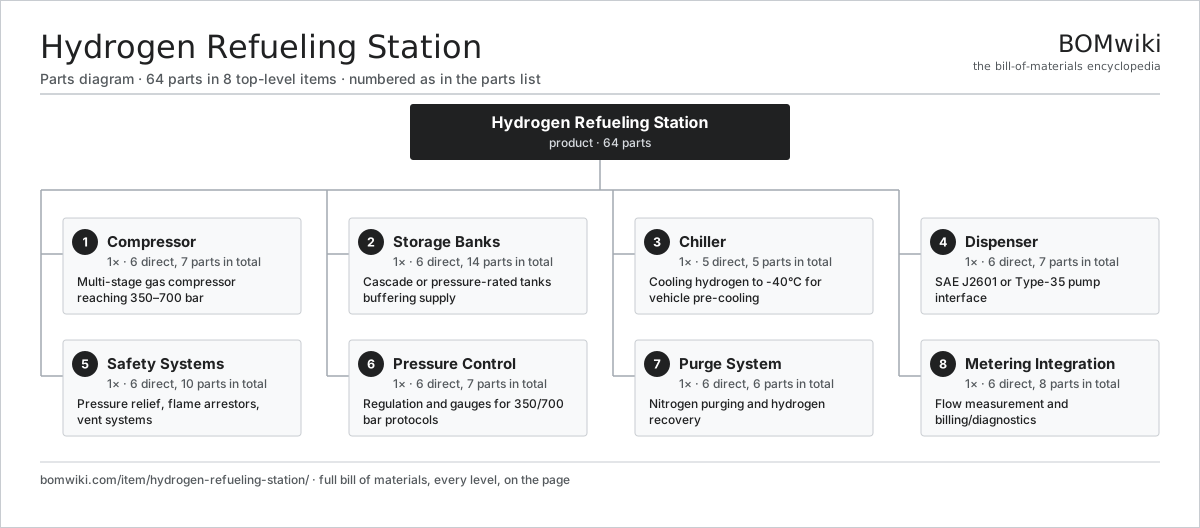
| # | Part | Qty | What it does |
|---|---|---|---|
| 1 | Compressor 6 parts | 1× | Multi-stage gas compressor reaching 350–700 bar |
| 2 | Storage Banks 6 parts | 1× | Cascade or pressure-rated tanks buffering supply |
| 3 | Chiller 5 parts | 1× | Cooling hydrogen to -40°C for vehicle pre-cooling |
| 4 | Dispenser 6 parts | 1× | SAE J2601 or Type-35 pump interface |
| 5 | Safety Systems 6 parts | 1× | Pressure relief, flame arrestors, vent systems |
| 6 | Pressure Control 6 parts | 1× | Regulation and gauges for 350/700 bar protocols |
| 7 | Purge System 6 parts | 1× | Nitrogen purging and hydrogen recovery |
| 8 | Metering Integration 6 parts | 1× | Flow measurement and billing/diagnostics |
3D model
No 3D model yet. Have a CAD file of this? Add a 3D model. STL renders right on this page; STEP, FreeCAD, and OpenSCAD sources are welcome too (openly licensed, like all 3D models on BOMwiki).
Build & assembly graph
expand / collapse · shared sub-assemblies converge · links to related products · est. labourTap an assembly to expand/collapse · tap a part to open it · use “Open page” for any node · drag to pan, scroll to zoom.
Bill of materials for Hydrogen Refueling Station
8 top-level lines · 55 rows shown · 64 parts total · indented to 3 levels| # | Item / sub-assembly | Part no. | Qty/assy | Ext. qty | Parts | Type |
|---|---|---|---|---|---|---|
| 1 | Compressor 6 parts | hydrogen-refueling-station-compressor | 1× | 1 | 7 | assembly |
| 1.1 | Compressor Head | hydrogen-refueling-station-compressor-head | 1× | 1 | · | part |
| 1.2 | Compressor Motor | hydrogen-refueling-station-compressor-motor | 1× | 1 | · | part |
| 1.3 | Compressor Cooling | hydrogen-refueling-station-compressor-cooling | 1× | 1 | · | part |
| 1.4 | Check Valve | hydrogen-refueling-station-check-valve | 2× | 2 | · | part |
| 1.5 | Oil Separator | hydrogen-refueling-station-oil-separator | 1× | 1 | · | part |
| 1.6 | Fastener Set | fastener-set | 1× | 1 | · | part |
| 2 | Storage Banks 6 parts | hydrogen-refueling-station-storage-banks | 1× | 1 | 14 | assembly |
| 2.1 | Storage Tank 350 | hydrogen-refueling-station-storage-tank-350 | 2× | 2 | · | part |
| 2.2 | Storage Tank 700 | hydrogen-refueling-station-storage-tank-700 | 1× | 1 | · | part |
| 2.3 | Tank Isolation Valve | hydrogen-refueling-station-tank-isolation-valve | 6× | 6 | · | part |
| 2.4 | Tank Relief Valve | hydrogen-refueling-station-tank-relief-valve | 3× | 3 | · | part |
| 2.5 | Tank Interconnect Line | hydrogen-refueling-station-tank-interconnect-line | 1× | 1 | · | part |
| 2.6 | Fastener Set | fastener-set | 1× | 1 | · | part |
| 3 | Chiller 5 parts | hydrogen-refueling-station-chiller | 1× | 1 | 5 | assembly |
| 3.1 | Chiller Core | hydrogen-refueling-station-chiller-core | 1× | 1 | · | part |
| 3.2 | Chiller Compressor | hydrogen-refueling-station-chiller-compressor | 1× | 1 | · | part |
| 3.3 | Chiller Condenser | hydrogen-refueling-station-chiller-condenser | 1× | 1 | · | part |
| 3.4 | Chiller Evaporator | hydrogen-refueling-station-chiller-evaporator | 1× | 1 | · | part |
| 3.5 | Temperature Sensor | hydrogen-refueling-station-temperature-sensor | 1× | 1 | · | part |
| 4 | Dispenser 6 parts | hydrogen-refueling-station-dispenser | 1× | 1 | 7 | assembly |
| 4.1 | Dispenser Pump | hydrogen-refueling-station-dispenser-pump | 1× | 1 | · | part |
| 4.2 | Dispenser Hose | hydrogen-refueling-station-dispenser-hose | 1× | 1 | · | part |
| 4.3 | Dispenser Nozzle | hydrogen-refueling-station-dispenser-nozzle | 1× | 1 | · | part |
| 4.4 | Dispenser Flow Meter | hydrogen-refueling-station-dispenser-flow-meter | 1× | 1 | · | part |
| 4.5 | Dispenser Pressure Gauge | hydrogen-refueling-station-dispenser-pressure-gauge | 1× | 1 | · | part |
| 4.6 | Relay | relay | 2× | 2 | · | part |
| 5 | Safety Systems 6 parts | hydrogen-refueling-station-safety-systems | 1× | 1 | 10 | assembly |
| 5.1 | Flame Arrestor | hydrogen-refueling-station-flame-arrestor | 2× | 2 | · | part |
| 5.2 | Pressure Relief Valve | hydrogen-refueling-station-pressure-relief-valve | 3× | 3 | · | part |
| 5.3 | Hydrogen Sensor | hydrogen-refueling-station-hydrogen-sensor | 2× | 2 | · | part |
| 5.4 | Emergency Vent Line | hydrogen-refueling-station-emergency-vent-line | 1× | 1 | · | part |
| 5.5 | Check Valve Vent | hydrogen-refueling-station-check-valve-vent | 1× | 1 | · | part |
| 5.6 | Relay | relay | 1× | 1 | · | part |
| 6 | Pressure Control 6 parts | hydrogen-refueling-station-pressure-control | 1× | 1 | 7 | assembly |
| 6.1 | Main Regulator | hydrogen-refueling-station-main-regulator | 1× | 1 | · | part |
| 6.2 | Secondary Regulator | hydrogen-refueling-station-secondary-regulator | 1× | 1 | · | part |
| 6.3 | Pressure Gauge 350 | hydrogen-refueling-station-pressure-gauge-350 | 1× | 1 | · | part |
| 6.4 | Pressure Gauge 700 | hydrogen-refueling-station-pressure-gauge-700 | 1× | 1 | · | part |
| 6.5 | Solenoid Valve | hydrogen-refueling-station-solenoid-valve | 2× | 2 | · | part |
| 6.6 | Fastener Set | fastener-set | 1× | 1 | · | part |
| 7 | Purge System 6 parts | hydrogen-refueling-station-purge-system | 1× | 1 | 6 | assembly |
| 7.1 | Nitrogen Supply | hydrogen-refueling-station-nitrogen-supply | 1× | 1 | · | part |
| 7.2 | Nitrogen Regulator | hydrogen-refueling-station-nitrogen-regulator | 1× | 1 | · | part |
| 7.3 | Purge Valve | hydrogen-refueling-station-purge-valve | 1× | 1 | · | part |
| 7.4 | Hydrogen Recovery Line | hydrogen-refueling-station-hydrogen-recovery-line | 1× | 1 | · | part |
| 7.5 | Recovery Compressor | hydrogen-refueling-station-recovery-compressor | 1× | 1 | · | part |
| 7.6 | Fastener Set | fastener-set | 1× | 1 | · | part |
| 8 | Metering Integration 6 parts | hydrogen-refueling-station-metering-integration | 1× | 1 | 8 | assembly |
| 8.1 | Flow Computer | hydrogen-refueling-station-flow-computer | 1× | 1 | · | part |
| 8.2 | Pressure Transducer | hydrogen-refueling-station-pressure-transducer | 2× | 2 | · | part |
| 8.3 | Temp Transducer | hydrogen-refueling-station-temp-transducer | 2× | 2 | · | part |
| 8.4 | Data Logger | hydrogen-refueling-station-data-logger | 1× | 1 | · | part |
| 8.5 | Display Panel | hydrogen-refueling-station-display-panel | 1× | 1 | · | part |
| 8.6 | Power Supply | power-supply | 1× | 1 | · | part |
Something wrong in this list? Report a problem with this BOM.
Related products
same domain, ranked by shared parts Battery Energy Storage System
17,429 parts · shares 1 with this page
Biogas Upgrading Unit
110 parts · shares 1 with this page
Battery Energy Storage System
17,429 parts · shares 1 with this page
Biogas Upgrading Unit
110 parts · shares 1 with this page
 Biomass Pellet Plant
404 parts · shares 1 with this page
Biomass Pellet Plant
404 parts · shares 1 with this page
 Concentrated Solar Power Receiver
855 parts · shares 1 with this page
Concentrated Solar Power Receiver
855 parts · shares 1 with this page
 Floating Offshore Wind Turbine
608 parts · shares 1 with this page
Floating Offshore Wind Turbine
608 parts · shares 1 with this page
Sourcing: possible vendors
Browse the supplier directory → Prices, MOQ, and lead times are algorithmic estimates, not quotes, and not claims about these companies. Company mappings are curated by keyword; est. price band $100–$20M. How estimates work| Vendor | HQ | Specialty | MOQ | Lead time |
|---|---|---|---|---|
|
🇩🇰Vestas
vestas.com ↗
|
Aarhus, DK | Wind turbines | 500 units | 12–24 wks |
| firstsolar.com ↗ | Tempe, US | PV modules | 500 units | 12–24 wks |
|
🇨🇳LONGi
longi.com ↗
|
Xi'an, CN | Solar wafers & modules | 500 units | 12–24 wks |
| enphase.com ↗ | Fremont, US | Microinverters & storage | 500 units | 12–24 wks |
|
🇨🇳Sungrow
sungrowpower.com ↗
|
Hefei, CN | Solar inverters & storage | 500 units | 12–24 wks |
1,112-word article