Marine Loading Arm
ProductOverview
The marine loading arm (MLA) is a ship-mounted articulated system for transferring liquid cargo between vessel and shore infrastructure during bulk liquid operations. Marine loading arms are predominantly found on tankers, chemical carriers, and specialized vessels designed to load or discharge petroleum products, chemicals, edible oils, and other liquid cargoes at ports where ship-side loading is preferred over fixed shore-based infrastructure.
The arm's defining feature is its articulated design: two pipe segments connected by swivel joints allow the arm to reach over the ship's rail, extend onto the dock, and articulate to accommodate different shore configurations without repositioning the vessel. This flexibility is critical in congested harbors where berthing spots are limited and vessel movement is costly. The arm is typically manned by deck crew and remotely operated via a pendant or local control station on deck.
How It Works
A marine loading arm is mounted on the ship's deck on a heavy pedestal welded to the structure. Before cargo operations, the crew conducts a pre-transfer briefing with shore personnel to confirm cargo type, pressure limits, hose configuration, and emergency procedures.
The arm begins in a stowed or neutral position. The operator engages the Slew Joint, rotating the arm to face the shore connection point. The slew bearing allows continuous rotation, enabling the operator to align the arm with the cargo hose manifold on the dock.
The first Boom Segment 1 (Primary Arm) extends from the Pedestal, and the second Boom Segment 2 (Secondary Arm) articulates at the first via Swivel Joint 1. The swivel joints are self-centering, allowing the arm to flex naturally under hose weight and pressure without binding. The operator manually guides the arm tip to the shore Quick-Connect Couplers, where a dock worker engages the couplers using a guide ring or alignment tool.
The couplers connect the ship's Cargo Hose and Return Hose to shore transfer lines. Once connected, shore personnel confirm readiness, and the cargo pump is started. Liquid flows from the shore facility, through the arm manifold, down the cargo hose, and into the ship's cargo tanks.
The Manifold Block houses the Ball Valve (manually or remotely operated) to start and stop flow, the Check Valve to prevent backflow, and the Pressure Relief Valve set at 40–50 bar to protect the hoses. The Pressure Gauge displays pressure to the operator.
During transfer, if the shore side suddenly loses pressure (hose failure, pump trip) or if cargo backs up (tank full), the Emergency Response System (ERS) activates. The ERS Pressure Switch detects abnormal pressure and triggers the ERS Control Solenoid, which closes the ERS Isolation Valve within seconds. Any cargo residue in the manifold drains into the ERS Catch Tray, and the ERS Drain Pump recovers it, preventing spills into the marine environment.
When the transfer is complete, shore personnel close their isolation valve, confirm zero pressure, and disconnect the couplers. The Counterweight Assembly balances the arm as it returns to the stowed position, eliminating strain on the pedestal and ship structure.
Subsystems
Pedestal and Base
The Pedestal is the critical interface between the arm and ship deck. The Pedestal Column is a heavy steel tube (30–40cm diameter, 2–3m tall) welded to the deck structure. The Pedestal Flange is a large circular plate welded or bolted to the ship's deck, distributing the arm's load across a wide area. The Slew Bearing (0.8–1.5m diameter ball or roller bearing) is mounted atop the pedestal, allowing 180+ degree continuous rotation. The Pedestal Bracing (diagonal gussets or struts) reinforces the pedestal against bending moments from the articulated arm weight and pressure loads.
Boom Segments and Articulation
The Boom Segment 1 (Primary Arm) is the primary arm section (3–5 meters long), directly mounted to the slew bearing at its base. It is a welded steel pipe (20–30cm OD) with internal passages for hose routing. The Boom Segment 2 (Secondary Arm) (2–4 meters long, 15–25cm OD) extends from segment 1 via the Swivel Joint 1. Each segment connects to the next via Swivel Coupling Assembly elements, typically consisting of a Coupling Ball (hardened steel sphere) seated in a Coupling Housing (ductile iron socket). Bearing Races (ball or roller elements) reduce friction. These couplings allow the arm to articulate ±30 degrees or more without kinking the internal Hose Bundle 1 and Hose Bundle 2.
Counterweight
The Counterweight Assembly extends rearward from the pedestal, opposite to the arm's outboard direction. The Counterweight Frame is a steel box-section beam, and Counterweight Blocks (5–15 tonnes of cast iron) are bolted to it. The Counterweight Adjustment mechanism allows adding or removing blocks to tune the arm balance. This counterweight reduces bending stress on the pedestal and eliminates the need for excessive deck reinforcement.
Manifold Block
The Manifold Block is mounted at the boom tip and is the operational heart of the arm. The Manifold Body is a ductile iron or steel casting with precision-drilled galleries. Inside are mounted:
- The Ball Valve: A two-way ball valve (typically 2–4 inch) that opens or closes the cargo line. It may be manually operated (wheel handle) or solenoid-actuated (remote control).
- The Check Valve: A spring-loaded check valve preventing backflow if shore-side pressure exceeds arm pressure.
- The Pressure Relief Valve: Set at 40–50 bar, this valve opens to protect hoses from overpressure.
- The Quick-Connect Couplers: Two flat-face quick couplers (typically 2–4 inch Eaton or ISO style) provide safe, spill-free connection to shore transfer hoses.
- The Pressure Gauge: A glycerin-filled pressure gauge (0–60 bar scale) allows visual confirmation of system pressure.
Hose Bundle
The Hose Bundle runs through the boom segments. The Cargo Hose (4–6 inch bore) is the primary transfer line rated to 40 bar, carrying cargo from shore to ship. The Return Hose (3–5 inch bore) handles cargo flowing back to shore during reverse transfer or stripping operations. The Control Hose (small bore, 1/2–3/4 inch) carries hydraulic or pneumatic pilot pressure for solenoid valve actuation. The Hose Clips and Supports secure the bundle to the boom at regular intervals. The Hose Protection includes abrasion-resistant sleeves at articulation points and bumpers where hoses might contact the ship structure.
Emergency Response System (ERS)
Regulatory bodies (IMO SOLAS, port state control) mandate ERS on all modern marine loading arms. The Emergency Response System (ERS) activates if a dangerous condition develops. The ERS Pressure Switch is an electronic transducer monitoring manifold pressure; if pressure spikes unexpectedly (indicating a hose rupture or sudden blockage), it signals the ERS Control Solenoid. The solenoid instantly closes the ERS Isolation Valve, stopping cargo flow within 2–3 seconds.
The ERS Catch Tray (a drip pan below the manifold) collects any cargo spilled during coupler disconnection. The ERS Drain Pump (small electric or pneumatic pump) then draws the residue from the tray and returns it to the ship's tank or shore facility, preventing environmental discharge.
Performance and Operational Characteristics
Marine loading arms handle viscosities ranging from light gasoline (0.5 cP) to heavy fuel oil (100+ cP) and specialized products like molten sulfur or heated bitumen. Throughput varies inversely with viscosity: gasoline and light oil operations achieve 400–600 m³/h; heavy bunker oil 100–200 m³/h.
Transfer lines are typically 4–6 inches in diameter. Shore-side pumps maintain 30–40 bar pressure; the arm manifold relief protects against transient pressure spikes. The arm itself is passive, it has no onboard pump; cargo flows under pressure from shore or from ship cargo pumps during discharge.
Connection safety is paramount. Modern arms use flat-face couplers that close off both sides upon disconnection, preventing spillage. Older poppet-type couplers drip residue, which is captured by the ERS catch tray. Crew training emphasizes coupling procedure, pressure testing before transfer, visual inspection of hose condition, and immediate response to pressure alarms.
Maintenance involves regular hose inspections for cracks, kinks, or external damage. Swivel joint bearings are greased at regular intervals. The manifold block is pressure-tested annually to ASME standards. Counterweight bolts are periodically retightened. The ERS system undergoes functional testing: the pressure switch is tested for trip point accuracy, and the isolation valve is cycled to confirm closure and opening.
Environmental regulations (MARPOL Annex I) require that any discharge must be documented, measured, and logged. Modern ships integrate digital flow meters into the manifold or shore connection, providing real-time cargo volume to the ship's cargo management system. Spill response procedures are detailed in the vessel's Ship Oil Pollution Emergency Plan (SOPEP).
The typical marine loading arm lifetime is 15–25 years, with major refurbishment (hose replacement, valve overhaul, bearing replacement) occurring every 5–7 years depending on duty and environment. Saltwater corrosion is a constant concern; stainless steel is preferred for exposed fasteners and wetted surfaces. Cathodic protection (sacrificial zinc anodes) extends steel component life in the marine environment.
Marine Loading Arm parts and their functions
9 top-level parts · 51 parts in total · full bill of materials below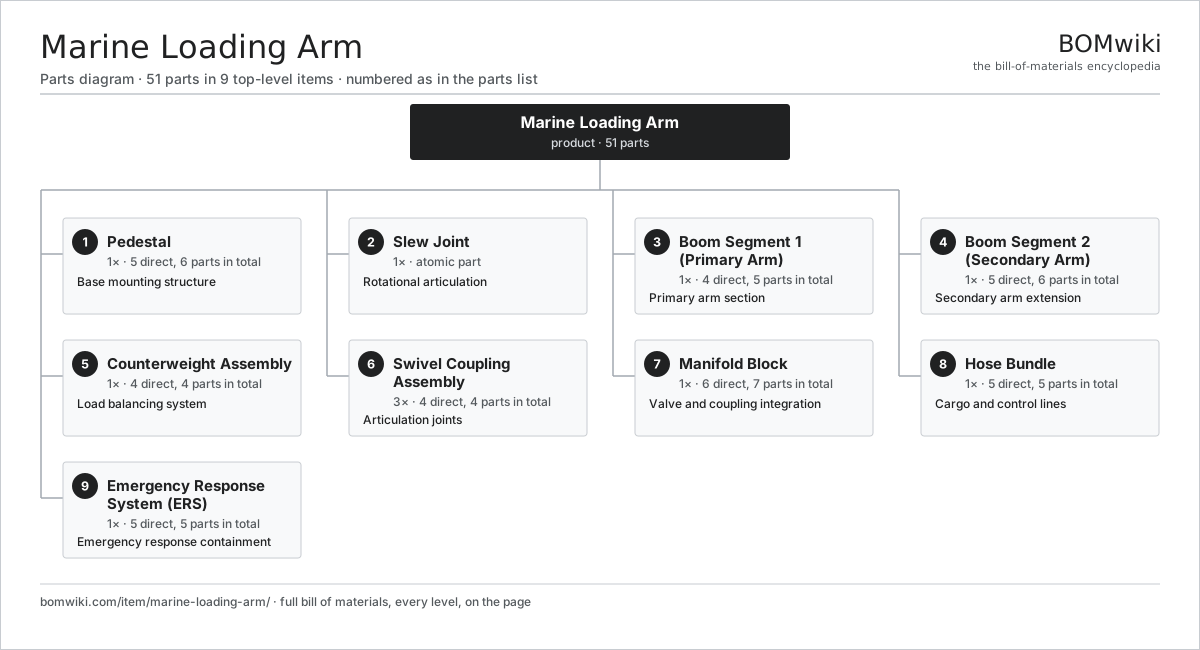
| # | Part | Qty | What it does |
|---|---|---|---|
| 1 | Pedestal 5 parts | 1× | Base mounting structure |
| 2 | Slew Joint | 1× | Rotational articulation |
| 3 | Boom Segment 1 (Primary Arm) 4 parts | 1× | Primary arm section |
| 4 | Boom Segment 2 (Secondary Arm) 5 parts | 1× | Secondary arm extension |
| 5 | Counterweight Assembly 4 parts | 1× | Load balancing system |
| 6 | Swivel Coupling Assembly 4 parts | 3× | Articulation joints |
| 7 | Manifold Block 6 parts | 1× | Valve and coupling integration |
| 8 | Hose Bundle 5 parts | 1× | Cargo and control lines |
| 9 | Emergency Response System (ERS) 5 parts | 1× | Emergency response containment |
3D model
No 3D model yet. Have a CAD file of this? Add a 3D model. STL renders right on this page; STEP, FreeCAD, and OpenSCAD sources are welcome too (openly licensed, like all 3D models on BOMwiki).
Build & assembly graph
expand / collapse · shared sub-assemblies converge · links to related products · est. labourTap an assembly to expand/collapse · tap a part to open it · use “Open page” for any node · drag to pan, scroll to zoom.
Bill of materials for Marine Loading Arm
9 top-level lines · 47 rows shown · 51 parts total · indented to 3 levels| # | Item / sub-assembly | Part no. | Qty/assy | Ext. qty | Parts | Type |
|---|---|---|---|---|---|---|
| 1 | Pedestal 5 parts | marine-loading-arm-pedestal | 1× | 1 | 6 | assembly |
| 1.1 | Pedestal Column | marine-loading-arm-pedestal-column | 1× | 1 | · | part |
| 1.2 | Pedestal Flange | marine-loading-arm-pedestal-flange | 1× | 1 | · | part |
| 1.3 | Slew Bearing | marine-loading-arm-slew-bearing | 1× | 1 | · | part |
| 1.4 | Pedestal Bracing | marine-loading-arm-pedestal-bracing | 1× | 1 | · | part |
| 1.5 | Fastener Set | fastener-set | 2× | 2 | · | part |
| 2 | Slew Joint | marine-loading-arm-slew-joint | 1× | 1 | · | part |
| 3 | Boom Segment 1 (Primary Arm) 4 parts | marine-loading-arm-boom-segment-1 | 1× | 1 | 5 | assembly |
| 3.1 | Boom Pipe Segment 1 | marine-loading-arm-boom-pipe-1 | 1× | 1 | · | part |
| 3.2 | Swivel Joint 1 | marine-loading-arm-swivel-joint-1 | 2× | 2 | · | part |
| 3.3 | Hose Bundle 1 | marine-loading-arm-internal-hose-bundle-1 | 1× | 1 | · | part |
| 3.4 | O-Ring Set | oring-set | 1× | 1 | · | part |
| 4 | Boom Segment 2 (Secondary Arm) 5 parts | marine-loading-arm-boom-segment-2 | 1× | 1 | 6 | assembly |
| 4.1 | Boom Pipe Segment 2 | marine-loading-arm-boom-pipe-2 | 1× | 1 | · | part |
| 4.2 | Swivel Joint 2 | marine-loading-arm-swivel-joint-2 | 2× | 2 | · | part |
| 4.3 | Manifold Mounting Base | marine-loading-arm-manifold-mounting-base | 1× | 1 | · | part |
| 4.4 | Hose Bundle 2 | marine-loading-arm-internal-hose-bundle-2 | 1× | 1 | · | part |
| 4.5 | O-Ring Set | oring-set | 1× | 1 | · | part |
| 5 | Counterweight Assembly 4 parts | marine-loading-arm-counterweight-assembly | 1× | 1 | 4 | assembly |
| 5.1 | Counterweight Frame | marine-loading-arm-counterweight-frame | 1× | 1 | · | part |
| 5.2 | Counterweight Blocks | marine-loading-arm-counterweight-blocks | 1× | 1 | · | part |
| 5.3 | Counterweight Adjustment | marine-loading-arm-counterweight-adjustment | 1× | 1 | · | part |
| 5.4 | Fastener Set | fastener-set | 1× | 1 | · | part |
| 6 | Swivel Coupling Assembly 4 parts | marine-loading-arm-swivel-coupling | 3× | 3 | 4 | assembly |
| 6.1 | Coupling Ball | marine-loading-arm-coupling-ball | 1× | 3 | · | part |
| 6.2 | Coupling Housing | marine-loading-arm-coupling-housing | 1× | 3 | · | part |
| 6.3 | Bearing Races | marine-loading-arm-bearing-races | 1× | 3 | · | part |
| 6.4 | O-Ring Set | oring-set | 1× | 3 | · | part |
| 7 | Manifold Block 6 parts | marine-loading-arm-manifold-block | 1× | 1 | 7 | assembly |
| 7.1 | Manifold Body | marine-loading-arm-manifold-body | 1× | 1 | · | part |
| 7.2 | Ball Valve | marine-loading-arm-ball-valve | 1× | 1 | · | part |
| 7.3 | Check Valve | marine-loading-arm-check-valve | 1× | 1 | · | part |
| 7.4 | Pressure Relief Valve | marine-loading-arm-pressure-relief | 1× | 1 | · | part |
| 7.5 | Quick-Connect Couplers | marine-loading-arm-quick-connect-couplers | 2× | 2 | · | part |
| 7.6 | Pressure Gauge | marine-loading-arm-pressure-gauge | 1× | 1 | · | part |
| 8 | Hose Bundle 5 parts | marine-loading-arm-hose-bundle | 1× | 1 | 5 | assembly |
| 8.1 | Cargo Hose | marine-loading-arm-cargo-hose | 1× | 1 | · | part |
| 8.2 | Return Hose | marine-loading-arm-return-hose | 1× | 1 | · | part |
| 8.3 | Control Hose | marine-loading-arm-control-hose | 1× | 1 | · | part |
| 8.4 | Hose Clips and Supports | marine-loading-arm-hose-clips | 1× | 1 | · | part |
| 8.5 | Hose Protection | marine-loading-arm-hose-protection | 1× | 1 | · | part |
| 9 | Emergency Response System (ERS) 5 parts | marine-loading-arm-ers-system | 1× | 1 | 5 | assembly |
| 9.1 | ERS Isolation Valve | marine-loading-arm-ers-isolation-valve | 1× | 1 | · | part |
| 9.2 | ERS Catch Tray | marine-loading-arm-ers-catch-tray | 1× | 1 | · | part |
| 9.3 | ERS Drain Pump | marine-loading-arm-ers-drain-pump | 1× | 1 | · | part |
| 9.4 | ERS Control Solenoid | marine-loading-arm-ers-control-solenoid | 1× | 1 | · | part |
| 9.5 | ERS Pressure Switch | marine-loading-arm-ers-pressure-switch | 1× | 1 | · | part |
Something wrong in this list? Report a problem with this BOM.
Related products
same domain, ranked by shared parts Articulated Forklift
2,417 parts · shares 1 with this page
Automated Mooring System
81 parts · shares 1 with this page
Articulated Forklift
2,417 parts · shares 1 with this page
Automated Mooring System
81 parts · shares 1 with this page
 Bag Dump Station
134 parts · shares 1 with this page
Bag Dump Station
134 parts · shares 1 with this page
 Bale Grab Handler
75 parts · shares 1 with this page
Bulk Bag Discharger
178 parts · shares 1 with this page
Coal Yard Stacker
571 parts · shares 1 with this page
Bale Grab Handler
75 parts · shares 1 with this page
Bulk Bag Discharger
178 parts · shares 1 with this page
Coal Yard Stacker
571 parts · shares 1 with this page
Sourcing: possible vendors
Browse the supplier directory → Prices, MOQ, and lead times are algorithmic estimates, not quotes, and not claims about these companies. Company mappings are curated by keyword; est. price band $2k–$300k. How estimates work| Vendor | HQ | Specialty | MOQ | Lead time |
|---|---|---|---|---|
| toyota-industries.com ↗ | Kariya, JP | Forklifts & logistics | 20 units | 10–16 wks |
| kiongroup.com ↗ | Frankfurt, DE | Forklifts (Linde, STILL) | 20 units | 10–16 wks |
| jungheinrich.com ↗ | Hamburg, DE | Warehouse trucks | 20 units | 10–16 wks |
| crown.com ↗ | New Bremen, US | Forklifts | 20 units | 10–16 wks |
|
🇨🇳Hangcha
hcforklift.com ↗
|
Hangzhou, CN | Forklifts & material handling | 20 units | 10–16 wks |
1,656-word article