Meat Bandsaw
ProductOverview
A meat bandsaw is a mechanical cutting machine using a continuous stainless or bimetal steel loop blade rotating on two wheels at 10–30 m/s, designed for butchering whole or partial meat carcasses and portioning into steaks, chops, and roasts. The band blade is gentler on meat structure than reciprocating saws, leaving cleaner surfaces with minimal oxidation or microfiber damage. A properly tensioned and guided blade cuts cleanly through bone and connective tissue without tearing muscle fibers.
Meat bandsaws are found in every professional butcher shop, meat processing plant, and retail counter. They are available in vertical (typical) or horizontal configurations, with capacities ranging from small tabletop units (processing 10–20 kg/hour) to large industrial machines (cutting 300+ kg/hour in high-volume plants). The machine must be robust: operating under continuous wet conditions, handling abrasive bone fragments, and withstanding operator fatigue.
How it Works
The machine frame is a rigid welded or cast-iron structure anchored to the floor. Two precision wheels (drive and idler, typically 250–350 mm diameter) are mounted vertically on the frame, separated by 800 mm to 1.2 m. A continuous stainless steel loop blade (1600–3000 mm circumference) runs around both wheels, driven by a motor-driven pulley on the drive wheel. The idler wheel is spring-loaded, allowing automatic tension adjustment and blade tracking.
The AC motor (1–3 kW, 1400 rpm) is connected to the drive wheel via a V-belt with pulleys (typically 2:1 to 4:1 reduction ratio), resulting in a blade speed of 10–30 m/s. At 20 m/s and 2.5 m blade circumference, the blade completes one full rotation in 0.125 seconds, or ~480 RPM. The motor runs continuously when the machine is energized; a safety interlock stops the motor if the protective hood is opened.
A precision cutting table is positioned directly beneath the blade. The table is precision-ground stainless steel or ductile iron and can slide horizontally on ball-bearing linear guides at speeds controlled by a hand wheel or power screw. A adjustable fence stops the table at desired cut positions, allowing repeatable thickness (0.5–50 mm slices). For angled cuts (e.g., cutting steaks from a sirloin at 30 degrees), the table tilts on a pivot.
To make a cut, the operator places a meat carcass or primal (e.g., a bone-in ribeye, 5–15 kg) on the table, aligns it with the fence, and advances the meat into the moving blade via the hand wheel. Blade teeth bite into the meat and bone incrementally; the operator guides the carcass along a straight path. Cutting a 30 mm steak from a 150 mm thick primal takes 3–5 seconds at moderate feed speed. On a high-volume counter, a single bandsaw operator might cut 50–100 portions per hour.
Blade Design and Materials
The saw blade is the critical component. Meat-processing blades are typically bimetal (high-speed steel teeth on a carbon-steel back) or high-carbon alloy. Bimetal blades are superior: the teeth are harder (M2 or M42 high-speed steel, >63 HRC) allowing longer edge life (10,000–30,000 cutting meters), while the back remains slightly flexible to absorb impact from bone. High-carbon blades (C45 or 1050 steel) are cheaper but dull faster (5,000–10,000 meters).
Blade width (30–100 mm) is chosen based on cut complexity:
- 30–40 mm: curved or irregular cuts (deboning, detailed portioning)
- 60–80 mm: straight cuts (steaks, chops) and carcass splitting
- 100 mm: heavy ripping and block cutting
Blade thickness (0.5–1.5 mm) affects:
- Thinner (<0.75 mm): less kerf waste, easier on small bones, quieter, but flexes under load
- Thicker (>1 mm): rigid, handles heavy bone, but more kerf waste and slower chip evacuation
Blade tooth pitch (spacing between teeth, 10–25 mm) should match meat type:
- 10–15 mm pitch (6+ TPI): fine cuts, poultry, deli meats, minimal bone
- 20–25 mm pitch (3–4 TPI): beef carcass cuts, thick bones, high-speed operation
At a blade speed of 20 m/s and 3 TPI (25 mm pitch), one new tooth engages the meat every 1.25 milliseconds, allowing sustained cutting speed of 3–5 mm per second (manual hand-wheel advance).
Precision and Surface Quality
A properly tensioned blade (10–15 kg preload for a 60 mm width) produces surface roughness Rz ~50 micrometers on beef muscle, acceptable for retail display. Over-tension (>20 kg) stresses welds and shortens blade life; under-tension (<5 kg) causes blade wandering and irregular surface. The upper and lower ceramic or steel guide blocks flanking the blade prevent lateral deflection (<1 mm) and are critical for achieving straight cuts.
Blade tracking (keeping the blade centered on the wheel rims) is maintained by the eccentric tension adjustment. If the blade drifts toward the front or back of the wheels, it will eventually slip off and break. Modern machines have automatic blade guides that correct minor drift; older machines require operator monitoring and adjustment every 2–4 hours.
Bone Cutting and Wear
Cutting through bone (dense, abrasive hydroxyapatite and collagen) accelerates blade wear 10–50x compared to pure muscle cutting. A blade cutting 100 kg of beef steak (soft tissue only) might last 20 days; the same blade cutting 100 kg of blade steaks (with bone) will dull in 2–3 days. Strategies to extend blade life:
- Use bimetal blades for bone-heavy work
- Reduce blade speed (10–15 m/s) for bone-intensive cuts
- Increase feed rate slightly to prevent blade rubbing in the kerf
- Sharpen or replace dull blades promptly (a dull blade heats meat, oxidizing it and creating discoloration)
A sharp blade operates at <40 °C on the tooth tip; a dull blade can exceed 60 °C, browning meat surfaces.
Safety Features
All modern meat bandsaws include:
- Transparent polycarbonate hood covering the blade and wheels
- Interlocked safety lid stopping the motor when opened
- Mesh guard on the operator-facing side preventing accidental hand contact
- Drip collection pan preventing blood and meat juices from pooling on the floor
- Thermal overload relay stopping the motor if jammed
Despite these features, meat saws rank among the highest-injury machines in meat plants. Operator fatigue, repetitive motion, and high-speed blades result in ~5–10 significant hand injuries per 1000 workers annually in butcheries. Training on proper carcass positioning, fence use, and emergency stop procedures is mandatory.
Maintenance and Service Life
The wheel bearings (typically 6205 or 6206 deep-groove ball bearings) experience high loads (100–200 kg blade tension) and must be inspected every 500 operating hours for wear and noise. NSF H1-certified grease is applied annually; bearing life is typically 5–10 years.
The blade is the consumable item. Bimetal blades cost 50–200 EUR depending on length and width; replacement requires unwelding the old blade and welding a new one (5–10 minute downtime). Some operations stock pre-welded blade sets for faster changeover.
The motor (1–3 kW) and V-belt drive are standard industrial components; typical lifespan is 8–10 years with annual belt tension inspection.
Integration in Butchery Workflow
In a typical butchery, a meat bandsaw receives primary primals (bone-in ribeyes, strips, chucks, 20–40 kg each) from a carcass breakdown stage and portions them into retail cuts (steaks, roasts, stew meat). A single operator manages one or two saws, making 5–10 cuts per minute and producing 20–30 portions per hour (higher speeds require chilling and multi-stage automation). The portioned cuts then proceed to trimming and packaging/forming.
High-volume plants (>1000 kg/hour meat processing) deploy multiple bandsaws (4–8 units) operated in parallel, each with a specialized role: one for carcass splitting, others for specific cut types (ribeyes, strips, chucks). Synchronization via conveyors and buffers ensures smooth flow and minimizes idle time.
Horizontal vs. Vertical Saws
Vertical saws (most common): Blade rotates in a vertical plane, operator feeds meat horizontally. Advantages: intuitive hand position, easy to guide meat, minimal vibration. Disadvantages: table length is limited (~500 mm), limiting maximum carcass size.
Horizontal saws: Blade rotates horizontally above the meat. Advantages: large table area (1–2 m), suitable for large primals and multiple simultaneous cuts. Disadvantages: higher vibration, harder to control meat position, steeper learning curve. Used primarily in large abattoirs.
Blade Speed Selection
Optimal blade speed depends on meat hardness and bone content:
- Soft tissue (muscle, fat): 20–30 m/s, fast feed rate (5–10 mm/sec)
- Mixed (muscle + thin bone): 15–20 m/s, moderate feed (3–5 mm/sec)
- Hard bone (femur, pelvis): 10–15 m/s, slow feed (1–2 mm/sec), bimetal blade required
Faster speeds reduce cutting time but generate more heat and accelerate blade wear. Slower speeds (10 m/s) allow higher-TPI blades to produce finer surfaces but reduce throughput. Most operators settle on 15–20 m/s as a compromise.
Capacity Estimation
A meat bandsaw's throughput (kg/hour) depends on:
- Blade sharpness: dull blade = slow feed = low throughput
- Meat type: soft poultry (100+ kg/hour) vs. hard bone beef (20–50 kg/hour)
- Cut complexity: simple steaks (50+ pieces/hour) vs. complex deboning (20 pieces/hour)
- Operator skill: experienced operators (30% faster than trainees)
A typical retail counter bandsaw (single operator) processes 20–50 kg/hour and requires sharpening every 2–3 days. Industrial plants with dedicated bandsaw operators and automatic sharpening stations achieve 100–300 kg/hour per machine.
Meat Bandsaw parts and their functions
7 top-level parts · 48 parts in total · full bill of materials below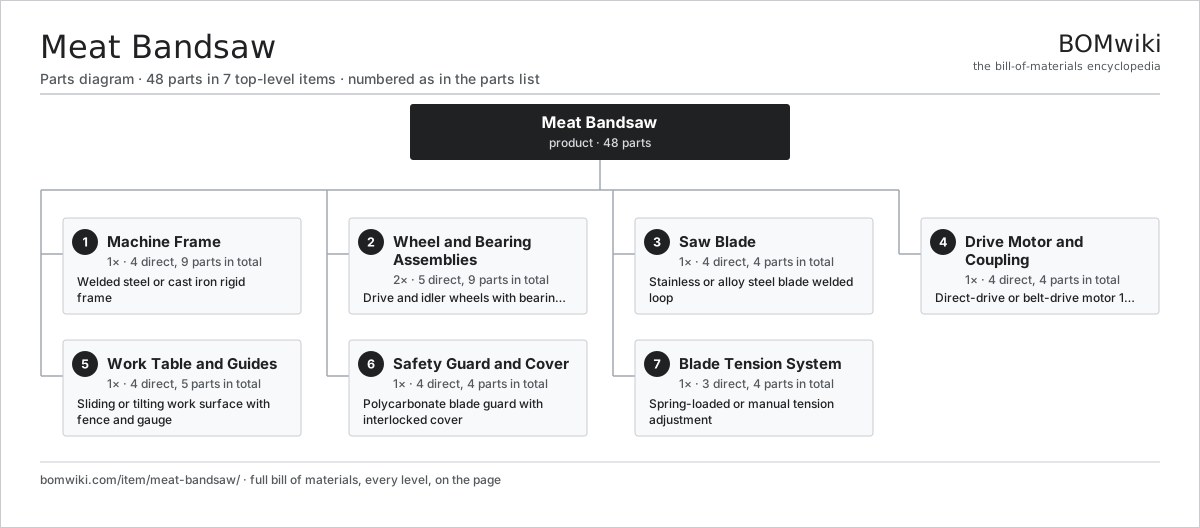
| # | Part | Qty | What it does |
|---|---|---|---|
| 1 | Machine Frame 4 parts | 1× | Welded steel or cast iron rigid frame |
| 2 | Wheel and Bearing Assemblies 5 parts | 2× | Drive and idler wheels with bearing blocks |
| 3 | Saw Blade 4 parts | 1× | Stainless or alloy steel blade welded loop |
| 4 | Drive Motor and Coupling 4 parts | 1× | Direct-drive or belt-drive motor 1–3 kW |
| 5 | Work Table and Guides 4 parts | 1× | Sliding or tilting work surface with fence and gauge |
| 6 | Safety Guard and Cover 4 parts | 1× | Polycarbonate blade guard with interlocked cover |
| 7 | Blade Tension System 3 parts | 1× | Spring-loaded or manual tension adjustment |
3D model
No 3D model yet. Have a CAD file of this? Add a 3D model. STL renders right on this page; STEP, FreeCAD, and OpenSCAD sources are welcome too (openly licensed, like all 3D models on BOMwiki).
Build & assembly graph
expand / collapse · shared sub-assemblies converge · links to related products · est. labourTap an assembly to expand/collapse · tap a part to open it · use “Open page” for any node · drag to pan, scroll to zoom.
Bill of materials for Meat Bandsaw
7 top-level lines · 35 rows shown · 48 parts total · indented to 3 levels| # | Item / sub-assembly | Part no. | Qty/assy | Ext. qty | Parts | Type |
|---|---|---|---|---|---|---|
| 1 | Machine Frame 4 parts | meat-bandsaw-frame | 1× | 1 | 9 | assembly |
| 1.1 | Base Plate and Foundation | meat-bandsaw-frame-base | 1× | 1 | · | part |
| 1.2 | Frame Uprights | meat-bandsaw-frame-uprights | 2× | 2 | · | part |
| 1.3 | Reinforcement Gussets | meat-bandsaw-frame-gussets | 4× | 4 | · | part |
| 1.4 | Fastener Set | fastener-set | 2× | 2 | · | part |
| 2 | Wheel and Bearing Assemblies 5 parts | meat-bandsaw-wheels | 2× | 2 | 9 | assembly |
| 2.1 | Drive Wheel | meat-bandsaw-drive-wheel | 1× | 2 | · | part |
| 2.2 | Idler Wheel | meat-bandsaw-idler-wheel | 1× | 2 | · | part |
| 2.3 | Wheel Bearings | meat-bandsaw-wheel-bearing | 4× | 8 | · | part |
| 2.4 | Wheel Axles | meat-bandsaw-wheel-axle | 2× | 4 | · | part |
| 2.5 | Tension Spring | meat-bandsaw-tension-spring | 1× | 2 | · | part |
| 3 | Saw Blade 4 parts | meat-bandsaw-blade | 1× | 1 | 4 | assembly |
| 3.1 | Blade Stock Material | meat-bandsaw-blade-steel | 1× | 1 | · | part |
| 3.2 | Blade Width | meat-bandsaw-blade-width | 1× | 1 | · | part |
| 3.3 | Blade Thickness | meat-bandsaw-blade-thickness | 1× | 1 | · | part |
| 3.4 | Blade Tooth Geometry | meat-bandsaw-blade-teeth | 1× | 1 | · | part |
| 4 | Drive Motor and Coupling 4 parts | meat-bandsaw-motor | 1× | 1 | 4 | assembly |
| 4.1 | AC Induction Motor | meat-bandsaw-motor-core | 1× | 1 | · | part |
| 4.2 | V-Belt and Pulleys | meat-bandsaw-belt-drive | 1× | 1 | · | part |
| 4.3 | Motor Mount Bracket | meat-bandsaw-motor-mount | 1× | 1 | · | part |
| 4.4 | Motor Protection Relay | meat-bandsaw-overload-protection | 1× | 1 | · | part |
| 5 | Work Table and Guides 4 parts | meat-bandsaw-table | 1× | 1 | 5 | assembly |
| 5.1 | Cutting Table Surface | meat-bandsaw-table-top | 1× | 1 | · | part |
| 5.2 | Table Slide Guides | meat-bandsaw-table-guides | 2× | 2 | · | part |
| 5.3 | Table Advance Mechanism | meat-bandsaw-table-movement | 1× | 1 | · | part |
| 5.4 | Adjustable Fence and Gauge | meat-bandsaw-fence | 1× | 1 | · | part |
| 6 | Safety Guard and Cover 4 parts | meat-bandsaw-guard | 1× | 1 | 4 | assembly |
| 6.1 | Blade Shield | meat-bandsaw-shield | 1× | 1 | · | part |
| 6.2 | Interlocked Safety Lid | meat-bandsaw-interlocked-lid | 1× | 1 | · | part |
| 6.3 | Operator Wrist Guard | meat-bandsaw-wrist-guard | 1× | 1 | · | part |
| 6.4 | Drip Collection Pan | meat-bandsaw-splash-pan | 1× | 1 | · | part |
| 7 | Blade Tension System 3 parts | meat-bandsaw-blade-tension | 1× | 1 | 4 | assembly |
| 7.1 | Tension Adjustment Knob | meat-bandsaw-tension-adjustment | 1× | 1 | · | part |
| 7.2 | Tension Gauge (Optional) | meat-bandsaw-tension-gauge | 1× | 1 | · | part |
| 7.3 | Blade Guide Blocks | meat-bandsaw-blade-guides | 2× | 2 | · | part |
Something wrong in this list? Report a problem with this BOM.
Sourcing: possible vendors
Browse the supplier directory → Prices, MOQ, and lead times are algorithmic estimates, not quotes, and not claims about these companies. Company mappings are curated by keyword; est. price band $1k–$500k. How estimates work| Vendor | HQ | Specialty | MOQ | Lead time |
|---|---|---|---|---|
| gea.com ↗ | Düsseldorf, DE | Process technology | 20 units | 12–20 wks |
| buhlergroup.com ↗ | Uzwil, CH | Food & materials processing | 20 units | 12–20 wks |
| tetrapak.com ↗ | Pully, CH | Food packaging & processing | 20 units | 12–20 wks |
| jbtc.com ↗ | Chicago, US | Food processing equipment | 20 units | 12–20 wks |
| alfalaval.com ↗ | Lund, SE | Heat transfer & separation | 20 units | 12–20 wks |
1,672-word article