Mochi Pounding Machine
ProductOverview
A mochi machine is an automated device for making mochigoma (mochi rice cakes), a Japanese staple requiring intensive hand pounding of steamed sticky rice. Traditional mochitsuki (hand pounding) uses a large mortar (usu) and wooden mallet; commercial machines replicate this labor-intensive process mechanically, combining steam cooking with a rotating kneading rotor and counter-fixed pins.
The machine consists of a large stainless steel steaming bowl (15–20 liter capacity), a rotating paddle-rotor with counter-rotating fixed pins, an electric motor with variable-speed gear drive, and a quick-release discharge gate. The operator loads prepared mochigome (short-grain glutinous rice, pre-soaked or freshly cooked), initiates steaming (8–10 minutes), then engages the rotor for kneading (8–15 minutes) until the rice transforms into a smooth, elastic mochi dough. Finished mochi is discharged through the gate into a portioning station or collection tray.
A typical commercial mochi machine produces 10–15 kg of finished mochi per 25–40 minute batch cycle, allowing a Japanese bakery or confectionery to produce 60–80 kg per 8-hour shift.
How it works
Mochigome rice (short-grain glutinous variety, often pre-steamed) is loaded into the Steam Cooking Bowl, a stainless steel vessel (15–20 liter capacity) with a hinged Lid Assembly. The Thermal Jacket surrounding the bowl is heated via the Heating Element (3–5 kW electric heater or steam inlet). Water or steam circulates through the jacket, maintaining 60–80°C steaming temperature, monitored by the Temperature Sensor (PT100 RTD probe).
The rice steams for 8–10 minutes until fully gelatinized and sticky. The Lid Assembly (hinged, with 1 inch centered vent) allows steam to escape; the vent opening is positioned to direct steam away from operators.
Once steaming completes, the operator initiates kneading by pressing START on the Control Panel and Timer. The AC Motor (1–2 hp) engages via the Motor Coupling, driving the Gear Reducer (20:1–30:1 ratio) to spin the Rotor Paddle at 15–40 RPM (adjustable via Speed Control Knob).
The Rotor Paddle, rotating in the steamed rice, pushes it toward the Counter-Pin Rack, a fixed array of 12–16 stainless steel pins mounted on the bowl's interior. The rotating paddle and fixed pins work together like a mechanical mortar and pestle: the paddle compresses rice against the pins, the pins puncture and shear the rice granules, and the repeated compression-release cycle breaks down the granule structure into a cohesive, elastic dough.
The Scraper Blade (a secondary rotating blade) pushes mochi toward the pin rack, ensuring thorough, even kneading throughout the batch. The entire process takes 8–15 minutes depending on desired texture (longer kneading produces smoother, more elastic mochi).
When kneading time expires, the Control Panel and Timer signal completion (audible alarm). The operator presses the Emergency Stop or allows the Motor Brake (spring-applied electromagnetic brake) to engage, stopping the rotor within 2 seconds.
The Discharge Gate and Removal System (hinged stainless valve at bowl bottom) is manually or pneumatically opened. Finished mochi exits through the Discharge Chute (30° angled stainless steel) into a collection area or Portioning Station (optional scale or divider pre-portioning mochi into 100–200 g pieces).
The Drip Pan (removable at frame base) catches rotor splash and condensate during operation.
Kneading dynamics and texture control
Mochi texture is determined by kneading intensity and duration:
- Light kneading (5–8 minutes): Produces slightly grainy mochi with visible rice particle texture; often preferred for kinako mochi (roasted soybean powder coating) where texture contrast is desirable.
- Medium kneading (10–12 minutes): Standard commercial mochi, smooth, elastic, slightly glossy surface.
- Heavy kneading (14–20 minutes): Very smooth, almost paste-like texture; preferred for mochi ice cream or filled mochi (daifuku) where elasticity must prevent cracking.
Rotor speed also affects texture: slower speeds (15–20 RPM) produce more uniform, fine-grained mochi because the extended kneading time allows thorough hydration and protein network development. Faster speeds (30–40 RPM) complete kneading faster but may produce slightly coarser texture due to less time at each compression-release cycle.
Rice variety is critical: short-grain glutinous mochigome has higher amylopectin content (~99%) compared to regular jasmine or sushi rice (~70%), yielding the characteristic sticky, elastic mochi texture. Using non-glutinous rice results in grainy, non-cohesive product unsuitable for mochi.
Batch management
A typical commercial workflow:
- Pre-soak mochigome rice (2 hours) → steam until fully tender off-machine (30 minutes)
- Load steamed rice into machine steam bowl → initiate steaming cycle (10 minutes)
- Engage rotor for kneading (12 minutes at medium speed)
- Discharge finished mochi to portioning station (3 minutes)
- Clean bowl and pins → reload for next batch
With efficient batch management, a single operator can run 4–5 batches (40–75 kg mochi) in an 8-hour shift. Mochi can be refrigerated or frozen post-production; it remains shelf-stable for 2–3 weeks at 4°C or 3–6 months frozen.
Maintenance
The Rotor Shaft and Counter-Pin Rack accumulate dried mochi residue after each batch. Daily disassembly and soaking in hot water (60–80°C) softens the residue for easy removal. The Rotor Paddle and Scraper Blade should be brushed clean and air-dried; starch buildup can accumulate over weeks if not cleaned daily.
The Thermal Jacket circulation should be flushed monthly with distilled water to prevent mineral scale buildup, which insulates the bowl exterior and slows steaming. The Temperature Sensor (RTD probe) should be visually inspected quarterly for corrosion or scale encrustation; light cleaning with a brush restores accuracy.
The Motor Brake should be functionally tested weekly; pressing the Emergency Stop should halt the rotor within 2 seconds. A slower or sluggish stop indicates brake friction pad wear requiring replacement.
The Gear Reducer is sealed for life but should be visually inspected for oil seepage at bearing seals. Audible grinding or rattling at startup indicates internal gear or bearing wear; the reducer should be replaced if mechanical noise persists.
The Variable-Speed Drive (VFD if used) should be protected from moisture and steam contact; a protective shield or separate control enclosure separate from the machine body extends VFD lifespan. Annual inspection of electrical connections and cooling fan operation is recommended.
Mochi Pounding Machine parts and their functions
6 top-level parts · 29 parts in total · full bill of materials below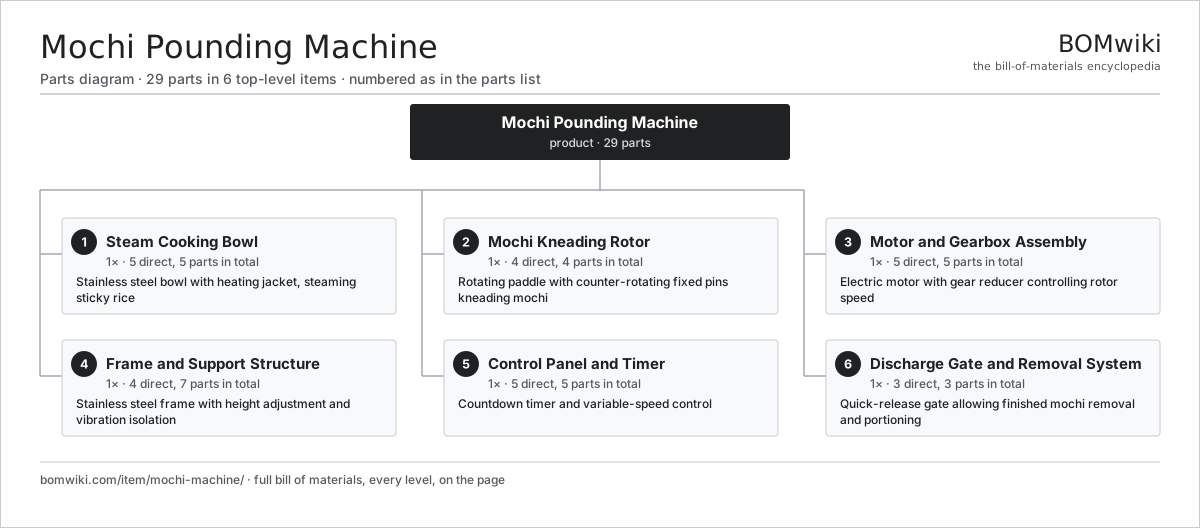
| # | Part | Qty | What it does |
|---|---|---|---|
| 1 | Steam Cooking Bowl 5 parts | 1× | Stainless steel bowl with heating jacket, steaming sticky rice |
| 2 | Mochi Kneading Rotor 4 parts | 1× | Rotating paddle with counter-rotating fixed pins kneading mochi |
| 3 | Motor and Gearbox Assembly 5 parts | 1× | Electric motor with gear reducer controlling rotor speed |
| 4 | Frame and Support Structure 4 parts | 1× | Stainless steel frame with height adjustment and vibration isolation |
| 5 | Control Panel and Timer 5 parts | 1× | Countdown timer and variable-speed control |
| 6 | Discharge Gate and Removal System 3 parts | 1× | Quick-release gate allowing finished mochi removal and portioning |
3D model
No 3D model yet. Have a CAD file of this? Add a 3D model. STL renders right on this page; STEP, FreeCAD, and OpenSCAD sources are welcome too (openly licensed, like all 3D models on BOMwiki).
Build & assembly graph
expand / collapse · shared sub-assemblies converge · links to related products · est. labourTap an assembly to expand/collapse · tap a part to open it · use “Open page” for any node · drag to pan, scroll to zoom.
Bill of materials for Mochi Pounding Machine
6 top-level lines · 32 rows shown · 29 parts total · indented to 3 levels| # | Item / sub-assembly | Part no. | Qty/assy | Ext. qty | Parts | Type |
|---|---|---|---|---|---|---|
| 1 | Steam Cooking Bowl 5 parts | mochi-machine-steam-bowl | 1× | 1 | 5 | assembly |
| 1.1 | Cooking Bowl | mochi-machine-bowl-vessel | 1× | 1 | · | part |
| 1.2 | Thermal Jacket | mochi-machine-thermal-jacket | 1× | 1 | · | part |
| 1.3 | Heating Element | mochi-machine-heating-element | 1× | 1 | · | part |
| 1.4 | Temperature Sensor | mochi-machine-temperature-sensor | 1× | 1 | · | part |
| 1.5 | Lid Assembly | mochi-machine-lid-with-vent | 1× | 1 | · | part |
| 2 | Mochi Kneading Rotor 4 parts | mochi-machine-kneading-rotor | 1× | 1 | 4 | assembly |
| 2.1 | Rotor Paddle | mochi-machine-rotor-paddle | 1× | 1 | · | part |
| 2.2 | Counter-Pin Rack | mochi-machine-counter-pin-rack | 1× | 1 | · | part |
| 2.3 | Rotor Shaft | mochi-machine-rotor-shaft | 1× | 1 | · | part |
| 2.4 | Scraper Blade | mochi-machine-scraper-blade | 1× | 1 | · | part |
| 3 | Motor and Gearbox Assembly 5 parts | mochi-machine-motor-drive | 1× | 1 | 5 | assembly |
| 3.1 | AC Motor | mochi-machine-ac-motor | 1× | 1 | · | part |
| 3.2 | Variable-Speed Drive | mochi-machine-variable-speed-drive | 1× | 1 | · | part |
| 3.3 | Gear Reducer | mochi-machine-gear-reducer | 1× | 1 | · | part |
| 3.4 | Motor Coupling | mochi-machine-motor-coupling | 1× | 1 | · | part |
| 3.5 | Motor Brake | mochi-machine-motor-brake | 1× | 1 | · | part |
| 4 | Frame and Support Structure 4 parts | mochi-machine-frame-support | 1× | 1 | 7 | assembly |
| 4.1 | Steel Frame | mochi-machine-steel-frame-base | 1× | 1 | · | part |
| 4.2 | Vibration Pads | mochi-machine-vibration-isolator-pads | 4× | 4 | · | part |
| 4.3 | Height Adjuster | mochi-machine-height-adjuster | 1× | 1 | · | part |
| 4.4 | Drip Pan | mochi-machine-drip-pan | 1× | 1 | · | part |
| 5 | Control Panel and Timer 5 parts | mochi-machine-timer-and-controls | 1× | 1 | 5 | assembly |
| 5.1 | Control Enclosure | mochi-machine-control-enclosure | 1× | 1 | · | part |
| 5.2 | Touch Screen Display | mochi-machine-hmi-display | 1× | 1 | · | part |
| 5.3 | Countdown Timer | mochi-machine-timer-countdown | 1× | 1 | · | part |
| 5.4 | Speed Control Knob | mochi-machine-speed-selector-knob | 1× | 1 | · | part |
| 5.5 | Emergency Stop | mochi-machine-emergency-stop-button | 1× | 1 | · | part |
| 6 | Discharge Gate and Removal System 3 parts | mochi-machine-discharge-gate | 1× | 1 | 3 | assembly |
| 6.1 | Discharge Gate | mochi-machine-gate-valve | 1× | 1 | · | part |
| 6.2 | Discharge Chute | mochi-machine-discharge-chute | 1× | 1 | · | part |
| 6.3 | Portioning Station | mochi-machine-portioning-station | 1× | 1 | · | part |
Something wrong in this list? Report a problem with this BOM.
Sourcing: possible vendors
Browse the supplier directory → Prices, MOQ, and lead times are algorithmic estimates, not quotes, and not claims about these companies. Company mappings are curated by keyword; est. price band $1k–$500k. How estimates work| Vendor | HQ | Specialty | MOQ | Lead time |
|---|---|---|---|---|
| gea.com ↗ | Düsseldorf, DE | Process technology | 20 units | 12–20 wks |
| buhlergroup.com ↗ | Uzwil, CH | Food & materials processing | 20 units | 12–20 wks |
| tetrapak.com ↗ | Pully, CH | Food packaging & processing | 20 units | 12–20 wks |
| jbtc.com ↗ | Chicago, US | Food processing equipment | 20 units | 12–20 wks |
| alfalaval.com ↗ | Lund, SE | Heat transfer & separation | 20 units | 12–20 wks |
1,100-word article