Musical Jewelry Box
ProductOverview
A musical jewelry box is a decorative storage container combining a mechanical wind-up music movement with jewelry organization and display elements. The core mechanism is a miniaturized music box: a spring-driven cylinder with precisely positioned pins plucks individual teeth of a metal comb, producing a melody. While the music plays, a rotating figure (dancer, ballerina) spins atop the comb, providing visual entertainment.
The appeal is nostalgic and multi-sensory: the mechanical charm of the wind-up movement, the visual spectacle of the rotating figure, and the practical function of jewelry storage. Musical jewelry boxes are common heirlooms, passed through generations; some vintage examples (1950s–1980s) retain fully functional mechanisms decades after manufacture.
Case Construction
The Wooden Case Enclosure is typically crafted from softwood (pine) or hardwood (walnut, cherry) with a decorative veneer finish:
Base materials:
- Pine or plywood: Economical, lightweight; used for export/budget models.
- Walnut: Premium; rich color, durable.
- Veneer: Thin layer (1–2 mm) of decorative hardwood glued to a pine or plywood core; reduces cost while maintaining appearance.
Joinery:
- Sides and top are typically butt-jointed and glued (no dowels or mortise-and-tenon in consumer models).
- Bottom is separate, screwed on for disassembly/service access.
- Interior bracing (cross-braces) prevents case warping under moisture and humidity changes.
Finish:
- Stain: Water or oil-based stain imparting color.
- Varnish: Polyurethane or shellac topcoat providing water resistance and UV protection.
- Hand-wax finish (premium): Beeswax or carnuba wax applied by hand; warmer appearance but requires reapplication.
Case size affects both the music mechanism size and jewelry storage capacity:
- Small (6×5×4 inches): 1–2 drawers, compact movement.
- Medium (8×6×5 inches): 2–3 drawers, standard movement.
- Large (12×10×8 inches): 3–4 drawers, larger mechanism.
Wind-Up Music Mechanism
The Wind-Up Musical Movement is the heart of the device. It comprises:
Mainspring
The Mainspring is a coiled steel ribbon wound inside a barrel (case). When wound by the external key, the spring stores mechanical energy (strain energy in the bent steel).
Specifications:
- Length: 0.5–2 meters depending on playing duration desired.
- Width: 5–15 mm.
- Thickness: 0.2–0.5 mm.
- Material: Hardened steel, resistant to fatigue cracking.
Energy storage: A typical mainspring, when fully wound, stores enough energy to drive the mechanism for 1–3 minutes of continuous music.
Music Cylinder
The Music Cylinder is a brass or steel drum with precisely positioned pins. The pins are set in a pattern that corresponds to the desired melody.
Pin pattern:
- Each pin represents one note.
- Pin position along the cylinder length determines timing (when the note is played).
- Pin height above the cylinder surface determines which comb tooth it engages.
Cylinder specifications:
- Diameter: 15–40 mm.
- Length: 20–80 mm.
- Pins: 20–100 pins total (depending on melody complexity and resolution).
- Rotation: Typically 30–120 rotations per minute (RPM), controlled by the gear train.
Melody encoding:
- A simple melody (e.g., "Twinkle Twinkle Little Star") requires ~20 unique notes.
- A more complex tune (e.g., "Swan Lake") requires ~50+ notes and a longer cylinder.
Musical Comb
The Musical Comb is the "output device," vibrating to produce sound.
Construction:
- Material: Spring steel (high carbon steel, 0.5–1.0 mm thick).
- Teeth: 20–40 individual teeth, each tuned to a specific musical note.
- Mounting: Clamped rigidly at one end; free to vibrate at the other.
Tuning:
- Note frequency = determined by tooth length and thickness.
- Longer teeth produce lower notes; shorter teeth produce higher notes.
- Manufacturing: Teeth are filed by hand or CNC machine to achieve precise tuning.
- Frequency range: Typically 2 octaves (C2–C4), ~4 kHz maximum.
Sound mechanism:
- Pin on the rotating cylinder strikes the free end of a comb tooth.
- Tooth vibrates at its natural frequency (e.g., 262 Hz for middle C).
- Vibration creates sound waves; the box body (wood, air) acts as a resonant chamber, amplifying the tone.
- Amplitude: ~60–80 dB (comparable to a music speaker at low volume).
Gear Train
The Gear Train connects the mainspring to the cylinder, regulating rotation speed:
Typical arrangement:
- Mainspring barrel (driver) rotates at ~100 RPM (if unwound directly).
- Gears reduce this to 30–60 RPM for the cylinder.
- Gear ratio: Often 2:1 or 3:1 (mainspring speed to cylinder speed).
Gear teeth: Typically 12–30 teeth per gear; meshing gears rotate in opposite directions.
Governor
The Governor regulates tempo, ensuring consistent music speed despite variation in mainspring tension.
Mechanical governor design:
- Friction-based: A weighted lever or spring-loaded block creates drag, resisting rapid rotation.
- Escapement: A cam-and-lever mechanism allows brief rotation before engaging a locking mechanism (escapes one rotation at a time).
Function: As the mainspring unwinds (losing energy), the governor prevents acceleration; tempo remains nearly constant throughout the music duration.
Dancer Mechanism
The Rotating Dancer Figure is a rotating figure that spins while the music plays, adding visual entertainment.
Components:
- Dancer Figure: A plastic, ceramic, or bisque-porcelain figure (ballerina, figurine) mounted on a pivot.
- Dancer Base: A platform or shaft rotating with the cylinder (or driven by a separate gear).
- Dancer Linkage: A mechanical linkage transferring cylinder rotation to the figure.
Linkage design:
- Cam follower: A follower rides on a cam (asymmetrical rotating part) mounted on the cylinder; as the cylinder rotates, the cam rises and falls, rocking the figure side-to-side.
- Direct drive: In some designs, the figure is directly mounted on a rotating shaft, spinning continuously as the cylinder turns.
Figure articulation:
- Simple figures: Non-articulated; the entire figure rotates.
- Complex figures: Arms or head pivot separately, creating a "dancing" appearance (moving arms, tilting head).
Drawer System
The Internal Drawer Compartments provides jewelry storage below the music mechanism:
Layout:
- Bottom layer: One large open compartment or one deep drawer.
- Middle layer: One or two medium drawers with dividers.
- Top layer: Often removed or integrated with the music mechanism platform.
Drawer design:
- Materials: Wood (pine) with felt or velvet lining.
- Handles: Small knobs or finger-grip openings.
- Glides: Wooden or plastic slides allowing smooth drawer motion; high-friction glides (wood-on-wood) require maintenance.
Compartments within drawers:
- Dividers organize jewelry types (rings, necklaces, bracelets, earrings).
- Spacing: 1–2 inches typical; sufficient for rings and small items.
- Fabric-lined compartments: Velvet or felt prevents scratching.
Mirror Assembly
The Flip-Down Mirror is mounted on the inside of the lid, allowing users to view themselves while selecting jewelry.
Mirror specifications:
- Glass: 1–2 mm float glass, silvered on the back.
- Dimensions: Typically 3×4 inches or similar.
- Frame: Wood or thin metal frame protecting edges.
- Mirror Hinge: Friction hinge allowing the mirror to tilt at various angles.
Functional purpose:
- Vanity: Allows the user to try on jewelry and see the result.
- Space efficiency: Integrates functionality without adding bulk.
Lid & Closure
The Hinged Lid comprises:
- Lid Panel: Wood panel hinged to the box body.
- Hinges: Typically 2 brass butt hinges.
- Lid Catch: Magnetic catch or spring-loaded latch holding the lid closed.
- Lid Gasket: Felt or rubber seal reducing dust ingress.
Catch types:
- Magnetic: Simple; magnet on the lid attracted to metal plate on the case. No latches required.
- Friction catch: Mechanical friction between the lid and case frame; deliberate design geometry creates enough friction to hold the lid in position.
Durability & Maintenance
Musical jewelry box longevity depends on the mechanism condition:
| Component | Lifespan | Maintenance |
|---|---|---|
| Mainspring | 20–30 years | Lubricate annually (clock oil) |
| Music cylinder | 30+ years | No maintenance needed |
| Comb | 20–30 years | Clean quarterly (soft brush) |
| Gear train | 20–30 years | Lubricate annually |
| Governor | 15–25 years | Lubricate; may need adjustment |
| Dancer linkage | 10–20 years | Inspect for wear; tighten loose pins |
| Drawers | 20+ years | Lubricate glides if stiff |
| Wood case | 40–60+ years | Condition finish annually (wax or varnish) |
Failure modes:
- Slow music: Governor wear, mainspring weakness, comb misalignment.
- Silent music: Broken comb tooth, pin missing from cylinder, mainspring broken.
- Difficult winding: Mainspring binding, broken ratchet mechanism.
- Stiff drawers: Wear, dust accumulation, environmental humidity changes.
Restoration:
- Professional restoration: Disassembly, cleaning, replacing worn parts (comb tooth, mainspring if broken).
- Cost: $100–300 depending on complexity.
- Time: 4–8 weeks if outsourced.
Care protocol:
- Wind gently: Don't over-wind (stop when winding becomes difficult).
- Wind regularly: Monthly winding prevents mainspring from settling.
- Lubricate: Annual application of clock oil (light machine oil) to pivot points and gear meshes.
- Store upright: Prevents drawer sagging and mechanism misalignment.
- Avoid moisture: Wood and metal components corrode in humid environments; store in dry locations.
Variants & Customization
Music selection:
- Fixed cylinder: Single melody (most common, lowest cost).
- Interchangeable cylinders: Multiple cylinders, each with a different melody; can be swapped.
Size range:
- Miniature: Travel-size boxes (4×3×2 inches); 30–60 second playing duration.
- Standard: Desktop boxes (8×6×5 inches); 1–2 minute duration.
- Large: Furniture-size boxes (12×10×8 inches); 2–3 minute duration.
Aesthetic styles:
- Classical: Traditional wood finishes (walnut, cherry).
- Modern: Minimalist designs, simple finishes.
- Decorative: Hand-painted, inlaid designs, jewel-tone veneers.
Historical Context & Collectibility
Musical jewelry boxes peaked in popularity during the Victorian era (1880–1920) and experienced a resurgence in the 1970s–1980s. Vintage models (pre-1950) are highly collectible:
- Value factors: Manufacturer (Swiss mechanisms are prized), age, original condition, unique melodies.
- Desirable features: Interchangeable cylinders, automata (complex moving figures), hand-painted scenes.
- Restoration market: High demand for parts and expertise; skilled technicians command premium rates.
Modern production is primarily concentrated in Asia and Eastern Europe, with the majority of retail music boxes retailing at $30–150; artisanal or vintage examples command $300–5,000+.
Musical Jewelry Box parts and their functions
7 top-level parts · 45 parts in total · full bill of materials below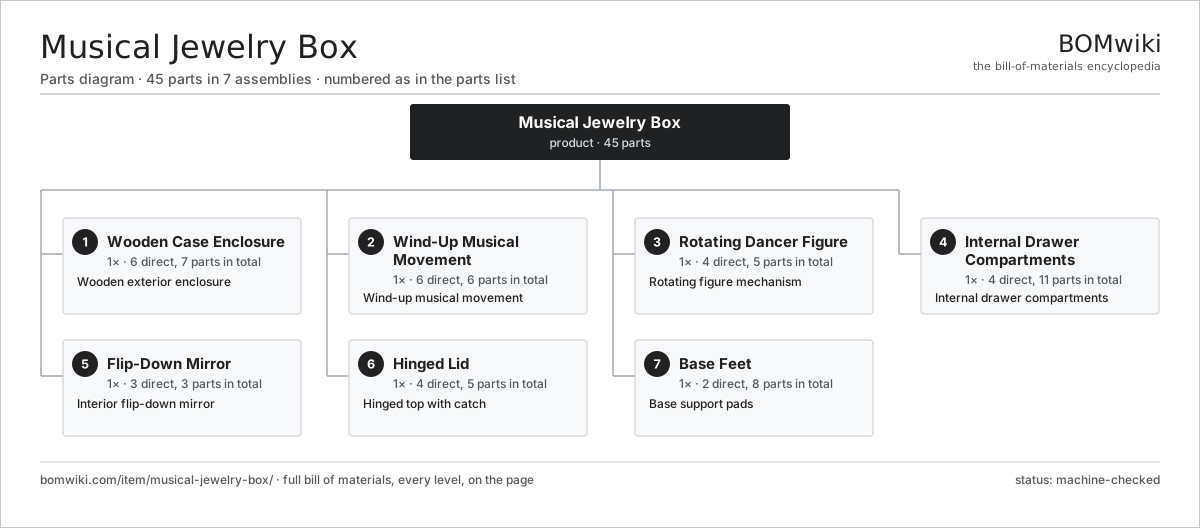
| # | Part | Qty | What it does |
|---|---|---|---|
| 1 | Wooden Case Enclosure 6 parts | 1× | Wooden exterior enclosure |
| 2 | Wind-Up Musical Movement 6 parts | 1× | Wind-up musical movement |
| 3 | Rotating Dancer Figure 4 parts | 1× | Rotating figure mechanism |
| 4 | Internal Drawer Compartments 4 parts | 1× | Internal drawer compartments |
| 5 | Flip-Down Mirror 3 parts | 1× | Interior flip-down mirror |
| 6 | Hinged Lid 4 parts | 1× | Hinged top with catch |
| 7 | Base Feet 2 parts | 1× | Base support pads |
3D model
No 3D model yet. Have a CAD file of this? Add a 3D model — STL renders right on this page; STEP, FreeCAD, and OpenSCAD sources are welcome too (openly licensed, like all 3D models on BOMwiki).
Build & assembly graph
expand / collapse · shared sub-assemblies converge · links to related products · est. labourTap an assembly to expand/collapse · tap a part to open it · use “Open page” for any node · drag to pan, scroll to zoom.
Bill of materials for Musical Jewelry Box
7 top-level lines · 36 rows shown · 45 parts total · indented to 3 levels| # | Item / sub-assembly | Part no. | Qty/assy | Ext. qty | Parts | Type |
|---|---|---|---|---|---|---|
| 1 | Wooden Case Enclosure 6 parts | musical-jewelry-box-case | 1× | 1 | 7 | assembly |
| 1.1 | Bottom Panel | musical-jewelry-box-bottom-panel | 1× | 1 | · | part |
| 1.2 | Side Wall | musical-jewelry-box-side-walls | 2× | 2 | · | part |
| 1.3 | Back Panel | musical-jewelry-box-back-panel | 1× | 1 | · | part |
| 1.4 | Front Frame | musical-jewelry-box-front-frame | 1× | 1 | · | part |
| 1.5 | Wood Veneer | musical-jewelry-box-veneer | 1× | 1 | · | part |
| 1.6 | Wood Stain/Finish | musical-jewelry-box-wood-stain | 1× | 1 | · | part |
| 2 | Wind-Up Musical Movement 6 parts | musical-jewelry-box-music-mechanism | 1× | 1 | 6 | assembly |
| 2.1 | Mainspring | musical-jewelry-box-mainspring | 1× | 1 | · | part |
| 2.2 | Music Cylinder | musical-jewelry-box-music-cylinder | 1× | 1 | · | part |
| 2.3 | Musical Comb | musical-jewelry-box-comb | 1× | 1 | · | part |
| 2.4 | Gear Train | musical-jewelry-box-gear-train | 1× | 1 | · | part |
| 2.5 | Governor | musical-jewelry-box-governor | 1× | 1 | · | part |
| 2.6 | Winding Key | musical-jewelry-box-winding-key | 1× | 1 | · | part |
| 3 | Rotating Dancer Figure 4 parts | musical-jewelry-box-dancer | 1× | 1 | 5 | assembly |
| 3.1 | Dancer Figure | musical-jewelry-box-dancer-figure | 1× | 1 | · | part |
| 3.2 | Dancer Base | musical-jewelry-box-dancer-base | 1× | 1 | · | part |
| 3.3 | Dancer Linkage | musical-jewelry-box-dancer-linkage | 1× | 1 | · | part |
| 3.4 | Figure Joint | musical-jewelry-box-figure-joint | 2× | 2 | · | part |
| 4 | Internal Drawer Compartments 4 parts | musical-jewelry-box-drawer-system | 1× | 1 | 11 | assembly |
| 4.1 | Drawer Frame | musical-jewelry-box-drawer-frame | 1× | 1 | · | part |
| 4.2 | Drawer | musical-jewelry-box-drawer | 2× | 2 | · | part |
| 4.3 | Drawer Divider | musical-jewelry-box-drawer-divider | 4× | 4 | · | part |
| 4.4 | Drawer Glide | musical-jewelry-box-drawer-glide | 4× | 4 | · | part |
| 5 | Flip-Down Mirror 3 parts | musical-jewelry-box-mirror | 1× | 1 | 3 | assembly |
| 5.1 | Mirror Glass | musical-jewelry-box-mirror-glass | 1× | 1 | · | part |
| 5.2 | Mirror Frame | musical-jewelry-box-mirror-frame | 1× | 1 | · | part |
| 5.3 | Mirror Hinge | musical-jewelry-box-mirror-hinge | 1× | 1 | · | part |
| 6 | Hinged Lid 4 parts | musical-jewelry-box-lid-assembly | 1× | 1 | 5 | assembly |
| 6.1 | Lid Panel | musical-jewelry-box-lid-panel | 1× | 1 | · | part |
| 6.2 | Lid Hinge | musical-jewelry-box-lid-hinge | 2× | 2 | · | part |
| 6.3 | Lid Catch | musical-jewelry-box-lid-catch | 1× | 1 | · | part |
| 6.4 | Lid Gasket | musical-jewelry-box-lid-gasket | 1× | 1 | · | part |
| 7 | Base Feet 2 parts | musical-jewelry-box-feet | 1× | 1 | 8 | assembly |
| 7.1 | Foot Pad | musical-jewelry-box-foot-pad | 4× | 4 | · | part |
| 7.2 | Foot Glide | musical-jewelry-box-foot-glide | 4× | 4 | · | part |
Sourcing: possible vendors
Prices, MOQ, and lead times are algorithmic estimates, not quotes, and not claims about these companies. Company mappings are curated by keyword; est. price band $20–$2k. How estimates work| Vendor | HQ | Specialty | MOQ | Lead time |
|---|---|---|---|---|
|
🇺🇸Coleman
coleman.com ↗
|
Chicago, US | Camping gear | 1,000 units | 6–10 wks |
| thenorthface.com ↗ | Denver, US | Outdoor apparel & gear | 1,000 units | 6–10 wks |
|
🇺🇸YETI
yeti.com ↗
|
Austin, US | Coolers & drinkware | 1,000 units | 6–10 wks |
| decathlon.com ↗ | Villeneuve-d'Ascq, FR | Sporting goods | 1,000 units | 6–10 wks |
|
🇺🇸Garmin
garmin.com ↗
|
Olathe, US | GPS & wearables | 1,000 units | 6–10 wks |
1,646-word article