Field Pipe Coating Machine
ProductOverview
Bare steel pipe exposed to soil, water, and atmospheric oxygen rapidly corrodes. Pipeline coatings, applied to the outer diameter (OD) during fabrication or in the field, protect pipe from corrosion and extend design life from 15 years to 50–70 years. Fusion-bonded epoxy (FBE) is the most common coating for buried pipelines; polyethylene (PE) provides additional abrasion resistance for installations with rocks or sharp backfill.
The field pipe coating machine is a portable system applied during pipeline construction when:
- Repair welds or field cuts require local recoating.
- Damaged coating (dents, nicks, welding spatter damage) must be restored.
- Shop-coated pipe is damaged during installation and needs touch-up.
- Field-fabricated spools or fittings must be coated on-site.
The machine system combines eight major subsystems: Surface Preparation Blast Head (blast cleaning), Pipe Heating Unit (preheat), Powder Spray Applicator (powder application), Powder Supply and Feeder System (powder feed), Post-Cure Cooling System (post-cure cooling), Process Control System (process logic), Pipe Support and Carriage System (pipe positioning), and Air Supply or Electric Power Unit (air/electric supply).
How It Works: Complete Coating Cycle
Step 1: Surface Preparation (Blast Cleaning)
The pipe section is positioned in the Pipe Support and Carriage System V-blocks, approximately 1–2 feet from the Blast Head (Wheel or Nozzle). The operator activates the Media Supply Hopper gravity feed and the blast wheel (rotating at 1,000–1,500 rpm, impacting steel shot at 150–200 mph onto the pipe surface).
The blast action removes mill scale (iron oxide from hot rolling), rust, and any remaining old coating, producing an ISO Sa 2.5 or Sa 3 clean steel surface (bright, with slight metal color and no visible scale or rust). This cleanliness is critical: any remaining mill scale reduces coating adhesion and promotes undercutting corrosion.
The Dust Collection Unit evacuates spent air and fine dust, maintaining visibility and meeting environmental standards.
Step 2: Heating (Preheat)
Once blasted, the pipe surface is cooled and may have residual moisture. The Pipe Heating Unit (induction coil or direct-fire burner) is activated, heating the pipe OD to 200–300°F. The Temperature Sensor measures surface temperature via infrared or contact probe; the Temperature Controller modulates heater power to maintain target temperature (e.g., 250°F ±10°F).
Why preheat?
- Moisture Evaporation: Any residual water or sweat evaporates from the steel surface, preventing coating blisters.
- Powder Flow: FBE and PE powders flow better on warm surfaces, melting and leveling for a uniform finish.
- Adhesion: Thermal activation of the powder's resin binder improves bond to the steel.
Preheat time is typically 30–60 seconds for 6–12 inch pipe, longer for larger diameters.
Step 3: Powder Application
Once temperature setpoint is reached, the Process Control System triggers the Spray Control Valve solenoid, opening the powder feed. The Powder Feed Auger (auger or vibratory feeder) meters powder into the Spray Nozzle at a controlled rate (1–10 lbs/minute, depending on desired coating weight).
In an electrostatic system:
- Powder particles are atomized by compressed air at the spray nozzle.
- A high-voltage High-Voltage Electrode (Electrostatic) (60–90 kV DC) ionizes the powder particles, giving each a negative charge.
- The grounded pipe (positive or neutral) attracts the negatively charged powder particles, which coat the surface.
- The electrostatic attraction is strong, so even complex geometry (weld beads, threads) receives coverage.
The operator (or automatic motion in larger machines) traverses the spray nozzle around the pipe circumference over 30–90 seconds, building a uniform layer. Powder thickness build-up is visible (white FBE powder or black PE powder coat) and tactile (touching with a gloved hand, the coating feels granular before it melts).
Step 4: Cooling (Post-Cure)
As soon as spray stops, the Post-Cure Cooling System (large fan or air ring) activates, forcing cool ambient air (or chilled air) around the pipe. The cooling serves multiple purposes:
- Powder Densification: Cooling stops powder flow, fixing the coat.
- Thermal Stress Relief: Slow, controlled cooling (typically 20–50°F per minute) prevents thermal shock and adhesion defects (delamination).
- Surface Curing: FBE in particular requires gradual cooling to cure properly; too-fast cooling results in a soft, sticky surface that can be damaged during handling.
Typical cooling time is 2–3 minutes for 6–12 inch pipe, until the surface cools to below 100°F and becomes touch-dry.
Step 5: Inspection and Indexing
Once cooled, the coated section is visually inspected:
- Coating Uniformity: Color and appearance should be even; thin spots or bare areas indicate inadequate spray coverage and require re-application.
- Thickness Check: A portable dry-film thickness (DFT) gauge measures coating thickness (target 250–300 microns for FBE per ANSI/AWWA C213); readings are recorded for compliance documentation.
- Adhesion Test: An adhesor (cross-hatch or pull-off tool) tests adhesion; poor adhesion indicates contamination (usually residual moisture or incomplete blasting) and the section must be recoated.
If inspection passes, the pipe is indexed to the next section, and the cycle repeats. A crew can coat 50–100 feet of pipe per 8-hour shift (rate depends on pipe diameter and coating thickness).
Coating Material Properties
Fusion-Bonded Epoxy (FBE):
- Thermosetting plastic powder, epoxy resin + hardener + filler, applied at 200–300°C melt temperature.
- Dry film thickness: 200–380 microns (standard 250–300 microns).
- Advantages: Strong adhesion to blasted steel, excellent abrasion resistance, superior corrosion protection.
- Disadvantages: Brittle, susceptible to thermal cracking during service (thermal cycling); cannot be field-repaired easily if damaged.
Polyethylene (PE):
- Thermoplastic powder, polyethylene resin + stabilizers, applied at 220–260°C melt temperature.
- Typically applied in two-layer composite: FBE primer (150–200 microns) + PE topcoat (150–200 microns).
- Advantages: Ductility, impact resistance, thermal cycling tolerance, easier field touch-up.
- Disadvantages: Lower melting point, softens in hot-oil service (limited to ~60°C service temperature).
Powder composition and application temperature are critical. Overheating (>350°C) causes resin degradation and gas evolution (bubbling, blistering). Underheating leaves the powder granular and unreacted.
Field Repair and Touch-Up Procedures
After the pipeline is installed and tested, field welds (connecting pre-coated spools) require local recoating. A small portable coating machine focuses on the weld area:
- Local Blast: Grind or blast the weld area and adjacent 2–3 inches to Sa 2.5 cleanliness.
- Preheat: Heat locally to 250°F.
- FBE Application: Spray FBE powder until coating thickness matches original (250–300 microns; verify with DFT gauge).
- Cool: Allow controlled cool to ambient.
Larger damaged areas (>6 inches) or thick-wall pipe where local heating is slow may use induction heating coils positioned around the pipe, or direct-fire burners with careful temperature control to avoid localized overheat.
Environmental and Safety Considerations
- Powder Dust: FBE and PE powder dust is an inhalation hazard; operators wear supplied-air respirators during blasting and spraying.
- Thermal Hazard: Hot pipe and heated fumes present burn risk; personnel wear heat-resistant gloves and aprons.
- Electrical Safety: Electrostatic spray systems operate at 60–90 kV; proper grounding and arc-flash protection are required.
- Compressed Air: High-pressure air (100+ psi) for blast and spray requires guarding and OSHA compliance.
Maintenance and Consumables
The Media Supply Hopper media (steel shot or aluminum oxide grit) is consumed and recycled; periodic top-ups are required. The Hopper Inlet Filter desiccant cartridge (prevents moisture entry into powder) is replaced every 50–100 hours. The Pipe Heating Unit induction coil or burner nozzles require annual inspection and calibration.
A well-maintained field coating machine operates 5,000–10,000 hours over 10–15 years, supporting continuous pipeline maintenance and field construction operations.
Field Pipe Coating Machine parts and their functions
8 top-level parts · 27 parts in total · full bill of materials below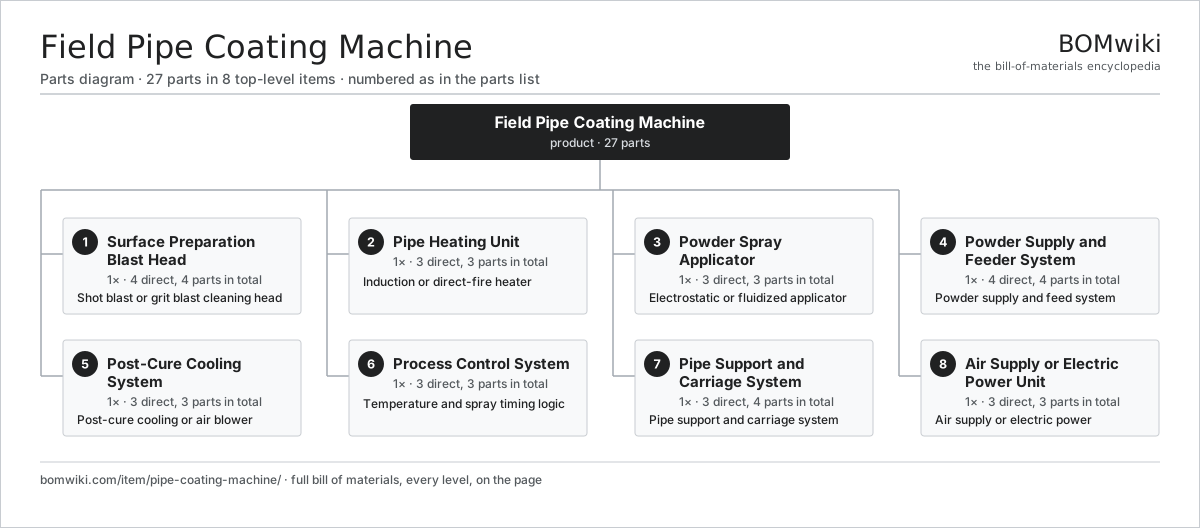
| # | Part | Qty | What it does |
|---|---|---|---|
| 1 | Surface Preparation Blast Head 4 parts | 1× | Shot blast or grit blast cleaning head |
| 2 | Pipe Heating Unit 3 parts | 1× | Induction or direct-fire heater |
| 3 | Powder Spray Applicator 3 parts | 1× | Electrostatic or fluidized applicator |
| 4 | Powder Supply and Feeder System 4 parts | 1× | Powder supply and feed system |
| 5 | Post-Cure Cooling System 3 parts | 1× | Post-cure cooling or air blower |
| 6 | Process Control System 3 parts | 1× | Temperature and spray timing logic |
| 7 | Pipe Support and Carriage System 3 parts | 1× | Pipe support and carriage system |
| 8 | Air Supply or Electric Power Unit 3 parts | 1× | Air supply or electric power |
3D model
No 3D model yet. Have a CAD file of this? Add a 3D model. STL renders right on this page; STEP, FreeCAD, and OpenSCAD sources are welcome too (openly licensed, like all 3D models on BOMwiki).
Build & assembly graph
expand / collapse · shared sub-assemblies converge · links to related products · est. labourTap an assembly to expand/collapse · tap a part to open it · use “Open page” for any node · drag to pan, scroll to zoom.
Bill of materials for Field Pipe Coating Machine
8 top-level lines · 34 rows shown · 27 parts total · indented to 3 levels| # | Item / sub-assembly | Part no. | Qty/assy | Ext. qty | Parts | Type |
|---|---|---|---|---|---|---|
| 1 | Surface Preparation Blast Head 4 parts | pipe-coating-machine-surface-prep-unit | 1× | 1 | 4 | assembly |
| 1.1 | Blast Head (Wheel or Nozzle) | pipe-coating-machine-blast-wheel-or-nozzle | 1× | 1 | · | part |
| 1.2 | Media Supply Hopper | pipe-coating-machine-blast-media-hopper | 1× | 1 | · | part |
| 1.3 | Media Recovery System | pipe-coating-machine-blast-media-recovery | 1× | 1 | · | part |
| 1.4 | Dust Collection Unit | pipe-coating-machine-blast-dust-collector | 1× | 1 | · | part |
| 2 | Pipe Heating Unit 3 parts | pipe-coating-machine-heat-source | 1× | 1 | 3 | assembly |
| 2.1 | Induction Heater or Burner | pipe-coating-machine-heat-induction-coil | 1× | 1 | · | part |
| 2.2 | Temperature Sensor | pipe-coating-machine-heat-temperature-sensor | 1× | 1 | · | part |
| 2.3 | Temperature Controller | pipe-coating-machine-heat-control-regulator | 1× | 1 | · | part |
| 3 | Powder Spray Applicator 3 parts | pipe-coating-machine-powder-spray-head | 1× | 1 | 3 | assembly |
| 3.1 | Spray Nozzle | pipe-coating-machine-spray-nozzle | 1× | 1 | · | part |
| 3.2 | High-Voltage Electrode (Electrostatic) | pipe-coating-machine-spray-electrode | 1× | 1 | · | part |
| 3.3 | Spray Control Valve | pipe-coating-machine-spray-actuator | 1× | 1 | · | part |
| 4 | Powder Supply and Feeder System 4 parts | pipe-coating-machine-powder-hopper | 1× | 1 | 4 | assembly |
| 4.1 | Powder Hopper | pipe-coating-machine-hopper-tank | 1× | 1 | · | part |
| 4.2 | Fluidization Air System | pipe-coating-machine-hopper-fluidizer | 1× | 1 | · | part |
| 4.3 | Powder Feed Auger | pipe-coating-machine-hopper-feeder-screw | 1× | 1 | · | part |
| 4.4 | Hopper Inlet Filter | pipe-coating-machine-hopper-filter | 1× | 1 | · | part |
| 5 | Post-Cure Cooling System 3 parts | pipe-coating-machine-cooling-system | 1× | 1 | 3 | assembly |
| 5.1 | Cooling Fan Assembly | pipe-coating-machine-cooling-fan-or-air-ring | 1× | 1 | · | part |
| 5.2 | Cooling Control Thermostat | pipe-coating-machine-cooling-thermostat | 1× | 1 | · | part |
| 5.3 | Cooling Air Shroud | pipe-coating-machine-cooling-shroud | 1× | 1 | · | part |
| 6 | Process Control System 3 parts | pipe-coating-machine-control-unit | 1× | 1 | 3 | assembly |
| 6.1 | Control PLC | pipe-coating-machine-control-plc | 1× | 1 | · | part |
| 6.2 | Parameter Selection Interface | pipe-coating-machine-control-parameter-input | 1× | 1 | · | part |
| 6.3 | Safety Interlock Module | pipe-coating-machine-control-safety-relay | 1× | 1 | · | part |
| 7 | Pipe Support and Carriage System 3 parts | pipe-coating-machine-support-frame | 1× | 1 | 4 | assembly |
| 7.1 | V-Block Support | pipe-coating-machine-support-v-blocks | 2× | 2 | · | part |
| 7.2 | Pipe Drive Motor | pipe-coating-machine-support-drive-motor | 1× | 1 | · | part |
| 7.3 | Drive Reduction Gearbox | pipe-coating-machine-support-drive-gearbox | 1× | 1 | · | part |
| 8 | Air Supply or Electric Power Unit 3 parts | pipe-coating-machine-compressor-or-power | 1× | 1 | 3 | assembly |
| 8.1 | Air Compressor | pipe-coating-machine-air-compressor | 1× | 1 | · | part |
| 8.2 | Compressed Air Tank | pipe-coating-machine-air-receiver-tank | 1× | 1 | · | part |
| 8.3 | Regulator and Desiccant Filter | pipe-coating-machine-air-regulator-filter | 1× | 1 | · | part |
Something wrong in this list? Report a problem with this BOM.
Sourcing: possible vendors
Browse the supplier directory → Prices, MOQ, and lead times are algorithmic estimates, not quotes, and not claims about these companies. Company mappings are curated by keyword; est. price band $10k–$50M. How estimates work| Vendor | HQ | Specialty | MOQ | Lead time |
|---|---|---|---|---|
|
🇺🇸SLB
slb.com ↗
|
Houston, US | Oilfield services & equipment | made to order | 24–48 wks |
| halliburton.com ↗ | Houston, US | Oilfield services | made to order | 24–48 wks |
| bakerhughes.com ↗ | Houston, US | Energy technology | made to order | 24–48 wks |
|
🇺🇸NOV
nov.com ↗
|
Houston, US | Drilling equipment | made to order | 24–48 wks |
| technipfmc.com ↗ | London, GB | Subsea & surface systems | made to order | 24–48 wks |
1,315-word article