Pleating Machine
ProductOverview
A pleating machine presses uniform, sharp pleats into fabric using a heat-and-pressure process. The machine works by feeding the fabric and a paper or film pattern together into a nip between two heated, synchronized rollers. The pattern has a series of fold lines that guide the fabric into precise pleat valleys and peaks. As the sandwich passes through the hot rollers, the fabric is compressed into the pleat folds while the heat softens and sets the fiber structure, locking the pleats in place permanently. Once the fabric emerges and cools, the pleats remain crisp and resist flattening even after many washing cycles.
The Main Frame is a rigid steel structure. The Heating Roller Assembly consists of a Top Heated Roller and Bottom Heated Roller, both heated internally to 100–200°C depending on the fiber type. The Pattern Feed System supplies folded paper or film patterns into the nip. The Fabric Infeed System feeds the flat fabric in register with the pattern. As they pass through the rollers, the pattern compresses the fabric into pleat shapes; the heat sets the fibers. The Outfeed Conveyor draws the pleated fabric out and allows it to cool. The Temperature Control System maintains roller heat, the Pressure Adjustment System controls nip force, and the Main Motor System synchronizes all motion.
How it works
The pleating process relies on the pattern, which is a carefully creased template. A typical pattern is a sheet of paper or polyester film with sharp fold lines at the pleat pitch (e.g., every 8 mm for a pleat-width of 4 mm valley + 4 mm peak). The pattern is folded along these lines into an accordion; it is then fed into the infeed hopper.
The fabric arrives flat from a roll or bolt. The Fabric Infeed System positions the fabric, and the Pattern Feed System synchronizes the folded pattern to arrive at the roller nip at the same time. Both fabric and pattern are compressed between the heated Top Heated Roller and Bottom Heated Roller. The nip pressure, typically 5–10 bar applied via the Pressure Adjustment System, is enough to hold the fabric firmly in the pleat valleys of the pattern.
The heat is the key to permanence. As the sandwich dwell in the nip (typically 5–30 seconds depending on fabric thickness and speed), the roller temperature, typically 140–180°C for synthetic fabrics, lower for delicate natural fibers, is transferred into the fabric. The heat softens the fiber structure; the pressure forces the fabric into the pleat shape. For synthetic fibers (polyester, nylon, acrylic), the heat above the glass-transition temperature actually sets the molecular structure into the pleat shape, and cooling locks it in place. For natural fibers (cotton, wool), the heat and moisture expand the fiber, and the pressure embeds the pleat geometry; as the fiber cools and dries, it retains the shape. This is why polyester and nylon hold pleats better and longer than cotton.
After exiting the rollers, the fabric emerges with crisp pleats. The Outfeed Conveyor draws it away from the roller nip and allows it to cool on the moving belt. As it cools, the pleat memory strengthens. Some machines include a chilling section with fan-cooled air to accelerate cooling and improve pleat set.
Pattern and pleat geometry
The pattern determines the pleat width and depth. A pattern with fold lines spaced 8 mm apart creates 4 mm pleat valleys alternating with 4 mm peaks, a tight, classic knife pleat. A 10 mm spacing gives a broader pleat; a 6 mm spacing a finer, more formal look. Patterns can be simple (uniform knife pleats), or complex (box pleats, two valleys facing outward, or inverted pleats, or even asymmetrical patterns).
Patterns are traditionally made from paper, but modern machines often use polyester film because it is more durable and can withstand many dozens of cycles before becoming too worn. A single paper pattern might last 20–50 runs; a film pattern might last 200+ runs. The cost of patterns is a notable operating expense for high-volume pleating operations.
Different pleat styles require different heat and pressure. Knife pleats benefit from moderate pressure (5–8 bar) and medium temperature (160–180°C for synthetics); box pleats, with their double folds, often require higher pressure and longer dwell time. Delicate fabrics such as silk or fine linen must be processed at lower temperature (120–140°C) to avoid sheen loss or yellowing.
Fabric properties and fiber behavior
The permanence of a pleat is fiber-dependent. Synthetic fibers with high crimp retention, polyester, nylon, acrylics, and blends, hold pleats durably for years. Cotton, linen, and wool, unless treated with a chemical resin finish (as in permanent-press cotton), tend to relax pleats over several wash cycles because the fibers return to their natural, relaxed shape.
The Temperature Control System must be adjusted by fiber type. Polyester tolerates 180–200°C; cotton and wool should stay at 140–160°C. Too high a temperature on delicate fibers causes scorching, color loss, or brittleness. Too low a temperature fails to set the pleat adequately, and the fabric emerges weak and liable to unfold during handling.
Moisture content matters. Fibers that are damp pleat more easily and set better because moisture plasticizes them. Industrial operations sometimes pre-steam the fabric or run the rollers with slight humidity to improve pleat lock.
Batch-to-batch consistency
One challenge in pleating is maintaining consistent nip pressure and temperature across the full width of the fabric. Temperature can vary slightly from side to side due to heat losses at the edges, or from top to bottom in the roller. The Temperature Control System monitors both rollers; some premium machines have multiple temperature zones, allowing fine-tuning of temperature across the width.
Similarly, the Pressure Adjustment System sets the total nip force, but load distribution can vary if the rollers are not perfectly parallel or if they wear unevenly. Periodic grinding or replacement of the Roller Cover keeps pressure uniform.
The pattern itself can introduce variation: if it is not perfectly centered in the infeed, or if it is shifted between runs, the final pleat spacing is off. This is why the Pattern Feed System and Fabric Infeed System are carefully aligned, and operators perform test runs to check registration before running full batches.
Pleating Machine parts and their functions
10 top-level parts · 133 parts in total · full bill of materials below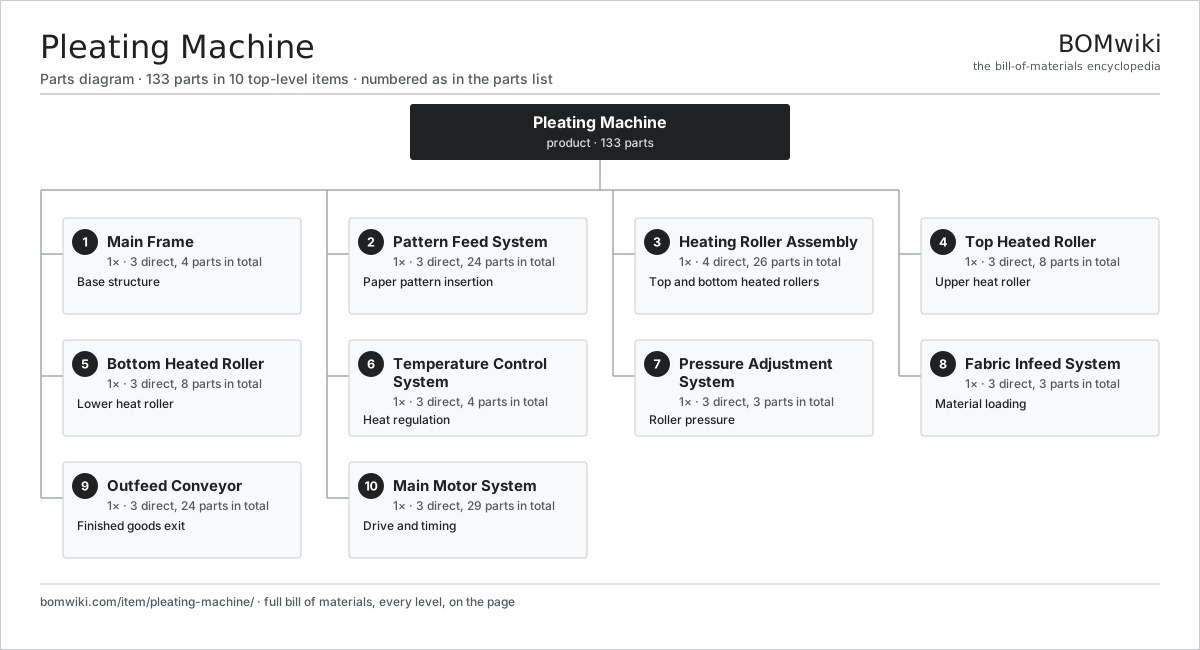
| # | Part | Qty | What it does |
|---|---|---|---|
| 1 | Main Frame 3 parts | 1× | Base structure |
| 2 | Pattern Feed System 3 parts | 1× | Paper pattern insertion |
| 3 | Heating Roller Assembly 4 parts | 1× | Top and bottom heated rollers |
| 4 | Top Heated Roller 3 parts | 1× | Upper heat roller |
| 5 | Bottom Heated Roller 3 parts | 1× | Lower heat roller |
| 6 | Temperature Control System 3 parts | 1× | Heat regulation |
| 7 | Pressure Adjustment System 3 parts | 1× | Roller pressure |
| 8 | Fabric Infeed System 3 parts | 1× | Material loading |
| 9 | Outfeed Conveyor 3 parts | 1× | Finished goods exit |
| 10 | Main Motor System 3 parts | 1× | Drive and timing |
3D model
No 3D model yet. Have a CAD file of this? Add a 3D model. STL renders right on this page; STEP, FreeCAD, and OpenSCAD sources are welcome too (openly licensed, like all 3D models on BOMwiki).
Build & assembly graph
expand / collapse · shared sub-assemblies converge · links to related products · est. labourTap an assembly to expand/collapse · tap a part to open it · use “Open page” for any node · drag to pan, scroll to zoom.
Bill of materials for Pleating Machine
10 top-level lines · 57 rows shown · 133 parts total · indented to 3 levels| # | Item / sub-assembly | Part no. | Qty/assy | Ext. qty | Parts | Type |
|---|---|---|---|---|---|---|
| 1 | Main Frame 3 parts | pleating-machine-main-frame | 1× | 1 | 4 | assembly |
| 1.1 | Base Plate | pleating-machine-base-plate | 1× | 1 | · | part |
| 1.2 | Side Frame | pleating-machine-side-frame | 2× | 2 | · | part |
| 1.3 | Roller Support Beam | pleating-machine-roller-support-beam | 1× | 1 | · | part |
| 2 | Pattern Feed System 3 parts | pleating-machine-pattern-feed | 1× | 1 | 24 | assembly |
| 2.1 | Pattern Hopper | pleating-machine-pattern-hopper | 1× | 1 | · | part |
| 2.2 | Pattern Motor 2 parts | pleating-machine-pattern-motor | 1× | 1 | 22 | assembly |
| 2.2.1 | Stator Assembly 3 parts + deeper › | stator-assembly | 1× | 1 | 3 | assembly |
| 2.2.2 | Rotor Assembly 4 parts + deeper › | rotor-assembly | 1× | 1 | 19 | assembly |
| 2.3 | Pattern Sensor | pleating-machine-pattern-sensor | 1× | 1 | · | part |
| 3 | Heating Roller Assembly 4 parts | pleating-machine-heating-roller-set | 1× | 1 | 26 | assembly |
| 3.1 | Top Heated Roller 3 parts | pleating-machine-top-roller | 1× | 1 | 8 | assembly |
| 3.1.1 | Roller Body | pleating-machine-roller-body | 1× | 1 | · | part |
| 3.1.2 | Heating Element | heating-element | 6× | 6 | · | part |
| 3.1.3 | Temperature Sensor | pleating-machine-temperature-sensor | 1× | 1 | · | part |
| 3.2 | Bottom Heated Roller 3 parts | pleating-machine-bottom-roller | 1× | 1 | 8 | assembly |
| 3.2.1 | Roller Body | pleating-machine-roller-body | 1× | 1 | · | part |
| 3.2.2 | Heating Element | heating-element | 6× | 6 | · | part |
| 3.2.3 | Temperature Sensor | pleating-machine-temperature-sensor | 1× | 1 | · | part |
| 3.3 | Ball Bearing | ball-bearing | 8× | 8 | · | part |
| 3.4 | Roller Cover | pleating-machine-roller-cover | 2× | 2 | · | part |
| 4 | Top Heated Roller 3 parts | pleating-machine-top-roller | 1× | 1 | 8 | assembly |
| 4.1 | Roller Body | pleating-machine-roller-body | 1× | 1 | · | part |
| 4.2 | Heating Element | heating-element | 6× | 6 | · | part |
| 4.3 | Temperature Sensor | pleating-machine-temperature-sensor | 1× | 1 | · | part |
| 5 | Bottom Heated Roller 3 parts | pleating-machine-bottom-roller | 1× | 1 | 8 | assembly |
| 5.1 | Roller Body | pleating-machine-roller-body | 1× | 1 | · | part |
| 5.2 | Heating Element | heating-element | 6× | 6 | · | part |
| 5.3 | Temperature Sensor | pleating-machine-temperature-sensor | 1× | 1 | · | part |
| 6 | Temperature Control System 3 parts | pleating-machine-temperature-control | 1× | 1 | 4 | assembly |
| 6.1 | Control Board | pleating-machine-control-board | 1× | 1 | · | part |
| 6.2 | Relay | relay | 2× | 2 | · | part |
| 6.3 | Temperature Display | pleating-machine-temperature-display | 1× | 1 | · | part |
| 7 | Pressure Adjustment System 3 parts | pleating-machine-pressure-adjustment | 1× | 1 | 3 | assembly |
| 7.1 | Pressure Cylinder | pleating-machine-pressure-cylinder | 1× | 1 | · | part |
| 7.2 | Pressure Gauge | pleating-machine-pressure-gauge | 1× | 1 | · | part |
| 7.3 | Pressure Regulator | pleating-machine-pressure-regulator | 1× | 1 | · | part |
| 8 | Fabric Infeed System 3 parts | pleating-machine-fabric-infeed | 1× | 1 | 3 | assembly |
| 8.1 | Fabric Hopper | pleating-machine-fabric-hopper | 1× | 1 | · | part |
| 8.2 | Infeed Guide | pleating-machine-infeed-guide | 1× | 1 | · | part |
| 8.3 | Tension Control | pleating-machine-tension-control | 1× | 1 | · | part |
| 9 | Outfeed Conveyor 3 parts | pleating-machine-outfeed-conveyor | 1× | 1 | 24 | assembly |
| 9.1 | Conveyor Belt | pleating-machine-conveyor-belt | 1× | 1 | · | part |
| 9.2 | Conveyor Motor 2 parts | pleating-machine-conveyor-motor | 1× | 1 | 22 | assembly |
| 9.2.1 | Stator Assembly 3 parts + deeper › | stator-assembly | 1× | 1 | 3 | assembly |
| 9.2.2 | Rotor Assembly 4 parts + deeper › | rotor-assembly | 1× | 1 | 19 | assembly |
| 9.3 | Encoder | encoder | 1× | 1 | · | part |
| 10 | Main Motor System 3 parts | pleating-machine-motor-system | 1× | 1 | 29 | assembly |
| 10.1 | Main Motor 3 parts | pleating-machine-main-motor | 1× | 1 | 24 | assembly |
| 10.1.1 | Stator Assembly 3 parts + deeper › | stator-assembly | 1× | 1 | 3 | assembly |
| 10.1.2 | Rotor Assembly 4 parts + deeper › | rotor-assembly | 1× | 1 | 19 | assembly |
| 10.1.3 | Ball Bearing | ball-bearing | 2× | 2 | · | part |
| 10.2 | Drive Gearbox 3 parts | pleating-machine-drive-gearbox | 1× | 1 | 4 | assembly |
| 10.2.1 | Gearbox Housing | gearbox-housing | 1× | 1 | · | part |
| 10.2.2 | Helical Gear Pair | gear-pair | 1× | 1 | · | part |
| 10.2.3 | Ball Bearing | ball-bearing | 2× | 2 | · | part |
| 10.3 | Drive Belt | drive-belt | 1× | 1 | · | part |
Something wrong in this list? Report a problem with this BOM.
Related products
same domain, ranked by shared parts Automatic Fabric Cutting Machine
1,695 parts · shares 2 with this page
Fabric Coating Machine
316 parts · shares 2 with this page
FDY Filament Spinning Line
679 parts · shares 2 with this page
Garment Fusing Press
93 parts · shares 2 with this page
Automatic Fabric Cutting Machine
1,695 parts · shares 2 with this page
Fabric Coating Machine
316 parts · shares 2 with this page
FDY Filament Spinning Line
679 parts · shares 2 with this page
Garment Fusing Press
93 parts · shares 2 with this page
 Meltblown Nonwoven Line
933 parts · shares 2 with this page
Mercerizing Range
585 parts · shares 2 with this page
Meltblown Nonwoven Line
933 parts · shares 2 with this page
Mercerizing Range
585 parts · shares 2 with this page
Sourcing: possible vendors
Browse the supplier directory → Prices, MOQ, and lead times are algorithmic estimates, not quotes, and not claims about these companies. Company mappings are curated by keyword; est. price band $10k–$1M. How estimates work| Vendor | HQ | Specialty | MOQ | Lead time |
|---|---|---|---|---|
|
🇨🇭Rieter
rieter.com ↗
|
Winterthur, CH | Spinning machinery | 10 units | 14–24 wks |
| truetzschler.com ↗ | Mönchengladbach, DE | Textile machinery | 10 units | 14–24 wks |
|
🇧🇪Picanol
picanol.be ↗
|
Ypres, BE | Weaving machines | 10 units | 14–24 wks |
| karlmayer.com ↗ | Obertshausen, DE | Warp knitting machines | 10 units | 14–24 wks |
|
🇨🇭Saurer
saurer.com ↗
|
Arbon, CH | Spinning & embroidery | 10 units | 14–24 wks |
1,085-word article