PTAC Unit
ProductOverview
A PTAC (packaged terminal air conditioner) is a self-contained heating and cooling unit installed in a through-wall sleeve, typically in a hotel room, apartment, or office space. The entire refrigeration cycle, compressor, condenser coil, expansion device, and evaporator coil, is sealed within a single chassis that mounts in a window or wall opening. Indoor air passes over the evaporator coil, where refrigerant absorbs heat and cools the room. Hot, high-pressure refrigerant vapor flows outdoors through refrigerant lines to the condenser coil, where a fan rejects heat to outside air. An electric resistance heater provides winter warming. The unit is independent of any central HVAC system, allowing individual room temperature control without ductwork or a main plant.
PTACs dominate the hospitality industry and rental housing because they are cheap to install, require no ductwork modifications, and allow each room to be heated or cooled independently. However, they are noisier and less efficient than split-system air conditioners and consume more electricity per ton of cooling. They are being gradually displaced by mini-split heat pumps in high-end properties but remain standard in budget hotels and apartments.
How it works
The hermetic compressor, typically a 0.5–1.5 hp scroll or reciprocating unit, is driven by a single-phase AC motor. When the room temperature rises above the thermostat setpoint, a relay energizes the compressor motor. Low-pressure liquid refrigerant from the expansion device (not shown in the BOM; assumed internal) enters the Indoor Evaporator Coil at low temperature and pressure. As indoor air is blown across the coil by the indoor fan motor, the refrigerant evaporates and absorbs sensible heat, leaving the coil as a cool vapor. This cooling action removes thermal energy and latent moisture from the room.
The low-pressure refrigerant vapor exits the evaporator and flows into the compressor's inlet port. The compressor's pump stage increases the pressure to 15–25 bar and raises the temperature substantially (adiabatic compression). This high-temperature, high-pressure vapor is discharged to the outdoor Outdoor Condenser Coil, where a fan motor forces outside air across the coil. The hot refrigerant condenses into a high-pressure liquid, rejecting the absorbed indoor heat to the outdoors. The condensate from the evaporator drains through gravity or a pan drain to the outside.
In heating mode, an electric heating element (2–5 kW) is activated instead of (or in addition to) the compressor. The room fan circulates air across the hot heating coil, warming the space. No refrigerant cycle is involved; heat is generated directly via electrical resistance. This "heat pump switchover" design (cooling via compressor, heating via electric element) is simpler and more reliable than reverse-cycle heat pump operation.
Compressor and Refrigerant Circuit
The Hermetic Compressor is a sealed hermetic unit: motor and pump share a common oil sump, and the shell is welded permanently closed. Refrigerant circulates through the oil, lubricating bearings. The compressor discharge line is hot (often 80–100°C); the suction line is cool (−5 to +5°C). These lines are insulated and routed through the Wall Sleeve and Trim to minimize heat loss and condensation.
Modern PTACs use R-410A (high-pressure, non-ozone-depleting refrigerant, 1–2 kg charge) or the newer R-32 (lower pressure, slightly better efficiency). Some older units still operate on R-22, now being phased out. Service technicians must be EPA-certified to handle refrigerants.
Condenser and Evaporator
Both coils are aluminum fin-tube designs: copper tubes brazed into aluminum fins. The condenser is exposed to outdoor elements (rain, dust, salt spray) and often accumulates corrosion or debris; annual cleaning is recommended. The evaporator is indoors and typically cleaner but can collect mold spores if the drip pan stagnates. A clogged evaporator restricts airflow and reduces capacity.
Electrical and Control
PTACs are wired directly to a 120 V (15 A) or 240 V (20 A) wall outlet or hardwired circuit. A built-in thermostat and relay measures room temperature and controls compressor and fan motor operation. Most units have a mechanical rotary dial for temperature setpoint and separate switches for mode (Cool/Heat/Fan-Only/Off) and fan speed (Low/Med/High). Some newer models feature wireless remote controls and programmable setpoints.
Installation and Through-Wall Configuration
The Interior Chassis and Housing is mounted inside a wall sleeve, a galvanized steel frame that slides through a cut opening in the wall. The sleeve is typically 20–30 cm deep, allowing the outdoor condenser section to protrude beyond the exterior face. Interior and exterior trim collars cover the wall edges and are adjustable to fit various wall thicknesses. Foam gaskets around the perimeter seal air and moisture infiltration gaps.
Installation is rapid: cut a rectangular hole, slide the sleeve through, secure with bolts, caulk the exterior trim, and plug in the unit. No refrigerant work is required (pre-charged sealed system), making it a task for maintenance staff rather than licensed HVAC technicians.
Advantages and Limitations
Advantages: low capital cost; simple installation (no ductwork); independent room control; works in rental properties (no permanent modification); compact. Limitations: high operating cost per ton (EER 8–12 vs. 12–16 for central systems); noisy (compressor and condenser fan); requires exterior wall access (limits placement); poor humidity control; visible appearance; no fresh outside air delivery without separate equipment.
Energy and Maintenance
Annual maintenance includes cleaning the outdoor condenser coil (high-pressure water spray), changing or cleaning the indoor air filter (every 2–3 months), and checking drain pan and drain line for blockages. Refrigerant charge decay is rare in sealed systems but can occur if tubing develops micro-leaks; this manifests as reduced cooling capacity.
Modern code often requires PTACs in new construction to have a minimum EER of 9–11 and noise limits below 50 dB(A) indoor. Mini-split heat pumps (ductless systems) are increasingly preferred as replacements because they are quieter, more efficient, and capable of heating without electric resistance.
PTAC Unit parts and their functions
8 top-level parts · 24 parts in total · full bill of materials below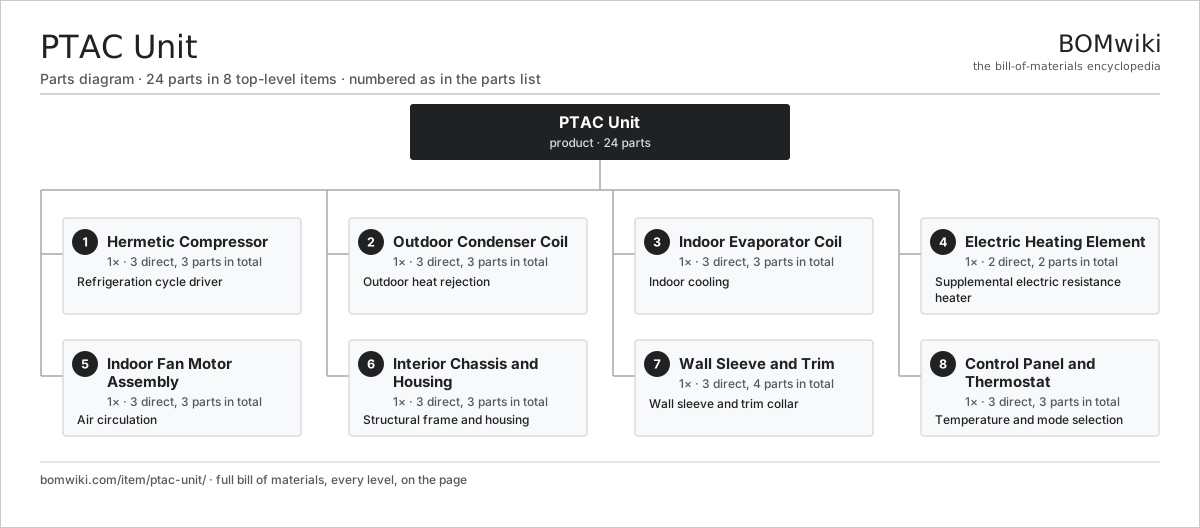
| # | Part | Qty | What it does |
|---|---|---|---|
| 1 | Hermetic Compressor 3 parts | 1× | Refrigeration cycle driver |
| 2 | Outdoor Condenser Coil 3 parts | 1× | Outdoor heat rejection |
| 3 | Indoor Evaporator Coil 3 parts | 1× | Indoor cooling |
| 4 | Electric Heating Element 2 parts | 1× | Supplemental electric resistance heater |
| 5 | Indoor Fan Motor Assembly 3 parts | 1× | Air circulation |
| 6 | Interior Chassis and Housing 3 parts | 1× | Structural frame and housing |
| 7 | Wall Sleeve and Trim 3 parts | 1× | Wall sleeve and trim collar |
| 8 | Control Panel and Thermostat 3 parts | 1× | Temperature and mode selection |
3D model
No 3D model yet. Have a CAD file of this? Add a 3D model. STL renders right on this page; STEP, FreeCAD, and OpenSCAD sources are welcome too (openly licensed, like all 3D models on BOMwiki).
Build & assembly graph
expand / collapse · shared sub-assemblies converge · links to related products · est. labourTap an assembly to expand/collapse · tap a part to open it · use “Open page” for any node · drag to pan, scroll to zoom.
Bill of materials for PTAC Unit
8 top-level lines · 31 rows shown · 24 parts total · indented to 3 levels| # | Item / sub-assembly | Part no. | Qty/assy | Ext. qty | Parts | Type |
|---|---|---|---|---|---|---|
| 1 | Hermetic Compressor 3 parts | ptac-unit-compressor | 1× | 1 | 3 | assembly |
| 1.1 | Compressor Motor | ptac-unit-compressor-motor | 1× | 1 | · | part |
| 1.2 | Pump Element | ptac-unit-compressor-pump | 1× | 1 | · | part |
| 1.3 | Compressor Shell | ptac-unit-compressor-crankcase | 1× | 1 | · | part |
| 2 | Outdoor Condenser Coil 3 parts | ptac-unit-condenser-coil | 1× | 1 | 3 | assembly |
| 2.1 | Condenser Tube Bundle | ptac-unit-condenser-tubes | 1× | 1 | · | part |
| 2.2 | Aluminum Fin Stock | ptac-unit-condenser-fins | 1× | 1 | · | part |
| 2.3 | Condenser Fan | ptac-unit-condenser-fan | 1× | 1 | · | part |
| 3 | Indoor Evaporator Coil 3 parts | ptac-unit-evaporator-coil | 1× | 1 | 3 | assembly |
| 3.1 | Evaporator Tube Bundle | ptac-unit-evaporator-tubes | 1× | 1 | · | part |
| 3.2 | Aluminum Fin Array | ptac-unit-evaporator-fins | 1× | 1 | · | part |
| 3.3 | Drip Pan | ptac-unit-evaporator-pan | 1× | 1 | · | part |
| 4 | Electric Heating Element 2 parts | ptac-unit-electric-heat | 1× | 1 | 2 | assembly |
| 4.1 | Heating Element | heating-element | 1× | 1 | · | part |
| 4.2 | Heat Control Thermostat | ptac-unit-electric-heat-thermostat | 1× | 1 | · | part |
| 5 | Indoor Fan Motor Assembly 3 parts | ptac-unit-fan-motor | 1× | 1 | 3 | assembly |
| 5.1 | Fan Motor Rotor | ptac-unit-fan-motor-rotor | 1× | 1 | · | part |
| 5.2 | Blower Wheel | ptac-unit-fan-motor-wheel | 1× | 1 | · | part |
| 5.3 | Motor Mount Damper | ptac-unit-fan-motor-damper | 1× | 1 | · | part |
| 6 | Interior Chassis and Housing 3 parts | ptac-unit-chassis | 1× | 1 | 3 | assembly |
| 6.1 | Chassis Frame | ptac-unit-chassis-frame | 1× | 1 | · | part |
| 6.2 | Thermal Insulation | ptac-unit-chassis-insulation | 1× | 1 | · | part |
| 6.3 | Service Panel | ptac-unit-chassis-access-panel | 1× | 1 | · | part |
| 7 | Wall Sleeve and Trim 3 parts | ptac-unit-sleeve | 1× | 1 | 4 | assembly |
| 7.1 | Sleeve Tube | ptac-unit-sleeve-tube | 1× | 1 | · | part |
| 7.2 | Trim Ring | ptac-unit-sleeve-trim-collar | 2× | 2 | · | part |
| 7.3 | Perimeter Foam Seal | ptac-unit-sleeve-insulation | 1× | 1 | · | part |
| 8 | Control Panel and Thermostat 3 parts | ptac-unit-controls | 1× | 1 | 3 | assembly |
| 8.1 | Room Thermostat Sensor | ptac-unit-controls-thermostat | 1× | 1 | · | part |
| 8.2 | Compressor Relay | ptac-unit-controls-relay | 1× | 1 | · | part |
| 8.3 | User Interface | ptac-unit-controls-display | 1× | 1 | · | part |
Something wrong in this list? Report a problem with this BOM.
Related products
same domain, ranked by shared parts Air Curtain
115 parts · shares 1 with this page
Air Curtain
115 parts · shares 1 with this page
 Centrifugal Chiller
340 parts · shares 1 with this page
Centrifugal Chiller
340 parts · shares 1 with this page
 Gas Furnace
308 parts · shares 1 with this page
Gas Furnace
308 parts · shares 1 with this page
 Heat Pump
117 parts · shares 1 with this page
Heat Pump
117 parts · shares 1 with this page
 Oil-Filled Radiator Heater
70 parts · shares 1 with this page
Packaged Rooftop Unit (RTU)
276 parts · shares 1 with this page
Oil-Filled Radiator Heater
70 parts · shares 1 with this page
Packaged Rooftop Unit (RTU)
276 parts · shares 1 with this page
Sourcing: possible vendors
Browse the supplier directory → Prices, MOQ, and lead times are algorithmic estimates, not quotes, and not claims about these companies. Company mappings are curated by keyword; est. price band $100–$20k. How estimates work| Vendor | HQ | Specialty | MOQ | Lead time |
|---|---|---|---|---|
|
🇺🇸Carrier
carrier.com ↗
|
Palm Beach Gardens, US | HVAC | 500 units | 8–14 wks |
| tranetechnologies.com ↗ | Davidson, US | HVAC | 500 units | 8–14 wks |
|
🇯🇵Daikin
daikin.com ↗
|
Osaka, JP | HVAC | 500 units | 8–14 wks |
|
🇺🇸Lennox
lennox.com ↗
|
Richardson, US | HVAC | 500 units | 8–14 wks |
| johnsoncontrols.com ↗ | Milwaukee, US | Building systems | 500 units | 8–14 wks |
1,052-word article