Ride-On Scrubber Dryer
ProductOverview
The ride-on scrubber dryer is an operator-seated floor cleaning and drying machine combining three functions in a single walk-behind or ride-on chassis: solution application and brush scrubbing, dirty-water recovery via vacuum squeegee, and wet-floor drying through evaporation and recovery. The machine is powered by a 48V or 80V battery system supplying energy to a 2 HP brush motor, 2 HP vacuum motor, and dual 1 HP traction-drive motors.
The design targets large-scale floor maintenance in hospitals, retail facilities, warehouses, and public buildings where daily or weekly cleaning of 5,000–20,000 square feet is routine. A single operator can clean and dry approximately 10,000–15,000 square feet per 8-hour shift, including refilling water tanks and dumping recovered dirty water. The machine reduces labor cost compared to traditional mop-and-bucket methods and produces superior hygiene (mechanical brushing plus chemical disinfection) compared to microfiber mops.
The machine's triple function is the key innovation: simultaneous brush scrubbing and solution application, followed immediately by squeegee recovery, leaves the floor damp but passable immediately after cleaning. Residual moisture evaporates within 1–2 hours, eliminating wet-floor hazards that characterize traditional wet-cleaning methods.
Scrubbing and solution delivery
The Scrub Deck Assembly mounts a 20-inch diameter Brush Head powered by a 2 HP AC motor. The motor speed (1800 RPM) is reduced via a Brush Gearbox to 150–300 RPM at the brush, providing enough torque to scrub soil from hard floor surfaces without excessive vibration.
The Brush Element is a nylon-bristle brush (18–20 inches wide, 2-inch bristle length) or synthetic pad. Nylon bristles are aggressive cleaners suitable for heavily soiled floors, tile grout lines, and concrete. Pads (microfiber or polyurethane) are gentler, used on polished or sealed floors where aggressive bristle scrubbing would damage the surface.
A Solution Pump (peristaltic type, 5–15 GPM) draws fresh solution from the Clean Tank and delivers it via spray nozzles positioned just ahead of the rotating brush. The operator controls solution flow via an on-off button or variable-speed control; most jobs use continuous solution application at 8–10 GPM.
The solution itself is typically a water-based detergent formulation (1–3% concentration by volume), selected based on floor type: neutral cleaners for sealed floors, acidic cleaners for grout and mineral deposits, or enzymatic cleaners for organic soils. The brush mechanical action (150–300 RPM rotation) plus chemical action (detergent surfactants) lifts and suspends soil, which is then removed by the vacuum recovery system.
Vacuum recovery and water extraction
The Recovery System Assembly immediately follows the scrub deck, consisting of dual rubber squeegee blades (front and rear) and a vacuum suction manifold. As the machine advances, the front squeegee blade pushes dirty water toward the suction manifold, which connects to a 2 HP Vacuum Motor Assembly delivering 180–220 CFM at 8–10 inches H₂O vacuum.
The suction flow through the manifold creates a partial vacuum beneath the squeegee blades, drawing dirty water into the Recovery Tank (25–35 gallon tank mounted on the rear frame). A Float Switch detects when the tank is full and signals the controller to stop the vacuum motor, preventing overflow.
The squeegee blade efficiency directly impacts the final moisture level left on the floor. High-quality squeegee blades reduce floor moisture to 8–12% by mass (nearly walking-surface dry). Poor blade contact or worn blades can leave 15–20% moisture, which increases drying time to 2–3 hours.
Power and control system
The machine is powered by a 48V or 80V battery system (150–200 Ah capacity). Lithium-ion batteries (li-poly cells) are increasingly common in newer models due to reduced weight and faster charging; older machines use lead-acid deep-cycle batteries (four 12V 200Ah cells wired in series for 48V systems).
A Motor Controller (dual-channel PWM DC motor driver) manages speed of the left and right Wheel Motor independently. This enables skid steering: the operator can reduce left-motor speed while maintaining right-motor speed, causing the machine to pivot in place or turn tightly. Maximum speed is 0–4 mph; sustained cleaning passes at 3 mph are typical.
The brush and vacuum motors operate on AC power derived from a DC-to-AC inverter inside the battery system or control cabinet. Most operators leave brush and vacuum motors running continuously during a job; individual on-off buttons or variable control allow the operator to pause scrubbing or recovery as needed for obstacle avoidance or tank emptying.
Operator station and ergonomics
The Operator Station Assembly is a seated platform, not a true ride-on seat as on large zero-turn mowers. The operator stands or sits on a cushioned Seat Assembly with safety switch; standing position is the norm for active cleaning floors, while sitting is used during long transit between cleaning zones.
Steering is via a large Steering Column (40-inch tiller wheel) that rotates left/right. The steering actuator converts tiller angle to rear caster wheel angle, enabling the machine to turn in approximately 3–4 foot radius curves.
Speed and solution-flow controls are mounted on the Armrest, allowing one-handed operation once the machine direction is set. The speed lever is proportional: pushing forward increases motor speed incrementally to 4 mph. Solution-on/off button and vacuum-on/off button (secondary) provide quick access to critical functions without releasing the steering wheel.
Maintenance and consumables
The Brush Element lasts 200–400 hours of operation depending on floor soil load. Brush replacement costs $80–$150 and takes 10 minutes (bolt-on connection). The Squeegee Blade lasts 300–600 hours and costs $40–$80 per blade; most operators replace both blades together.
The Blower Motor (both brush and vacuum motors) endure 3000–5000 hours before bearing wear becomes significant. Motor replacement costs $400–$600 each and requires reconnection of pulleys and belts; average repair time is 2–3 hours.
The Solution Pump (peristaltic type) lasts 1500–2500 hours. Replacment cost is $200–$400. The rubber tubing inside the pump wears from friction and chemical exposure; as internal surfaces become abraded, pump output gradually declines.
Battery replacement represents the largest maintenance cost. Lead-acid batteries (48V 200Ah set) cost $800–$1200 and last 3–5 years (300–500 charge cycles). Lithium-ion batteries cost $2000–$3500 but endure 2000+ cycles (5–8 year lifespan).
Water quality and chemical handling
Most operators use municipal tap water for the clean-water tank, adding detergent concentrate on-site. Hard water (high calcium/magnesium) reduces detergent effectiveness and can deposit mineral scale inside the Solution Pump; water softening or chelating detergents resolve this issue.
Recovered dirty water in the Recovery Tank can be reused for second or third passes on less-soiled areas; this practice reduces fresh-water consumption. However, as soil concentration rises, detergent effectiveness declines. Most operators dump and refill the recovery tank every 2–3 passes (approximately 4–6 hours operation).
Chemical residues (detergent, disinfectant) in recovered water can accelerate rubber blade degradation and may cause algae growth in standing tanks. Some operators add biocide (quaternary ammonium or chlorine) to recovery tanks to prevent microbial growth during multi-day storage.
Safety and operational considerations
The rotating Brush Element at 150–300 RPM presents minor entanglement risk (bristles are soft, not sharp), but foot contact should be avoided. The Seat Safety Switch cuts motor power if the operator falls or dismounts, preventing uncontrolled machine motion.
Wet floors are slippery; operators must maintain firm footing and avoid rapid direction changes that could cause loss of control. The dual traction motors and independent speed control enable skid steering, which can surprise operators unfamiliar with the machine. Training emphasizes gradual speed increase and smooth turns.
Noise levels are 78–85 dB during operation (brush and vacuum motors combined), requiring hearing protection for extended 8-hour shifts. Dust from dry soil (especially on concrete) can become airborne before solution application; wet cleaning reduces dust, but poorly ventilated enclosed spaces can accumulate airborne particulate.
Chemical exposure from detergent and disinfectant fumes is generally low with water-based detergents; however, concentrated detergent contact (from spills or contact with tank inlet) can irritate skin and eyes. Operators wear nitrile gloves and eye protection during tank refilling.
Cleaning performance metrics
Machine cleaning effectiveness depends on three variables: brush agitation (mechanical), chemical action (detergent), and dwell time (contact time). Slow machine speed (2 mph) with continuous detergent delivers superior soil removal on heavily soiled floors. Fast speed (4 mph) with reduced dwell time is acceptable for lightly soiled floors but may miss embedded soil.
Industry standards measure cleanliness via reflectance (gloss) and dirt particle count. A typical retail floor improves from 30–40% reflectance (dirty) to 70–80% reflectance (clean) after a single pass with the ride-on scrubber dryer, provided brush and solution are used continuously. Sealed concrete floors may require two passes or extended detergent dwell time to achieve high gloss.
Bacterial reduction (for hygiene-critical environments) depends on detergent type and dwell time. Neutral detergent alone reduces viable bacteria by 60–80%; adding disinfectant (quaternary ammonium or hypochlorite) extends efficacy to 95%+ bacterial reduction. Contact time requirements vary by disinfectant; most require 30–60 seconds wetness on the surface.
Ride-On Scrubber Dryer parts and their functions
8 top-level parts · 88 parts in total · full bill of materials below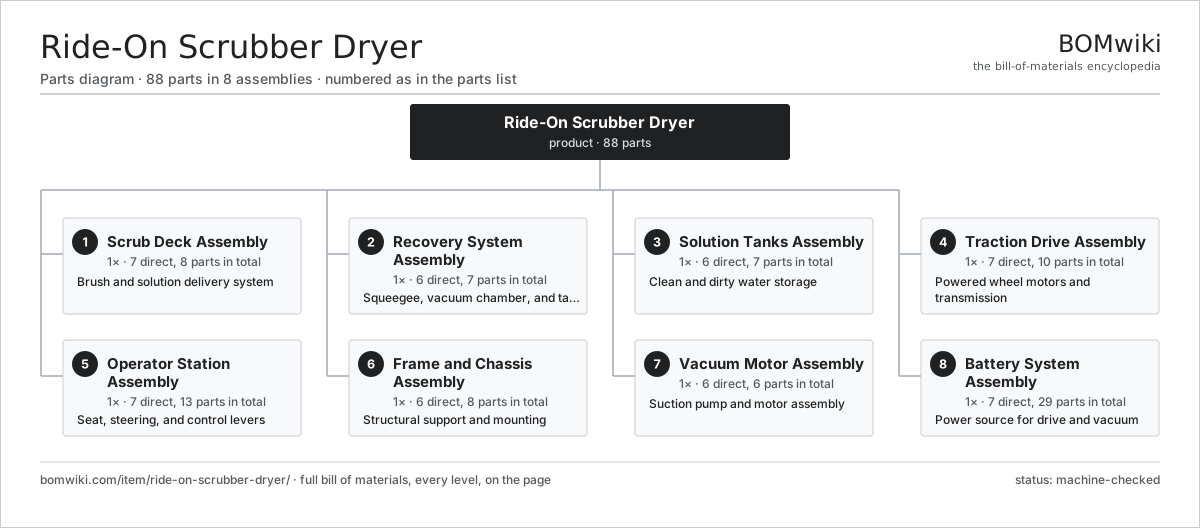
| # | Part | Qty | What it does |
|---|---|---|---|
| 1 | Scrub Deck Assembly 7 parts | 1× | Brush and solution delivery system |
| 2 | Recovery System Assembly 6 parts | 1× | Squeegee, vacuum chamber, and tank |
| 3 | Solution Tanks Assembly 6 parts | 1× | Clean and dirty water storage |
| 4 | Traction Drive Assembly 7 parts | 1× | Powered wheel motors and transmission |
| 5 | Operator Station Assembly 7 parts | 1× | Seat, steering, and control levers |
| 6 | Frame and Chassis Assembly 6 parts | 1× | Structural support and mounting |
| 7 | Vacuum Motor Assembly 6 parts | 1× | Suction pump and motor assembly |
| 8 | Battery System Assembly 7 parts | 1× | Power source for drive and vacuum |
3D model
No 3D model yet. Have a CAD file of this? Add a 3D model — STL renders right on this page; STEP, FreeCAD, and OpenSCAD sources are welcome too (openly licensed, like all 3D models on BOMwiki).
Build & assembly graph
expand / collapse · shared sub-assemblies converge · links to related products · est. labourTap an assembly to expand/collapse · tap a part to open it · use “Open page” for any node · drag to pan, scroll to zoom.
Bill of materials for Ride-On Scrubber Dryer
8 top-level lines · 65 rows shown · 88 parts total · indented to 3 levels| # | Item / sub-assembly | Part no. | Qty/assy | Ext. qty | Parts | Type |
|---|---|---|---|---|---|---|
| 1 | Scrub Deck Assembly 7 parts | ride-on-scrubber-dryer-scrub-deck | 1× | 1 | 8 | assembly |
| 1.1 | Brush Motor | ride-on-scrubber-dryer-brush-motor | 1× | 1 | · | part |
| 1.2 | Brush Head | ride-on-scrubber-dryer-brush-head | 1× | 1 | · | part |
| 1.3 | Brush Element | ride-on-scrubber-dryer-brush-element | 1× | 1 | · | part |
| 1.4 | Brush Gearbox | ride-on-scrubber-dryer-brush-gearbox | 1× | 1 | · | part |
| 1.5 | Solution Pump | ride-on-scrubber-dryer-solution-pump | 1× | 1 | · | part |
| 1.6 | Spray Nozzle | ride-on-scrubber-dryer-spray-nozzle | 2× | 2 | · | part |
| 1.7 | Fastener Set | fastener-set | 1× | 1 | · | part |
| 2 | Recovery System Assembly 6 parts | ride-on-scrubber-dryer-recovery-system | 1× | 1 | 7 | assembly |
| 2.1 | Squeegee Blade | ride-on-scrubber-dryer-squeegee-blade | 2× | 2 | · | part |
| 2.2 | Suction Header | ride-on-scrubber-dryer-suction-header | 1× | 1 | · | part |
| 2.3 | Recovery Tank | ride-on-scrubber-dryer-recovery-tank | 1× | 1 | · | part |
| 2.4 | Tank Drain Valve | ride-on-scrubber-dryer-tank-drain-valve | 1× | 1 | · | part |
| 2.5 | Float Switch | ride-on-scrubber-dryer-float-switch | 1× | 1 | · | part |
| 2.6 | Fastener Set | fastener-set | 1× | 1 | · | part |
| 3 | Solution Tanks Assembly 6 parts | ride-on-scrubber-dryer-solution-tanks | 1× | 1 | 7 | assembly |
| 3.1 | Clean Tank | ride-on-scrubber-dryer-clean-tank | 1× | 1 | · | part |
| 3.2 | Dirty Tank | ride-on-scrubber-dryer-dirty-tank | 1× | 1 | · | part |
| 3.3 | Tank Lid | ride-on-scrubber-dryer-tank-lid | 2× | 2 | · | part |
| 3.4 | Fill Strainer | ride-on-scrubber-dryer-fill-strainer | 1× | 1 | · | part |
| 3.5 | Interconnect Line | ride-on-scrubber-dryer-interconnect-line | 1× | 1 | · | part |
| 3.6 | Fastener Set | fastener-set | 1× | 1 | · | part |
| 4 | Traction Drive Assembly 7 parts | ride-on-scrubber-dryer-traction-drive | 1× | 1 | 10 | assembly |
| 4.1 | Wheel Motor | ride-on-scrubber-dryer-wheel-motor | 2× | 2 | · | part |
| 4.2 | Motor Controller | ride-on-scrubber-dryer-motor-controller | 1× | 1 | · | part |
| 4.3 | Wheel Assembly | ride-on-scrubber-dryer-wheel-assembly | 2× | 2 | · | part |
| 4.4 | Caster Wheel | ride-on-scrubber-dryer-caster-wheel | 2× | 2 | · | part |
| 4.5 | Steering Cylinder | ride-on-scrubber-dryer-steering-cylinder | 1× | 1 | · | part |
| 4.6 | Transmission Coupling | ride-on-scrubber-dryer-transmission-coupling | 1× | 1 | · | part |
| 4.7 | Fastener Set | fastener-set | 1× | 1 | · | part |
| 5 | Operator Station Assembly 7 parts | ride-on-scrubber-dryer-operator-station | 1× | 1 | 13 | assembly |
| 5.1 | Seat Assembly 5 parts | seat-assembly | 1× | 1 | 7 | assembly |
| 5.1.1 | Seat Frame | seat-frame | 1× | 1 | · | part |
| 5.1.2 | Seat Foam | seat-foam | 2× | 2 | · | part |
| 5.1.3 | Seat Cover | seat-cover | 1× | 1 | · | part |
| 5.1.4 | Seat Motor | seat-motor | 2× | 2 | · | part |
| 5.1.5 | Seat Heater Mat | seat-heater | 1× | 1 | · | part |
| 5.2 | Steering Column | ride-on-scrubber-dryer-steering-column | 1× | 1 | · | part |
| 5.3 | Control Handle | ride-on-scrubber-dryer-control-handle | 1× | 1 | · | part |
| 5.4 | Speed Lever | ride-on-scrubber-dryer-speed-lever | 1× | 1 | · | part |
| 5.5 | Armrest | ride-on-scrubber-dryer-armrest | 1× | 1 | · | part |
| 5.6 | Seat Safety Switch | ride-on-scrubber-dryer-seat-safety-switch | 1× | 1 | · | part |
| 5.7 | Fastener Set | fastener-set | 1× | 1 | · | part |
| 6 | Frame and Chassis Assembly 6 parts | ride-on-scrubber-dryer-frame-chassis | 1× | 1 | 8 | assembly |
| 6.1 | Frame Tube | ride-on-scrubber-dryer-frame-tube | 1× | 1 | · | part |
| 6.2 | Platform Deck | ride-on-scrubber-dryer-platform-deck | 1× | 1 | · | part |
| 6.3 | Tank Cradle | ride-on-scrubber-dryer-tank-cradle | 1× | 1 | · | part |
| 6.4 | Motor Mount Bracket | ride-on-scrubber-dryer-motor-mount-bracket | 2× | 2 | · | part |
| 6.5 | Wheel Hub Mount | ride-on-scrubber-dryer-wheel-hub-mount | 2× | 2 | · | part |
| 6.6 | Fastener Set | fastener-set | 1× | 1 | · | part |
| 7 | Vacuum Motor Assembly 6 parts | ride-on-scrubber-dryer-vacuum-motor | 1× | 1 | 6 | assembly |
| 7.1 | Blower Motor | blower-motor | 1× | 1 | · | part |
| 7.2 | Vacuum Pump | ride-on-scrubber-dryer-vacuum-pump | 1× | 1 | · | part |
| 7.3 | Motor Coupling | ride-on-scrubber-dryer-motor-coupling | 1× | 1 | · | part |
| 7.4 | Vacuum Motor Mount | ride-on-scrubber-dryer-vacuum-motor-mount | 1× | 1 | · | part |
| 7.5 | Thermal Overload | ride-on-scrubber-dryer-thermal-overload | 1× | 1 | · | part |
| 7.6 | Fastener Set | fastener-set | 1× | 1 | · | part |
| 8 | Battery System Assembly 7 parts | ride-on-scrubber-dryer-battery-system | 1× | 1 | 29 | assembly |
| 8.1 | LiPo Cell | lipo-cell | 20× | 20 | · | part |
| 8.2 | Lead-Acid Battery | ride-on-scrubber-dryer-lead-acid-battery | 4× | 4 | · | part |
| 8.3 | Battery BMS | ride-on-scrubber-dryer-battery-bms | 1× | 1 | · | part |
| 8.4 | Battery Charger | ride-on-scrubber-dryer-battery-charger | 1× | 1 | · | part |
| 8.5 | Battery Contactor | ride-on-scrubber-dryer-battery-contactor | 1× | 1 | · | part |
| 8.6 | Battery Cable | ride-on-scrubber-dryer-battery-cable | 1× | 1 | · | part |
| 8.7 | Fastener Set | fastener-set | 1× | 1 | · | part |
Related products
same domain, ranked by shared parts Artificial Turf Groomer
63 parts · shares 1 with this page
Artificial Turf Groomer
63 parts · shares 1 with this page
 Carpet Blower/Dryer Stack
69 parts · shares 1 with this page
Carpet Blower/Dryer Stack
69 parts · shares 1 with this page
 Concrete Floor Grinder
69 parts · shares 1 with this page
Concrete Floor Grinder
69 parts · shares 1 with this page
Sourcing: possible vendors
Prices, MOQ, and lead times are algorithmic estimates, not quotes, and not claims about these companies. Company mappings are curated by keyword; est. price band $50–$1.5k. How estimates work| Vendor | HQ | Specialty | MOQ | Lead time |
|---|---|---|---|---|
| sharkninja.com ↗ | Needham, US | Floorcare & kitchen | 1,000 units | 8–12 wks |
|
🇬🇧Dyson
dyson.com ↗
|
Malmesbury, GB | Vacuums & hair care | 1,000 units | 8–12 wks |
|
🇺🇸Bissell
bissell.com ↗
|
Grand Rapids, US | Floorcare | 1,000 units | 8–12 wks |
|
🇺🇸iRobot
irobot.com ↗
|
Bedford, US | Robot vacuums | 1,000 units | 8–12 wks |
|
🇩🇪Kärcher
karcher.com ↗
|
Winnenden, DE | Cleaning equipment | 1,000 units | 8–12 wks |
1,630-word article