Rotor Spinning Machine
ProductOverview
A rotor spinning machine converts short staple fibers into continuous yarn using centrifugal force and mechanical twisting. Unlike ring spinning, which draws and twists fibers through a complex system of rollers and moving parts, rotor spinning imparts twist by rotating a cup-shaped rotor that accumulates fibers and forms yarn directly. This approach is faster, produces coarser and medium-count yarns more cost-effectively, and tolerates a wider range of fiber lengths. Rotor-spun yarn dominates production of cotton, polyester blend, and synthetic apparel yarns.
How It Works
The process begins with compressed fiber sliver (loose fiber rope) fed from a creel. The fiber opener tears the sliver into individual fibers using a high-speed spiked roller and screens. Opened fibers are transported by air to the opening roller, which drafts (attenuates) the fibers and feeds them into the rotor inlet.
The rotor cup rotates at 50,000–150,000 rpm depending on yarn fineness desired. Fibers enter tangentially through a narrow inlet condenser and are centrifugally pressed against the rotor's inner wall, where they spin together with the cup. The rotor's continuous rotation imparts twist to the accumulating fiber mass. As yarn collects at the rotor exit, a nozzle guides the twisted yarn downstream.
Yarn winds continuously onto a bobbin using the winding head, which may run faster or slower than rotor speed depending on desired yarn properties. The entire process from fiber opening to yarn winding happens in one continuous zone, unlike ring spinning's separation of drafting and twisting.
Fiber Opening and Drafting
The fiber opener uses a spiked roller spinning at 3,000–6,000 rpm. Compressed sliver is fed against the roller, which combs fibers and breaks apart fiber clusters. A stationary toothed screen removes fiber waste and neps (knots). Opened fibers are conveyed to the opening roller, which applies a significant drafting ratio (80–200:1, depending on sliver denier and yarn target count).
Drafting control is critical. Too little drafting produces uneven yarn; too much causes fiber breakage. The nip pressure between top and bottom draft rollers is adjustable, allowing operators to tune drafting for different fiber blends.
Rotor Zone
The rotor spinning head is the heart of the process. A precision-machined steel or composite rotor cup 30–40 mm in diameter rotates on oil-lubricated or ceramic high-speed bearings. The rotor's inner surface is smooth or slightly textured to enhance fiber grip.
Fibers entering through the fiber inlet are accelerated by centrifugal force to the rotor's periphery, where they accumulate and twist together. As the rotor rotates, fibers spiral against the wall, and their contact with the rotor's surface imparts twist. The twist propagates into the accumulating fiber mass, creating a continuous spiral structure.
The yarn exit nozzle extracts twisted yarn from the rotor chamber at a controlled rate. Excessive withdrawal causes yarn breakage; too slow withdrawal causes fiber backup. Modern machines use a yarn splitter nozzle that stabilizes twist distribution.
Speed Control
Rotor speed determines yarn fineness and twist. Higher rotor speeds (100,000–150,000 rpm) are used for finer yarns (40–80 tex); lower speeds (50,000–80,000 rpm) for coarser yarns (15–30 tex). Rotor frequency is controlled via a variable frequency drive, allowing on-the-fly speed adjustment.
The winding speed is typically set to match or slightly exceed yarn production rate from the rotor, creating controlled yarn tension. Modern machines allow separate control of rotor and winding speeds for process optimization.
Yarn Quality Factors
Rotor-spun yarn has characteristics distinct from ring-spun yarn. Rotor yarn tends to be hairier (more protruding fiber ends) due to the nature of fiber accumulation in the rotor. Tenacity is slightly lower than ring-spun yarn of the same count. However, rotor yarn's bulk and covering power are often superior, making it valuable for fabrics requiring high opacity or stretch.
Production rates are 50–150 kg/hour per spinning unit, higher than ring spinning (20–50 kg/hour) due to faster process cycles and multi-position machines.
Machine Architecture
A single rotor-spinning machine typically has 2–8 spinning positions (spindle units), each with its own rotor, fiber inlet, and winding head. This allows the machine to process multiple yarns simultaneously from the same compressed air and power supply, improving productivity and reducing per-kilogram cost. A 4-spindle machine with each spindle at 100 kg/hour produces 400 kg/hour total.
The machine requires steady electrical power (7.5–22 kW) and compressed air (0.6–1 MPa) for pneumatic controls and fiber conveyance. The entire machine frame must be rigid and well-isolated from floor vibration to prevent yarn quality degradation.
Fiber Compatibility
Rotor spinning tolerates short staple fibers (25–45 mm) including cotton, polyester, viscose, and blends. Fiber length uniformity affects yarn evenness; machines include waste removal and contaminant screens to maintain fiber quality. Typical fiber count ranges from 0.5 to 2 micronaire (maturity measure for cotton) and 1.2–1.5 denier for polyester staple.
The spinning process is inherently tolerant of minor fiber defects and neps, making it suitable for lower-grade raw material compared to ring spinning. This cost advantage is a major driver of rotor spinning adoption in commodity yarn production.
Rotor Spinning Machine parts and their functions
8 top-level parts · 74 parts in total · full bill of materials below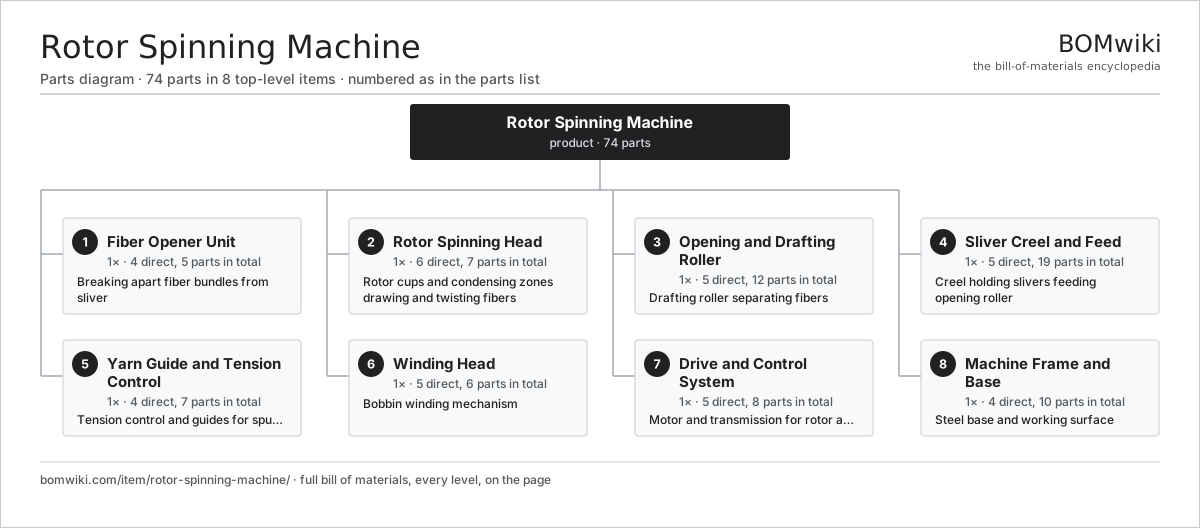
| # | Part | Qty | What it does |
|---|---|---|---|
| 1 | Fiber Opener Unit 4 parts | 1× | Breaking apart fiber bundles from sliver |
| 2 | Rotor Spinning Head 6 parts | 1× | Rotor cups and condensing zones drawing and twisting fibers |
| 3 | Opening and Drafting Roller 5 parts | 1× | Drafting roller separating fibers |
| 4 | Sliver Creel and Feed 5 parts | 1× | Creel holding slivers feeding opening roller |
| 5 | Yarn Guide and Tension Control 4 parts | 1× | Tension control and guides for spun yarn |
| 6 | Winding Head 5 parts | 1× | Bobbin winding mechanism |
| 7 | Drive and Control System 5 parts | 1× | Motor and transmission for rotor and take-up |
| 8 | Machine Frame and Base 4 parts | 1× | Steel base and working surface |
3D model
No 3D model yet. Have a CAD file of this? Add a 3D model. STL renders right on this page; STEP, FreeCAD, and OpenSCAD sources are welcome too (openly licensed, like all 3D models on BOMwiki).
Build & assembly graph
expand / collapse · shared sub-assemblies converge · links to related products · est. labourTap an assembly to expand/collapse · tap a part to open it · use “Open page” for any node · drag to pan, scroll to zoom.
Bill of materials for Rotor Spinning Machine
8 top-level lines · 46 rows shown · 74 parts total · indented to 3 levels| # | Item / sub-assembly | Part no. | Qty/assy | Ext. qty | Parts | Type |
|---|---|---|---|---|---|---|
| 1 | Fiber Opener Unit 4 parts | rotor-spinning-machine-fiber-opener | 1× | 1 | 5 | assembly |
| 1.1 | Opener Spiked Roller | rotor-spinning-machine-opener-roller | 1× | 1 | · | part |
| 1.2 | Teeth Screen | rotor-spinning-machine-teeth-screen | 1× | 1 | · | part |
| 1.3 | Opener Drive Motor | rotor-spinning-machine-opener-motor | 1× | 1 | · | part |
| 1.4 | Ball Bearing | ball-bearing | 2× | 2 | · | part |
| 2 | Rotor Spinning Head 6 parts | rotor-spinning-machine-rotor-spun-head | 1× | 1 | 7 | assembly |
| 2.1 | Rotor Cup | rotor-spinning-machine-rotor-cup | 1× | 1 | · | part |
| 2.2 | Rotor Shaft | rotor-spinning-machine-rotor-shaft | 1× | 1 | · | part |
| 2.3 | Fiber Inlet Condenser | rotor-spinning-machine-condensing-fiber-inlet | 1× | 1 | · | part |
| 2.4 | Yarn Exit Nozzle | rotor-spinning-machine-yarn-nozzle | 1× | 1 | · | part |
| 2.5 | High-Speed Rotor Bearing Block | rotor-spinning-machine-rotor-bearing-block | 2× | 2 | · | part |
| 2.6 | Rotor Drive Motor | rotor-spinning-machine-rotor-motor | 1× | 1 | · | part |
| 3 | Opening and Drafting Roller 5 parts | rotor-spinning-machine-opening-roller | 1× | 1 | 12 | assembly |
| 3.1 | Top Draft Roller | rotor-spinning-machine-draft-roller-top | 1× | 1 | · | part |
| 3.2 | Bottom Draft Roller | rotor-spinning-machine-draft-roller-bottom | 1× | 1 | · | part |
| 3.3 | Draft Roller Shaft | rotor-spinning-machine-roller-shaft | 2× | 2 | · | part |
| 3.4 | Nip Pressure Spring | rotor-spinning-machine-pressure-spring | 4× | 4 | · | part |
| 3.5 | Ball Bearing | ball-bearing | 4× | 4 | · | part |
| 4 | Sliver Creel and Feed 5 parts | rotor-spinning-machine-sliver-feeder | 1× | 1 | 19 | assembly |
| 4.1 | Creel Frame | rotor-spinning-machine-creel-stand | 1× | 1 | · | part |
| 4.2 | Bobbin Spindle Holder | rotor-spinning-machine-bobbin-holders | 8× | 8 | · | part |
| 4.3 | Feed Roller | rotor-spinning-machine-feed-roller | 1× | 1 | · | part |
| 4.4 | Sliver Tension Arm | rotor-spinning-machine-sliver-tension-arm | 1× | 1 | · | part |
| 4.5 | Ball Bearing | ball-bearing | 8× | 8 | · | part |
| 5 | Yarn Guide and Tension Control 4 parts | rotor-spinning-machine-yarn-guide | 1× | 1 | 7 | assembly |
| 5.1 | Yarn Guide Eyelet | rotor-spinning-machine-guide-eyelets | 4× | 4 | · | part |
| 5.2 | Tension Disk | rotor-spinning-machine-tension-disk | 1× | 1 | · | part |
| 5.3 | Dancer Roller | rotor-spinning-machine-dancer-roller | 1× | 1 | · | part |
| 5.4 | Yarn Splitter | rotor-spinning-machine-yarn-splitter | 1× | 1 | · | part |
| 6 | Winding Head 5 parts | rotor-spinning-machine-winding-head | 1× | 1 | 6 | assembly |
| 6.1 | Winding Spindle Motor | rotor-spinning-machine-wind-spindle-motor | 1× | 1 | · | part |
| 6.2 | Wind Spindle | rotor-spinning-machine-wind-spindle | 1× | 1 | · | part |
| 6.3 | Yarn Traverse Guide | rotor-spinning-machine-yarn-traverse-guide | 1× | 1 | · | part |
| 6.4 | Winding Nip Roller | rotor-spinning-machine-wind-nip-roller | 1× | 1 | · | part |
| 6.5 | Ball Bearing | ball-bearing | 2× | 2 | · | part |
| 7 | Drive and Control System 5 parts | rotor-spinning-machine-drive-system | 1× | 1 | 8 | assembly |
| 7.1 | Main Drive Motor | rotor-spinning-machine-main-motor | 1× | 1 | · | part |
| 7.2 | Rotor Frequency Drive | rotor-spinning-machine-rotor-frequency-drive | 1× | 1 | · | part |
| 7.3 | Drive Belt | rotor-spinning-machine-transmission-belt | 1× | 1 | · | part |
| 7.4 | Winding Drive Transmission | rotor-spinning-machine-winding-transmission | 1× | 1 | · | part |
| 7.5 | Relay | relay | 4× | 4 | · | part |
| 8 | Machine Frame and Base 4 parts | rotor-spinning-machine-frame | 1× | 1 | 10 | assembly |
| 8.1 | Main Frame Casting | rotor-spinning-machine-main-frame-casting | 1× | 1 | · | part |
| 8.2 | Sheet Metal Panel | sheet-panel | 4× | 4 | · | part |
| 8.3 | Vibration Isolator Foot | rotor-spinning-machine-vibration-isolator | 4× | 4 | · | part |
| 8.4 | Fastener Set | fastener-set | 1× | 1 | · | part |
Something wrong in this list? Report a problem with this BOM.
Related products
same domain, ranked by shared parts Automatic Fabric Cutting Machine
1,695 parts · shares 1 with this page
Automatic Winding Machine
288 parts · shares 1 with this page
Automatic Fabric Cutting Machine
1,695 parts · shares 1 with this page
Automatic Winding Machine
288 parts · shares 1 with this page
 Chainstitch Machine
82 parts · shares 1 with this page
Computerized Flat Knitting Machine
6,577 parts · shares 1 with this page
Cotton Blowroom Line
258 parts · shares 1 with this page
Chainstitch Machine
82 parts · shares 1 with this page
Computerized Flat Knitting Machine
6,577 parts · shares 1 with this page
Cotton Blowroom Line
258 parts · shares 1 with this page
Sourcing: possible vendors
Browse the supplier directory → Prices, MOQ, and lead times are algorithmic estimates, not quotes, and not claims about these companies. Company mappings are curated by keyword; est. price band $10k–$1M. How estimates work| Vendor | HQ | Specialty | MOQ | Lead time |
|---|---|---|---|---|
|
🇨🇭Rieter
rieter.com ↗
|
Winterthur, CH | Spinning machinery | 10 units | 14–24 wks |
| truetzschler.com ↗ | Mönchengladbach, DE | Textile machinery | 10 units | 14–24 wks |
|
🇧🇪Picanol
picanol.be ↗
|
Ypres, BE | Weaving machines | 10 units | 14–24 wks |
| karlmayer.com ↗ | Obertshausen, DE | Warp knitting machines | 10 units | 14–24 wks |
|
🇨🇭Saurer
saurer.com ↗
|
Arbon, CH | Spinning & embroidery | 10 units | 14–24 wks |
969-word article