Shoe Lasting Machine
ProductOverview
Shoe lasting is the critical process of stretching and molding the upper leather or textile around a wooden or plastic form (the "last") to create the permanent shoe shape. A lasting machine automates this labor-intensive step, which traditionally required skilled hand-stretching and nailing. Modern lasting machines apply three principal forces simultaneously: toe-box closure, heel compression, and side-wall tension, while simultaneously applying adhesive to the upper-to-insole bond line.
The shoe lasting machine is a core workstation in footwear factories, operating at 40–60 cycles per hour. A single operator typically manages 1–2 machines, loading pre-lasted shoe uppers onto lasts, pressing a start button, and unloading shaped shoes 40–60 seconds later. The degree of automation, from semi-automatic (operator-controlled clamping) to fully automatic (PLC-sequenced), depends on production volume and operator skill availability.
Lasting Process Sequence
The typical shoe lasting cycle unfolds in five stages:
1. Last Loading (Manual, ~5 seconds)
The operator inserts a prepared shoe upper (with insole pre-glued) onto the last support, aligns the heel counter, and positions the shoe body over the last. The last is held vertically by a quick-change chuck, allowing rapid swaps between different shoe sizes.
2. Cement Application (~10 seconds)
Once the upper is positioned, the cement applicator system automatically sprays or rolls adhesive onto the underside of the upper and the insole top surface. The spray is timed to occur before mechanical clamping, allowing the adhesive to activate and become tacky. Typical adhesive volume is 15–30 mL per shoe, depending on upper construction and desired bond strength.
3. Toe Lasting (~15 seconds)
The toe pincer system activates, driving two opposing clamping jaws inward. The jaws grip the shoe upper around the toe box and pull it tight against the last form, stretching the fabric and molding it into the toe profile. Toe clamp force is 800–1200 N per jaw. This phase sets the critical toe-box shape and prevents wrinkles in the finished shoe.
4. Heel Lasting (~15 seconds)
As toe pressure is maintained, the heel pincer system engages, applying 600–1000 N inward pressure on the heel counter. This compresses the heel seat and locks the heel shape. The heel phase often begins slightly after toe closure to ensure the upper fabric has sufficient pre-tension.
5. Side Wall Tension (~10 seconds)
Finally, the side clamps engage, pulling the lateral sidewalls inward and holding them under tension against the last width. This step ensures the upper conforms tightly to the side profile and prevents gapping.
All three clamping stages (toe, heel, side) maintain pressure for 10–20 seconds while the adhesive sets to a permanent bond. The PLC controller manages the timing sequence; a typical cycle is 40–60 seconds total.
Hydraulic Power Architecture
All mechanical actuators in the lasting machine, toe pincers, heel pincers, side clamps, and cement spray arm, are driven by a centralized hydraulic system. This approach offers several advantages over pneumatic or electric actuation:
- Power density: Hydraulic systems deliver high force in compact cylinders (~800 N from a 50 mm bore, 100 bar pressure).
- Smooth actuation: Oil is incompressible, allowing smooth, jerk-free motion and precise pressure control.
- Energy efficiency: Pilot-operated relief valves and load-sensing pump controls minimize energy waste and heat generation.
The hydraulic pump, driven by a 5–7.5 kW AC motor at 1500 rpm, supplies up to 30 L/min at 100–150 bar nominal pressure. A pressure accumulator (1–2 L) damps pressure spikes and smooths pump flow ripple, extending component life and reducing noise.
Flow is distributed by a main manifold block containing nested galleries and individual solenoid directional valves for each actuator circuit. Pressure transducers monitor toe, heel, and side pressures in real-time; if any pressure exceeds setpoint, the control system logs an alarm and reduces solenoid duty cycle to prevent fabric damage.
Cement Adhesive System
The cement adhesive system is critical to bond formation and is often the source of manufacturing variability. The system consists of:
- Adhesive tank: An 8–10 L reservoir with mechanical stirring, preventing solvent evaporation and sedimentation of resin particles.
- Gear pump: A positive displacement pump rated for high-viscosity adhesives (typically 100–300 cP). Flow rate is 5–15 L/min depending on spray pattern and droplet size.
- Spray nozzles: Air-atomizing nozzles mix adhesive with compressed air (6–8 bar) to produce a fine mist. Nozzles are positioned to spray the upper's bottom surface and insole top edge; dual nozzles ensure complete coverage even for large (size 48) shoes.
- Spray arm actuator: A stepper motor adjusts nozzle height and angle dynamically based on last geometry, ensuring uniform adhesive distribution.
Adhesive cure time is critical: if applied too early, solvent evaporates and viscosity rises, reducing flow into microscopic surface roughness; if applied too late, the upper has already moved, creating gap-induced misalignment. Optimal timing is just before toe-clamp pressure, when adhesive becomes tacky (2–5 minutes, depending on ambient humidity).
Control System and Operator Interface
The control panel is the nervous system of the lasting machine. A standard industrial PLC executes the lasting sequence:
- Wait for operator to press "Start" on the HMI touchscreen.
- De-energize all solenoid directional valves (pincers in neutral, open position).
- Energize cement applicator solenoid; spray adhesive for 4–6 seconds.
- Wait 2 seconds for adhesive to become tacky.
- Energize toe-pincer solenoid; ramp pressure over 3 seconds to 800 N; hold for 15 seconds.
- Energize heel-pincer solenoid; ramp over 2 seconds to 600 N; hold for 12 seconds.
- Energize side-clamp solenoid; apply 500 N; hold for 10 seconds.
- Maintain all pressures for additional 5 seconds (adhesive setting phase).
- De-energize all solenoids in sequence; pincers retract under spring pressure.
- Signal operator with audible tone and green light: "Load next shoe."
Pressure transducers provide feedback loops: if toe pressure drops below 700 N (pincer slippage, weak adhesive, or operator interference), the controller logs an event and alerts the operator. This real-time monitoring prevents "soft" lasting (inadequate pressure) that would result in wrinkled or misshapen shoes hours later during wear.
Manufacturing Considerations
Lasting machine reliability and shoe quality depend on several factors:
- Last geometry accuracy: Lasts must be precisely profiled to target shoe size and shape. Worn or damaged lasts produce poor-fitting shoes.
- Adhesive batch consistency: Resin content and solvent evaporation significantly affect cure time and bond strength. Factory quality control typically includes viscosity checks (Zahn cup) on each new batch.
- Operator technique: Even with automatic control, operator skill matters: improper upper positioning leads to misalignment; overloading the adhesive tank shortens spray nozzle life.
- Maintenance: Hydraulic fluid must be changed every 1000–2000 operating hours; dirt or water contamination causes actuator sluggishness and seal wear.
A well-maintained lasting machine typically runs 3–5 years before major overhaul (cylinder seal replacement, pump wear). Tire costs for consumables (nozzles, hoses) are ~$500–1000 per month in high-volume (>500 pairs/day) factories.
Shoe Lasting Machine parts and their functions
8 top-level parts · 54 parts in total · full bill of materials below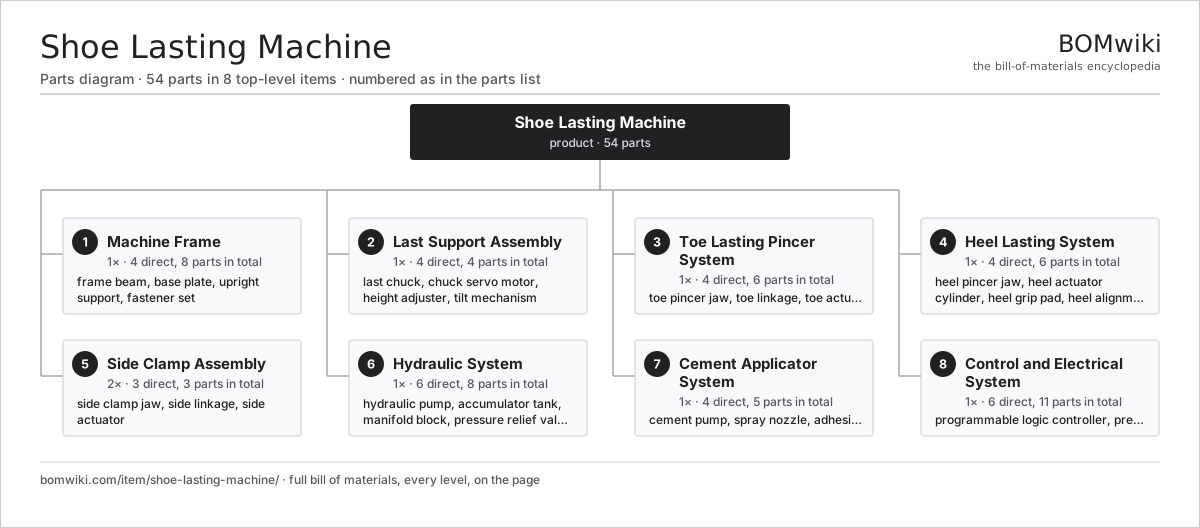
| # | Part | Qty | What it does |
|---|---|---|---|
| 1 | Machine Frame 4 parts | 1× | Welded steel base structure supporting all mechanical systems and providing rigid mounting points. |
| 2 | Last Support Assembly 4 parts | 1× | Adjustable clamp that holds the shoe last (mold form) in vertical position during lasting. |
| 3 | Toe Lasting Pincer System 4 parts | 1× | Powered toe box pincers that grip and stretch the shoe upper around the toe portion of the last. |
| 4 | Heel Lasting System 4 parts | 1× | Powered heel pincers that grip and stretch the heel counter area, creating the critical heel seat shape. |
| 5 | Side Clamp Assembly 3 parts | 2× | Lateral clamping jaws that pull and hold shoe sidewalls in tension against the last. |
| 6 | Hydraulic System 6 parts | 1× | Centralized hydraulic power supply providing pressure and flow to all mechanical actuators. |
| 7 | Cement Applicator System 4 parts | 1× | Spray or roller applicator that applies adhesive to upper and insole interfaces during lasting. |
| 8 | Control and Electrical System 6 parts | 1× | PLC-based control system managing actuator timing, pressure monitoring, and operator interface. |
3D model
No 3D model yet. Have a CAD file of this? Add a 3D model. STL renders right on this page; STEP, FreeCAD, and OpenSCAD sources are welcome too (openly licensed, like all 3D models on BOMwiki).
Build & assembly graph
expand / collapse · shared sub-assemblies converge · links to related products · est. labourTap an assembly to expand/collapse · tap a part to open it · use “Open page” for any node · drag to pan, scroll to zoom.
Bill of materials for Shoe Lasting Machine
8 top-level lines · 43 rows shown · 54 parts total · indented to 3 levels| # | Item / sub-assembly | Part no. | Qty/assy | Ext. qty | Parts | Type |
|---|---|---|---|---|---|---|
| 1 | Machine Frame 4 parts | shoe-lasting-machine-frame | 1× | 1 | 8 | assembly |
| 1.1 | Frame Beam | shoe-lasting-machine-frame-beam | 4× | 4 | · | part |
| 1.2 | Base Plate | shoe-lasting-machine-base-plate | 1× | 1 | · | part |
| 1.3 | Upright Support | shoe-lasting-machine-uprights | 2× | 2 | · | part |
| 1.4 | Fastener Set | fastener-set | 1× | 1 | · | part |
| 2 | Last Support Assembly 4 parts | shoe-lasting-machine-last-support | 1× | 1 | 4 | assembly |
| 2.1 | Last Chuck | shoe-lasting-machine-last-chuck | 1× | 1 | · | part |
| 2.2 | Chuck Servo Motor | shoe-lasting-machine-chuck-servo | 1× | 1 | · | part |
| 2.3 | Height Adjuster | shoe-lasting-machine-height-adjuster | 1× | 1 | · | part |
| 2.4 | Tilt Mechanism | shoe-lasting-machine-tilt-mechanism | 1× | 1 | · | part |
| 3 | Toe Lasting Pincer System 4 parts | shoe-lasting-machine-toe-system | 1× | 1 | 6 | assembly |
| 3.1 | Toe Pincer Jaw | shoe-lasting-machine-toe-pincer | 2× | 2 | · | part |
| 3.2 | Toe Linkage | shoe-lasting-machine-toe-linkage | 1× | 1 | · | part |
| 3.3 | Toe Actuator | shoe-lasting-machine-toe-actuator | 1× | 1 | · | part |
| 3.4 | Toe Grip Pad | shoe-lasting-machine-toe-pad | 2× | 2 | · | part |
| 4 | Heel Lasting System 4 parts | shoe-lasting-machine-heel-system | 1× | 1 | 6 | assembly |
| 4.1 | Heel Pincer Jaw | shoe-lasting-machine-heel-pincer | 2× | 2 | · | part |
| 4.2 | Heel Actuator Cylinder | shoe-lasting-machine-heel-actuator | 1× | 1 | · | part |
| 4.3 | Heel Grip Pad | shoe-lasting-machine-heel-pad | 2× | 2 | · | part |
| 4.4 | Heel Alignment Guide | shoe-lasting-machine-heel-guide | 1× | 1 | · | part |
| 5 | Side Clamp Assembly 3 parts | shoe-lasting-machine-side-clamp | 2× | 2 | 3 | assembly |
| 5.1 | Side Clamp Jaw | shoe-lasting-machine-side-jaw | 1× | 2 | · | part |
| 5.2 | Side Linkage | shoe-lasting-machine-side-linkage | 1× | 2 | · | part |
| 5.3 | Side Actuator | shoe-lasting-machine-side-actuator | 1× | 2 | · | part |
| 6 | Hydraulic System 6 parts | shoe-lasting-machine-hydraulic-system | 1× | 1 | 8 | assembly |
| 6.1 | Hydraulic Pump | shoe-lasting-machine-hydraulic-pump | 1× | 1 | · | part |
| 6.2 | Accumulator Tank | shoe-lasting-machine-accumulator | 1× | 1 | · | part |
| 6.3 | Manifold Block | shoe-lasting-machine-manifold | 1× | 1 | · | part |
| 6.4 | Pressure Relief Valve | shoe-lasting-machine-pressure-relief | 1× | 1 | · | part |
| 6.5 | Directional Control Valve | shoe-lasting-machine-directional-valves | 3× | 3 | · | part |
| 6.6 | Hydraulic Hose Bundle | shoe-lasting-machine-hose-assembly | 1× | 1 | · | part |
| 7 | Cement Applicator System 4 parts | shoe-lasting-machine-cement-applicator | 1× | 1 | 5 | assembly |
| 7.1 | Cement Pump | shoe-lasting-machine-cement-pump | 1× | 1 | · | part |
| 7.2 | Spray Nozzle | shoe-lasting-machine-spray-nozzle | 2× | 2 | · | part |
| 7.3 | Adhesive Tank | shoe-lasting-machine-adhesive-tank | 1× | 1 | · | part |
| 7.4 | Spray Arm Actuator | shoe-lasting-machine-spray-arm | 1× | 1 | · | part |
| 8 | Control and Electrical System 6 parts | shoe-lasting-machine-control-panel | 1× | 1 | 11 | assembly |
| 8.1 | Programmable Logic Controller | shoe-lasting-machine-plc | 1× | 1 | · | part |
| 8.2 | Pressure Transducer | shoe-lasting-machine-pressure-transducer | 3× | 3 | · | part |
| 8.3 | Limit Switch | shoe-lasting-machine-limit-switch | 4× | 4 | · | part |
| 8.4 | Solenoid Driver Module | shoe-lasting-machine-solenoid-valve-driver | 1× | 1 | · | part |
| 8.5 | HMI Touchscreen | shoe-lasting-machine-hmi-panel | 1× | 1 | · | part |
| 8.6 | Power Supply | power-supply | 1× | 1 | · | part |
Something wrong in this list? Report a problem with this BOM.
Sourcing: possible vendors
Browse the supplier directory → Prices, MOQ, and lead times are algorithmic estimates, not quotes, and not claims about these companies. Company mappings are curated by keyword; est. price band $10k–$1M. How estimates work| Vendor | HQ | Specialty | MOQ | Lead time |
|---|---|---|---|---|
|
🇨🇭Rieter
rieter.com ↗
|
Winterthur, CH | Spinning machinery | 10 units | 14–24 wks |
| truetzschler.com ↗ | Mönchengladbach, DE | Textile machinery | 10 units | 14–24 wks |
|
🇧🇪Picanol
picanol.be ↗
|
Ypres, BE | Weaving machines | 10 units | 14–24 wks |
| karlmayer.com ↗ | Obertshausen, DE | Warp knitting machines | 10 units | 14–24 wks |
|
🇨🇭Saurer
saurer.com ↗
|
Arbon, CH | Spinning & embroidery | 10 units | 14–24 wks |
1,257-word article