Skate Sharpening Machine
ProductOverview
A skate sharpening machine is a stationary precision grinding tool designed to restore sharp edges on ice skate blades. Unlike portable handheld sharpeners, stationary machines employ a rotating Grinding Wheel with controlled speed, precision Clamp Carriage positioning, and Alignment Guide systems to achieve consistent results. These machines are found in pro shops, ice rinks, and service centers, and are the standard tool for competitive skaters and hockey teams.
The machine consists of a Base Frame supporting a motor-driven Grinding Wheel, a mechanical Clamp Carriage that holds and advances the blade against the wheel, and an Alignment Guide that ensures precise blade angle and rocker radius. A Coolant System delivers fluid to the grinding zone, controlling heat and preventing blade tempering damage. Safety features include a Wheel Guard and Emergency Stop.
Professional ice hockey teams sharpen skates before every practice and game; recreational skaters sharpen every 10–20 hours of use. Proper sharpening maintains edge bite, enables fast acceleration and turning, and prevents the dull-edge slip that leads to falls and fatigue.
How it works
The operator clamps the skate blade into the Clamp Vise, which grips the blade along its length. The Alignment Guide is adjusted to set the edge angle (typically 45° per side for hockey, steeper for speed skating), and the Rocker Template is positioned to match the desired blade rocker curve.
The Motor is started, spinning the Grinding Wheel at a controlled speed (typically 1500–3000 RPM depending on wheel size and blade steel). The operator slowly advances the blade against the spinning wheel using the Feed Screw, feeding the blade smoothly across the wheel face. The Coolant System pumps coolant onto the wheel, carrying away grinding heat and metal debris.
As the blade is fed across the wheel, the abrasive surface removes dull steel, reshaping the cross-sectional edge to a sharp V. The Dresser is periodically used to true and re-profile the wheel, maintaining its shape and sharpness. Dressing is typically performed every 5–10 blade pairs or when the wheel shows visible wear.
The sharpening process typically takes 3–5 minutes per blade pair. The operator periodically examines the blade under light to verify the edge is sharp (a sharp edge reflects light in a thin line; a dull edge reflects light across a wider band). Once both edges are sharp, the blade is removed, rinsed, and dried.
Grinding wheel selection and dressing
The Wheel Stone is the critical component determining sharpening quality. Wheels are characterized by abrasive type, grit size, and bonding material. Aluminum oxide wheels (brown or white) are common for general ice skate sharpening; silicon carbide wheels are harder and longer-lasting but more expensive. Grit size ranges from 60 (very coarse, fast material removal) to 220 (fine, precise edge). Most shops use 120–180 grit for production sharpening.
The Dresser is a diamond or carbide tool used to true (remove run-out) and re-profile the wheel. Dressing is essential to maintain edge sharpness; a dull wheel removes metal inefficiently, generating excessive heat and potentially damaging the blade's temper. Dressing is performed by hand, feeding the dresser across the spinning wheel face to expose fresh abrasive and restore the precise radius profile.
Alignment and precision
The Alignment Guide is the system determining final edge quality. The Angle Gauge is calibrated to set the cross-sectional edge angle (45° is standard for hockey, 40° for speed skaters, 50° for figure skaters). The Rocker Template ensures the blade retains its longitudinal curve; some machines use simple mechanical guides, while premium models employ contoured cams or digital angle measurement.
The Clamp Pressure must be sufficient to hold the blade rigidly without crushing it. Excessive pressure can cause distortion or chattering; insufficient pressure allows blade slip and uneven grinding. Most machines use spring-loaded or lever-based clamping with adjustable preload.
The Feed Screw controls the rate at which the blade advances across the wheel. A manual feed screw requires operator skill to maintain consistent pressure; some semi-automatic machines use powered feeds for repeatable results. The feed rate is critical: too fast causes rapid wheel wear and a rough edge; too slow wastes time and generates excessive heat.
Coolant and thermal management
The Coolant System delivers fluid to the grinding zone, performing two functions: cooling the blade and wheel, and flushing away grinding swarf (fine metal particles). Water-based coolants are common and economical; soluble oil coolants provide better lubrication and slightly superior finish. The Coolant Pump circulates fluid continuously during sharpening.
Thermal management is critical because excessive heat can soften or anneal the blade steel, reducing hardness and edge retention. Professional shops use flood coolant systems (similar to industrial machine tools) to maintain blade temperature below 50°C during grinding. Manual machines with mist-coolant systems require operator awareness to avoid overheating.
Safety and maintenance
The Wheel Guard is a welded or bolted enclosure protecting the operator from contact with the spinning wheel. The guard includes an opening for blade insertion, with guards preventing hand contact with the wheel during operation. The Emergency Stop is a large red mushroom-head button mounted within arm's reach, allowing immediate motor shutdown in case of emergency.
Regular maintenance includes dressing the wheel every 5–10 blade pairs, checking motor pulley and belt tension, inspecting the clamp vise for damage or wear, and monitoring coolant level and condition. The Coolant Tank should be drained and refilled every 2–4 weeks to remove accumulated swarf and microbial growth.
Grinding wheels can develop radial run-out (wobble) over time, or develop flat spots from dressing or use. A wheel with excessive run-out should be replaced, as it produces inconsistent edge geometry. Wheels typically last 100–200 blade pairs before requiring replacement.
A well-maintained skate sharpening machine can operate reliably for 10+ years. Upkeep is minimal if dressing is performed regularly and coolant is maintained. Professional shops often calibrate machines monthly to verify edge angles with test blades, ensuring consistent quality.
Skate Sharpening Machine parts and their functions
8 top-level parts · 27 parts in total · full bill of materials below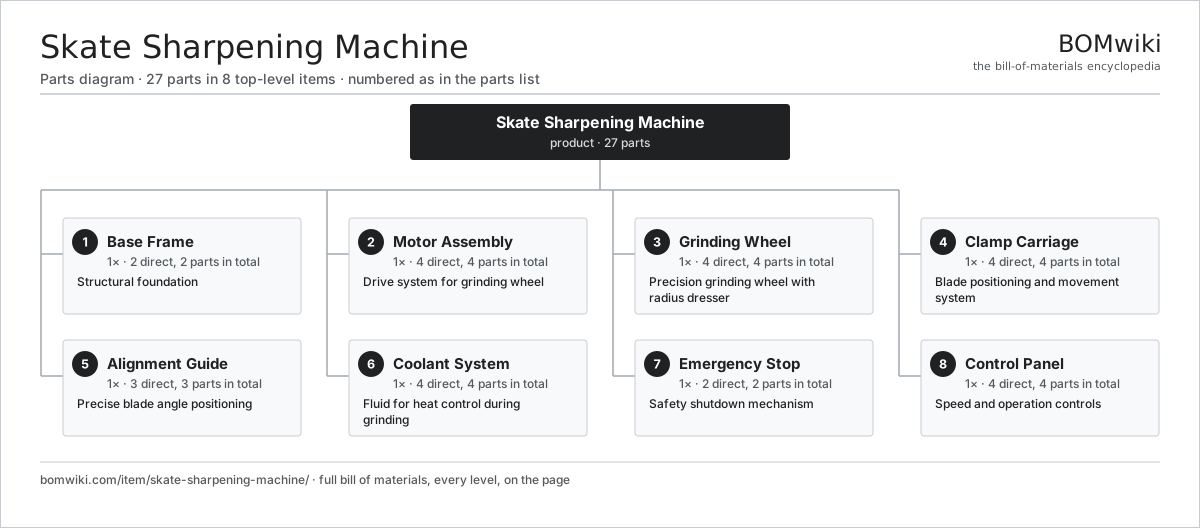
| # | Part | Qty | What it does |
|---|---|---|---|
| 1 | Base Frame 2 parts | 1× | Structural foundation |
| 2 | Motor Assembly 4 parts | 1× | Drive system for grinding wheel |
| 3 | Grinding Wheel 4 parts | 1× | Precision grinding wheel with radius dresser |
| 4 | Clamp Carriage 4 parts | 1× | Blade positioning and movement system |
| 5 | Alignment Guide 3 parts | 1× | Precise blade angle positioning |
| 6 | Coolant System 4 parts | 1× | Fluid for heat control during grinding |
| 7 | Emergency Stop 2 parts | 1× | Safety shutdown mechanism |
| 8 | Control Panel 4 parts | 1× | Speed and operation controls |
3D model
No 3D model yet. Have a CAD file of this? Add a 3D model. STL renders right on this page; STEP, FreeCAD, and OpenSCAD sources are welcome too (openly licensed, like all 3D models on BOMwiki).
Build & assembly graph
expand / collapse · shared sub-assemblies converge · links to related products · est. labourTap an assembly to expand/collapse · tap a part to open it · use “Open page” for any node · drag to pan, scroll to zoom.
Bill of materials for Skate Sharpening Machine
8 top-level lines · 35 rows shown · 27 parts total · indented to 3 levels| # | Item / sub-assembly | Part no. | Qty/assy | Ext. qty | Parts | Type |
|---|---|---|---|---|---|---|
| 1 | Base Frame 2 parts | skate-sharpener-base-frame | 1× | 1 | 2 | assembly |
| 1.1 | Frame Iron | skate-sharpener-frame-iron | 1× | 1 | · | part |
| 1.2 | Frame Isolation | skate-sharpener-frame-isolation | 1× | 1 | · | part |
| 2 | Motor Assembly 4 parts | skate-sharpener-motor-assembly | 1× | 1 | 4 | assembly |
| 2.1 | Motor | skate-sharpener-motor | 1× | 1 | · | part |
| 2.2 | Motor Mount | skate-sharpener-motor-mount | 1× | 1 | · | part |
| 2.3 | Motor Pulley | skate-sharpener-motor-pulley | 1× | 1 | · | part |
| 2.4 | Motor Belt | skate-sharpener-motor-belt | 1× | 1 | · | part |
| 3 | Grinding Wheel 4 parts | skate-sharpener-grinding-wheel | 1× | 1 | 4 | assembly |
| 3.1 | Wheel Stone | skate-sharpener-wheel-stone | 1× | 1 | · | part |
| 3.2 | Wheel Arbor | skate-sharpener-wheel-arbor | 1× | 1 | · | part |
| 3.3 | Wheel Guard | skate-sharpener-wheel-guard | 1× | 1 | · | part |
| 3.4 | Dresser | skate-sharpener-dresser | 1× | 1 | · | part |
| 4 | Clamp Carriage 4 parts | skate-sharpener-clamp-carriage | 1× | 1 | 4 | assembly |
| 4.1 | Clamp Vise | skate-sharpener-clamp-vise | 1× | 1 | · | part |
| 4.2 | Carriage Rail | skate-sharpener-carriage-rail | 1× | 1 | · | part |
| 4.3 | Feed Screw | skate-sharpener-feed-screw | 1× | 1 | · | part |
| 4.4 | Clamp Pressure | skate-sharpener-clamp-pressure | 1× | 1 | · | part |
| 5 | Alignment Guide 3 parts | skate-sharpener-alignment-guide | 1× | 1 | 3 | assembly |
| 5.1 | Angle Gauge | skate-sharpener-angle-gauge | 1× | 1 | · | part |
| 5.2 | Rocker Template | skate-sharpener-rocker-template | 1× | 1 | · | part |
| 5.3 | Alignment Pin | skate-sharpener-alignment-pin | 1× | 1 | · | part |
| 6 | Coolant System 4 parts | skate-sharpener-coolant-system | 1× | 1 | 4 | assembly |
| 6.1 | Coolant Pump | skate-sharpener-coolant-pump | 1× | 1 | · | part |
| 6.2 | Coolant Tank | skate-sharpener-coolant-tank | 1× | 1 | · | part |
| 6.3 | Coolant Nozzle | skate-sharpener-coolant-nozzle | 1× | 1 | · | part |
| 6.4 | Coolant Fluid | skate-sharpener-coolant-fluid | 1× | 1 | · | part |
| 7 | Emergency Stop 2 parts | skate-sharpener-emergency-stop | 1× | 1 | 2 | assembly |
| 7.1 | E-Stop Button | skate-sharpener-estop-button | 1× | 1 | · | part |
| 7.2 | E-Stop Relay | skate-sharpener-estop-relay | 1× | 1 | · | part |
| 8 | Control Panel 4 parts | skate-sharpener-control-panel | 1× | 1 | 4 | assembly |
| 8.1 | Speed Potentiometer | skate-sharpener-speed-potentiometer | 1× | 1 | · | part |
| 8.2 | Power Switch | skate-sharpener-power-switch | 1× | 1 | · | part |
| 8.3 | Indicator Light | skate-sharpener-indicator-light | 1× | 1 | · | part |
| 8.4 | Control Enclosure | skate-sharpener-control-enclosure | 1× | 1 | · | part |
Something wrong in this list? Report a problem with this BOM.
Sourcing: possible vendors
Browse the supplier directory → Prices, MOQ, and lead times are algorithmic estimates, not quotes, and not claims about these companies. Company mappings are curated by keyword; est. price band $20–$2k. How estimates work| Vendor | HQ | Specialty | MOQ | Lead time |
|---|---|---|---|---|
|
🇺🇸Coleman
coleman.com ↗
|
Chicago, US | Camping gear | 1,000 units | 6–10 wks |
| thenorthface.com ↗ | Denver, US | Outdoor apparel & gear | 1,000 units | 6–10 wks |
|
🇺🇸YETI
yeti.com ↗
|
Austin, US | Coolers & drinkware | 1,000 units | 6–10 wks |
| decathlon.com ↗ | Villeneuve-d'Ascq, FR | Sporting goods | 1,000 units | 6–10 wks |
|
🇺🇸Garmin
garmin.com ↗
|
Olathe, US | GPS & wearables | 1,000 units | 6–10 wks |
1,060-word article