Trench Drain System
ProductOverview
A trench drain system is a linear, floor-mounted surface drainage channel that collects water from a large area and directs it to a single outlet. Common in basements (around sump pumps or equipment), warehouses, loading docks, and showrooms, trench drains handle continuous low-volume water (floor washdown, spills) or intermittent high-volume events (flooding, drainage from cleaning). The channel is covered by a removable or hinged grate that filters debris while allowing water to flow freely.
Trench drains eliminate the need for scattered floor drains and sump basins, creating an unobstructed, easier-to-clean floor. They are essential in food processing plants, car washes, commercial kitchens, and factories where floor hygiene and drainage efficiency are critical.
Channel Construction and Materials
The Channel Sections are precast modular units assembled end-to-end. Concrete channels are traditional and durable; fiberglass alternatives are lighter and corrosion-resistant. Each section is typically 2–4 feet long and 3–6 inches wide (interior), with a U-shaped or rectangular cross-section.
The Concrete Channel is reinforced concrete, sloped internally toward the outlet. The Channel Invert, the interior bottom surface, is either sloped (steeper channels direct water more aggressively) or relatively flat (allows standing water in a sump section). The channel must be installed at a minimum 1/8 inch per foot slope toward the outlet to ensure gravity drainage; without adequate slope, standing water becomes stagnant and foul.
Joints between channel sections are sealed with Joint Sealant, a silicone or polyurethane bead that prevents seepage between modules. Poor sealing results in water leaking into the floor structure below, causing concrete deterioration and mold growth.
Grate and Surface Interface
The Grate Covers are removable or hinged covers that sit flush with the floor surface, allowing users to walk or drive over the trench without falling in. The grates serve dual purposes: they filter debris and they provide pedestrian/equipment safety.
The Steel Bar Grate is welded steel or stainless bars spaced 1/4–1/2 inch apart. Tighter spacing (1/4 inch) is used in commercial kitchens to prevent food particles from entering; wider spacing (1/2 inch) is typical in industrial warehouses. The spacing is a trade-off: tighter spacing filters better but clogs more easily; wider spacing flows faster but allows sediment to reach the discharge line.
The Grate Support Frame is a metal or plastic frame that snaps or bolts onto the channel rim, supporting the grate. Hinged grates (Hinged Grate Panel) allow one section to swing open for cleaning the channel interior without removing the entire grate assembly.
Grates accumulate hair, lint, and food particles and must be cleaned daily in active commercial environments. Neglect leads to standing water, odor, and bacterial growth. In kitchens, grates are removable to a sink for thorough scrubbing; in industrial settings, occasional washdown with a hose is typical.
Channel Outlets and Sediment Management
At the end of the trench (or multiple outlets for very long trenches), the End Caps and Outlets seal the channel and direct water to the discharge line. The Outlet Adapter is a 2–4 inch fitting that threads or sockets into an integral outlet port on the trench, connecting to a Discharge Piping that routes water to the building drain, storm system, or sump pump.
An optional Cleanout Plug is a removable cap on a side outlet that allows maintenance access for flushing sediment that has accumulated inside the channel.
Many trench drain systems include a Sediment Trap and Sump, an enlarged or deeper section of the trench that acts as a settling basin. Sediment, hair, and silt fall out of suspension in the slow-moving water of the sump and accumulate at the bottom. Periodically (weekly to monthly), the Sump Drain Valve, a manual ball valve at the sump bottom, is opened and the sludge is flushed to the building drain or a waste bucke t. An optional Sump Strainer Basket basket suspended in the sump catches larger solids, preventing their passage into the discharge line.
Without a sediment trap, fine sediment (silt, talcum powder in an industrial setting, flour in a bakery) will pass into the discharge line and eventually settle in the building drain, reducing flow capacity and creating odor problems. A well-designed system captures 80–90% of sediment in the sump, reducing maintenance of the main drain.
Installation and Slope
The Installation and Support Brackets secure the channel to the floor structure. Concrete channels are typically set into a prepared floor slab or recessed into the concrete; fiberglass channels can be surface-mounted on a flat floor. Leveling is critical: the channel must slope continuously toward the outlet without low spots that would trap standing water.
Leveling Shims, plastic or stainless shims, are inserted under the channel at 2–4 foot intervals to achieve the proper 1/8 inch per foot slope. A long trench (20 feet) will have a 2.5 inch elevation drop from inlet to outlet.
The Support Bracket bolts the channel sides to the floor structure, preventing shifting. Floor Anchors are concrete expansion anchors or through-bolts that securely fasten the trench so it cannot move under live load or vibration.
Discharge and Drainage Options
The Discharge Piping and Pumping carries water from the trench outlet to final disposal. The Discharge Piping is PVC or cast-iron tubing, typically 2–4 inches in diameter, routed to:
Building drain: The trench discharges into the sanitary drainage stack via a sanitary tee or wye, similar to any other fixture. If the outlet is above the floor drain connection point, gravity flow occurs; if the trench outlet is below grade, a Submersible Pump lifts water to the main drain.
Storm drain: In dual-drainage systems, the trench connects to the storm (surface water) line rather than sanitary sewer, reducing load on the sewage treatment plant.
Exterior grade: In basement installations, the discharge line extends outdoors to a daylight opening, sump pit, or splash block.
A Check Valve on the discharge line prevents backflow from the main drain into the trench during high-water events or when the building drain is under pressure.
Sediment and Maintenance
Regular cleaning is essential:
Daily (in active commercial use): Remove the Steel Bar Grate or hinged panels and rinse the channel interior with water, removing hair and food debris.
Weekly: Open the Sump Drain Valve and allow accumulated sludge to flow into a bucket or connected waste line. Flush the sump with fresh water.
Monthly: Inspect the Discharge Piping for blockages. Use a plumbing snake or high-pressure hose to clear sediment buildup.
Annually: Remove any grate sections and scrub the channel interior with a brush and mild detergent. Inspect the Joint Sealant for deterioration; reseal if needed.
Neglect leads to blockages (water backing up and overflowing the trench onto the floor), odor (anaerobic decomposition of trapped organic matter), and pest infestation (insects, rodents attracted to decomposing food).
Material Selection and Corrosion
Concrete channels are inexpensive, sturdy, and long-lasting (30+ years) but can crack from freeze-thaw cycles in cold climates and are susceptible to chemical attack (acids, caustics used in commercial cleaning). In harsh environments, sealed concrete or epoxy-lined channels are preferred.
Fiberglass channels are lighter, fully corrosion-resistant, and suitable for harsh chemical environments (food processing, pharmaceutical manufacturing) but are more expensive and can be damaged by heavy impacts.
Steel grates with epoxy or stainless coating last 15–20 years in normal conditions but degrade faster in coastal salt-spray environments. Stainless grates last 30+ years but are 2–3 times more expensive.
Plastic grates are lightest and fully corrosion-proof but less impact-resistant and can warp under heavy concentrated loads (wheel traffic).
Typical Applications
- Basements: Around sump pumps, dehumidifiers, or drainage sumps, preventing standing water.
- Commercial kitchens: Collecting washdown water, grease, and food debris near equipment and sinks.
- Laundries and carwashes: Handling high-volume washdown water from equipment.
- Manufacturing floors: Capturing coolant, hydraulic fluid spills, and industrial washdown water.
- Laboratories: Draining chemical and biological spills into containment systems.
- Parking structures: Collecting water pooling in low-zone floor areas.
Trench Drain System parts and their functions
8 top-level parts · 26 parts in total · full bill of materials below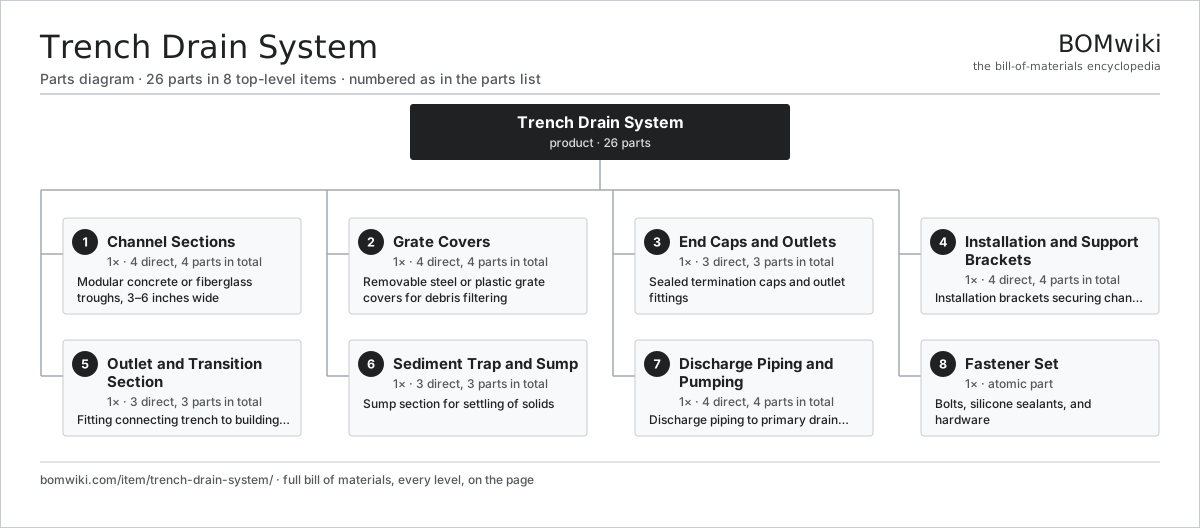
| # | Part | Qty | What it does |
|---|---|---|---|
| 1 | Channel Sections 4 parts | 1× | Modular concrete or fiberglass troughs, 3–6 inches wide |
| 2 | Grate Covers 4 parts | 1× | Removable steel or plastic grate covers for debris filtering |
| 3 | End Caps and Outlets 3 parts | 1× | Sealed termination caps and outlet fittings |
| 4 | Installation and Support Brackets 4 parts | 1× | Installation brackets securing channel to floor |
| 5 | Outlet and Transition Section 3 parts | 1× | Fitting connecting trench to building drain or sump |
| 6 | Sediment Trap and Sump 3 parts | 1× | Sump section for settling of solids |
| 7 | Discharge Piping and Pumping 4 parts | 1× | Discharge piping to primary drain or pump |
| 8 | Fastener Set | 1× | Bolts, silicone sealants, and hardware |
3D model
No 3D model yet. Have a CAD file of this? Add a 3D model. STL renders right on this page; STEP, FreeCAD, and OpenSCAD sources are welcome too (openly licensed, like all 3D models on BOMwiki).
Build & assembly graph
expand / collapse · shared sub-assemblies converge · links to related products · est. labourTap an assembly to expand/collapse · tap a part to open it · use “Open page” for any node · drag to pan, scroll to zoom.
Bill of materials for Trench Drain System
8 top-level lines · 33 rows shown · 26 parts total · indented to 3 levels| # | Item / sub-assembly | Part no. | Qty/assy | Ext. qty | Parts | Type |
|---|---|---|---|---|---|---|
| 1 | Channel Sections 4 parts | trench-drain-system-channel-sections | 1× | 1 | 4 | assembly |
| 1.1 | Concrete Channel | trench-drain-system-concrete-channel | 1× | 1 | · | part |
| 1.2 | Fiberglass Channel | trench-drain-system-fiberglass-channel | 1× | 1 | · | part |
| 1.3 | Channel Invert | trench-drain-system-channel-invert | 1× | 1 | · | part |
| 1.4 | Joint Sealant | trench-drain-system-joint-sealant | 1× | 1 | · | part |
| 2 | Grate Covers 4 parts | trench-drain-system-gratings | 1× | 1 | 4 | assembly |
| 2.1 | Steel Bar Grate | trench-drain-system-steel-grate | 1× | 1 | · | part |
| 2.2 | Plastic Grate | trench-drain-system-plastic-grate | 1× | 1 | · | part |
| 2.3 | Grate Support Frame | trench-drain-system-grate-frame | 1× | 1 | · | part |
| 2.4 | Hinged Grate Panel | trench-drain-system-hinged-access | 1× | 1 | · | part |
| 3 | End Caps and Outlets 3 parts | trench-drain-system-end-caps | 1× | 1 | 3 | assembly |
| 3.1 | End Cap Block | trench-drain-system-end-cap-block | 1× | 1 | · | part |
| 3.2 | Outlet Adapter | trench-drain-system-outlet-adapter | 1× | 1 | · | part |
| 3.3 | Cleanout Plug | trench-drain-system-cleanout-plug | 1× | 1 | · | part |
| 4 | Installation and Support Brackets 4 parts | trench-drain-system-frame-anchors | 1× | 1 | 4 | assembly |
| 4.1 | Support Bracket | trench-drain-system-anchor-bracket | 1× | 1 | · | part |
| 4.2 | Leveling Shims | trench-drain-system-leveling-shims | 1× | 1 | · | part |
| 4.3 | Floor Anchors | trench-drain-system-floor-anchors | 1× | 1 | · | part |
| 4.4 | Fastener Set | fastener-set | 1× | 1 | · | part |
| 5 | Outlet and Transition Section 3 parts | trench-drain-system-outlet-section | 1× | 1 | 3 | assembly |
| 5.1 | Outlet Channel Section | trench-drain-system-outlet-channel | 1× | 1 | · | part |
| 5.2 | Outlet Casting | trench-drain-system-outlet-casting | 1× | 1 | · | part |
| 5.3 | Outlet Gasket | trench-drain-system-outlet-gasket | 1× | 1 | · | part |
| 6 | Sediment Trap and Sump 3 parts | trench-drain-system-sediment-trap | 1× | 1 | 3 | assembly |
| 6.1 | Sump Section | trench-drain-system-sump-section | 1× | 1 | · | part |
| 6.2 | Sump Drain Valve | trench-drain-system-sump-drain-valve | 1× | 1 | · | part |
| 6.3 | Sump Strainer Basket | trench-drain-system-sump-strainer | 1× | 1 | · | part |
| 7 | Discharge Piping and Pumping 4 parts | trench-drain-system-piping-connection | 1× | 1 | 4 | assembly |
| 7.1 | Discharge Piping | trench-drain-system-discharge-line | 1× | 1 | · | part |
| 7.2 | Discharge Clamps | trench-drain-system-discharge-clamps | 1× | 1 | · | part |
| 7.3 | Check Valve | trench-drain-system-check-valve | 1× | 1 | · | part |
| 7.4 | Submersible Pump | trench-drain-system-submersible-pump | 1× | 1 | · | part |
| 8 | Fastener Set | fastener-set | 1× | 1 | · | part |
Something wrong in this list? Report a problem with this BOM.
Sourcing: possible vendors
Browse the supplier directory → Prices, MOQ, and lead times are algorithmic estimates, not quotes, and not claims about these companies. Company mappings are curated by keyword; est. price band $20–$3k. How estimates work| Vendor | HQ | Specialty | MOQ | Lead time |
|---|---|---|---|---|
|
🇺🇸Kohler
kohler.com ↗
|
Kohler, US | Plumbing fixtures | 1,000 units | 6–12 wks |
|
🇯🇵TOTO
toto.com ↗
|
Kitakyushu, JP | Sanitaryware | 1,000 units | 6–12 wks |
|
🇯🇵LIXIL
lixil.com ↗
|
Tokyo, JP | Plumbing (Grohe, American Std) | 1,000 units | 6–12 wks |
|
🇺🇸Moen
moen.com ↗
|
North Olmsted, US | Faucets & fixtures | 1,000 units | 6–12 wks |
|
🇨🇭Geberit
geberit.com ↗
|
Rapperswil, CH | Sanitary systems | 1,000 units | 6–12 wks |
1,415-word article