Aquarium Acrylic Tunnel
ProductOverview
Aquarium acrylic tunnels provide dramatic walk-through viewing experiences in public aquariums and marine parks by enclosing visitors in transparent acrylic while large sharks, rays, sea turtles, and pelagic fish swim overhead and around. The Aquarium Acrylic Tunnel must safely contain water pressure (typically <2 m depth, 0.2 bar gauge) while maintaining optical clarity and structural integrity against thermal cycling, impact, and fatigue.
The system comprises four Curved Acrylic Sheets cast acrylic sheets custom hot-formed to a radius of curvature (3–4 m), Seam Adhesive & Bonding structural adhesive joining seams under controlled conditions, and a Support Frame Assembly stainless steel frame distributing weight and hydrostatic load. An Watertight Entrance Lock watertight lock controls water entry, and Underwater Lighting underwater LEDs illuminate fish and coral without glare or shadows.
Cast acrylic is selected for walk-through tunnels over polycarbonate or other plastics because it offers superior optical clarity (99.8% light transmission), exceptional hardness (no surface scratching from fish contact), and long-term stability (no yellowing over 20+ years). Cast acrylic disadvantages include brittleness (susceptibility to impact cracking) and stress-cracking risk from organic solvents or high sustained stress.
Cast Acrylic Material Properties
The Cast Acrylic Panel 50 mm thick cast acrylic panels are formed using batch polymerization (monomer + catalyst poured into molds), producing uniform crystal structure. Thickness is selected to span the panel width (typically 2–3 m) without unacceptable sag under its own weight (50 kg/m²) and water pressure load (20 kg/m² per 1 m depth).
Key properties of cast acrylic:
- Tensile strength: 10 MPa (bending stress), sufficient for thin wall designs
- Light transmission: 99.8% visible spectrum (unmatched by polycarbonate at 85%)
- Coefficient of thermal expansion: 70 ppm/K, requiring gasket accommodations in hot climates
- Refractive index: 1.49 (similar to water 1.33, minimizing fish distortion vs polycarbonate 1.58)
- Stress-cracking threshold: Avoid contact with acetone, MEK, chloroform, or hydrocarbons
- UV stability: Excellent long-term resistance (>20 years outdoor life)
Acrylic is not notch-sensitive like glass; small edge scratches do not propagate into cracks. However, sharp internal corners in complex shapes introduce stress concentrations. Tunnel designs round all internal corners with R ≥ 50 mm.
Panel Curvature and Forming
The Thermal Forming Service process heats acrylic sheets to 160–180°C (below the 200°C decomposition threshold) and presses them into molds achieving the target curvature. The mold defines the outer surface (facing the tank), while the inner surface develops naturally as the acrylic relaxes. Curvature is typically 3–4 m radius; smaller radius (tighter curve) creates a more immersive viewing experience but introduces higher membrane stress.
Forming tolerance is maintained to ±0.5 mm radius variation (called "ovality" when measured). Excessive ovality causes panel-to-panel mismatch and visible gaps in seams. Post-forming, the Edge Finishing process polishes edges to optical Grade C (slightly cloudy but acceptable for non-viewing surfaces).
Seam Bonding and Structural Adhesive
Adjacent acrylic panels are joined using Acrylic Structural Cement methyl methacrylate (MMA)-based adhesive, applied as a thin bead (2–3 mm) along the joint edge. The Bonding Fixture Jig aluminum jig maintains ±0.1 mm gap and alignment while adhesive cures. Cure time is 24 hours at controlled Cure Control Cabinet temperature and humidity (20–25°C, 50–60% RH).
The adhesive chemically dissolves the acrylic surface 0.1–0.2 mm, creating a molecular bond (not mechanical adhesion). Bond strength is 70% of acrylic tensile strength (7 MPa), so a 20 mm wide × 50 mm thick seam develops 7 MPa × 1000 mm² = 7000 N tensile load capacity, more than sufficient for hydrostatic pressure (which is pure compression, not tension).
Seams must be inspected post-cure for voids or stress-whitening (sign of incomplete consolidation). Any defect requires careful re-working: partial cutting out the bad adhesive and rebonding with fresh MMA.
Support Structure and Load Distribution
The Support Frame Assembly stainless steel 316L frame bears the weight of four acrylic panels (~20 ton total) plus dynamic water loads from currents and fish. The frame uses welded I-beams (150 × 100 mm) for primary structure and vertical tube columns (100 mm diameter) anchored to a concrete foundation below the tank floor.
Acrylic panels are bolted to the frame via Precision Mounting Feet precision-machined stainless steel feet with M16 threaded inserts. Bolts are torque-rated to 200 N·m, distributing clamping load evenly across the panel width. Excessive bolt preload (>250 N·m) causes stress concentration and potential cracking; under-torque allows water seepage.
Entrance Gate Seal
The Watertight Entrance Lock stainless steel gate (1 m × 2 m × 50 mm thick) seals the tunnel opening when not in use or during maintenance. The gate closes on the tunnel opening with Gate Seal Gasket EPDM rubber gaskets in a double-seal configuration: an outer gasket seals against the frame, and an inner gasket seals against water. This redundancy ensures that leakage from the outer seal drains to a collection channel rather than flooding the tunnel.
The Pressure Latch mechanical lever latch applies clamping force to compress both gaskets uniformly. A small vent hole (2 mm) in the latch allows pressure equalization when opening the gate, preventing sudden pressure differential that could blow the gate open.
Gate opening/closing pressure is typically 50–100 kg force at the lever end (1.5–2 m lever arm, translating to 2500–5000 N clamping force). Most modern gates include a hydraulic damper reducing closing speed to prevent slamming and water sloshing.
Lighting and Visitor Experience
The Underwater Lighting underwater LED arrays (6 panels, 50 W each) are mounted on the tank exterior, behind the acrylic. Lighting is positioned to create even illumination without glare or hot spots, typically using Light Diffuser Sheet frosted acrylic diffusers.
Color temperature is adjustable (3000–6500 K) to accentuate fish and coral colors. Warmer (3000 K) lighting emphasizes reds and oranges; cooler (6500 K) highlights blues and greens. Dimming capability allows day/night cycles (brighter 8 AM–5 PM, dimmed 5 PM–8 AM) to maintain animal circadian rhythms.
Total light output is typically 300–500 lm per meter of tunnel, a middle ground between shadowy (poor visibility) and harsh (causing fish stress and algae bloom).
Installation and Commissioning
Construction sequence:
- Site preparation: Excavate tunnel footprint, pour concrete foundation and floor sump
- Frame assembly: Weld stainless steel frame to foundation, inspect all welds
- Panel installation: Position acrylic panels in frame, bolt with 200 N·m torque
- Seam bonding: Apply structural adhesive to panel-to-panel edges, cure 24 h
- Gasket installation: Install Edge Gaskets & Moisture Control silicone cord gaskets along interior seams
- Gate installation: Mount entrance gate with hinges and latch
- Lighting installation: Mount LED arrays and diffusers on exterior
- Water filling and pressure test: Gradually fill to design depth (2 m), inspect for leaks
Pressure testing is critical: fill to design depth and hold for 24 hours while monitoring for seepage. Any seepage is marked and the tunnel is drained for remedial bonding.
Long-Term Maintenance
Quarterly:
- Inspect seams for weeping or stress-cracking
- Clean interior acrylic with soft cloth and mild soap (avoid harsh chemicals)
- Check gate gaskets for compression-set or hardening
Annually:
- Chemical inspection of adhesive seams with ultrasonic or thermal imaging
- Bolt torque verification (retorque if drift detected)
- Gasket replacement if >15% compression-set
Every 5–10 years:
- Structural inspection by certified diver or ROV (if underwater tunnel)
- Adhesive stress-relief testing (apply hydrostatic pressure while monitoring strains)
Failure Modes and Risk Mitigation
Acrylic crazing: Exposure to organic solvents (spilled sunscreen, cleaning agents) or sustained high tensile stress. Mitigation: strict chemical control, avoid over-tightening bolts, design minimum internal corner radius.
Seam separation: Water leakage if adhesive bond weakens. Mitigation: redundant gasket seals, 24 h pressure monitoring during commissioning, yearly visual inspection.
Impact cracking: Fish or visitor contact, dropped tools. Mitigation: acrylic thickness adequate for expected impact (50 mm sufficient for visitor contact), protective railings during maintenance.
Most modern aquarium tunnels operate successfully for 20–30 years with proper maintenance. System cost is $500,000–$1.5M USD depending on length and complexity.
Aquarium Acrylic Tunnel parts and their functions
8 top-level parts · 111 parts in total · full bill of materials below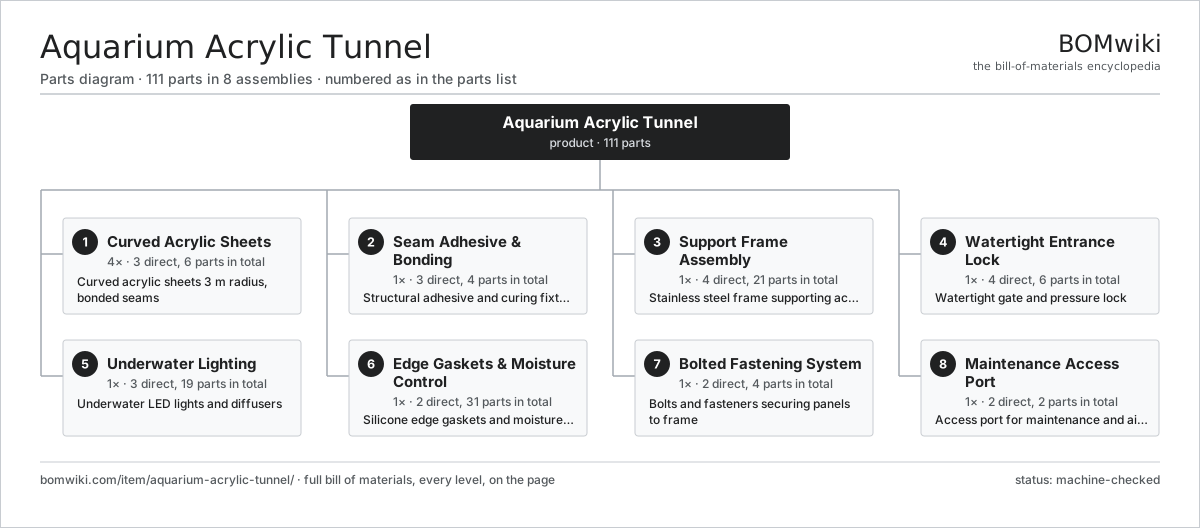
| # | Part | Qty | What it does |
|---|---|---|---|
| 1 | Curved Acrylic Sheets 3 parts | 4× | Curved acrylic sheets 3 m radius, bonded seams |
| 2 | Seam Adhesive & Bonding 3 parts | 1× | Structural adhesive and curing fixtures |
| 3 | Support Frame Assembly 4 parts | 1× | Stainless steel frame supporting acrylic weight |
| 4 | Watertight Entrance Lock 4 parts | 1× | Watertight gate and pressure lock |
| 5 | Underwater Lighting 3 parts | 1× | Underwater LED lights and diffusers |
| 6 | Edge Gaskets & Moisture Control 2 parts | 1× | Silicone edge gaskets and moisture barriers |
| 7 | Bolted Fastening System 2 parts | 1× | Bolts and fasteners securing panels to frame |
| 8 | Maintenance Access Port 2 parts | 1× | Access port for maintenance and air bleeding |
3D model
No 3D model yet. Have a CAD file of this? Add a 3D model — STL renders right on this page; STEP, FreeCAD, and OpenSCAD sources are welcome too (openly licensed, like all 3D models on BOMwiki).
Build & assembly graph
expand / collapse · shared sub-assemblies converge · links to related products · est. labourTap an assembly to expand/collapse · tap a part to open it · use “Open page” for any node · drag to pan, scroll to zoom.
Bill of materials for Aquarium Acrylic Tunnel
8 top-level lines · 31 rows shown · 111 parts total · indented to 3 levels| # | Item / sub-assembly | Part no. | Qty/assy | Ext. qty | Parts | Type |
|---|---|---|---|---|---|---|
| 1 | Curved Acrylic Sheets 3 parts | aquarium-acrylic-tunnel-curved-panels | 4× | 4 | 6 | assembly |
| 1.1 | Cast Acrylic Panel | aquarium-acrylic-tunnel-acrylic-sheet | 4× | 16 | · | part |
| 1.2 | Thermal Forming Service | aquarium-acrylic-tunnel-thermal-forming | 1× | 4 | · | part |
| 1.3 | Edge Finishing | aquarium-acrylic-tunnel-edge-finishing | 1× | 4 | · | part |
| 2 | Seam Adhesive & Bonding 3 parts | aquarium-acrylic-tunnel-seam-bonding | 1× | 1 | 4 | assembly |
| 2.1 | Acrylic Structural Cement | aquarium-acrylic-tunnel-structural-cement | 2× | 2 | · | part |
| 2.2 | Bonding Fixture Jig | aquarium-acrylic-tunnel-bonding-fixture | 1× | 1 | · | part |
| 2.3 | Cure Control Cabinet | aquarium-acrylic-tunnel-cure-monitoring | 1× | 1 | · | part |
| 3 | Support Frame Assembly 4 parts | aquarium-acrylic-tunnel-support-structure | 1× | 1 | 21 | assembly |
| 3.1 | Stainless Steel I-Beam | aquarium-acrylic-tunnel-frame-beam | 6× | 6 | · | part |
| 3.2 | Support Tube | aquarium-acrylic-tunnel-frame-column | 4× | 4 | · | part |
| 3.3 | Precision Mounting Feet | aquarium-acrylic-tunnel-anchor-points | 8× | 8 | · | part |
| 3.4 | Fastener Set | fastener-set | 3× | 3 | · | part |
| 4 | Watertight Entrance Lock 4 parts | aquarium-acrylic-tunnel-entrance-gate | 1× | 1 | 6 | assembly |
| 4.1 | Gate Steel Frame | aquarium-acrylic-tunnel-gate-frame | 1× | 1 | · | part |
| 4.2 | Gate Seal Gasket | aquarium-acrylic-tunnel-gate-gasket | 2× | 2 | · | part |
| 4.3 | Gate Hinge | aquarium-acrylic-tunnel-gate-hinge | 2× | 2 | · | part |
| 4.4 | Pressure Latch | aquarium-acrylic-tunnel-latch-handle | 1× | 1 | · | part |
| 5 | Underwater Lighting 3 parts | aquarium-acrylic-tunnel-lighting-system | 1× | 1 | 19 | assembly |
| 5.1 | LED Light Panel | aquarium-acrylic-tunnel-led-array | 6× | 6 | · | part |
| 5.2 | LED Driver Supply | aquarium-acrylic-tunnel-led-driver | 1× | 1 | · | part |
| 5.3 | Light Diffuser Sheet | aquarium-acrylic-tunnel-light-diffuser | 12× | 12 | · | part |
| 6 | Edge Gaskets & Moisture Control 2 parts | aquarium-acrylic-tunnel-sealing-gaskets | 1× | 1 | 31 | assembly |
| 6.1 | Silicone Gasket Cord | aquarium-acrylic-tunnel-silicone-gasket | 30× | 30 | · | part |
| 6.2 | Moisture Barrier Film | aquarium-acrylic-tunnel-moisture-barrier | 1× | 1 | · | part |
| 7 | Bolted Fastening System 2 parts | aquarium-acrylic-tunnel-mounting-hardware | 1× | 1 | 4 | assembly |
| 7.1 | Fastener Set | fastener-set | 2× | 2 | · | part |
| 7.2 | Load Distribution Washer | aquarium-acrylic-tunnel-washers | 2× | 2 | · | part |
| 8 | Maintenance Access Port 2 parts | aquarium-acrylic-tunnel-inspection-port | 1× | 1 | 2 | assembly |
| 8.1 | Inspection Port | aquarium-acrylic-tunnel-port-body | 1× | 1 | · | part |
| 8.2 | Port Tapered Plug | aquarium-acrylic-tunnel-port-plug | 1× | 1 | · | part |
Sourcing: possible vendors
Prices, MOQ, and lead times are algorithmic estimates, not quotes, and not claims about these companies. Company mappings are curated by keyword; est. price band $2k–$500M. How estimates work| Vendor | HQ | Specialty | MOQ | Lead time |
|---|---|---|---|---|
| hd.com ↗ | Ulsan, KR | Shipbuilder | made to order | 52–104 wks |
| fincantieri.com ↗ | Trieste, IT | Shipbuilder | made to order | 52–104 wks |
| damen.com ↗ | Gorinchem, NL | Shipbuilder | made to order | 52–104 wks |
| brunswick.com ↗ | Mettawa, US | Marine & boats | made to order | 52–104 wks |
|
🇨🇳CSSC
cssc.net.cn ↗
|
Shanghai, CN | Shipbuilding conglomerate | made to order | 52–104 wks |
1,396-word article