Can Densifier
ProductOverview
A can densifier is a compact hydraulic press that crushes aluminum and steel beverage cans into flat rectangular biscuits. The machine reduces incoming can volume by approximately 75%, allowing a single compacted biscuit (roughly 4 × 3 × 2 inches) to represent 8–10 loose cans. This dramatic space saving is critical for retailers, distribution centers, and recycling operations, as it reduces waste hauling frequency, container storage footprint, and transport costs.
Can densifiers are found at supermarkets, convenience stores, warehouses, and beverage processing facilities. They feed crushed biscuits directly into collection bins that are picked up by recycling haulers, typically once weekly (versus three times weekly without compaction). The compressed biscuits are easier to feed into aluminum smelters compared to loose cans.
How it works
Compaction Cycle
Cans are gravity-fed through the hopper. A 1 kW AC spacing wheel motor rotates an eccentric guide arm that drops one or two cans at a time into the press chamber. The feed gate prevents hand contact with the active area.
The operator presses the green start button on the control cabinet. The motor clutch solenoid energizes, coupling the 7.5 kW motor to the vane pump input shaft. The motor/pump combination runs at 1800 rpm, the pump delivers pressurized oil to the hydraulic circuit.
The solenoid directional valve is initially deenergized. When the operator holds the start button, a 24 VDC coil energizes the spool, routing pump flow to the head-end (cap-end) port of the main cylinder. The top platen descends rapidly onto the cans in the chamber.
As the platen contacts the cans, resistance builds and pressure rises. When pressure reaches 180–200 bar (90% of the 210 bar relief setting), the operator typically releases the start button. The electronic timer takes over, holding the platen in the down position for 30–45 seconds, allowing the can aluminum to fully deform and flatten. During this dwell time, the pump continues circulating via load-holding check valves in the manifold, maintaining steady pressure.
When the timer expires, the solenoid de-energizes and the spool shifts to neutral. Return flow drains from the rod-end (rod-side) of the cylinder back to the reservoir. The 1 L accumulator (pre-charged and storing energy from the compression stroke) assists, rapidly retracting the platen upward.
As the platen rises, the ejector mechanism activates. A pneumatic ejector cylinder (6 bar solenoid valve) extends, pushing the flattened can biscuit horizontally out of the chamber onto a collection tray. The biscuit slides down the angled tray into a bin or collection hopper for transport.
The cycle completes. The operator can load fresh cans and repeat, or the machine can be set to automatic mode to cycle continuously until the hopper is empty.
Hydraulic System Details
The variable vane pump (10 cc/rev) supplies pressurized fluid. The pump is equipped with a load-sensing compensator: when the platen resistance is low, the pump displacement automatically reduces, saving energy. When resistance is high (active compression), the pump delivers full displacement.
The NG10 manifold block integrates:
- The directional control valve (solenoid-operated, manual override for emergency descent).
- A pilot-operated check valve allowing free load-holding during the dwell phase.
- The main relief valve (210 bar setting, protecting all system components).
- Instrumentation port for the pressure transducer providing feedback to the timer logic.
Return flow from the cylinder rod-end, valve internal leakage, and pump case drain all flow back to the 80 L tank. A suction strainer prevents contamination from reaching the pump. A return-line filter (integral to the tank mounting) protects the system from wear particles.
Ejection and Collection
Once the platen retracts fully, the ejector solenoid valve (6 bar) fires. The ejector cylinder (50 mm bore, 100 mm stroke) extends with approximately 1500 N of force, pushing the flattened biscuit out of the chamber. The biscuit slides down the angled collection tray and drops into a waiting bin.
The ejector retracts under spring force and the cycle is complete. Fresh cans can be loaded immediately for the next compression cycle.
Control System
The stainless-steel control enclosure is mounted at operator height, away from splashing water. It contains:
- Green start button (momentary, 30 mm).
- Red emergency stop button (40 mm mushroom head, safety-rated dual-channel).
- Electronic timer dial (0–60 s, typically set to 30–45 s for can compaction).
- 24 VDC control relays for the motor-clutch solenoid, directional-valve solenoid, and ejector-cylinder solenoid.
- Glycerin-filled pressure gauge (0–250 bar) for operator monitoring of system pressure during compression.
The feed gate includes a mechanical interlock switch that prevents the compaction cycle from starting if the gate is open. This is a passive safety measure: if the operator forgets to close the gate, the electrical circuit is broken and pressing start has no effect.
Power System
The 7.5 kW single-phase motor (240 VAC input) drives the pump. A soft-start module ramps the motor acceleration over approximately 5 seconds, reducing the inrush current spike that would otherwise occur with a direct-on-line starter. The soft start protects electrical panel components and prevents voltage dips that might affect other equipment on the same circuit.
The solenoid-engaged friction clutch between the motor and pump allows the pump to be stationary while the motor idles at no-load speed. This is more efficient than disengaging the motor entirely: the motor consumes minimal power at idle, and engagement is instantaneous when needed.
Materials Processed
- Aluminum beverage cans: 0.15 mm thickness, crush easily, final biscuit weight 50–80 g per can.
- Steel cans: Thicker (0.2 mm), require slightly higher pressure, slightly denser biscuits.
- Mixed aluminum/steel: Operate at 200 bar for reliable compaction of both types.
- Partially full cans: Must be emptied before compaction to avoid hydraulic fluid contamination from residual liquid.
Maintenance Schedule
Daily: Check hopper for blockages, verify emergency stop button clicks and resets, observe pressure gauge needle for normal range (160–200 bar during compression). Drain any condensation from the compressed-air tank feeding the ejector solenoid (if present).
Weekly: Inspect fasteners on the compaction chamber for looseness. Test feed-gate interlock by opening the gate and attempting to start a cycle; cycle should not engage. Check hydraulic fluid level in tank; top up if needed (reservoir should be 75% full at idle).
Monthly: Change the return-line hydraulic filter element. Inspect top platen and bottom anvil for cracks or spalling; minor surface damage is acceptable, but deep cracks or chipping indicates platen replacement is needed. Test the cycle timer by running a cycle and verifying dwell time (should match dial setting).
Quarterly: Check the vibration isolation feet for hardening or cracks. If damping is compromised, vibration will increase noticeably. Grease the spacing wheel motor bearing if equipped with a manual lube fitting. Test the pneumatic ejector by manually closing the solenoid valve for 10 s and verifying no pressure loss.
Annually: Change the hydraulic fluid and perform a full system flush. Measure the accumulator pre-charge nitrogen pressure (should be 0.6 × system operating pressure, typically 100 bar for a 210 bar system). Have a certified technician recharge the accumulator if needed. Inspect the directional valve solenoid coil for corrosion and test coil resistance (should be 20–30 ohms for a 24 VDC coil).
Typical Facility Integration
In a retail supermarket:
- Cashiers or stockers place empty cans in the hopper throughout the day.
- The machine runs intermittently (10–15 cycles per day in a small store, up to 100+ in a large distribution center).
- Biscuits accumulate in a 200–300 liter collection bin over one week.
- A recycling hauler arrives weekly, swaps the full bin for an empty one, and transports biscuits to aluminum smelter or secondary processor.
The economic benefit is immediate: the store reduces waste hauling from three times weekly to once weekly, saving labor, fuel, and tipping fees.
Can Densifier parts and their functions
8 top-level parts · 44 parts in total · full bill of materials below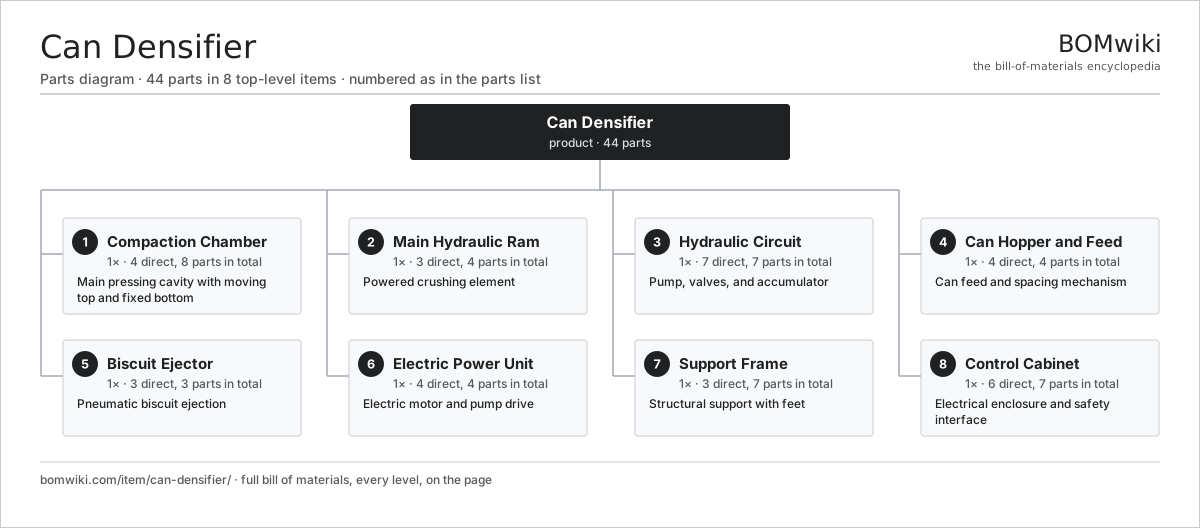
| # | Part | Qty | What it does |
|---|---|---|---|
| 1 | Compaction Chamber 4 parts | 1× | Main pressing cavity with moving top and fixed bottom |
| 2 | Main Hydraulic Ram 3 parts | 1× | Powered crushing element |
| 3 | Hydraulic Circuit 7 parts | 1× | Pump, valves, and accumulator |
| 4 | Can Hopper and Feed 4 parts | 1× | Can feed and spacing mechanism |
| 5 | Biscuit Ejector 3 parts | 1× | Pneumatic biscuit ejection |
| 6 | Electric Power Unit 4 parts | 1× | Electric motor and pump drive |
| 7 | Support Frame 3 parts | 1× | Structural support with feet |
| 8 | Control Cabinet 6 parts | 1× | Electrical enclosure and safety interface |
3D model
No 3D model yet. Have a CAD file of this? Add a 3D model. STL renders right on this page; STEP, FreeCAD, and OpenSCAD sources are welcome too (openly licensed, like all 3D models on BOMwiki).
Build & assembly graph
expand / collapse · shared sub-assemblies converge · links to related products · est. labourTap an assembly to expand/collapse · tap a part to open it · use “Open page” for any node · drag to pan, scroll to zoom.
Bill of materials for Can Densifier
8 top-level lines · 42 rows shown · 44 parts total · indented to 3 levels| # | Item / sub-assembly | Part no. | Qty/assy | Ext. qty | Parts | Type |
|---|---|---|---|---|---|---|
| 1 | Compaction Chamber 4 parts | can-densifier-compaction-chamber | 1× | 1 | 8 | assembly |
| 1.1 | Top Platen | can-densifier-top-platen | 1× | 1 | · | part |
| 1.2 | Bottom Anvil | can-densifier-bottom-anvil | 1× | 1 | · | part |
| 1.3 | Guide Post | can-densifier-guide-post | 4× | 4 | · | part |
| 1.4 | Chamber Backing Plate | can-densifier-chamber-liner | 2× | 2 | · | part |
| 2 | Main Hydraulic Ram 3 parts | can-densifier-hydraulic-ram | 1× | 1 | 4 | assembly |
| 2.1 | Main Cylinder | can-densifier-main-cylinder | 1× | 1 | · | part |
| 2.2 | Cylinder Rod | can-densifier-cylinder-rod | 1× | 1 | · | part |
| 2.3 | Rod Guide | can-densifier-rod-guide-bearing | 2× | 2 | · | part |
| 3 | Hydraulic Circuit 7 parts | can-densifier-hydraulic-system | 1× | 1 | 7 | assembly |
| 3.1 | Variable Vane Pump | can-densifier-hydraulic-pump | 1× | 1 | · | part |
| 3.2 | Directional Valve | can-densifier-directional-valve | 1× | 1 | · | part |
| 3.3 | Relief Valve | can-densifier-pressure-relief | 1× | 1 | · | part |
| 3.4 | Accumulator | can-densifier-accumulator | 1× | 1 | · | part |
| 3.5 | Manifold Block | can-densifier-manifold-block | 1× | 1 | · | part |
| 3.6 | Hydraulic Tank | can-densifier-reservoir | 1× | 1 | · | part |
| 3.7 | Pressure Sensor | pressure-sensor | 1× | 1 | · | part |
| 4 | Can Hopper and Feed 4 parts | can-densifier-hopper-assembly | 1× | 1 | 4 | assembly |
| 4.1 | Hopper | can-densifier-hopper-body | 1× | 1 | · | part |
| 4.2 | Spacing Wheel Motor | can-densifier-spacing-wheel | 1× | 1 | · | part |
| 4.3 | Feed Gate | can-densifier-feed-gate | 1× | 1 | · | part |
| 4.4 | Fastener Set | fastener-set | 1× | 1 | · | part |
| 5 | Biscuit Ejector 3 parts | can-densifier-ejector-mechanism | 1× | 1 | 3 | assembly |
| 5.1 | Ejector Cylinder | can-densifier-ejector-cylinder | 1× | 1 | · | part |
| 5.2 | Ejector Plate | can-densifier-ejector-plate | 1× | 1 | · | part |
| 5.3 | Collection Tray | can-densifier-collection-tray | 1× | 1 | · | part |
| 6 | Electric Power Unit 4 parts | can-densifier-power-unit | 1× | 1 | 4 | assembly |
| 6.1 | Electric Motor | can-densifier-electric-motor | 1× | 1 | · | part |
| 6.2 | Motor Clutch | can-densifier-motor-clutch | 1× | 1 | · | part |
| 6.3 | Soft Starter | can-densifier-motor-starter | 1× | 1 | · | part |
| 6.4 | Power Supply | power-supply | 1× | 1 | · | part |
| 7 | Support Frame 3 parts | can-densifier-frame | 1× | 1 | 7 | assembly |
| 7.1 | Sheet Metal Panel | sheet-panel | 2× | 2 | · | part |
| 7.2 | Vibration Isolator | can-densifier-isolation-feet | 4× | 4 | · | part |
| 7.3 | Fastener Set | fastener-set | 1× | 1 | · | part |
| 8 | Control Cabinet 6 parts | can-densifier-control-cabinet | 1× | 1 | 7 | assembly |
| 8.1 | Control Enclosure | can-densifier-control-box | 1× | 1 | · | part |
| 8.2 | Start Button | can-densifier-start-button | 1× | 1 | · | part |
| 8.3 | Emergency Stop Button | can-densifier-emergency-stop | 1× | 1 | · | part |
| 8.4 | Cycle Timer | can-densifier-timer | 1× | 1 | · | part |
| 8.5 | Relay | relay | 2× | 2 | · | part |
| 8.6 | Pressure Gauge | can-densifier-pressure-gauge | 1× | 1 | · | part |
Something wrong in this list? Report a problem with this BOM.
Related products
same domain, ranked by shared parts Candle Making Machine
73 parts · shares 3 with this page
Coil Coating Line
1,767 parts · shares 3 with this page
Candle Making Machine
73 parts · shares 3 with this page
Coil Coating Line
1,767 parts · shares 3 with this page
 Continuous Galvanizing Line
1,296 parts · shares 3 with this page
Continuous Galvanizing Line
1,296 parts · shares 3 with this page
 Cosmetic Powder Press
92 parts · shares 3 with this page
Cosmetic Powder Press
92 parts · shares 3 with this page
Sourcing: possible vendors
Browse the supplier directory → Prices, MOQ, and lead times are algorithmic estimates, not quotes, and not claims about these companies. Company mappings are curated by keyword; est. price band $5k–$2M. How estimates work| Vendor | HQ | Specialty | MOQ | Lead time |
|---|---|---|---|---|
| atlascopco.com ↗ | Stockholm, SE | Compressors & industrial | 10 units | 12–20 wks |
|
🇦🇹Andritz
andritz.com ↗
|
Graz, AT | Process plants & machinery | 10 units | 12–20 wks |
| buhlergroup.com ↗ | Uzwil, CH | Food & materials processing | 10 units | 12–20 wks |
| gea.com ↗ | Düsseldorf, DE | Process technology | 10 units | 12–20 wks |
| mhi.com ↗ | Tokyo, JP | Heavy machinery | 10 units | 12–20 wks |
1,500-word article