Converter Decanner
ProductOverview
A catalytic converter decanner (or converter processor) is a specialized machine designed to safely disassemble automotive catalytic converters and extract the precious-metal-bearing catalyst substrate. Catalytic converters contain platinum, palladium, and rhodium deposited on a ceramic or metallic honeycomb structure, precious metals commanding $1,000–$5,000+ per ounce in commodity markets.
A single converter contains 3–10 grams of platinum-group metals, making recovery economically valuable. Deanners automate the process of removing housing, extracting catalyst core, and capturing fine dust containing ultrafine precious metal particles that would otherwise be lost.
The machine integrates shearing (cutting the converter can), pneumatic pressing (extracting the catalyst monolith), and vacuum dust collection. A modern facility operating a decanner 16–20 hours daily can process 1500–8000 converters per month, recovering 50–200 ounces of precious metals monthly.
How it works
Catalytic converters are loaded into the magazine feeder (10–50 unit capacity). The operator or an automated indexer positions the first converter on the guide block, aligning it with the shear blade.
The pneumatic shear cylinder (90 psi, 2–3 inch bore) drives the hardened steel blade downward at 10–20 strokes per minute. The blade cuts through the stainless steel housing, separating the cylindrical converter body into halves or removing end caps. This exposes the ceramic or metallic substrate core.
The separated housing pieces drop through the waste chute into the housing collection bin, stainless steel and precious metals in the can are recovered via separate smelting routes.
The exposed catalyst substrate (a honeycomb monolith or pellet bed) is then positioned under the extraction press. The pneumatic extraction cylinder (4–5 inch bore, 90–100 psi) drives a hardened steel platen that presses the catalyst out of the converter shell, dropping it into the catalyst collection hopper.
Throughout shearing and extraction, a vacuum hood positioned above the work area draws dust and loose ceramic particles into a dust collection motor (3–5 hp) and through a HEPA cartridge filter. Fine precious metal powder and ceramic dust accumulate on the filter; periodically the filter is removed and the recovered dust is sold to refineers.
Once extraction is complete, the magazine advance motor indexes the carousel to the next converter, and the cycle repeats. Processing rates are typically 100–300 converters/hour for single-stage machines, or 200–500/hour for automated multi-stage systems with parallel shear and extraction stations.
Housing and Catalyst Separation Economics
A typical converter yields:
- Stainless housing: 60–80 lbs per 100 converters (value $0.50–$1.50 per converter as commodity stainless)
- Catalyst substrate: 40–60 lbs per 100 converters (ceramic/alumina, recyclable as abrasive or filler)
- Precious metal dust: 0.5–2 grams per converter (value $500–$10,000 depending on platinum/palladium content and spot prices)
The catalyst substrate by itself is low-value (ceramic is ~$10–$50/ton), but the precious metal fines captured from the substrate are high-value. A single 2-gram dust recovery per converter can be worth $50–$200 in spot markets, justifying the decanner investment.
Recovered stainless housing is sold to foundries or secondary smelters as scrap input. Some operations melt the stainless directly; others shred and sell to recyclers.
Catalyst Substrate Composition
Most modern converters use one of two substrate types:
- Ceramic monolith (honeycomb): Alumina-based, high surface area, thin walls. Rigid structure survives high temperature but is brittle and shatters if struck too hard during extraction.
- Metallic substrate: Iron-chromium-aluminum (FeCrAl) alloy, thicker walls, more robust. More valuable as secondary metal recycle.
The extraction platen pressure is sometimes adjustable to accommodate both types without breakage: higher force for metallic, gentler pressure for ceramic.
Dust Collection and Precious Metal Recovery
The vacuum system captures 85–95% of free powder and loose particles. However, the most valuable fine dust remains embedded in the ceramic honeycomb structure itself. Secondary processing (crushing, leaching, smelting) recovers this embedded metal.
Filter changes are performed weekly or monthly depending on processing volume. A full filter cartridge may contain 50–200 grams of valuable dust. Facilities typically send used filter cartridges to precious metal refiners for acid leaching and recovery.
Safety and Environmental Controls
Catalytic converter processing generates several hazards:
- Shear blade contact: Unguarded blades and pneumatic cylinders pose laceration and crushing risk. All moving parts are enclosed and interlocked doors prevent access during operation.
- Precious metal dust inhalation: Platinum and palladium dust are respiratory hazards at high concentrations. The vacuum hood must achieve >85% capture efficiency. Dust masks are recommended for operators.
- Noise: Pneumatic cylinders and shear action produce 80–88 dB. Hearing protection (foam earplugs or earmuffs) is required.
- Ceramic breakage: Broken ceramic fragments from the monolith can have sharp edges and become airborne. Smooth extraction and proper dust management minimize this risk.
The emergency stop button must be within immediate reach of the operator and capable of de-energizing all pneumatic circuits within 1 second.
Regulatory Compliance
In many jurisdictions, catalytic converter recycling requires:
- EPA or state air quality permits (dust emissions must meet standards)
- Proper hazardous material classification and disposal of filter cartridges
- Employee training on precious metal handling and inhalation hazard control
- Documentation of converter processing volumes for precious metal tracking and tax purposes
Some operations operate only under permit as licensed precious metal processors or jewelers.
Integration with Refining Operations
Most decanner operations partner with specialized precious metal refiners. Recovered substrate and dust are shipped to refiners who perform hydrometallurgical or pyrometallurgical processing (acid leaching, electroplating, or smelting) to extract pure platinum, palladium, and rhodium. Refiners return a percentage (70–95%) of metal value back to the original collector.
The refining process typically takes 6–12 weeks, so operations must maintain working capital to fund material in process.
Converter Decanner parts and their functions
8 top-level parts · 38 parts in total · full bill of materials below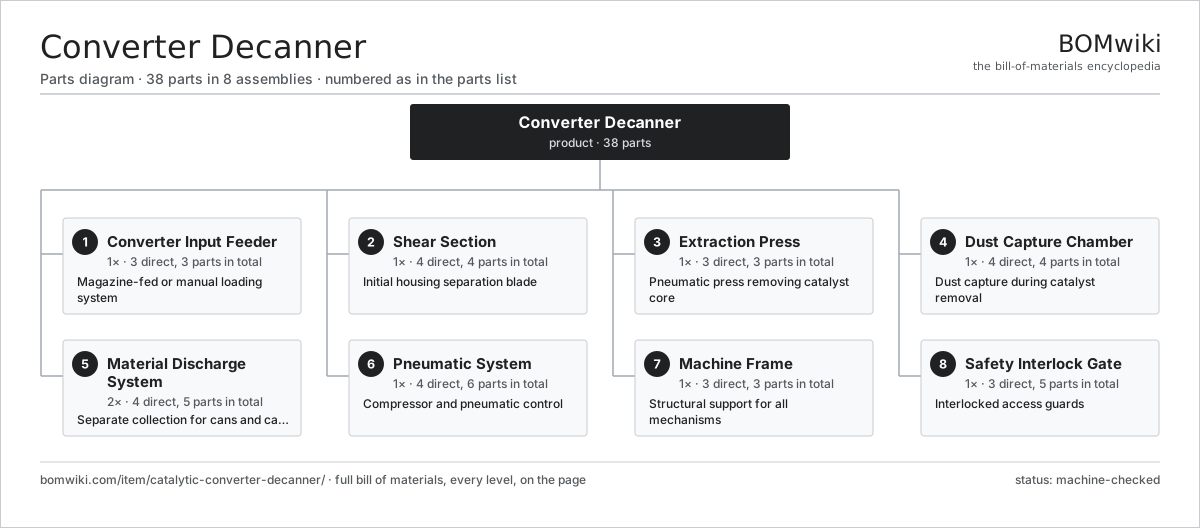
| # | Part | Qty | What it does |
|---|---|---|---|
| 1 | Converter Input Feeder 3 parts | 1× | Magazine-fed or manual loading system |
| 2 | Shear Section 4 parts | 1× | Initial housing separation blade |
| 3 | Extraction Press 3 parts | 1× | Pneumatic press removing catalyst core |
| 4 | Dust Capture Chamber 4 parts | 1× | Dust capture during catalyst removal |
| 5 | Material Discharge System 4 parts | 2× | Separate collection for cans and catalyst |
| 6 | Pneumatic System 4 parts | 1× | Compressor and pneumatic control |
| 7 | Machine Frame 3 parts | 1× | Structural support for all mechanisms |
| 8 | Safety Interlock Gate 3 parts | 1× | Interlocked access guards |
3D model
No 3D model yet. Have a CAD file of this? Add a 3D model — STL renders right on this page; STEP, FreeCAD, and OpenSCAD sources are welcome too (openly licensed, like all 3D models on BOMwiki).
Build & assembly graph
expand / collapse · shared sub-assemblies converge · links to related products · est. labourTap an assembly to expand/collapse · tap a part to open it · use “Open page” for any node · drag to pan, scroll to zoom.
Bill of materials for Converter Decanner
8 top-level lines · 36 rows shown · 38 parts total · indented to 3 levels| # | Item / sub-assembly | Part no. | Qty/assy | Ext. qty | Parts | Type |
|---|---|---|---|---|---|---|
| 1 | Converter Input Feeder 3 parts | catalytic-converter-decanner-input-feeder | 1× | 1 | 3 | assembly |
| 1.1 | Converter Magazine | catalytic-converter-decanner-magazine | 1× | 1 | · | part |
| 1.2 | Position Guide | catalytic-converter-decanner-position-guide | 1× | 1 | · | part |
| 1.3 | Magazine Advance Motor | catalytic-converter-decanner-advance-motor | 1× | 1 | · | part |
| 2 | Shear Section 4 parts | catalytic-converter-decanner-shear-section | 1× | 1 | 4 | assembly |
| 2.1 | Shear Blade | catalytic-converter-decanner-shear-blade | 1× | 1 | · | part |
| 2.2 | Shear Anvil | catalytic-converter-decanner-shear-anvil | 1× | 1 | · | part |
| 2.3 | Shear Cylinder | catalytic-converter-decanner-shear-cylinder | 1× | 1 | · | part |
| 2.4 | Waste Housing Chute | catalytic-converter-decanner-waste-chute | 1× | 1 | · | part |
| 3 | Extraction Press 3 parts | catalytic-converter-decanner-extraction-press | 1× | 1 | 3 | assembly |
| 3.1 | Extraction Cylinder | catalytic-converter-decanner-extraction-cylinder | 1× | 1 | · | part |
| 3.2 | Extraction Platen | catalytic-converter-decanner-extraction-platen | 1× | 1 | · | part |
| 3.3 | Catalyst Exit Guide | catalytic-converter-decanner-catalyst-exit-guide | 1× | 1 | · | part |
| 4 | Dust Capture Chamber 4 parts | catalytic-converter-decanner-dusting-chamber | 1× | 1 | 4 | assembly |
| 4.1 | Dust Chamber Enclosure | catalytic-converter-decanner-chamber-enclosure | 1× | 1 | · | part |
| 4.2 | Collection Hood | catalytic-converter-decanner-collection-hood | 1× | 1 | · | part |
| 4.3 | Vacuum Blower Motor | catalytic-converter-decanner-vacuum-motor | 1× | 1 | · | part |
| 4.4 | Dust Filter Cartridge | catalytic-converter-decanner-filter-cartridge | 1× | 1 | · | part |
| 5 | Material Discharge System 4 parts | catalytic-converter-decanner-discharge-ports | 2× | 2 | 5 | assembly |
| 5.1 | Housing Collection Bin | catalytic-converter-decanner-housing-bin | 1× | 2 | · | part |
| 5.2 | Catalyst Hopper | catalytic-converter-decanner-catalyst-hopper | 1× | 2 | · | part |
| 5.3 | Fines Collection Hopper | catalytic-converter-decanner-fines-hopper | 1× | 2 | · | part |
| 5.4 | Discharge Gate | catalytic-converter-decanner-bin-gates | 2× | 4 | · | part |
| 6 | Pneumatic System 4 parts | catalytic-converter-decanner-air-system | 1× | 1 | 6 | assembly |
| 6.1 | Air Compressor | catalytic-converter-decanner-air-compressor | 1× | 1 | · | part |
| 6.2 | Air Dryer | catalytic-converter-decanner-air-dryer | 1× | 1 | · | part |
| 6.3 | Regulator Assembly | catalytic-converter-decanner-regulator-assembly | 1× | 1 | · | part |
| 6.4 | Solenoid Valve | catalytic-converter-decanner-solenoid-valves | 3× | 3 | · | part |
| 7 | Machine Frame 3 parts | catalytic-converter-decanner-frame | 1× | 1 | 3 | assembly |
| 7.1 | Main Frame Assembly | catalytic-converter-decanner-main-frame | 1× | 1 | · | part |
| 7.2 | Work Table | catalytic-converter-decanner-work-table | 1× | 1 | · | part |
| 7.3 | Motor Mount Bracket | catalytic-converter-decanner-motor-mount | 1× | 1 | · | part |
| 8 | Safety Interlock Gate 3 parts | catalytic-converter-decanner-safety-gates | 1× | 1 | 5 | assembly |
| 8.1 | Guard Gate | catalytic-converter-decanner-side-guard-gate | 2× | 2 | · | part |
| 8.2 | Interlock Switch | catalytic-converter-decanner-gate-interlock-switch | 2× | 2 | · | part |
| 8.3 | Emergency Stop Button | catalytic-converter-decanner-emergency-stop-button | 1× | 1 | · | part |
Sourcing: possible vendors
Prices, MOQ, and lead times are algorithmic estimates, not quotes, and not claims about these companies. Company mappings are curated by keyword; est. price band $5k–$2M. How estimates work| Vendor | HQ | Specialty | MOQ | Lead time |
|---|---|---|---|---|
| atlascopco.com ↗ | Stockholm, SE | Compressors & industrial | 10 units | 12–20 wks |
|
🇦🇹Andritz
andritz.com ↗
|
Graz, AT | Process plants & machinery | 10 units | 12–20 wks |
| buhlergroup.com ↗ | Uzwil, CH | Food & materials processing | 10 units | 12–20 wks |
| gea.com ↗ | Düsseldorf, DE | Process technology | 10 units | 12–20 wks |
| mhi.com ↗ | Tokyo, JP | Heavy machinery | 10 units | 12–20 wks |
1,062-word article