Central Telemetry Station
ProductOverview
Central telemetry monitoring is the backbone of patient surveillance in acute care settings. Patients admitted to intermediate care units, cardiac wards, or ICUs wear wireless ECG transmitters continuously, sending real-time waveforms to a centralized monitoring station. Unlike bedside monitors (which display only at the patient's room), the central station allows a small team of telemetry technicians or nurses to supervise dozens of patients simultaneously, instantly detecting dangerous arrhythmias, hypoxia, or bradycardia.
The modality has been in clinical use for over 60 years; modern systems have evolved from analog RF to digital packet-switched architecture, enabling higher patient density, richer data logging, and seamless EMR integration. A typical 40-bed medical-surgical unit deploys 1–2 central stations per day shift, staffed by 1–2 dedicated technicians who monitor live ECG trends, manage alerts, and escalate critical events to bedside nurses.
How it Works
Each monitored patient wears a small wireless transmitter, roughly the size of a pager, strapped to the chest or worn on a wrist band. The transmitter samples the patient's ECG signal at 250–500 Hz via three or five electrode pads and compresses the waveform data into packets (typically 20–50 ms snapshots). These packets are transmitted to the antenna system via 2.4 GHz or proprietary RF band.
The ceiling-mounted antennas distributed throughout the ward receive the transmitted packets with a mast-mounted pre-amplifier boosting signal strength. The amplified signal travels via low-loss coaxial cable to the receiver rack, where the RF receiver modules demodulate the digital signal, recovering the ECG waveform and vital-sign data.
The monitoring computer, a multi-core workstation, receives packets from all 16–32 patients simultaneously, reassembles them into continuous waveforms, and renders them on the multi-monitor display. Each patient occupies a channel on the primary monitor, showing a scrolling ECG strip at traditional paper speed (25 mm/s). The secondary monitor displays patient list, vital-sign trends (heart rate over 8–24 hours), and current alarms.
The computer runs real-time arrhythmia detection algorithms: does the current ECG beat match a normal sinus pattern, or does it show premature contractions, atrial fibrillation, or ventricular tachycardia? The alarm engine compares detected rhythms and vital signs against configurable thresholds (e.g., HR <40 or >130 bpm triggers alarm). If a critical rhythm is detected, the speaker emits an urgency-coded alert tone, the LED beacon for that patient flashes red, and a vibration alert is sent to the assigned nurse's pager.
The telemetry technician or nurse observes the waveform on the monitor, confirms the alarm is genuine (not artifact), and may press a button to silence the audible alert while investigating at the patient's bedside or escalating to the physician. All events, detected arrhythmias, alarms, manual confirmations, are logged to the SSD archive, creating a detailed timeline.
Waveform and Alarm Logic
Modern telemetry systems analyze ECG morphology and rhythm with increasing sophistication. Algorithms detect:
- Arrhythmias: Atrial fibrillation, premature ventricular contractions (PVCs), ventricular tachycardia (VT), ventricular fibrillation (VF), asystole.
- Rate abnormalities: Bradycardia (<40 bpm), tachycardia (>120 bpm), depending on patient age and diagnosis.
- ST-segment changes: Early myocardial infarction detection during acute coronary syndrome.
- Hypoxia: Oxygen saturation <88% (if pulse oximetry is integrated).
Alarm fatigue, excessive false or non-actionable alerts, is a major concern. Hospitals configure thresholds carefully, often employing "ventilatory limits" where alarms are suppressed for patients post-operatively or on certain medications (e.g., atropine can cause transient tachycardia). Advanced systems use machine learning to adapt alarm sensitivity per patient based on baseline ECG morphology.
Data Flow and Integration
The network interface connects the central station to the hospital LAN via Gigabit Ethernet. A data gateway translates telemetry alarms and patient identifiers into HL7 or FHIR messages, which are pushed to the hospital's electronic health record (EHR). Simultaneously, patient data (admit/discharge, bed changes) flows from the EHR to the telemetry system, ensuring the monitor displays correct patient-to-bed mappings.
Remote physician access is supported via VPN, allowing cardiologists or hospitalists to view live ECG from home or clinic, accelerating triage decisions during acute events. Data is encrypted in transit and at rest per HIPAA standards.
Backup Power
The UPS and battery system is mission-critical. Loss of telemetry monitoring during power failure is unacceptable; patients continue to suffer arrhythmias while unobserved. The 10 kVA UPS holds up to 30 minutes of full-load operation if mains power is interrupted. External battery cabinets provide sustained power for hours until generator backup engages or power is restored.
Limitations and Challenges
Wireless telemetry RF coverage can have dead zones, typically bathrooms, elevators, or areas shielded by structural steel. Patients leaving the monitored zone may lose signal, creating a blind period. Some hospitals respond with repeater antennas or wearable backup systems. Additionally, patient movement artifacts and electrode motion can mimic dangerous arrhythmias, triggering false alarms. Modern systems employ motion rejection algorithms to reduce false positives.
Finally, telemetry systems are vendor-proprietary: data from a Philips system cannot be directly read by a GE system. Multi-brand hospital environments face workflow complexity. Standardization efforts around FHIR are beginning to address this, but progress is slow due to competitive and regulatory inertia.
Central Telemetry Station parts and their functions
7 top-level parts · 31 parts in total · full bill of materials below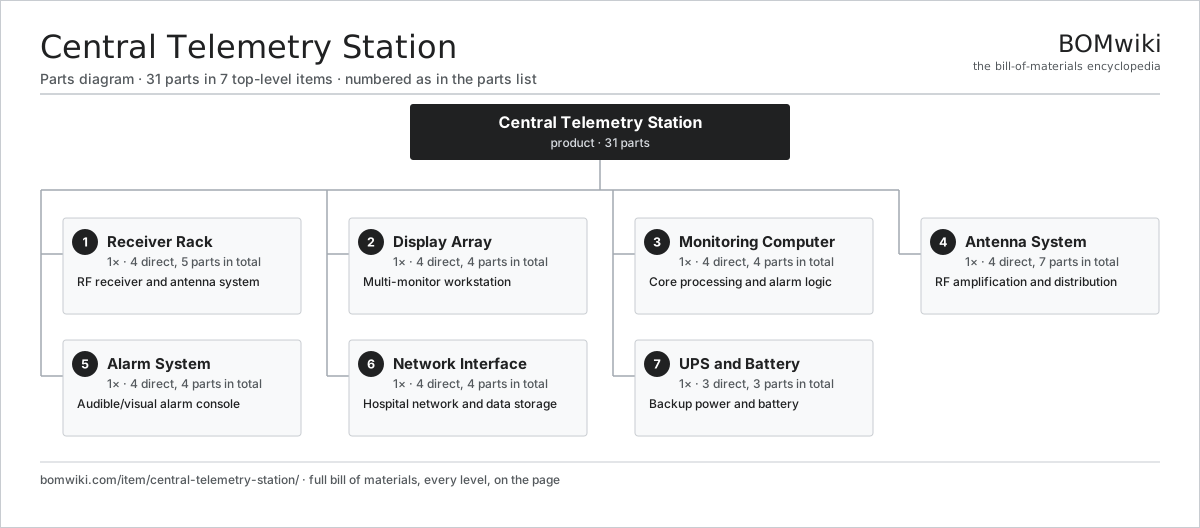
| # | Part | Qty | What it does |
|---|---|---|---|
| 1 | Receiver Rack 4 parts | 1× | RF receiver and antenna system |
| 2 | Display Array 4 parts | 1× | Multi-monitor workstation |
| 3 | Monitoring Computer 4 parts | 1× | Core processing and alarm logic |
| 4 | Antenna System 4 parts | 1× | RF amplification and distribution |
| 5 | Alarm System 4 parts | 1× | Audible/visual alarm console |
| 6 | Network Interface 4 parts | 1× | Hospital network and data storage |
| 7 | UPS and Battery 3 parts | 1× | Backup power and battery |
3D model
No 3D model yet. Have a CAD file of this? Add a 3D model. STL renders right on this page; STEP, FreeCAD, and OpenSCAD sources are welcome too (openly licensed, like all 3D models on BOMwiki).
Build & assembly graph
expand / collapse · shared sub-assemblies converge · links to related products · est. labourTap an assembly to expand/collapse · tap a part to open it · use “Open page” for any node · drag to pan, scroll to zoom.
Bill of materials for Central Telemetry Station
7 top-level lines · 34 rows shown · 31 parts total · indented to 3 levels| # | Item / sub-assembly | Part no. | Qty/assy | Ext. qty | Parts | Type |
|---|---|---|---|---|---|---|
| 1 | Receiver Rack 4 parts | central-telemetry-station-receiver-rack | 1× | 1 | 5 | assembly |
| 1.1 | Rack Frame | central-telemetry-station-rack-frame | 1× | 1 | · | part |
| 1.2 | RF Receiver Module | central-telemetry-station-receiver-module | 2× | 2 | · | part |
| 1.3 | Signal Combiner | central-telemetry-station-signal-combiner | 1× | 1 | · | part |
| 1.4 | Cooling Unit | central-telemetry-station-cooling-fan | 1× | 1 | · | part |
| 2 | Display Array 4 parts | central-telemetry-station-display-array | 1× | 1 | 4 | assembly |
| 2.1 | Primary Monitor | central-telemetry-station-monitor-1 | 1× | 1 | · | part |
| 2.2 | Secondary Monitor | central-telemetry-station-monitor-2 | 1× | 1 | · | part |
| 2.3 | Monitor Stand | central-telemetry-station-monitor-stand | 1× | 1 | · | part |
| 2.4 | Video Controller | central-telemetry-station-video-controller | 1× | 1 | · | part |
| 3 | Monitoring Computer 4 parts | central-telemetry-station-monitoring-computer | 1× | 1 | 4 | assembly |
| 3.1 | Main Processor | central-telemetry-station-main-processor | 1× | 1 | · | part |
| 3.2 | System Memory | central-telemetry-station-system-memory | 1× | 1 | · | part |
| 3.3 | Data Storage | central-telemetry-station-data-storage | 1× | 1 | · | part |
| 3.4 | Software OS | central-telemetry-station-software-os | 1× | 1 | · | part |
| 4 | Antenna System 4 parts | central-telemetry-station-antenna-system | 1× | 1 | 7 | assembly |
| 4.1 | Antenna Unit | central-telemetry-station-antenna-units | 4× | 4 | · | part |
| 4.2 | RF Cable | central-telemetry-station-rf-cable | 1× | 1 | · | part |
| 4.3 | RF Amplifier | central-telemetry-station-rf-amplifier | 1× | 1 | · | part |
| 4.4 | Antenna Mount | central-telemetry-station-antenna-mount | 1× | 1 | · | part |
| 5 | Alarm System 4 parts | central-telemetry-station-alarm-system | 1× | 1 | 4 | assembly |
| 5.1 | Alarm Speaker | central-telemetry-station-alarm-speaker | 1× | 1 | · | part |
| 5.2 | LED Beacon | central-telemetry-station-led-beacon | 1× | 1 | · | part |
| 5.3 | Vibration Alert | central-telemetry-station-vibration-alert | 1× | 1 | · | part |
| 5.4 | Alarm Logic | central-telemetry-station-alarm-logic | 1× | 1 | · | part |
| 6 | Network Interface 4 parts | central-telemetry-station-network-interface | 1× | 1 | 4 | assembly |
| 6.1 | Ethernet Port | central-telemetry-station-ethernet-port | 1× | 1 | · | part |
| 6.2 | Firewall | central-telemetry-station-firewall | 1× | 1 | · | part |
| 6.3 | VPN Gateway | central-telemetry-station-vpn-gateway | 1× | 1 | · | part |
| 6.4 | Data Gateway | central-telemetry-station-data-gateway | 1× | 1 | · | part |
| 7 | UPS and Battery 3 parts | central-telemetry-station-uninterruptible-power | 1× | 1 | 3 | assembly |
| 7.1 | UPS Unit | central-telemetry-station-ups-unit | 1× | 1 | · | part |
| 7.2 | Battery Cabinet | central-telemetry-station-battery-cabinet | 1× | 1 | · | part |
| 7.3 | Power Management | central-telemetry-station-power-management | 1× | 1 | · | part |
Something wrong in this list? Report a problem with this BOM.
Sourcing: possible vendors
Browse the supplier directory → Prices, MOQ, and lead times are algorithmic estimates, not quotes, and not claims about these companies. Company mappings are curated by keyword; est. price band $500–$3M. How estimates work| Vendor | HQ | Specialty | MOQ | Lead time |
|---|---|---|---|---|
| gehealthcare.com ↗ | Chicago, US | Medical imaging & devices | 100 units | 12–20 wks |
| siemens-healthineers.com ↗ | Erlangen, DE | Medical systems | 100 units | 12–20 wks |
|
🇳🇱Philips
philips.com ↗
|
Amsterdam, NL | Health technology | 100 units | 12–20 wks |
| medtronic.com ↗ | Minneapolis, US | Medical devices | 100 units | 12–20 wks |
|
🇨🇳Mindray
mindray.com ↗
|
Shenzhen, CN | Medical devices | 100 units | 12–20 wks |
974-word article