Crematory Filtration System
ProductOverview
A crematory filtration system is an essential air pollution control unit downstream of a Cremation Furnace, capturing gaseous and particulate emissions before they reach the atmosphere. The system removes three categories of hazardous air pollutants (HAPs): coarse particulates (fly ash), fine particulates and acid gases (HCl, SO₂), and mercury vapor, a toxic heavy metal released during cremation of remains containing dental amalgam or industrial contaminants.
Modern crematories cannot legally operate without some form of air filtration. U.S. EPA NESHAP Subpart EEE (National Emission Standards for Hazardous Air Pollutants for Human Cremation Crematories) mandates particulate and mercury removal; many states impose additional requirements. The filtration system is as critical to the crematory as the furnace itself, without it, the facility risks violations, fines, and operational shutdown.
Core subsystems include the Cyclone Pre-Separator coarse separator, the Pulse-Jet Fabric Filter fine particulate fabric filter, the Activated Carbon Sorbent System mercury and acid-gas sorption system, the Induced-Draft (ID) Fan induced-draft fan, the Furnace-to-Filter Ductwork exhaust ductwork routing, the Final Exhaust Stack final exhaust stack, and the Monitoring & Control System monitoring system.
How It Works
Cremation furnace exhaust (300–400°C, containing fly ash, water vapor, acid gases, and mercury vapor) exits the Cremation Furnace stack and enters the Furnace-to-Filter Ductwork insulated ductwork. The hot gas travels to the inlet of the Cyclone Pre-Separator cyclone separator.
Cyclone Pre-Separation: Inside the Cyclone Separator Shell, the gas enters tangentially via the Cyclone Inlet Port inlet, creating a vortex. Centrifugal force throws coarse particles (bone fragments, ash agglomerates >10 microns) outward toward the walls. These settle downward to the Ash Collection Hopper collection bin. Cleaned gas exits upward through the Cyclone Top Outlet center outlet to the fabric filter. This pre-separator removes ~90% of coarse particles, significantly extending fabric filter life.
Fabric Filtration: The cleaned gas enters the Filter Cartridge Housing fabric filter chamber. The Filter Cartridge pleated cartridges (typically 8–12 units) are arranged in parallel. Gas flows from outside to inside through the pleated media (Dacron polyester or ceramic), depositing fine ash and dust on the cartridge outer surface. Cleaned gas exits through the cartridge core to the outlet header.
As dust accumulates on the cartridge surface, pressure drop across the filter increases. When the Clogging Detection Switch differential pressure switch senses the pressure drop exceeding 50–100 Pa (adjustable setpoint), it triggers the Pulse Solenoid Valve solenoid valve. A sharp pulse of 80–90 psi compressed air (from the Pulse Air Compressor small compressor) is injected into the cartridge core backward, momentarily reversing flow. This dislodges the dust layer from the cartridge surface, causing it to drop to the hopper below for disposal. The pulse lasts ~0.1 seconds; the cartridge is back in service immediately. Pulse cycles typically occur every 30–60 minutes during active cremation operation.
Mercury & Acid Gas Removal: Downstream of the fabric filter, the gas (now low in particulates but still containing mercury vapor, HCl, and SO₂) passes through the Activated Carbon Sorbent System activated carbon sorbent injection system. The Carbon Metering Injector peristaltic pump continuously meters activated carbon (1–5 lbs/hour, adjustable based on mercury load) into the exhaust stream. The activated carbon (extremely porous, ~1000 m²/g surface area) rapidly sorbs mercury vapor, acid gases, and other volatile compounds. A Carbon Contact Chamber residence chamber (ductwork section with 5–10 seconds of contact time at gas velocity) ensures good contact.
The carbon-laden gas then passes back through the Filter Cartridge Housing fabric filter (the same cartridges), where activated carbon particles and sorbed-mercury are captured alongside remaining ash. This dual-purpose design, fabric + carbon sorbent, is efficient and economical.
Exhaust & Stack: The cleaned, cooled gas (now <100°C, <1 ppm particulates, >80% mercury removed) exits the baghouse and is drawn by the Induced-Draft (ID) Fan induced-draft fan toward the Final Exhaust Stack final exhaust stack. The ID fan maintains slight negative pressure (10–25 Pa) throughout the crematory and filtration system, ensuring safe operation and preventing fugitive emissions. The fan typically operates continuously during cremation and 15–30 minutes post-cremation to clear the system.
The clean air exits through the Exhaust Stack Tube stainless steel stack (3–6 meters tall) above the facility roof, dispersing into the atmosphere. The Stack Rain Cap rain cap prevents weather intrusion.
Mercury Abatement Details
Cremation releases mercury because many deceased individuals have dental amalgam (silver-mercury fillings and crowns), and some may have consumed contaminated food or had industrial exposure. The Cremation Furnace reaches 1100°C+, causing elemental mercury (Hg⁰) to vaporize and exit with the exhaust. Additionally, combustion oxidizes some elemental mercury to divalent mercury (Hg²⁺), which is more toxic and bio-accumulative.
The Activated Carbon Sorbent System activated carbon sorbent captures both forms, sorbing them into the porous carbon structure. Depending on the coal source of the carbon (bituminous, coconut shell) and iodine impregnation (a catalytic additive), typical capture rates are 50–90% for the first pass. Some facilities install a secondary Mercury Capture System sorbent trap (iodine-coated carbon or zeolite cartridge) downstream of the fabric filter, achieving >95% overall mercury removal.
Mercury-loaded carbon and filter cartridges must be disposed as hazardous waste in the U.S., adding cost ($1000–5000 annually for typical high-volume crematories). Some states require mercury capture documentation and reporting.
Fabric Filter Technology
Fabric filter technology has evolved significantly. Traditional woven bags (fiberglass, polyester) are being replaced by pleated cartridges (offering 3–5× greater surface area in the same footprint) and newer media:
- Dacron polyester: Robust, cost-effective ($200–500 per cartridge), limited to ~130°C continuous. Fine for crematory service (exhaust cools to <100°C before filtration).
- PTFE (Teflon) membrane: Superior chemical resistance, higher temperature capability (~150°C), >$500 per cartridge. Used in corrosive or high-temperature applications.
- Ceramic: Extremely durable (>10 year lifespan), resistant to acid and thermal cycling, very expensive ($1000–2000 per element). Preferred for high-volume facilities with long operational life expectations.
Typical crematory cartridges cost $200–400 and are replaced annually or after 500–1000 operating hours (1–2 years for average facility). A full set (8–12 cartridges) costs $2000–5000 to replace.
Control & Monitoring
The Monitoring & Control System continuously monitors system health:
- Differential pressure: Filter Pressure Transmitter transmitter measures filter loading. Alarm triggers if ΔP exceeds safe maximum (indicating imminent blinding). Pulse-cleaning frequency is adjusted based on ΔP rise rate.
- Furnace draft: Draft Pressure Transmitter monitor confirms furnace maintains 10–25 Pa negative pressure. Low draft (indicating fan failure or blockage) triggers alarm and potential furnace shutdown.
- Activated carbon metering: Optional flow meter confirms carbon injector is dispensing at desired rate (1–5 lbs/hr).
- Mercury capture: Optional CEM (continuous emissions monitoring) system measures Hg concentration in stack gas in real time (required in some jurisdictions).
The Control Timer or PLC PLC can also automate pulse-cleaning frequency, increasing pulse intervals during low-load periods (fewer simultaneous cremations) and decreasing (more frequent pulses) during high-load operation, optimizing cartridge life.
Installation & Facility Integration
A crematory filtration system is typically integrated into the building's HVAC design:
- Ductwork: The Furnace-to-Filter Ductwork hot ductwork must be stainless steel (corrosion resistance in acid-gas environment) and insulated (ceramic fiber) to maintain temperature >150°C, preventing acid gas condensation and corrosion.
- Stack location: The stack must exit above the roof line (typically 1–2 meters above peak) and away from air intakes of the building and adjacent buildings (preventing re-entry of emissions).
- Electrical: The Induced-Draft (ID) Fan typically requires 208–240V 3-phase service, 50+ amp capacity.
- Maintenance access: Hop hopper below the cyclone and baghouse must be accessible for ash removal (weekly during active season).
- Sewer/waste: Ash from the Ash Collection Hopper (and activated carbon from the cartridges) must be properly disposed. Ash is typically non-hazardous and can go to landfill; carbon-loaded cartridges go to hazardous waste.
Installation cost is $50,000–150,000 depending on complexity; annual operating cost (carbon, cartridge replacement, electricity, waste disposal) is $10,000–30,000 for a medium-volume crematory (500–1000 cremations/year).
Regulatory & Environmental Context
EPA NESHAP Subpart EEE (effective 2010, with tightening in 2015) requires:
- Particulate removal: >99% of particulates >10 microns; varies by emission standard.
- Mercury capture: 50% minimum (modifiable combustion-based systems allowed, but 90%+ sorbent injection is standard).
- Operation monitoring: Temperature, pressure, carbon injection rate, and (if using CEM) continuous Hg measurement.
State and local regulations often exceed EPA minimums. Some regions mandate >90% mercury capture and continuous monitoring; others require quarterly emissions testing.
A Crematory Filtration System failure (e.g., blocked ductwork, fan failure, broken cartridge) typically triggers immediate furnace shutdown by interlocks, protecting equipment and environment. Operators are trained to recognize low-draft conditions and verify filter operation before igniting remains.
Variations & Advanced Systems
Modern systems may include:
- Regenerative thermal oxidizer (RTO): Pre-combusts volatile organics before sorbent, improving pollutant capture.
- Wet scrubber: Water spray column washing exhaust, removing acid gases and some mercury (produces liquid hazardous waste; less common now).
- Electrostatic precipitator (ESP): Alternative to fabric filter for fine particulate capture (lower pressure drop, but higher capital and maintenance cost).
- Real-time CEM: Optical or spectroscopic instruments continuously measuring Hg, HCl, SO₂, and opacity in stack gas, logging to regulatory database.
A well-designed and maintained Crematory Filtration System provides 10–15 years of reliable service, protecting both local air quality and operator health while ensuring regulatory compliance.
Crematory Filtration System parts and their functions
8 top-level parts · 40 parts in total · full bill of materials below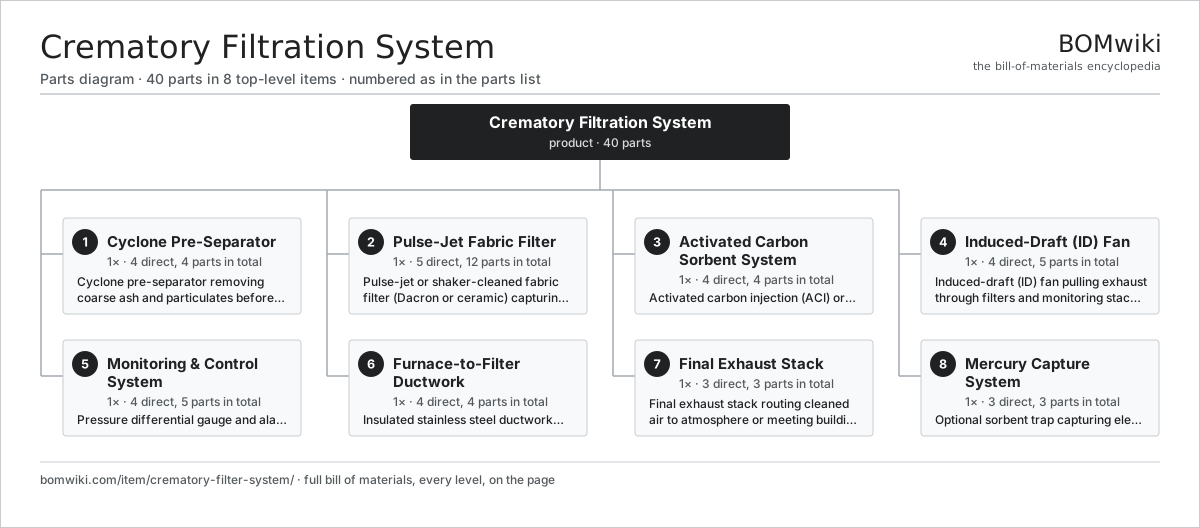
| # | Part | Qty | What it does |
|---|---|---|---|
| 1 | Cyclone Pre-Separator 4 parts | 1× | Cyclone pre-separator removing coarse ash and particulates before filter bed |
| 2 | Pulse-Jet Fabric Filter 5 parts | 1× | Pulse-jet or shaker-cleaned fabric filter (Dacron or ceramic) capturing fine particulates |
| 3 | Activated Carbon Sorbent System 4 parts | 1× | Activated carbon injection (ACI) or sorption bed removing mercury vapor and acid gases |
| 4 | Induced-Draft (ID) Fan 4 parts | 1× | Induced-draft (ID) fan pulling exhaust through filters and monitoring stack draft |
| 5 | Monitoring & Control System 4 parts | 1× | Pressure differential gauge and alarm triggering filter cleaning when clogged |
| 6 | Furnace-to-Filter Ductwork 4 parts | 1× | Insulated stainless steel ductwork routing hot exhaust from [[cremation-furnace]] to filter inlet |
| 7 | Final Exhaust Stack 3 parts | 1× | Final exhaust stack routing cleaned air to atmosphere or meeting building code height |
| 8 | Mercury Capture System 3 parts | 1× | Optional sorbent trap capturing elemental and oxidized mercury for waste disposal |
3D model
No 3D model yet. Have a CAD file of this? Add a 3D model. STL renders right on this page; STEP, FreeCAD, and OpenSCAD sources are welcome too (openly licensed, like all 3D models on BOMwiki).
Build & assembly graph
expand / collapse · shared sub-assemblies converge · links to related products · est. labourTap an assembly to expand/collapse · tap a part to open it · use “Open page” for any node · drag to pan, scroll to zoom.
Bill of materials for Crematory Filtration System
8 top-level lines · 39 rows shown · 40 parts total · indented to 3 levels| # | Item / sub-assembly | Part no. | Qty/assy | Ext. qty | Parts | Type |
|---|---|---|---|---|---|---|
| 1 | Cyclone Pre-Separator 4 parts | crematory-filter-cyclone | 1× | 1 | 4 | assembly |
| 1.1 | Cyclone Separator Shell | crematory-filter-cyclone-body | 1× | 1 | · | part |
| 1.2 | Cyclone Inlet Port | crematory-filter-cyclone-inlet | 1× | 1 | · | part |
| 1.3 | Cyclone Top Outlet | crematory-filter-cyclone-outlet | 1× | 1 | · | part |
| 1.4 | Ash Collection Hopper | crematory-filter-ash-hopper | 1× | 1 | · | part |
| 2 | Pulse-Jet Fabric Filter 5 parts | crematory-filter-bag-cartridge | 1× | 1 | 12 | assembly |
| 2.1 | Filter Cartridge | crematory-filter-cartridge-element | 8× | 8 | · | part |
| 2.2 | Filter Cartridge Housing | crematory-filter-housing | 1× | 1 | · | part |
| 2.3 | Pulse Solenoid Valve | crematory-filter-pulse-valve | 1× | 1 | · | part |
| 2.4 | Pulse Air Compressor | crematory-filter-compressed-air-supply | 1× | 1 | · | part |
| 2.5 | Clogging Detection Switch | crematory-filter-pressure-switch | 1× | 1 | · | part |
| 3 | Activated Carbon Sorbent System 4 parts | crematory-filter-activated-carbon | 1× | 1 | 4 | assembly |
| 3.1 | Activated Carbon Storage Hopper | crematory-filter-carbon-hopper | 1× | 1 | · | part |
| 3.2 | Carbon Metering Injector | crematory-filter-carbon-injector | 1× | 1 | · | part |
| 3.3 | Carbon Contact Chamber | crematory-filter-carbon-contact-chamber | 1× | 1 | · | part |
| 3.4 | Mercury Sorbent Trap | crematory-filter-mercury-trap | 1× | 1 | · | part |
| 4 | Induced-Draft (ID) Fan 4 parts | crematory-filter-id-fan | 1× | 1 | 5 | assembly |
| 4.1 | ID Fan Drive Motor | crematory-filter-fan-motor | 1× | 1 | · | part |
| 4.2 | Fan Impeller Assembly | crematory-filter-fan-blade | 1× | 1 | · | part |
| 4.3 | Fan Shaft Bearing | crematory-filter-fan-bearing | 2× | 2 | · | part |
| 4.4 | Furnace Draft Gauge | crematory-filter-draft-gauge | 1× | 1 | · | part |
| 5 | Monitoring & Control System 4 parts | crematory-filter-control-panel | 1× | 1 | 5 | assembly |
| 5.1 | Filter Pressure Transmitter | crematory-filter-differential-sensor | 1× | 1 | · | part |
| 5.2 | Draft Pressure Transmitter | crematory-filter-draft-transmitter | 1× | 1 | · | part |
| 5.3 | System Alarm & Beacon | crematory-filter-alarms | 2× | 2 | · | part |
| 5.4 | Control Timer or PLC | crematory-filter-control-logic | 1× | 1 | · | part |
| 6 | Furnace-to-Filter Ductwork 4 parts | crematory-filter-duct-piping | 1× | 1 | 4 | assembly |
| 6.1 | Stainless Steel Duct Tube | crematory-filter-duct-tube | 1× | 1 | · | part |
| 6.2 | Duct Insulation Blanket | crematory-filter-duct-insulation | 1× | 1 | · | part |
| 6.3 | Thermal Expansion Joint | crematory-filter-duct-expansion-joint | 1× | 1 | · | part |
| 6.4 | Bypass Damper Valve | crematory-filter-duct-damper | 1× | 1 | · | part |
| 7 | Final Exhaust Stack 3 parts | crematory-filter-stack-pipe | 1× | 1 | 3 | assembly |
| 7.1 | Exhaust Stack Tube | crematory-filter-stack-tube | 1× | 1 | · | part |
| 7.2 | Stack Rain Cap | crematory-filter-stack-cap | 1× | 1 | · | part |
| 7.3 | Stack Support & Flashing | crematory-filter-stack-mounting | 1× | 1 | · | part |
| 8 | Mercury Capture System 3 parts | crematory-filter-mercury-abatement | 1× | 1 | 3 | assembly |
| 8.1 | Mercury Sorbent Cartridge | crematory-filter-mercury-cartridge | 1× | 1 | · | part |
| 8.2 | Mercury Trap Housing | crematory-filter-cartridge-housing | 1× | 1 | · | part |
| 8.3 | Mercury Cartridge Replacement Set | crematory-filter-cartridge-change-kit | 1× | 1 | · | part |
Something wrong in this list? Report a problem with this BOM.
Sourcing: possible vendors
Browse the supplier directory → Prices, MOQ, and lead times are algorithmic estimates, not quotes, and not claims about these companies. Company mappings are curated by keyword; est. price band $5k–$2M. How estimates work| Vendor | HQ | Specialty | MOQ | Lead time |
|---|---|---|---|---|
| atlascopco.com ↗ | Stockholm, SE | Compressors & industrial | 10 units | 12–20 wks |
|
🇦🇹Andritz
andritz.com ↗
|
Graz, AT | Process plants & machinery | 10 units | 12–20 wks |
| buhlergroup.com ↗ | Uzwil, CH | Food & materials processing | 10 units | 12–20 wks |
| gea.com ↗ | Düsseldorf, DE | Process technology | 10 units | 12–20 wks |
| mhi.com ↗ | Tokyo, JP | Heavy machinery | 10 units | 12–20 wks |
1,604-word article