Drive-Through Teller Unit
ProductOverview
A drive-through teller unit is a banking convenience feature that emerged in the 1960s and has remained largely unchanged in principle, though modern implementations add pneumatic optimization, video verification, and digital audit trails. The drive-through window allows bank customers to conduct basic transactions, deposits, withdrawals, check deposits, without exiting their vehicles. For busy urban branches with limited parking, or suburban banks targeting working families during lunch or evening hours, the drive-through is a competitive advantage. The system's centerpiece is a pneumatic capsule transport network: customers place envelopes or documents in a capsule at a drive-up window, press a button, and the capsule whooshes through tubing to a teller workstation. The teller processes the transaction, seals a response capsule (cash withdrawal, receipt, or confirmation slip), and sends it back to the customer. The entire interaction, from capsule departure to return, takes 30–60 seconds. No queues, no wait, no leaving the car.
For the teller, the drive-through adds efficiency. One teller can serve 3–4 drive-up lanes simultaneously by glancing at a monitor showing the current customer's request, processing it, and loading the response capsule. The teller never leaves their desk. For the bank, drive-through reduces pressure on interior teller lines and allows the branch to operate extended hours with minimal added staffing. A 24-hour drive-through can run unmanned for some hours (customers use ATMs, deposit envelopes in the night depository), then manned during peak times.
Architecture: Customer to Teller
A customer pulls up to the Customer Drive-Up Terminal, a stainless steel or aluminum cabinet mounted to the building exterior at window height (3–4 feet above the driveway). The Customer Display shows "Welcome. Insert your transaction envelope." The customer inserts an envelope (containing cash, checks, or a deposit slip) into the Envelope Slot, a 2 × 8 inch opening. A motorized capsule load mechanism (part of the Capsule Receiver) seats the envelope inside a pneumatic capsule, a clear plastic cylinder, 2.5 inches diameter, 4 inches long, with a screw-on or snap-on cap. The teller, watching their monitor, presses a button labeled "Send to Teller" on the Control Keyboard. The PLC & Transaction Controller energizes a solenoid on the Tube Routing & Junctions's inlet valve at the customer station. The Pneumatic Blower & Pressure Control (already spinning at idle) sucks the pressurized tube; the capsule is drawn into the Tube Main, a 3-inch-diameter HDPE tube that runs through the building, and travels at 20 mph toward the teller station. The journey takes ~3 seconds for a 40-foot run. The Pressure Transducer at the teller station detects the capsule's arrival (a momentary pressure spike as the capsule enters the intake), triggering an audible beep and a notification on the teller's Teller Display: "Lane 3 | Capsule Arrived | $500 Deposit Request". The capsule slides down the Capsule Input Chute directly onto the teller's work surface.
The teller opens the capsule, removes the customer's deposit envelope, and verifies the contents. If the customer claimed to deposit 500 dollars (5 × $100 bills), the Weight Sensor validates the envelope weight (roughly 1.5 ounces for five bills ± 0.3 oz tolerance). If the weight is correct, the teller counts the bills (as security and reconciliation), types the amount into the core banking system via the Teller Display, and the account is credited. The Transaction Receipt Printer on the teller side prints a transaction log: "Lane 3 | 2024-03-15 14:32:15 | Deposit $500 | Account 5847-123 | Teller: Sarah M." The teller then places a customer receipt into a return capsule, loads it into the Capsule Loader, and presses "Send to Lane 3". The PLC & Transaction Controller configures the tube's solenoid valve to route the capsule back to the customer station. The blower pushes the capsule back through the tube. It arrives at the customer's Capsule Receiver in 3 seconds, triggering a tone and a display message: "Your receipt is ready. Thank you for banking with us." The customer retrieves the capsule, takes the receipt, and drives away.
Pneumatic System Design
The Pneumatic Blower & Pressure Control is the system's power source. It is a 1–2 horsepower centrifugal blower, typically a positive-displacement lobe blower or a centrifugal fan. The blower is sized to maintain a steady 6–12 inches of water column pressure (roughly 0.25–0.5 PSIG) continuously, with capability to surge to 15 PSIG when routing a new capsule. This pressure is enough to accelerate a 2–4 ounce capsule to 20 mph and maintain that speed against friction losses in the tubing.
The Tube Routing & Junctions is the conduit. Modern systems use HDPE (high-density polyethylene) tubing, which is quieter than aluminum (reduces rattle and vibration noise) and resists corrosion. The main trunk (3–4 inch ID) carries capsules in either direction; branch tubes (2–2.5 inch ID) feed individual drive-up lanes and teller station inlets. The tubes are mounted along the building interior walls or run through attics/crawl spaces, suspended by Tube Support Brackets that include vibration isolators to minimize noise transmission to occupied spaces.
At junctions, Junction Valve Assemblys (solenoid-controlled 3-way ball valves) intelligently route capsules. A solenoid valve has two states: de-energized (blocks pressure, allows capsule to travel a default path, e.g., to teller station) or energized (opens pressure, diverts capsule to an alternate path, e.g., back to customer). The PLC & Transaction Controller energizes the correct valve based on the transaction mode (send-to-teller vs. send-to-customer) and the lane. If there are 3 customer lanes, there are typically 3 independent branch tubes, each with its own solenoid valve and pressure transducer. The control board can route any capsule to any lane by activating the corresponding valve.
Smooth tubing and specially designed fittings (Tube Elbow Fittings) prevent capsule jams. Capsules can get stuck if they encounter a sharp corner or a burr inside the tube. Modern designs use 45° or 90° smooth-radius elbows. If a capsule does jam (rare but possible if the blower pressure spikes or the capsule is oversized), a manual breaker fitting at that junction allows staff to disassemble the tube and extract the capsule.
Safety & Reliability
Drive-through systems operate continuously, sometimes 24/7, and must be highly reliable. The blower operates from 120 or 240 VAC; a dedicated circuit breaker (20–30 A) protects it. The PLC & Transaction Controller includes a backup 12V 7Ah battery that keeps the solenoid valves energized for ~4 hours if AC power is lost, preventing the system from locking up or leaving customer capsules stranded inside tubing.
The Pressure Regulator is critical. If pressure rises above a safe threshold (e.g., >15 PSIG), capsules can travel so fast they collide with the tube junction diverters and jam. The regulator uses a needle valve or electronic solenoid to bleed excess pressure, maintaining a steady 8–10 PSIG. A Pressure Gauge displays current pressure; tellers check it daily.
The Check Valve at the blower outlet prevents catastrophic back-pressure if the blower suddenly stops or reverses (e.g., during an emergency stop or power loss). Without this check valve, gravity or residual pressure could collapse the tube network or pull capsules back toward the blower, causing jams.
Noise is a design consideration for customer perception. A blower running continuously produces ~85 dB of sound, like a vacuum cleaner. To reduce this, the blower is installed with a Silencer Muffler (an acoustic enclosure with foam or fiberglass), and branch tubes are routed inside walls (insulated by wall framing and drywall) rather than exposed externally. Modern installations typically achieve <80 dB at the customer window, which customers find acceptable.
Video & Audio Integration
The Audio & Video Communication adds security and efficiency. A Fixed Camera mounted above the customer window captures video of every transaction. This video is critical for dispute resolution: if a customer claims they deposited $1,000 but the bank recorded $500, the teller and manager can review the video to see exactly what envelope the customer inserted. The camera also captures the customer's vehicle license plate and face (a deterrent to fraud and a forensic asset if theft occurs).
A Microphone Speaker at the customer window allows voice communication. The customer can say "I'm depositing 5 checks and $200 cash" while the teller listens on the interior speaker. This allows the teller to ask for clarification: "Do you need $100 in cash back?" or "Is your account number 5847-123?" Two-way audio dramatically speeds up transactions, reducing average time from ~90 seconds to ~60 seconds.
The teller's Camera Monitor displays live video of the current drive-up lane, so the teller knows what to expect when the capsule arrives. If the video shows a customer reaching for cash before the capsule is sent back (a safety concern), the teller can delay sending the capsule or alert a manager.
Integration with Core Banking
The PLC & Transaction Controller connects to the bank's core accounting system via Ethernet (or RS-232 serial for legacy systems). When a capsule arrives at the teller station, the teller's display shows the customer's account, recent transactions, balance, and holds. The teller confirms the account, enters the transaction amount, and the core system immediately processes it. A transaction log is created: timestamp, teller ID, amount, confirmation number. This log is the single source of truth for reconciliation. At end of day, the drive-through manager reconciles the cash counted from returned capsules against the core system's transaction log. If all deposits and withdrawals match, the drive-through reconciles cleanly.
Maintenance & Troubleshooting
The blower requires annual maintenance: the air filter (3–6 month replacement cycle) must be inspected weekly, and the blower housing should be vacuumed clean. Bearing lubrication (if not sealed bearings) occurs annually. The tubing system requires occasional inspection: dust and debris can accumulate inside tubes over years of operation, causing capsule drag. A brush pushed through the tubes annually (after disconnecting at couplings) cleans them. The solenoid valves are rated for 100,000+ cycles; in a typical drive-through running 200 transactions/day, a valve is actuated ~200 times/day, or 73,000 times/year. Replacement of a single solenoid valve is a 30-minute job (disconnect hose couplings, unbolted the valve, bolt a new one in place).
The Capsule Loader and Capsule Receiver mechanisms are mechanical; any jamming is usually due to a bent capsule or debris inside the mechanism. Regular cleaning (weekly) with compressed air prevents most jams. Capsules themselves are consumables; they can crack or wear after 5–10 years of heavy use and should be replaced as a set every 5 years (~$500–1000 for a full set).
Regulations & Audit
Banks must retain a transaction log of all drive-through activity (OCC and FDIC requirements). The PLC & Transaction Controller's transaction timestamps and the core system's records serve this purpose. Video and audio recordings are retained for 30+ days per bank security policy. The drive-through is one of the highest-fraud-risk areas of a bank because capsules are physically isolated from staff observation for ~3 seconds during transit; video verification is mandatory.
Tellers are trained to never assume a capsule contents are correct: they always verify (count cash, weigh envelopes, inspect checks) before crediting the account. Weight verification via Weight Sensor is a built-in control that reduces counting errors and discrepancies.
Drive-Through Teller Unit parts and their functions
8 top-level parts · 178 parts in total · full bill of materials below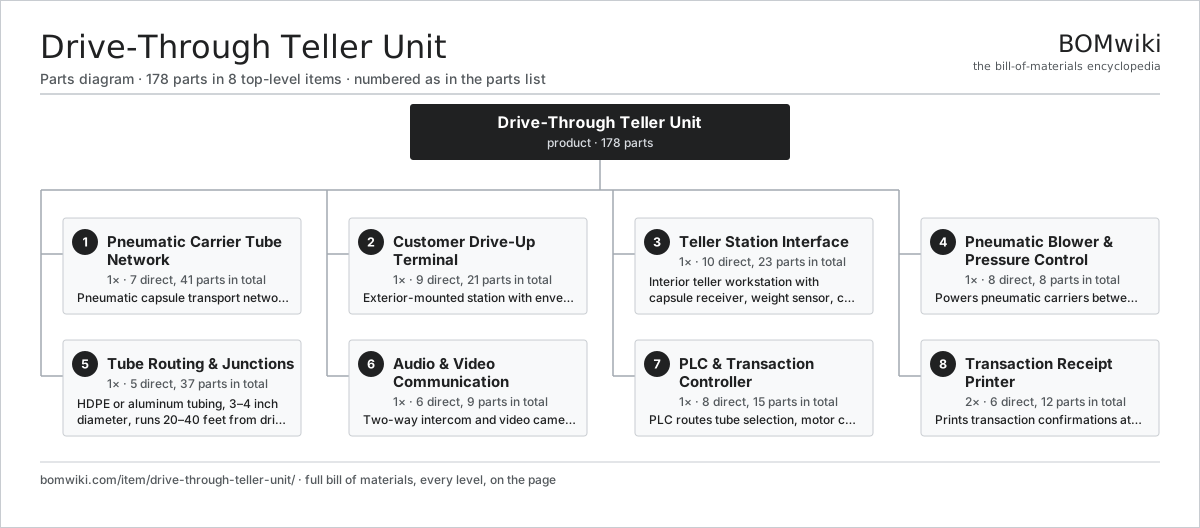
| # | Part | Qty | What it does |
|---|---|---|---|
| 1 | Pneumatic Carrier Tube Network 7 parts | 1× | Pneumatic capsule transport network connects customer pickup to teller station |
| 2 | Customer Drive-Up Terminal 9 parts | 1× | Exterior-mounted station with envelope slot, document scanner, receipt printer, push-to-talk speaker |
| 3 | Teller Station Interface 10 parts | 1× | Interior teller workstation with capsule receiver, weight sensor, camera, receipt printer |
| 4 | Pneumatic Blower & Pressure Control 8 parts | 1× | Powers pneumatic carriers between customer and teller stations at 15–25 mph |
| 5 | Tube Routing & Junctions 5 parts | 1× | HDPE or aluminum tubing, 3–4 inch diameter, runs 20–40 feet from drive-up to teller window |
| 6 | Audio & Video Communication 6 parts | 1× | Two-way intercom and video camera link teller to customer |
| 7 | PLC & Transaction Controller 8 parts | 1× | PLC routes tube selection, motor control, intercom logic |
| 8 | Transaction Receipt Printer 6 parts | 2× | Prints transaction confirmations at both customer and teller terminals |
3D model
No 3D model yet. Have a CAD file of this? Add a 3D model. STL renders right on this page; STEP, FreeCAD, and OpenSCAD sources are welcome too (openly licensed, like all 3D models on BOMwiki).
Build & assembly graph
expand / collapse · shared sub-assemblies converge · links to related products · est. labourTap an assembly to expand/collapse · tap a part to open it · use “Open page” for any node · drag to pan, scroll to zoom.
Bill of materials for Drive-Through Teller Unit
8 top-level lines · 79 rows shown · 178 parts total · indented to 3 levels| # | Item / sub-assembly | Part no. | Qty/assy | Ext. qty | Parts | Type |
|---|---|---|---|---|---|---|
| 1 | Pneumatic Carrier Tube Network 7 parts | drive-through-teller-unit-carrier-tube-system | 1× | 1 | 41 | assembly |
| 1.1 | Main Blower | drive-through-teller-unit-main-blower | 1× | 1 | · | part |
| 1.2 | Tube Main | drive-through-teller-unit-tube-main | 1× | 1 | · | part |
| 1.3 | Tube Branches | drive-through-teller-unit-tube-branches | 4× | 4 | · | part |
| 1.4 | Tube Junction Valve | drive-through-teller-unit-tube-junction-valve | 4× | 4 | · | part |
| 1.5 | Tube Elbow Fittings | drive-through-teller-unit-tube-elbow-fittings | 20× | 20 | · | part |
| 1.6 | Tube Support Bracket | drive-through-teller-unit-tube-support-bracket | 10× | 10 | · | part |
| 1.7 | Fastener Set | fastener-set | 1× | 1 | · | part |
| 2 | Customer Drive-Up Terminal 9 parts | drive-through-teller-unit-customer-terminal | 1× | 1 | 21 | assembly |
| 2.1 | Terminal Housing | drive-through-teller-unit-terminal-housing | 1× | 1 | · | part |
| 2.2 | Envelope Slot | drive-through-teller-unit-envelope-slot | 1× | 1 | · | part |
| 2.3 | Capsule Receiver | drive-through-teller-unit-capsule-receiver | 1× | 1 | · | part |
| 2.4 | Customer Display | drive-through-teller-unit-customer-display | 1× | 1 | · | part |
| 2.5 | Push To Talk Speaker | drive-through-teller-unit-push-to-talk-speaker | 1× | 1 | · | part |
| 2.6 | Document Scanner | drive-through-teller-unit-document-scanner | 1× | 1 | · | part |
| 2.7 | Transaction Receipt Printer 6 parts | drive-through-teller-unit-receipt-printer | 1× | 1 | 12 | assembly |
| 2.7.1 | Thermal Printer Head | drive-through-teller-unit-thermal-printer-head | 2× | 2 | · | part |
| 2.7.2 | Paper Roll | drive-through-teller-unit-paper-roll | 2× | 2 | · | part |
| 2.7.3 | Paper Motor | drive-through-teller-unit-paper-motor | 2× | 2 | · | part |
| 2.7.4 | Cutter Blade | drive-through-teller-unit-cutter-blade | 2× | 2 | · | part |
| 2.7.5 | Paper Sensor | drive-through-teller-unit-paper-sensor | 2× | 2 | · | part |
| 2.7.6 | Connector | connector | 2× | 2 | · | part |
| 2.8 | Light Ring | drive-through-teller-unit-light-ring | 1× | 1 | · | part |
| 2.9 | Connector | connector | 2× | 2 | · | part |
| 3 | Teller Station Interface 10 parts | drive-through-teller-unit-teller-terminal | 1× | 1 | 23 | assembly |
| 3.1 | Teller Station Desk | drive-through-teller-unit-teller-station-desk | 1× | 1 | · | part |
| 3.2 | Capsule Input Chute | drive-through-teller-unit-capsule-input-chute | 1× | 1 | · | part |
| 3.3 | Weight Sensor | drive-through-teller-unit-weight-sensor | 1× | 1 | · | part |
| 3.4 | Capsule Loader | drive-through-teller-unit-capsule-loader | 1× | 1 | · | part |
| 3.5 | Teller Display | drive-through-teller-unit-teller-display | 1× | 1 | · | part |
| 3.6 | Transaction Receipt Printer 6 parts | drive-through-teller-unit-receipt-printer | 1× | 1 | 12 | assembly |
| 3.6.1 | Thermal Printer Head | drive-through-teller-unit-thermal-printer-head | 2× | 2 | · | part |
| 3.6.2 | Paper Roll | drive-through-teller-unit-paper-roll | 2× | 2 | · | part |
| 3.6.3 | Paper Motor | drive-through-teller-unit-paper-motor | 2× | 2 | · | part |
| 3.6.4 | Cutter Blade | drive-through-teller-unit-cutter-blade | 2× | 2 | · | part |
| 3.6.5 | Paper Sensor | drive-through-teller-unit-paper-sensor | 2× | 2 | · | part |
| 3.6.6 | Connector | connector | 2× | 2 | · | part |
| 3.7 | Camera Monitor | drive-through-teller-unit-camera-monitor | 1× | 1 | · | part |
| 3.8 | Audio Speaker | drive-through-teller-unit-audio-speaker | 1× | 1 | · | part |
| 3.9 | Control Keyboard | drive-through-teller-unit-control-keyboard | 1× | 1 | · | part |
| 3.10 | Connector | connector | 3× | 3 | · | part |
| 4 | Pneumatic Blower & Pressure Control 8 parts | drive-through-teller-unit-blower-motor | 1× | 1 | 8 | assembly |
| 4.1 | Ac Blower | drive-through-teller-unit-ac-blower | 1× | 1 | · | part |
| 4.2 | Blower Housing | drive-through-teller-unit-blower-housing | 1× | 1 | · | part |
| 4.3 | Blower Filter | drive-through-teller-unit-blower-filter | 1× | 1 | · | part |
| 4.4 | Pressure Regulator | drive-through-teller-unit-pressure-regulator | 1× | 1 | · | part |
| 4.5 | Pressure Gauge | drive-through-teller-unit-pressure-gauge | 1× | 1 | · | part |
| 4.6 | Check Valve | drive-through-teller-unit-check-valve | 1× | 1 | · | part |
| 4.7 | Silencer Muffler | drive-through-teller-unit-silencer-muffler | 1× | 1 | · | part |
| 4.8 | Connector | connector | 1× | 1 | · | part |
| 5 | Tube Routing & Junctions 5 parts | drive-through-teller-unit-tube-network | 1× | 1 | 37 | assembly |
| 5.1 | Junction Valve Assembly | drive-through-teller-unit-junction-valve-assembly | 4× | 4 | · | part |
| 5.2 | Pressure Transducer | drive-through-teller-unit-pressure-transducer | 4× | 4 | · | part |
| 5.3 | Tube Diameter Adapter | drive-through-teller-unit-tube-diameter-adapter | 8× | 8 | · | part |
| 5.4 | Tube Seal Coupling | drive-through-teller-unit-tube-seal-coupling | 20× | 20 | · | part |
| 5.5 | Fastener Set | fastener-set | 1× | 1 | · | part |
| 6 | Audio & Video Communication 6 parts | drive-through-teller-unit-audio-video-system | 1× | 1 | 9 | assembly |
| 6.1 | Microphone Speaker | drive-through-teller-unit-microphone-speaker | 2× | 2 | · | part |
| 6.2 | Intercom Amplifier | drive-through-teller-unit-intercom-amplifier | 1× | 1 | · | part |
| 6.3 | Fixed Camera | drive-through-teller-unit-fixed-camera | 1× | 1 | · | part |
| 6.4 | Camera Monitor | drive-through-teller-unit-camera-monitor | 1× | 1 | · | part |
| 6.5 | Recording Storage | drive-through-teller-unit-recording-storage | 1× | 1 | · | part |
| 6.6 | Connector | connector | 3× | 3 | · | part |
| 7 | PLC & Transaction Controller 8 parts | drive-through-teller-unit-control-board | 1× | 1 | 15 | assembly |
| 7.1 | Microcontroller | mcu | 1× | 1 | · | part |
| 7.2 | Bare PCB | pcb-bare | 1× | 1 | · | part |
| 7.3 | Safe Deposit System Rtc Module | drive-through-teller-unit-safe-deposit-system-rtc-module | 1× | 1 | · | part |
| 7.4 | Relay | relay | 4× | 4 | · | part |
| 7.5 | Power MOSFET | mosfet | 2× | 2 | · | part |
| 7.6 | SMD Passive (R/C/L) | smd-passives | 1× | 1 | · | part |
| 7.7 | Connector | connector | 4× | 4 | · | part |
| 7.8 | Power Supply | power-supply | 1× | 1 | · | part |
| 8 | Transaction Receipt Printer 6 parts | drive-through-teller-unit-receipt-printer | 2× | 2 | 12 | assembly |
| 8.1 | Thermal Printer Head | drive-through-teller-unit-thermal-printer-head | 2× | 4 | · | part |
| 8.2 | Paper Roll | drive-through-teller-unit-paper-roll | 2× | 4 | · | part |
| 8.3 | Paper Motor | drive-through-teller-unit-paper-motor | 2× | 4 | · | part |
| 8.4 | Cutter Blade | drive-through-teller-unit-cutter-blade | 2× | 4 | · | part |
| 8.5 | Paper Sensor | drive-through-teller-unit-paper-sensor | 2× | 4 | · | part |
| 8.6 | Connector | connector | 2× | 4 | · | part |
Something wrong in this list? Report a problem with this BOM.
Related products
same domain, ranked by shared parts Cash Deposit Machine
64 parts · shares 5 with this page
Coin Counting Kiosk
63 parts · shares 5 with this page
Queue Ticket Dispenser
307 parts · shares 5 with this page
Rotary Deposit Safe
152 parts · shares 4 with this page
Cash Deposit Machine
64 parts · shares 5 with this page
Coin Counting Kiosk
63 parts · shares 5 with this page
Queue Ticket Dispenser
307 parts · shares 5 with this page
Rotary Deposit Safe
152 parts · shares 4 with this page
 Coin Wrapping Machine
70 parts · shares 4 with this page
Coin Wrapping Machine
70 parts · shares 4 with this page
Sourcing: possible vendors
Browse the supplier directory → Prices, MOQ, and lead times are algorithmic estimates, not quotes, and not claims about these companies. Company mappings are curated by keyword; est. price band $50–$15k. How estimates work| Vendor | HQ | Specialty | MOQ | Lead time |
|---|---|---|---|---|
|
🇯🇵Canon
canon.com ↗
|
Tokyo, JP | Imaging & optics | 500 units | 8–12 wks |
|
🇯🇵Ricoh
ricoh.com ↗
|
Tokyo, JP | Office imaging | 500 units | 8–12 wks |
|
🇺🇸Xerox
xerox.com ↗
|
Norwalk, US | Printers & copiers | 500 units | 8–12 wks |
|
🇯🇵Epson
epson.com ↗
|
Suwa, JP | Printers & projectors | 500 units | 8–12 wks |
|
🇯🇵Brother
brother.com ↗
|
Nagoya, JP | Printers & sewing | 500 units | 8–12 wks |
2,053-word article