Electroplating Machine
ProductOverview
An electroplating machine is an electrochemistry workstation that applies thin metal coatings to conductive surfaces via galvanic deposition. Direct current flows from an external source (rectifier) through an electrolyte solution, forcing metal ions to migrate to and deposit on a cathode (the work piece). The result is a bright, uniform, protective coating used for corrosion resistance, aesthetic finishing, electrical conductivity enhancement, and wear protection.
Electroplating is ubiquitous in manufacturing: automotive fasteners, jewelry, dental prosthetics, circuit boards, architectural hardware, and decorative trim all rely on electroplating for durability and appearance. Home platers, small manufacturers, and industrial job-shops operate electroplating lines ranging from single-tank benchtop systems to multi-station production facilities.
How it works
A work piece (cathode, negative terminal) is suspended in an acidic or alkaline electrolyte bath using an insulated cathode hanger. An anode (positive terminal, pure metal or inert) is placed opposite the work piece in an anode basket. The DC rectifier applies 6–100V across the two electrodes.
Current flows: electrons travel through the external circuit from rectifier negative to the work piece (cathode), then through the ionic electrolyte to the anode. At the cathode surface, metal cations (Cu²⁺, Ni²⁺, Zn²⁺, etc.) gain electrons and are reduced to neutral metal, forming a solid deposit. At the anode, the metal dissolves, releasing electrons and maintaining current flow. The net result: metal transfers from the anode to the cathode, building a uniform coating 5–50 micrometers thick per plating cycle (typical 10–30 minute plating time for jewelry or small industrial parts).
The bath heater maintains optimal temperature (35–65°C depending on plating chemistry); hotter baths allow faster deposition but risk burning (brittle deposits) or excessive hydrogen evolution. The agitation system (air bubbler or mechanical stirrer) circulates solution, ensuring uniform coating and preventing salt buildup near the cathode.
Electrochemistry Fundamentals
Faraday's law governs electroplating: the mass of metal deposited is proportional to charge (current × time) and the metal's atomic weight divided by its valence. For copper plating: Cu²⁺ + 2e⁻ → Cu, so depositing 63.5 grams of copper requires 2 moles of electrons (≈193,000 coulombs or about 53 amp-hours). In practice, plating efficiency is 90–99% for most metals; side reactions (hydrogen evolution, oxygen evolution) consume a small fraction of current.
Current density (amperes per square foot of cathode) critically affects coating quality. Too low (< 10 A/ft²), deposition is slow and porous. Too high (> 100 A/ft²), deposits are rough, burned, or develop stress cracks. Optimal current density is typically 20–50 A/ft² for most plating recipes. A 12 × 12 inch work piece (1 ft²) requires 20–50 amperes; larger parts may require hundreds of amps from industrial rectifiers.
Plating Solutions and Chemistry
Acidic plating (sulfuric acid, hydrochloric acid base):
- Copper plating: CuSO₄ (copper sulfate) + H₂SO₄, producing bright hard deposits. Standard for jewelry and electrical applications.
- Nickel plating: NiCl₂ + H₂SO₄, producing corrosion-resistant finish. Used on steel fasteners and automotive trim.
- Zinc plating: ZnSO₄ + H₂SO₄, producing white silver-gray coating. Used for industrial steel protection (cost-effective, less decorative than nickel).
Alkaline plating:
- Gold plating: KAu(CN)₂ (gold cyanide) + KOH, requiring very low current density and careful temperature control. Used for jewelry, PCB traces, and contact surfaces requiring high conductivity.
- Copper plating (alkaline version): produces ductile, lower-stress deposits than acidic copper, preferred for thick buildup (striking layers > 50 μm).
Most systems start with a striking layer (very thin, high-current-density deposit of a different metal) to ensure adhesion; then main plating builds the bulk coating; finally, a finish layer (often bright nickel or passivated) provides appearance and final corrosion protection.
Rectifier Circuit and Control
The rectifier converts AC mains power (240V) to DC using a step-down transformer, silicon diode bridge, and LC filter. The transformer reduces voltage to 6–50V (low voltage is safer for operator); the bridge rectifier (full-wave, four diodes) converts AC to pulsating DC; the filter choke and filter capacitor smooth ripple to <2%.
Output current is adjustable via a rheostat or PWM controller. The ammeter displays real-time current; the voltmeter shows cell voltage (typically 2–20V depending on bath and load). The timer allows automatic shutoff after a preset time (e.g., 15 minutes for copper plating to 10 μm thickness).
Tank and Anode Assembly
The plating tank is typically 24 × 18 × 12 inches or larger, made of fiberglass or steel with a plastic lining (polypropylene or PVC) resisting acidic or alkaline solutions. The internal baffle divides the tank into main plating and return zones, improving solution circulation.
The anode basket suspends pure metal anodes (copper, nickel, zinc plates) in the solution. An anode bag (cotton or synthetic fabric) encloses the anode, preventing loose fragments from contaminating the work piece. The anode is connected to the rectifier positive terminal; current flows from the anode into solution.
The cathode hangers are conductive (copper or stainless steel) and insulated from the tank frame using rubber sleeves, preventing unintended current paths. Multiple work pieces can be plated simultaneously by suspending them all from the same cathode rail (parallel connection).
Temperature and Agitation
The immersion heater (3–10 kW) brings the bath from room temperature to optimal (typically 40–55°C) in 30–60 minutes. The thermostat maintains ±3°C setpoint; over-temperature causes rapid anode dissolution and solution degradation.
The agitation system circulates solution via either (1) air bubbler (fine bubbles from a porous stone at tank bottom), or (2) mechanical stirrer paddle rotating slowly (5–20 RPM). Agitation:
- Removes hydrogen bubbles from cathode surface (which otherwise create voids in coating).
- Replenishes metal ions and removes waste products (hydroxides, chlorides).
- Prevents salt bridges (high-concentration zones preventing current flow).
- Ensures uniform thickness across the work piece.
Quality Control and Troubleshooting
Porous, dull, or rough deposits indicate low current density, high bath temperature, or contamination. Remedy: increase rectifier current, cool bath, or perform a partial bath purification (carbon treatment or selective precipitation).
Burned, brittle deposits with cracks indicate excessive current density or low metal ion concentration. Remedy: reduce current, add more anode surface area (to reduce current density), or replenish solution chemistry (add CuSO₄, NiCl₂, etc.).
Peeling or poor adhesion suggests dirty substrate. Remedy: pre-plate cleaning (degreaser + acid dip) or a thin striking layer at very high current density to nucleate bonding.
Uneven thickness (plating thinner at far end of tank) is caused by uneven current distribution or large geometry. Remedy: reposition work piece, add auxiliary anodes, or use higher current density profile.
Safety Considerations
Electrical hazards: the rectifier produces high amperage; all terminals are insulated and guarded. Many systems use low-voltage (6–50V) output, reducing shock risk compared to raw 240V mains.
Chemical hazards: acidic plating solutions (H₂SO₄, HCl) cause severe burns; alkaline solutions (KOH, NaOH) are similarly caustic. Proper PPE (rubber gloves, apron, safety goggles) is mandatory. Gold cyanide solutions are acutely toxic (cyanide salts); special ventilation and handling protocols apply.
Gas hazards: hydrogen evolution at the cathode and chlorine evolution (if chloride present) at the anode can accumulate in poorly ventilated tanks. Proper exhaust ductwork or fume hoods are required, especially for alkaline or high-current plating.
Production Workflow
A typical jewelry shop copper-plating workflow:
- Degrease work piece (immerse in hot alkaline degreaser 5 min).
- Rinse in water.
- Immerse in dilute sulfuric acid (acid dip 1–2 sec) to remove oxides.
- Rinse again.
- Insert into plating tank, set rectifier to 30A, 10V.
- Plate for 10–15 minutes, building 10–20 μm copper coat.
- Remove and rinse in running water.
- Optional: immerse in nickel-plating bath for corrosion protection.
Total time per work piece: 20–30 minutes. A shop running two parallel plating tanks can process 10–15 pieces per 8-hour shift, achieving 100–150 pieces per day at production scale.
Electroplating Machine parts and their functions
7 top-level parts · 36 parts in total · full bill of materials below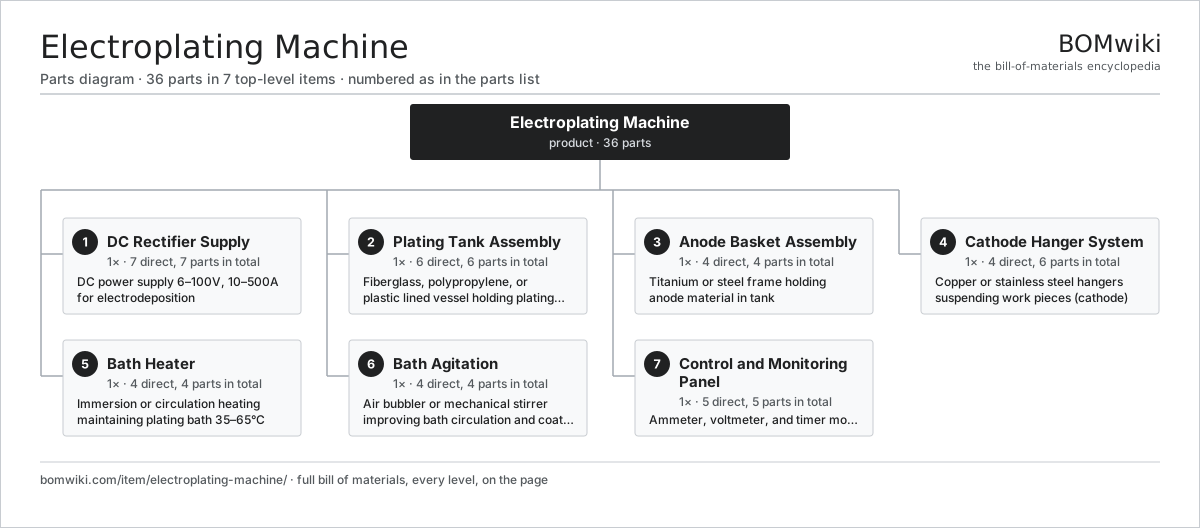
| # | Part | Qty | What it does |
|---|---|---|---|
| 1 | DC Rectifier Supply 7 parts | 1× | DC power supply 6–100V, 10–500A for electrodeposition |
| 2 | Plating Tank Assembly 6 parts | 1× | Fiberglass, polypropylene, or plastic lined vessel holding plating solution |
| 3 | Anode Basket Assembly 4 parts | 1× | Titanium or steel frame holding anode material in tank |
| 4 | Cathode Hanger System 4 parts | 1× | Copper or stainless steel hangers suspending work pieces (cathode) |
| 5 | Bath Heater 4 parts | 1× | Immersion or circulation heating maintaining plating bath 35–65°C |
| 6 | Bath Agitation 4 parts | 1× | Air bubbler or mechanical stirrer improving bath circulation and coating uniformity |
| 7 | Control and Monitoring Panel 5 parts | 1× | Ammeter, voltmeter, and timer monitoring plating parameters |
3D model
No 3D model yet. Have a CAD file of this? Add a 3D model. STL renders right on this page; STEP, FreeCAD, and OpenSCAD sources are welcome too (openly licensed, like all 3D models on BOMwiki).
Build & assembly graph
expand / collapse · shared sub-assemblies converge · links to related products · est. labourTap an assembly to expand/collapse · tap a part to open it · use “Open page” for any node · drag to pan, scroll to zoom.
Bill of materials for Electroplating Machine
7 top-level lines · 41 rows shown · 36 parts total · indented to 3 levels| # | Item / sub-assembly | Part no. | Qty/assy | Ext. qty | Parts | Type |
|---|---|---|---|---|---|---|
| 1 | DC Rectifier Supply 7 parts | electroplating-machine-rectifier | 1× | 1 | 7 | assembly |
| 1.1 | Step-Down Transformer | electroplating-machine-transformer | 1× | 1 | · | part |
| 1.2 | Rectifier Bridge Stack | electroplating-machine-rectifier-diodes | 1× | 1 | · | part |
| 1.3 | DC Filter Choke | electroplating-machine-filter-choke | 1× | 1 | · | part |
| 1.4 | Filter Capacitor | electroplating-machine-filter-cap | 1× | 1 | · | part |
| 1.5 | Ammeter Display | electroplating-machine-ammeter | 1× | 1 | · | part |
| 1.6 | Voltmeter Display | electroplating-machine-voltmeter | 1× | 1 | · | part |
| 1.7 | Current Control Rheostat | electroplating-machine-variable-resistor | 1× | 1 | · | part |
| 2 | Plating Tank Assembly 6 parts | electroplating-machine-plating-tank | 1× | 1 | 6 | assembly |
| 2.1 | Tank Structure | electroplating-machine-tank-body | 1× | 1 | · | part |
| 2.2 | Tank Interior Lining | electroplating-machine-tank-lining | 1× | 1 | · | part |
| 2.3 | Tank Overflow Standpipe | electroplating-machine-tank-overflow | 1× | 1 | · | part |
| 2.4 | Tank Partition Baffle | electroplating-machine-tank-baffle | 1× | 1 | · | part |
| 2.5 | Cathode Rail | electroplating-machine-cathode-rail | 1× | 1 | · | part |
| 2.6 | Anode Rail | electroplating-machine-anode-rail | 1× | 1 | · | part |
| 3 | Anode Basket Assembly 4 parts | electroplating-machine-anode-basket | 1× | 1 | 4 | assembly |
| 3.1 | Anode Basket Frame | electroplating-machine-anode-frame | 1× | 1 | · | part |
| 3.2 | Anode Plates | electroplating-machine-anode-material | 1× | 1 | · | part |
| 3.3 | Anode Containment Bag | electroplating-machine-anode-bag | 1× | 1 | · | part |
| 3.4 | Anode Electrical Connector | electroplating-machine-anode-connector | 1× | 1 | · | part |
| 4 | Cathode Hanger System 4 parts | electroplating-machine-cathode-hooks | 1× | 1 | 6 | assembly |
| 4.1 | Cathode Rail | electroplating-machine-cathode-rail | 1× | 1 | · | part |
| 4.2 | Individual Cathode Hook | electroplating-machine-cathode-hook | 3× | 3 | · | part |
| 4.3 | Cathode Clip Connector | electroplating-machine-cathode-clip | 1× | 1 | · | part |
| 4.4 | Hanger Insulation Sleeve | electroplating-machine-hanger-insulation | 1× | 1 | · | part |
| 5 | Bath Heater 4 parts | electroplating-machine-heater-system | 1× | 1 | 4 | assembly |
| 5.1 | Immersion Heater Element | electroplating-machine-immersion-heater | 1× | 1 | · | part |
| 5.2 | Temperature Sensor | electroplating-machine-temperature-sensor | 1× | 1 | · | part |
| 5.3 | Temperature Thermostat | electroplating-machine-thermostat | 1× | 1 | · | part |
| 5.4 | Heater Protective Guard | electroplating-machine-heater-guard | 1× | 1 | · | part |
| 6 | Bath Agitation 4 parts | electroplating-machine-agitation-system | 1× | 1 | 4 | assembly |
| 6.1 | Air Compressor | electroplating-machine-air-compressor | 1× | 1 | · | part |
| 6.2 | Air Pressure Regulator | electroplating-machine-air-regulator | 1× | 1 | · | part |
| 6.3 | Air Diffuser Stone | electroplating-machine-air-diffuser | 1× | 1 | · | part |
| 6.4 | Agitation Motor | electroplating-machine-agitation-motor | 1× | 1 | · | part |
| 7 | Control and Monitoring Panel 5 parts | electroplating-machine-control-panel | 1× | 1 | 5 | assembly |
| 7.1 | Electronic Timer | electroplating-machine-timer | 1× | 1 | · | part |
| 7.2 | Mode Selector Switch | electroplating-machine-selector-switch | 1× | 1 | · | part |
| 7.3 | Circuit Breaker | electroplating-machine-power-breaker | 1× | 1 | · | part |
| 7.4 | Contactor Relay | electroplating-machine-control-relay | 1× | 1 | · | part |
| 7.5 | Status Indicator Lights | electroplating-machine-status-lights | 1× | 1 | · | part |
Something wrong in this list? Report a problem with this BOM.
Sourcing: possible vendors
Browse the supplier directory → Prices, MOQ, and lead times are algorithmic estimates, not quotes, and not claims about these companies. Company mappings are curated by keyword; est. price band $5k–$2M. How estimates work| Vendor | HQ | Specialty | MOQ | Lead time |
|---|---|---|---|---|
| atlascopco.com ↗ | Stockholm, SE | Compressors & industrial | 10 units | 12–20 wks |
|
🇦🇹Andritz
andritz.com ↗
|
Graz, AT | Process plants & machinery | 10 units | 12–20 wks |
| buhlergroup.com ↗ | Uzwil, CH | Food & materials processing | 10 units | 12–20 wks |
| gea.com ↗ | Düsseldorf, DE | Process technology | 10 units | 12–20 wks |
| mhi.com ↗ | Tokyo, JP | Heavy machinery | 10 units | 12–20 wks |
1,407-word article