Embalming Table
ProductOverview
An embalming table is a specialized hydraulic-assisted work platform designed for the arterial injection, cavity treatment, and body preparation procedures that preserve and disinfect human remains prior to funeral viewing or cremation. Modern embalming tables combine surgical-grade stainless steel surfaces, integrated fluid management, and height adjustment to accommodate operators of different stature and reduce physical strain during extended procedures.
The table serves as the central work station in any funeral home or mortuary prep room. A typical facility maintains 1–3 embalming tables depending on volume; high-throughput crematories may have 5+. The table is used 5–10 times daily in active funeral homes, handling a variety of body conditions and complexities.
Key subsystems include the Table Top Assembly providing an ergonomic drainage-sloped work surface, the Drainage & Waste Collection passively collecting and pumping waste fluids, the Hydraulic/Electric Lift Base with height adjustment via Hydraulic Lift Cylinder, the Arterial Embalming Pump for arterial chemical injection, the Arterial Injection Lines for vessel access, and the Cavity Aspirator System for cavity evacuation and treatment.
How It Works
Preparation begins with the deceased placed supine on the Table Top Assembly. The operator adjusts table height using the Foot Control Pedal pedal to bring the work surface to comfortable elbow height. Positioning straps (Shoulder Restraint Strap, Pelvic Restraint Belt, Ankle Restraint Cuff) are fastened to prevent body shifting.
Arterial Injection Phase: The operator makes a small incision to access a major artery (typically femoral or carotid). The Arterial Trocar Cannula or Injection Needle is inserted into the vessel. Tubing from the Arterial Embalming Pump connects via the Arterial Injection Lines and Silicone Injection Tubing to the needle. The operator starts the pump at low flow (0.5 L/min) while monitoring the Pressure Gauge on the pump outlet. As the arterial system fills with embalming solution (formaldehyde-based, dyed for visualization), blanching of skin occurs and body tissues firm. Flow rate increases to 2–3 L/min once the system pressurizes. A parallel venous incision allows displaced blood and interstitial fluid to drain passively into the table. This phase typically lasts 20–40 minutes depending on body size and condition.
Cavity Treatment Phase: Once arterial injection is complete, the Cavity Aspirator System is activated. The operator uses the Aspiration Trocar Probe trocar to pierce body cavities (thoracic, abdominal, pelvic) and aspirate contents (blood, organ fluid, gas) into the Aspiration Waste Canister. Vacuum is maintained at 60–80 kPa by the Vacuum Regulator Valve. After aspiration, the operator injects cavity fluid (typically formaldehyde at lower concentration than arterial) using a second peristaltic pump circuit (in advanced tables) or by hand-syringe. The Canister Filter Element prevents aerosol escape during vacuum operation.
Drainage & Waste Handling: Throughout both phases, fluids (blood, interstitial fluid, embalming solution, aspirated cavity contents) drain via gravity through the Drainage Perforations on the Table Top Assembly into the Sump Basin Unit. When the sump fills, the Pump Float Switch automatically activates the Waste Evacuation Pump, which evacuates the sump through the Waste Hose Line into an external holding tank at 50–80 L/min. The Check Valve prevents back-siphon. This cycle repeats until procedure completion.
The table height can be dynamically adjusted via the Foot Control Pedal pedal, allowing the operator to work comfortably on different body regions without bending or over-reaching. The Hydraulic Lift Cylinder hydraulic system smoothly raises or lowers the table 600–900 mm range.
Surface & Contamination Control
The Table Top Assembly is seamless stainless steel (Grade 304L) with small perforations (3–5 mm diameter) distributed uniformly at 100 mm spacing. This design allows fluid to drain rapidly while preventing pooling. The perforated top is sloped at 2–3° toward the sump drain, ensuring gravity drainage. An Splash Guard Tubing welded around the perimeter contains splashes and directs fluid downward. Between procedures, the table is hosed down and disinfected (quaternary ammonia or bleach-based), and the sump is emptied and cleaned.
The Mechanical Shroud Skirt covers the hydraulic cylinders and plumbing underneath, simplifying cleaning and protecting mechanical components from contamination. All tubing (Silicone Injection Tubing) is replaced between procedures or between bodies if cross-contamination is a concern.
Hydraulic System & Ergonomics
The Hydraulic/Electric Lift Base contains a small hydraulic power unit with a Height-Adjust Pump (0.5–1 kW motor) pressurizing the Hydraulic Lift Cylinder pair at 2000–2500 psi. Pressure is manually set at installation and maintained constant; height adjustment is metered via spool valve. The Foot Control Pedal pedal operates a solenoid spool valve directing hydraulic oil to raise or lower the cylinders. An optional Wireless Remote Control allows remote height adjustment if the operator needs to move away from the table.
The hydraulic system is critical for operator ergonomics. Embalming procedures are physically demanding (standing, making precise incisions, controlling fluid flow) and repetitive; poor table height forces awkward posture and fatigue. Modern tables support 600–900 mm height range to accommodate operators from 150 cm to 190+ cm height. Hydraulic adjustment is smooth, load-holding (no drift), and responsive.
Fluid Injection Systems
The Arterial Embalming Pump is a peristaltic pump (not centrifugal) to preserve cellular integrity of embalming solutions, peristaltic pumps squeeze tubing gently without shearing. The pump motor is a AC or brushless DC design (1–2 kW) with variable-frequency drive (VFD) controlling speed and hence flow rate from 0.5–5 L/min. A Pressure Gauge on the pump outlet monitors back-pressure in the arterial tree; typical operating pressure is 100–150 kPa, with max cutoff at 200 kPa to prevent vessel rupture.
The Arterial Injection Lines distributes injection capability. Silicone tubing (food-grade, pharmaceutical-rated) connects the pump outlet to a series of Inline Ball Valve isolation valves. Operators can inject into the left and right carotid arteries simultaneously (via a Arterial Trocar Cannula) or alternate legs. Needle-switching (different gauges for different body areas) is quick; stainless Adjustable Hose Clamp hose clamps secure tubing at each junction.
Cavity System
The Cavity Aspirator System comprises a vacuum pump (rotary vane, 0.5–1.5 kW), a Vacuum Regulator Valve needle valve, and a Aspiration Waste Canister collection bottle. The operator opens the regulator and inserts the Aspiration Trocar Probe trocar into the body cavity, applying light suction (initially 50 kPa, increased to 80–100 kPa as cavities are cleared). The probe is withdrawn from each region once aspiration ceases (dry sound from trocar). The Canister Filter Element (HEPA or activated charcoal) captures aerosols and prevents particulates from reaching the vacuum pump motor, extending pump life.
After aspiration, cavity fluid (a lower-concentration formaldehyde solution mixed with dye and desiccant) is injected via hand-syringe or, in automated tables, a second peristaltic pump circuit dedicated to cavity injection.
Safety & Infection Control
Embalming tables must comply with OSHA bloodborne pathogen standards. All surfaces and tubing that contact body fluids are either disposable (injection needles, cannulas, tubing) or cleanable stainless/silicone. The Canister Filter Element in the aspirator system is critical for operator protection; it prevents infectious aerosols from escaping into the prep room air.
The Body Positioning & Restraints (straps) prevents body movement, which is important both for operator safety (preventing accidental contact with a shifting body) and for procedural accuracy (steady positioning ensures consistent arterial distribution).
Spill containment is critical. The Splash Guard Tubing and drain-sloped top prevent fluid from splashing onto the floor. The Sump Basin Unit and Waste Evacuation Pump auto-evacuation eliminate pooling. External waste holding tanks are sealed and transported for proper disposal via licensed medical waste handlers.
Maintenance & Longevity
Hydraulic fluid is filtered annually and topped up as needed. The Hydraulic Lift Cylinder seals are inspected for leakage; minor weeping is normal, but significant leakage requires seal replacement. The pump motor bearings are greased annually. Peristaltic pump tubing rollers wear over time (every 500–1000 injection procedures) and are replaced as a complete rotor assembly. The Waste Evacuation Pump impeller may clog with tissue or coagulated blood; periodic flushing or impeller replacement ensures reliability.
Stainless steel surfaces resist corrosion but can pit if exposed to chloride-based cleaners; neutral pH disinfectants (quaternary ammonia) are recommended. A well-maintained embalming table operates reliably for 10–15 years before major refurbishment or replacement.
Embalming Table parts and their functions
8 top-level parts · 62 parts in total · full bill of materials below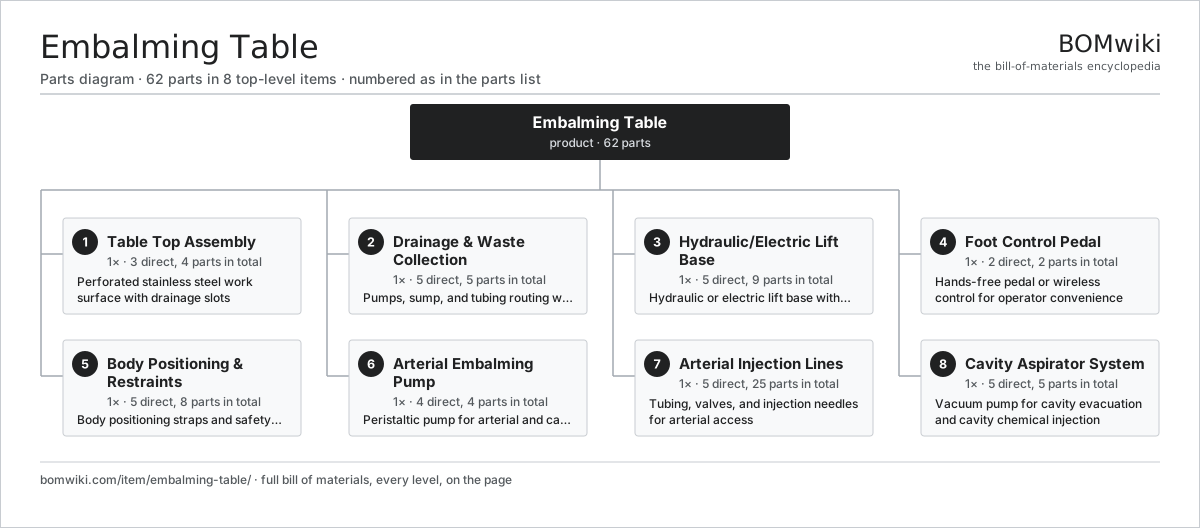
| # | Part | Qty | What it does |
|---|---|---|---|
| 1 | Table Top Assembly 3 parts | 1× | Perforated stainless steel work surface with drainage slots |
| 2 | Drainage & Waste Collection 5 parts | 1× | Pumps, sump, and tubing routing waste fluids to waste tank |
| 3 | Hydraulic/Electric Lift Base 5 parts | 1× | Hydraulic or electric lift base with height adjustment |
| 4 | Foot Control Pedal 2 parts | 1× | Hands-free pedal or wireless control for operator convenience |
| 5 | Body Positioning & Restraints 5 parts | 1× | Body positioning straps and safety arm supports |
| 6 | Arterial Embalming Pump 4 parts | 1× | Peristaltic pump for arterial and cavity chemical injection |
| 7 | Arterial Injection Lines 5 parts | 1× | Tubing, valves, and injection needles for arterial access |
| 8 | Cavity Aspirator System 5 parts | 1× | Vacuum pump for cavity evacuation and cavity chemical injection |
3D model
No 3D model yet. Have a CAD file of this? Add a 3D model. STL renders right on this page; STEP, FreeCAD, and OpenSCAD sources are welcome too (openly licensed, like all 3D models on BOMwiki).
Build & assembly graph
expand / collapse · shared sub-assemblies converge · links to related products · est. labourTap an assembly to expand/collapse · tap a part to open it · use “Open page” for any node · drag to pan, scroll to zoom.
Bill of materials for Embalming Table
8 top-level lines · 42 rows shown · 62 parts total · indented to 3 levels| # | Item / sub-assembly | Part no. | Qty/assy | Ext. qty | Parts | Type |
|---|---|---|---|---|---|---|
| 1 | Table Top Assembly 3 parts | embalming-table-top-assembly | 1× | 1 | 4 | assembly |
| 1.1 | Stainless Steel Table Top | embalming-table-top-sheet | 1× | 1 | · | part |
| 1.2 | Splash Guard Tubing | embalming-table-edge-guard | 2× | 2 | · | part |
| 1.3 | Drainage Perforations | embalming-table-drain-holes | 1× | 1 | · | part |
| 2 | Drainage & Waste Collection 5 parts | embalming-table-drainage-system | 1× | 1 | 5 | assembly |
| 2.1 | Sump Basin Unit | embalming-table-sump-basin | 1× | 1 | · | part |
| 2.2 | Waste Evacuation Pump | embalming-table-waste-pump | 1× | 1 | · | part |
| 2.3 | Pump Float Switch | embalming-table-pump-float-switch | 1× | 1 | · | part |
| 2.4 | Waste Hose Line | embalming-table-waste-line | 1× | 1 | · | part |
| 2.5 | Check Valve | embalming-table-check-valve | 1× | 1 | · | part |
| 3 | Hydraulic/Electric Lift Base 5 parts | embalming-table-frame-base | 1× | 1 | 9 | assembly |
| 3.1 | Height-Adjust Pump | embalming-table-hydraulic-pump | 1× | 1 | · | part |
| 3.2 | Hydraulic Lift Cylinder | embalming-table-lift-cylinder | 2× | 2 | · | part |
| 3.3 | Base Structural Frame | embalming-table-base-frame | 1× | 1 | · | part |
| 3.4 | Locking Caster Wheel | embalming-table-wheels | 4× | 4 | · | part |
| 3.5 | Mechanical Shroud Skirt | embalming-table-shroud-skirt | 1× | 1 | · | part |
| 4 | Foot Control Pedal 2 parts | embalming-table-foot-control | 1× | 1 | 2 | assembly |
| 4.1 | Foot Pedal Control | embalming-table-pedal-assembly | 1× | 1 | · | part |
| 4.2 | Wireless Remote Control | embalming-table-wireless-remote | 1× | 1 | · | part |
| 5 | Body Positioning & Restraints 5 parts | embalming-table-restraint-system | 1× | 1 | 8 | assembly |
| 5.1 | Shoulder Restraint Strap | embalming-table-shoulder-strap | 2× | 2 | · | part |
| 5.2 | Pelvic Restraint Belt | embalming-table-pelvic-strap | 1× | 1 | · | part |
| 5.3 | Ankle Restraint Cuff | embalming-table-ankle-strap | 2× | 2 | · | part |
| 5.4 | Arm Rest Support | embalming-table-arm-support | 2× | 2 | · | part |
| 5.5 | Head Support Cradle | embalming-table-head-cradle | 1× | 1 | · | part |
| 6 | Arterial Embalming Pump 4 parts | embalming-table-embalming-pump | 1× | 1 | 4 | assembly |
| 6.1 | Peristaltic Pump Motor | embalming-table-pump-motor | 1× | 1 | · | part |
| 6.2 | Peristaltic Pump Head | embalming-table-pump-head | 1× | 1 | · | part |
| 6.3 | Pressure Gauge | embalming-table-pressure-gauge | 1× | 1 | · | part |
| 6.4 | Flow Rate Meter | embalming-table-flow-meter | 1× | 1 | · | part |
| 7 | Arterial Injection Lines 5 parts | embalming-table-fluid-line-assembly | 1× | 1 | 25 | assembly |
| 7.1 | Silicone Injection Tubing | embalming-table-silicone-tubing | 10× | 10 | · | part |
| 7.2 | Adjustable Hose Clamp | embalming-table-brass-clamp | 6× | 6 | · | part |
| 7.3 | Inline Ball Valve | embalming-table-stop-cock-valve | 4× | 4 | · | part |
| 7.4 | Injection Needle | embalming-table-injection-needle | 4× | 4 | · | part |
| 7.5 | Arterial Trocar Cannula | embalming-table-arterial-cannula | 1× | 1 | · | part |
| 8 | Cavity Aspirator System 5 parts | embalming-table-aspirator-unit | 1× | 1 | 5 | assembly |
| 8.1 | Cavity Vacuum Pump | embalming-table-vacuum-pump | 1× | 1 | · | part |
| 8.2 | Vacuum Regulator Valve | embalming-table-vacuum-regulator | 1× | 1 | · | part |
| 8.3 | Aspiration Waste Canister | embalming-table-waste-canister | 1× | 1 | · | part |
| 8.4 | Canister Filter Element | embalming-table-canister-filter | 1× | 1 | · | part |
| 8.5 | Aspiration Trocar Probe | embalming-table-aspirator-probe | 1× | 1 | · | part |
Something wrong in this list? Report a problem with this BOM.
Sourcing: possible vendors
Browse the supplier directory → Prices, MOQ, and lead times are algorithmic estimates, not quotes, and not claims about these companies. Company mappings are curated by keyword; est. price band $5k–$2M. How estimates work| Vendor | HQ | Specialty | MOQ | Lead time |
|---|---|---|---|---|
| atlascopco.com ↗ | Stockholm, SE | Compressors & industrial | 10 units | 12–20 wks |
|
🇦🇹Andritz
andritz.com ↗
|
Graz, AT | Process plants & machinery | 10 units | 12–20 wks |
| buhlergroup.com ↗ | Uzwil, CH | Food & materials processing | 10 units | 12–20 wks |
| gea.com ↗ | Düsseldorf, DE | Process technology | 10 units | 12–20 wks |
| mhi.com ↗ | Tokyo, JP | Heavy machinery | 10 units | 12–20 wks |
1,438-word article