Crucible Furnace
ProductOverview
A crucible furnace is a metal melting furnace used in small-scale foundry work for casting bronze, aluminum, and sometimes iron. Unlike a cupola (which melts metal continuously at scale) or a reverberatory furnace (for large batch melting), a crucible furnace melts metal in a removable clay or ceramic pot (the crucible) held inside a heavily insulated chamber.
The Refractory Body is a steel shell lined with high-alumina ceramic brick. A gas burner or induction coil heats the crucible. Once the metal is molten and at pouring temperature (typically 2000–2300 °F), the entire furnace tilts via a tilt mechanism, pouring the molten metal into a waiting mold.
Crucible furnaces dominate small art foundries, jewelry casting, and specialty metalwork. They are affordable ($2,000–10,000 for quality units), reliable, and versatile across copper, bronze, aluminum, and some cast-iron work. The main limitation is crucible life, good crucibles last 20–50 meltings before degrading and requiring replacement.
Melting in Stages and Temperature Control
Metal melting in a crucible furnace follows a predictable profile. Cold metal is charged into the preheated crucible. As the burner fires and the flue draws hot gases around and above the crucible, temperature rises steadily.
The stages are:
- Preheat (room to 1000 °F): 10–15 minutes. Metal surface begins to oxidize.
- Melting (1000 to melting point): 15–30 minutes depending on metal and load. The surface first becomes a thick oxide layer (dross), then metal begins flowing. Vigorous steam rises as moisture and binders burn off.
- Soak (at or slightly above melting point): 5–10 minutes. Metal temperature stabilizes. The pyrometer guides the operator to the correct pouring temperature.
- Pouring: The lid is removed, dross is skimmed, and the furnace is tilted to pour.
Total time from cold start to pouring: typically 45–90 minutes depending on crucible size and burner power.
Temperature measurement is critical. Overheating (above 2400 °F for most alloys) causes excessive gas absorption, leading to porosity in castings and premature crucible failure. Underheating (below the correct pouring temperature) results in short, cold castings that don't fill the mold. A pyrometer provides safe, non-contact measurement, though experienced founders often judge temperature by color and sound.
The Crucible: Selection and Life
The crucible is the single most critical component. It is not a reusable vessel but a consumable good, rated for 20–50 uses before degrading. Selection depends on the metal being melted:
- Clay-graphite crucibles (#A, #B, #C): For bronze and copper alloys. Durable, inexpensive ($20–50). Typical life: 30–50 heats.
- Silicon-carbide crucibles (#SC, #SX): For aluminum and magnesium. Higher cost ($50–150) but longer life (50–100 heats) and better thermal shock resistance.
- Graphite crucibles: For precious metals and high-purity work. Expensive ($100–300) but clean and inert.
A crucible fails in one of two ways: spalling, where the inner surface flakes off (caused by thermal shock or moisture), and washing, where the crucible walls gradually thin as molten metal erodes them (inevitable with high-temperature and long-duration melts). Either way, metal starts seeping through the walls, and pouring becomes impossible.
Proper crucible care extends life: never quench a hot crucible in water, preheat the crucible before charging metal, and avoid rapid temperature swings. Storage in a dry place (not a humid foundry floor) prevents moisture absorption, which causes spalling when heated.
Gas Burner vs. Induction Heating
Gas Burner Models: A propane or natural-gas burner with an air blower is the traditional and most common approach. The fuel line and nozzle are simple, reliable, and inexpensive to operate ($5–10 per heat in fuel). The flame heats the brick lining, which in turn heats the crucible by radiation and convection. Heat-up is relatively slow (45–60 minutes) but steady.
Induction Models: An induction coil (copper tube carrying AC current at high frequency) surrounds the crucible. Eddy currents induced in the metal crucible and its contents generate heat directly within the metal, without flame or intermediate radiation. Heat-up is very fast (20–30 minutes), and temperature control is precise via frequency/power adjustment. Cost is higher ($5,000–15,000), and electrical consumption is significant (10–30 kW during melting), but cycle time is reduced dramatically. Induction is favored in high-volume production facilities and for precision work.
Tilting and Pouring
The tilting mechanism is the innovation that makes crucible furnaces practical. Manual tilt arms (lever-operated) work for crucibles up to ~50 lbs capacity. Larger furnaces use a hydraulic cylinder for smooth, controlled pouring at any speed.
The operator removes the lid and skims off dross (oxide layer) floating on the metal surface using a long-handled steel ladle or dross skimmer. The metal is now ready to pour. The furnace is tilted slowly (hydraulic) or via lever motion (manual), and metal flows out through the pouring port or an optional spout, into the waiting mold.
Controlling pour rate is crucial: pour too fast and the mold fills chaotically, trapping air; pour too slow and the metal cools before filling the mold. Experienced founders develop a feel for the correct speed.
Refractory and Maintenance
The brick lining is high-alumina ceramic (3000+ °F rated), rated far hotter than the furnace operating temperature (2000–2400 °F). This ensures years of service. However, the interior gradually spalls from thermal cycling and from contact with molten metal. After 500–1000 heat cycles (2–5 years of regular use), the lining becomes thin and heat loss increases. Complete relining, removing the old brick and installing new, is a major undertaking ($2,000–5,000) but extends furnace life another 5 years.
The flue and damper require occasional cleaning: ash and metal fumes accumulate, clogging the exhaust and reducing draft. A blockage causes back-pressure that disrupts melting and temperatures. Brushing out the flue annually prevents this.
The blower motor (for gas furnaces) and electrical components are sealed and require no maintenance beyond changing the motor bearings every 5–10 years if the furnace runs heavily.
Safety and Foundry Practice
Molten metal at 2200 °F is an extreme hazard. Any moisture or contamination causes violent explosions: a single water droplet on a crucible surface will vaporize explosively, ejecting molten metal. Foundries enforce strict protocols: all tools and surfaces are kept absolutely dry, the crucible is never allowed to contact wet floor or water-based coolants, and workers wear heat-resistant protective gear (leather apron, spats, gloves, face shield).
The crucible tongs are specialized tools with long handles (3–4 feet) that allow extraction of the hot crucible without approaching the furnace too closely. Many foundries use a double-crucible method: while metal melts in one crucible inside the furnace, a matching ''dummy'' crucible sits nearby, preheating. When the first melt is ready, the preheated crucible is swapped in (via tongs) for the next heat.
The furnace exhaust is hot (400–800 °F) and contains CO and SO₂ from combustion. Adequate venting to the outside is essential; enclosed foundries with poor draft experience worker illness and equipment degradation.
Casting Workflow
A typical day at a small bronze-casting foundry:
- Furnace is lit and brought to temperature (30–45 min preheat with no load).
- A crucible charged with scrap bronze is loaded into the furnace.
- First melt completes (45–60 min total). Crucible is extracted via tongs and poured into a waiting mold.
- The emptied crucible is returned to the furnace and removed (via dummy crucible swap), allowing the next charge.
- This cycle repeats 4–8 times per day depending on project size and pouring rate.
Small foundries might produce 50–200 lbs of finished castings per day with a single crucible furnace. Larger operations run multiple furnaces in parallel to increase throughput.
Historical Development and Alternatives
Crucible furnaces date to the Middle Ages and have remained fundamentally unchanged. The core innovation, using a removable ceramic pot inside an insulated furnace, is so elegant that no better small-scale melting method has displaced it. Modern furnaces differ mainly in burner efficiency (recuperators), induction options, and hydraulic tilt systems, but the principle is 600+ years old.
Alternatives like electric-resistance furnaces (simple but slow), reverberatory furnaces (large-scale), and cupolas (continuous melting) exist, but each has different economics. For small art foundries and specialty shops, the crucible furnace remains the standard.
Crucible Furnace parts and their functions
8 top-level parts · 37 parts in total · full bill of materials below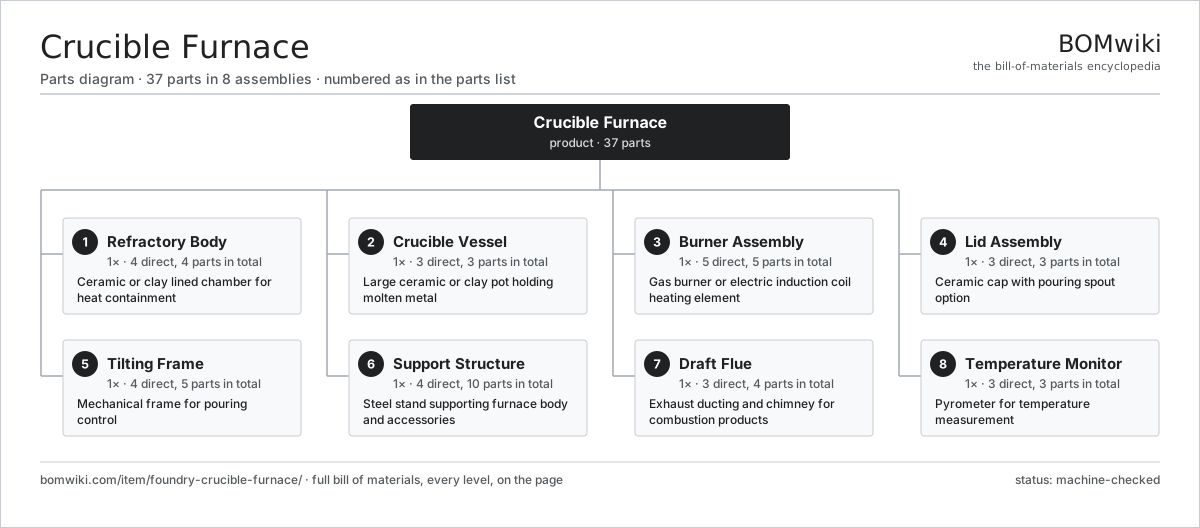
| # | Part | Qty | What it does |
|---|---|---|---|
| 1 | Refractory Body 4 parts | 1× | Ceramic or clay lined chamber for heat containment |
| 2 | Crucible Vessel 3 parts | 1× | Large ceramic or clay pot holding molten metal |
| 3 | Burner Assembly 5 parts | 1× | Gas burner or electric induction coil heating element |
| 4 | Lid Assembly 3 parts | 1× | Ceramic cap with pouring spout option |
| 5 | Tilting Frame 4 parts | 1× | Mechanical frame for pouring control |
| 6 | Support Structure 4 parts | 1× | Steel stand supporting furnace body and accessories |
| 7 | Draft Flue 3 parts | 1× | Exhaust ducting and chimney for combustion products |
| 8 | Temperature Monitor 3 parts | 1× | Pyrometer for temperature measurement |
3D model
No 3D model yet. Have a CAD file of this? Add a 3D model — STL renders right on this page; STEP, FreeCAD, and OpenSCAD sources are welcome too (openly licensed, like all 3D models on BOMwiki).
Build & assembly graph
expand / collapse · shared sub-assemblies converge · links to related products · est. labourTap an assembly to expand/collapse · tap a part to open it · use “Open page” for any node · drag to pan, scroll to zoom.
Bill of materials for Crucible Furnace
8 top-level lines · 37 rows shown · 37 parts total · indented to 3 levels| # | Item / sub-assembly | Part no. | Qty/assy | Ext. qty | Parts | Type |
|---|---|---|---|---|---|---|
| 1 | Refractory Body 4 parts | foundry-crucible-furnace-refractory-body | 1× | 1 | 4 | assembly |
| 1.1 | Outer Shell | foundry-crucible-furnace-outer-shell | 1× | 1 | · | part |
| 1.2 | Brick Lining | foundry-crucible-furnace-brick-lining | 1× | 1 | · | part |
| 1.3 | Insulation Wrap | foundry-crucible-furnace-insulation-wrap | 1× | 1 | · | part |
| 1.4 | Pouring Port | foundry-crucible-furnace-pouring-port | 1× | 1 | · | part |
| 2 | Crucible Vessel 3 parts | foundry-crucible-furnace-crucible-vessel | 1× | 1 | 3 | assembly |
| 2.1 | Crucible Pot | foundry-crucible-furnace-crucible-pot | 1× | 1 | · | part |
| 2.2 | Crucible Grate | foundry-crucible-furnace-crucible-grate | 1× | 1 | · | part |
| 2.3 | Crucible Tongs | foundry-crucible-furnace-crucible-tongs | 1× | 1 | · | part |
| 3 | Burner Assembly 5 parts | foundry-crucible-furnace-burner-assembly | 1× | 1 | 5 | assembly |
| 3.1 | Burner Nozzle | foundry-crucible-furnace-burner-nozzle | 1× | 1 | · | part |
| 3.2 | Fuel Line | foundry-crucible-furnace-fuel-line | 1× | 1 | · | part |
| 3.3 | Air Blower | foundry-crucible-furnace-air-blower | 1× | 1 | · | part |
| 3.4 | Igniter | foundry-crucible-furnace-igniter | 1× | 1 | · | part |
| 3.5 | Induction Coil | foundry-crucible-furnace-induction-coil | 1× | 1 | · | part |
| 4 | Lid Assembly 3 parts | foundry-crucible-furnace-lid-assembly | 1× | 1 | 3 | assembly |
| 4.1 | Lid Dome | foundry-crucible-furnace-lid-dome | 1× | 1 | · | part |
| 4.2 | Lid Handle | foundry-crucible-furnace-lid-handle | 1× | 1 | · | part |
| 4.3 | Pouring Spout | foundry-crucible-furnace-pouring-spout-option | 1× | 1 | · | part |
| 5 | Tilting Frame 4 parts | foundry-crucible-furnace-tilting-frame | 1× | 1 | 5 | assembly |
| 5.1 | Tilt Arm | foundry-crucible-furnace-tilt-arm | 2× | 2 | · | part |
| 5.2 | Tilt Pivot | foundry-crucible-furnace-tilt-pivot | 1× | 1 | · | part |
| 5.3 | Tilt Lock | foundry-crucible-furnace-tilt-lock | 1× | 1 | · | part |
| 5.4 | Hydraulic Tilt Option | foundry-crucible-furnace-hydraulic-option | 1× | 1 | · | part |
| 6 | Support Structure 4 parts | foundry-crucible-furnace-support-structure | 1× | 1 | 10 | assembly |
| 6.1 | Base Frame | foundry-crucible-furnace-base-frame | 1× | 1 | · | part |
| 6.2 | Legs | foundry-crucible-furnace-legs | 4× | 4 | · | part |
| 6.3 | Vibration Pads | foundry-crucible-furnace-vibration-pads | 4× | 4 | · | part |
| 6.4 | Fastener Set | fastener-set | 1× | 1 | · | part |
| 7 | Draft Flue 3 parts | foundry-crucible-furnace-draft-flue | 1× | 1 | 4 | assembly |
| 7.1 | Flue Pipe | foundry-crucible-furnace-flue-pipe | 2× | 2 | · | part |
| 7.2 | Damper | foundry-crucible-furnace-damper | 1× | 1 | · | part |
| 7.3 | Chimney Stack | foundry-crucible-furnace-chimney-stack | 1× | 1 | · | part |
| 8 | Temperature Monitor 3 parts | foundry-crucible-furnace-temperature-monitor | 1× | 1 | 3 | assembly |
| 8.1 | Optical Pyrometer | foundry-crucible-furnace-optical-pyrometer | 1× | 1 | · | part |
| 8.2 | Thermocouple Probe | foundry-crucible-furnace-thermocouple-option | 1× | 1 | · | part |
| 8.3 | Display Unit | foundry-crucible-furnace-display | 1× | 1 | · | part |
Sourcing: possible vendors
Prices, MOQ, and lead times are algorithmic estimates, not quotes, and not claims about these companies. Company mappings are curated by keyword; est. price band $5k–$2M. How estimates work| Vendor | HQ | Specialty | MOQ | Lead time |
|---|---|---|---|---|
| atlascopco.com ↗ | Stockholm, SE | Compressors & industrial | 10 units | 12–20 wks |
|
🇦🇹Andritz
andritz.com ↗
|
Graz, AT | Process plants & machinery | 10 units | 12–20 wks |
| buhlergroup.com ↗ | Uzwil, CH | Food & materials processing | 10 units | 12–20 wks |
| gea.com ↗ | Düsseldorf, DE | Process technology | 10 units | 12–20 wks |
| mhi.com ↗ | Tokyo, JP | Heavy machinery | 10 units | 12–20 wks |
1,531-word article