Four-Sided Moulder
ProductOverview
A four-sided moulder (also called a four-square or four-sided planer) is an industrial woodworking machine that simultaneously shapes all four faces of rectangular stock in a single pass. Four independent spindle heads (top, bottom, left, right) each remove material at controlled depth, transforming rough sawn or planed lumber into precision-profiled finished stock.
Four-sided moulders are essential in furniture manufacturing, millwork, and door/window production: creating custom profiles for frames, trim, architectural molding, and structural components. A single pass achieves finishes requiring 3–4 separate machining steps on traditional equipment (planer + moulder + edge router).
Four Spindle System
Top and Bottom Spindles
The top and bottom spindles each carry 11 kW motors (6000 rpm nominal) and cutter blocks that face the broad faces of the stock (top and bottom surfaces). Running at high speed, they remove the most material.
Typical top cutter profile: Bead, ogee, or flat face (no profile, simply planed flat).
Typical bottom cutter profile: Mirror image of top (for symmetric molding) or flat planing cut.
Depth of cut: Top spindle removes 1–3 mm; bottom spindle removes 0–2 mm (often shallow or flatted). Independent depth control via spindle height adjustment (mechanical or pneumatic).
Left and Right Spindles
The left and right spindles carry 7.5 kW motors each, profile-cutting the side faces. Typical operations:
Straight rounding: 3–5 mm radius roundover on all four edges.
Complex molding: Beading, fluting, or decorative profile along edges.
Mortise or tenon cuts: Shaping tenon shoulders or mortise perimeter on end grain (specialized setups).
Depth of cut: Left/right spindles typically remove 0.5–2 mm per side, less aggressive than top/bottom due to grain orientation (side cuts often run across grain).
Feed System
The motorized feed system propels stock through all four spindle zones at controlled speed:
Top and bottom pressure rollers: Rubberized rollers pressing downward on stock top face, supporting weight and ensuring uniform grain direction through bottom cutter.
Side pressure bars: Cast iron pressure bars on left/right, preventing stock lateral movement and ensuring straight feed.
Feed motor: 15 kW motor drives the entire roller assembly via helical gearbox (20:1 reduction). Speed 10–60 m/min variable; operator selects based on wood species and profile complexity.
Speed optimization:
- Fast feed (40–60 m/min): Softwood (pine, fir), simple profiles (flat planing).
- Medium feed (20–40 m/min): Hardwood (oak, maple), complex molding.
- Slow feed (10–20 m/min): Figured hardwood (cherry, walnut), premium finishes.
Spindle Height Adjustment
Each spindle position (top, bottom, left, right) includes independent height adjustment mechanisms, typically:
Mechanical adjusters: Handwheels or levers manually positioning spindles. Slower but precise for experienced operators.
Hydraulic/pneumatic cylinders: Rapid spindle positioning via PLC control. Preset profile setups enable single-button spindle configuration (reduces setup time from 30 min to 5 min).
Linear transducers (optional): Measure spindle position feedback to ±0.1 mm, enabling automatic depth control during production runs.
Table and Support System
Infeed Table
A precision-ground cast iron table (2000 × 300 mm) leads stock into the machine. Rollers support long stock without sagging; adjustable fence aligns stock vertically.
Outfeed Table
An extended table (3000 × 300 mm) supports finished stock exiting all spindle zones, preventing deflection and protecting the cutter profiles.
Production Workflow
Setup
- Stock selection: Measure incoming board (width, thickness); verify within machine range.
- Spindle configuration: Select profile template or manually adjust spindle heights:
- Top spindle: 2 mm depth, beading profile
- Bottom spindle: flat (0 mm depth)
- Left/right spindles: 3 mm radius roundover, 1.5 mm depth
- Feed speed: Dial in appropriate speed (25 m/min hardwood standard).
- Spindle warm-up: Run empty (no load) for 30 seconds to stabilize spindle temperature.
Cutting Run
- Feed stock: Operator positions board at infeed table; engage feed motor.
- Continuous cutting: Stock advances through all four spindle zones (~2–3 seconds transit time for 2-meter board at 40 m/min).
- Automatic exit: Stock exits onto outfeed table, completing the pass.
- Quality check: Inspect profile surface finish; adjust spindle depth if tearout visible.
Production example: Profiling 2-meter hardwood boards (100 mm width, 25 mm thickness) at 25 m/min: ~3 minutes per 20-meter batch (6–7 boards) = 120 linear meters/hour = 6 complete door frames per hour (if frame=20 m total).
Spindle Brake
Each spindle includes an electromagnetic brake stopping rotation within 3 seconds of power shutoff, essential safety feature per CE standards.
Dust Collection
Integrated shrouds around all four spindle zones collect wood chips. Central vacuum port (2–4 kW blower typical) exhausts chips to baghouse. Integrated dust collection is mandatory for operator health (fine dust from four simultaneous cuts is substantial).
Applications
Custom Molding Production
Doors, frames, baseboard, crown molding. One profile per spindle set satisfies 95% of millwork demand. Short setup time (10–15 min) for profile changes enables 3–4 different profiles per shift.
Structural Elements
Glulam beams (laminated beams) require straight planing + edge rounding. Four-sided moulder performs both in single pass, reducing scrap and labor.
Furniture Components
Stair parts (treads, risers, railings), chair seats, cabinet face frames. Custom profiles differentiate furniture; four-sided moulder allows rapid profiling at scale.
Specialty Profiles
Curved or angled profiles (e.g., beveled window trim at 45°) require spindle tilt jigs, custom tooling, but expands application scope beyond standard rectangular molding.
Spindle Speed Selection
High speed (5000–6000 rpm):
- Fine finishes (low tearout risk).
- Softwood (pine, spruce) avoiding fuzzing.
- Typical industrial standard.
Medium speed (3000–4000 rpm):
- Figured hardwood (cherry, walnut) across-grain cuts.
- Reduces chatter vibration on complex profiles.
Low speed (<2000 rpm):
- Exotic hardwoods (teak, ebony) with extreme fineness.
- Custom deep profiles (>10 mm depth).
Spindle speed affects both cutter tooth frequency and vibration: higher speed = higher tooth frequency = finer finish but higher noise and power demand. Optimal speed is material-specific (typically 50–80 m/sec surface speed at cutter tip).
Maintenance
Daily:
- Inspect cutter blocks for dull or chipped teeth (replace if >10% area worn).
- Clear wood dust from spindle shrouds and pressure rollers.
- Verify feed roller pressure (should press firmly on stock without marring).
Weekly:
- Sharpen or replace dull cutter blocks (professional service, ~$200–400 per block).
- Clean pressure bar surfaces (eraser or soft brush); verify flatness.
- Recalibrate digital depth displays.
Monthly:
- Inspect spindle bearings for noise or grinding (replace if worn).
- Clean and re-grease feed motor gearbox.
- Test spindle brake engagement time (<3 seconds).
Annually:
- Overhaul spindle cartridge bearings and seals.
- Replace worn feed rollers if causing slipping or marring.
- Recalibrate PLC spindle speed sensor.
Limitations
Four-sided moulders excel at uniform rectangular stock. Warped or cupped lumber doesn't engage all spindles uniformly; skipped cutting results. Pre-surfacing on a conventional planer is recommended. Very wide stock (>250 mm) exceeds standard spindle reach; custom-built extended-range machines available at premium cost.
Curved surfaces (rounded cabinet doors, molded architectural elements with non-rectangular cross-section) exceed milling capability. Non-through-profile (e.g., mortise on end grain visible from one side only) requires custom spindle positioning, increasing setup complexity.
Specialty operations (inlay grooves, stopped cuts, tapered molding) typically require secondary hand-routing or CNC. The machine is optimized for full-through profiling of uniform stock.
Four-Sided Moulder parts and their functions
10 top-level parts · 59 parts in total · full bill of materials below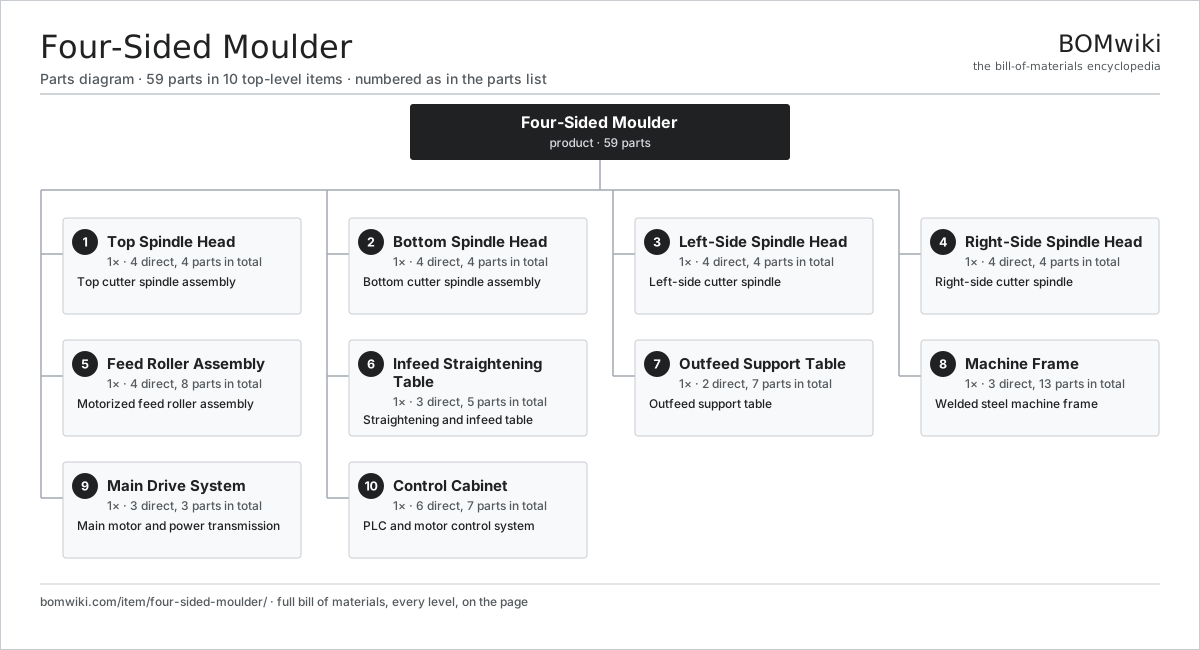
| # | Part | Qty | What it does |
|---|---|---|---|
| 1 | Top Spindle Head 4 parts | 1× | Top cutter spindle assembly |
| 2 | Bottom Spindle Head 4 parts | 1× | Bottom cutter spindle assembly |
| 3 | Left-Side Spindle Head 4 parts | 1× | Left-side cutter spindle |
| 4 | Right-Side Spindle Head 4 parts | 1× | Right-side cutter spindle |
| 5 | Feed Roller Assembly 4 parts | 1× | Motorized feed roller assembly |
| 6 | Infeed Straightening Table 3 parts | 1× | Straightening and infeed table |
| 7 | Outfeed Support Table 2 parts | 1× | Outfeed support table |
| 8 | Machine Frame 3 parts | 1× | Welded steel machine frame |
| 9 | Main Drive System 3 parts | 1× | Main motor and power transmission |
| 10 | Control Cabinet 6 parts | 1× | PLC and motor control system |
3D model
No 3D model yet. Have a CAD file of this? Add a 3D model. STL renders right on this page; STEP, FreeCAD, and OpenSCAD sources are welcome too (openly licensed, like all 3D models on BOMwiki).
Build & assembly graph
expand / collapse · shared sub-assemblies converge · links to related products · est. labourTap an assembly to expand/collapse · tap a part to open it · use “Open page” for any node · drag to pan, scroll to zoom.
Bill of materials for Four-Sided Moulder
10 top-level lines · 47 rows shown · 59 parts total · indented to 3 levels| # | Item / sub-assembly | Part no. | Qty/assy | Ext. qty | Parts | Type |
|---|---|---|---|---|---|---|
| 1 | Top Spindle Head 4 parts | four-sided-moulder-top-spindle | 1× | 1 | 4 | assembly |
| 1.1 | Top Motor | four-sided-moulder-top-motor | 1× | 1 | · | part |
| 1.2 | Top Cutter | four-sided-moulder-top-cutter-block | 1× | 1 | · | part |
| 1.3 | Spindle Bearings | four-sided-moulder-spindle-bearing-set | 1× | 1 | · | part |
| 1.4 | Top Hood | four-sided-moulder-top-dust-hood | 1× | 1 | · | part |
| 2 | Bottom Spindle Head 4 parts | four-sided-moulder-bottom-spindle | 1× | 1 | 4 | assembly |
| 2.1 | Bottom Motor | four-sided-moulder-bottom-motor | 1× | 1 | · | part |
| 2.2 | Bottom Cutter | four-sided-moulder-bottom-cutter-block | 1× | 1 | · | part |
| 2.3 | Bottom Bearings | four-sided-moulder-bottom-bearing | 1× | 1 | · | part |
| 2.4 | Bottom Hood | four-sided-moulder-bottom-dust-hood | 1× | 1 | · | part |
| 3 | Left-Side Spindle Head 4 parts | four-sided-moulder-left-spindle | 1× | 1 | 4 | assembly |
| 3.1 | Left Motor | four-sided-moulder-left-motor | 1× | 1 | · | part |
| 3.2 | Left Cutter | four-sided-moulder-left-cutter-block | 1× | 1 | · | part |
| 3.3 | Left Bearings | four-sided-moulder-left-bearing | 1× | 1 | · | part |
| 3.4 | Left Hood | four-sided-moulder-left-dust-hood | 1× | 1 | · | part |
| 4 | Right-Side Spindle Head 4 parts | four-sided-moulder-right-spindle | 1× | 1 | 4 | assembly |
| 4.1 | Right Motor | four-sided-moulder-right-motor | 1× | 1 | · | part |
| 4.2 | Right Cutter | four-sided-moulder-right-cutter-block | 1× | 1 | · | part |
| 4.3 | Right Bearings | four-sided-moulder-right-bearing | 1× | 1 | · | part |
| 4.4 | Right Hood | four-sided-moulder-right-dust-hood | 1× | 1 | · | part |
| 5 | Feed Roller Assembly 4 parts | four-sided-moulder-feed-roller-system | 1× | 1 | 8 | assembly |
| 5.1 | Feed Roller | four-sided-moulder-feed-roller | 4× | 4 | · | part |
| 5.2 | Feed Motor | four-sided-moulder-feed-motor | 1× | 1 | · | part |
| 5.3 | Feed Gearbox | four-sided-moulder-feed-gearbox | 1× | 1 | · | part |
| 5.4 | Pressure Bar | four-sided-moulder-infeed-pressure-bar | 2× | 2 | · | part |
| 6 | Infeed Straightening Table 3 parts | four-sided-moulder-infeed-table | 1× | 1 | 5 | assembly |
| 6.1 | Infeed Table | four-sided-moulder-infeed-table-plate | 1× | 1 | · | part |
| 6.2 | Infeed Roller | four-sided-moulder-infeed-rollers | 3× | 3 | · | part |
| 6.3 | Fence Adjuster | four-sided-moulder-fence-adjuster | 1× | 1 | · | part |
| 7 | Outfeed Support Table 2 parts | four-sided-moulder-outfeed-table | 1× | 1 | 7 | assembly |
| 7.1 | Outfeed Table | four-sided-moulder-outfeed-table-plate | 1× | 1 | · | part |
| 7.2 | Outfeed Roller | four-sided-moulder-outfeed-rollers | 6× | 6 | · | part |
| 8 | Machine Frame 3 parts | four-sided-moulder-frame | 1× | 1 | 13 | assembly |
| 8.1 | Main Beam | four-sided-moulder-main-beam | 4× | 4 | · | part |
| 8.2 | Base Casting | four-sided-moulder-base-casting | 1× | 1 | · | part |
| 8.3 | Isolator | four-sided-moulder-vibration-isolators | 8× | 8 | · | part |
| 9 | Main Drive System 3 parts | four-sided-moulder-drive-system | 1× | 1 | 3 | assembly |
| 9.1 | Main Motor | four-sided-moulder-main-motor | 1× | 1 | · | part |
| 9.2 | Pulley System | four-sided-moulder-pulley-system | 1× | 1 | · | part |
| 9.3 | Belt Guard | four-sided-moulder-belt-guard | 1× | 1 | · | part |
| 10 | Control Cabinet 6 parts | four-sided-moulder-control-cabinet | 1× | 1 | 7 | assembly |
| 10.1 | PLC | four-sided-moulder-plc | 1× | 1 | · | part |
| 10.2 | Top VFD | four-sided-moulder-top-vfd | 1× | 1 | · | part |
| 10.3 | Side VFD | four-sided-moulder-side-vfd | 2× | 2 | · | part |
| 10.4 | Bottom VFD | four-sided-moulder-bottom-vfd | 1× | 1 | · | part |
| 10.5 | Feed VFD | four-sided-moulder-feed-vfd | 1× | 1 | · | part |
| 10.6 | HMI Display | four-sided-moulder-hmi | 1× | 1 | · | part |
Something wrong in this list? Report a problem with this BOM.
Sourcing: possible vendors
Browse the supplier directory → Prices, MOQ, and lead times are algorithmic estimates, not quotes, and not claims about these companies. Company mappings are curated by keyword; est. price band $5k–$2M. How estimates work| Vendor | HQ | Specialty | MOQ | Lead time |
|---|---|---|---|---|
| atlascopco.com ↗ | Stockholm, SE | Compressors & industrial | 10 units | 12–20 wks |
|
🇦🇹Andritz
andritz.com ↗
|
Graz, AT | Process plants & machinery | 10 units | 12–20 wks |
| buhlergroup.com ↗ | Uzwil, CH | Food & materials processing | 10 units | 12–20 wks |
| gea.com ↗ | Düsseldorf, DE | Process technology | 10 units | 12–20 wks |
| mhi.com ↗ | Tokyo, JP | Heavy machinery | 10 units | 12–20 wks |
1,255-word article