Grain Vacuum
ProductOverview
A grain vacuum is a suction-based harvester that extracts loose, dry grain or seeds from standing crops using a centrifugal blower. The machine combines air-handling and cyclone separation in a compact package: a pickup header creates air turbulence to lift grain from the plant canopy, a suction hose conveys the grain-air mixture to a cyclone separator where centrifugal force isolates grain from air, and a discharge system delivers clean grain into a transport bin or onboard hopper.
Grain vacuums are used for harvesting small grains (wheat, barley, oats), seeds (canola, sunflower, safflower), and pulses (lentils, chickpeas, beans), as well as specialty crops like medicinal herbs and spice seeds. They excel in difficult harvest conditions, high moisture crops, late-harvested material with natural shattering, or crops with poor combine separating characteristics.
Unlike combines, which are designed for bulk grain with aggressive mechanical threshing, vacuums rely on gentle suction and air transport, minimizing grain damage and bruising. This is advantageous for seed crops (which must remain viable) and malting grains (which require intact germination).
How it works
Air Generation: The onboard or PTO-driven engine powers a centrifugal blower fan. As the impeller rotates at 2400–3600 rpm, it draws air into the volute housing and compresses it into two streams:
- Suction side (upstream of impeller): 0.6–0.8 bar below atmospheric pressure (partial vacuum).
- Discharge side (downstream): 0.3–0.5 bar above atmospheric pressure.
Grain Pickup: The operator positions the pickup header at or below crop cutting height. Pickup Fingers rotating at 300–500 rpm agitate the crop, creating air disturbance. The suction pulls loose grain and light chaff from standing plants into the Header Tube. A Cutterbar cuts standing crop at 50–100 mm height, ensuring clean harvest and minimal stubble.
Transport to Separator: The grain-air mixture travels through a Suction Hose (typically 75–100 mm diameter, 10 m long) under vacuum at 0.6–0.8 bar. As grain and air move, the kinetic energy allows air to carry grain particles without compression. A temporary Inlet Screen (6 mm mesh openings) removes large straw chunks before the mixture enters the cyclone.
Cyclone Separation: The grain-air mixture enters the Cyclone Separator tangentially, creating a vortex. Centrifugal force throws heavier grain particles outward and downward toward the hopper; lighter air and chaff exit upward and out the top. Separation efficiency exceeds 98% for most grain crops.
Grain accumulates in the Cyclone Hopper at the cyclone base. An Overflow Gate check valve prevents grain backup into the suction line if the hopper fills. Typical hopper residence time is 2–5 seconds before discharge.
Discharge: From the hopper, grain falls by gravity through a Discharge Gate (hand-operated or solenoid-controlled) into the discharge tube. The tube, sized 75–100 mm diameter and 5–15 m long, directs grain toward a waiting transport bin. On the discharge side, blower back-pressure (0.3–0.5 bar) aids grain flow and helps convey material up vertical discharge runs if needed.
Air Exhaust: Clean air exiting the top of the cyclone passes through a final air filter (cartridge or bag type) to remove fine dust before venting to atmosphere. Modern designs often include a fan or cyclone-type air filter to prevent dust nuisance.
Operational Workflow
Pre-Harvest Setup:
- Load the grain vacuum onto the tractor three-point linkage or position as self-propelled unit.
- Attach the pickup header at the correct height (50–100 mm above ground for standing grain).
- Connect suction hose from header to cyclone inlet.
- Position discharge hose and extend toward the first grain bin or cart.
- Check all air connections for tight seals (leaks reduce suction efficiency).
Harvest Pass:
- Operator engages PTO (if tractor-driven) or starts onboard engine.
- Throttle is set to maintain blower at rated speed (typically full throttle for maximum suction).
- Pickup finger motor is engaged to begin grain agitation.
- Tractor is driven forward at 4–8 km/h; grain enters suction header and is transported to cyclone.
- Operator monitors discharge gate position and grain flow; opens gate to allow grain discharge into bin.
Hopper Management:
- If using onboard tank (optional Tank Assembly (Optional)), cyclone hopper drains to the tank.
- Tank fills to capacity in 15–30 minutes depending on crop density and speed.
- Operator parks over next bin, opens the tank drain gate, and gravity-discharges into the bin.
- Process repeats; tank is refilled from the field in next harvest pass.
Cleanup: At day end, the cyclone hopper is emptied and cleaned. Any remaining grain in the hose is blown out by running the blower dry for 30–60 seconds.
Grain Handling Characteristics
Wheat & Barley: Standard small grains; vacuums handle moisture content up to 20% without performance loss. Harvest efficiency 95–98%.
Canola: Highly volatile seeds prone to shattering; gentle suction (80% blower fan speed) reduces seed loss. Vacuum suits canola better than combines for late-harvested crops.
Lentils & Chickpeas: Dense seeds; require higher blower power (full fan speed) but excellent harvest efficiency (>98%) due to spherical grain shape that rolls easily in cyclone.
Sunflower: Large seed; pickup header must be sized appropriately (wider spacing between fingers). Discharge hose diameter 100 mm prevents blockage.
Herbs & Spices: Small seeds (1–5 mm); fine chaff often exits with grain, requiring secondary cleaning. Extra air filtration helps minimize dust.
Suction vs. Pressure Discharge
The design described uses suction on the pickup side and gravity discharge on the grain side. This is the most common configuration for small to medium operators.
An alternative pressure discharge system (rare) uses the discharge side of the blower to propel grain through tubing to elevated bins. Pressure discharge requires:
- Enclosed discharge tube (pressurized to +0.3 bar).
- Increased blower power (20–30% higher than suction-only design).
- Grain pipe design to prevent blockage (gradual bends, minimum 75 mm diameter).
Advantages: Can discharge grain vertically 10+ m high; useful for bins elevated on stands. Disadvantages: higher power consumption, grain heating (air friction), more complex seals.
Maintenance & Troubleshooting
Reduced Suction: Indicates filter clogging or hose leaks. Check Inlet Screen for accumulation (clean every 50–100 acres). Inspect suction hose for cracks, splits, or loose clamps (listen for hissing air). Verify blower fan speed (may be reduced due to engine load or belt slip).
Grain Backup into Suction Hose: Cyclone hopper is overfull, preventing gravity drainage. Check Overflow Gate for sticking (should pop open at ~100 mbar). Empty hopper immediately; reduce harvest speed.
Chaff in Discharged Grain: Cyclone separation efficiency is low, usually due to:
- High crop moisture (>25%); wait for further drying.
- Fan speed too low; increase throttle.
- Inlet screen clogged; clean screen and inspect for gaps.
- Grain-air mixture velocity in suction hose too low; check for hose kinks or leaks.
Engine Overload: Blower is working too hard, possibly due to wet grain or excessive chaff. Reduce ground speed by 20–30%, allowing more time for separation in the cyclone. Check fuel quality and spark plug condition.
Pickup Failure: Fingers are not rotating or rotating slowly. Check finger motor clutch engagement (if belt-driven). Verify electric or hydraulic supply. Inspect fingers for breakage or debris jamming.
Hose Blockage: Large straw chunks blocking discharge hose. The Inlet Screen should prevent this, but it may be damaged or clogged. Stop immediately; remove discharge hose, clear blockage, and inspect screen.
Operational Economics
A typical grain vacuum costs $35,000–60,000 new (PTO-driven) or $100,000–150,000 (self-propelled with onboard tank). Operating cost is approximately $15–25 per hour for fuel, labor, and maintenance.
Productivity varies by crop and conditions:
- Wheat (moderate density): 10–20 acres/hour (5–8 km/h × 2.0 m header).
- Canola (sparse): 15–25 acres/hour (slightly faster passes due to lower resistance).
- Lentils (dense): 8–12 acres/hour (higher grain load reduces speed; more frequent bin changes).
Economic justification depends on crop value. Vacuums are economical for:
- High-value seed crops (value >$1000/acre).
- Difficult-harvest situations (late-harvested crops, high moisture, poor separation).
- Niche crops (specialty seeds, herbs) where gentle handling preserves seed viability.
For bulk commodity grains at $200–300/acre, vacuum economics are marginal unless harvest conditions are poor or crop characteristics require gentle handling.
Variations & Accessories
Pickup Header Types:
- Finger pickup: Standard, uses rotating fingers to agitate crop (described here).
- Brush pickup: Softer brushes instead of fingers; used for fragile seeds or herbs.
- Platform pickup: Broad flat surface with vacuum; used for crops already partially dry.
Discharge Arrangements:
- Gravity discharge (standard): Hopper sits above bin.
- Pneumatic discharge: Uses discharge side of blower to push grain through tube; allows elevated discharge.
- Auger discharge: Screw conveyor at hopper bottom (for mobile operation without following bins).
Onboard Hopper Sizes: Optional tanks range 500–2000 liters, allowing 15–60 minute operating range before requiring empty and discharge.
Grain Cleaning: Some units integrate a secondary air screen or aspirator to remove lighter chaff, producing cleaner grain without additional equipment.
Integration with Storage & Processing
Grain discharged from vacuum into bins or trailers must be handled according to target moisture and end-use. Seed grain requires immediate cool storage (cold storage prevents premature germination). Malting barley for breweries requires gentle handling and careful moisture control to preserve germination capacity. Dry commodity grain can be stored in conventional bins.
Many small grain farmers use vacuum harvesters as a complement to combines, combines handle the main bulk of the crop quickly, while vacuums clean up shattered grain, thin patches, or specialty seed blocks where gentle handling is required.
Grain Vacuum parts and their functions
8 top-level parts · 50 parts in total · full bill of materials below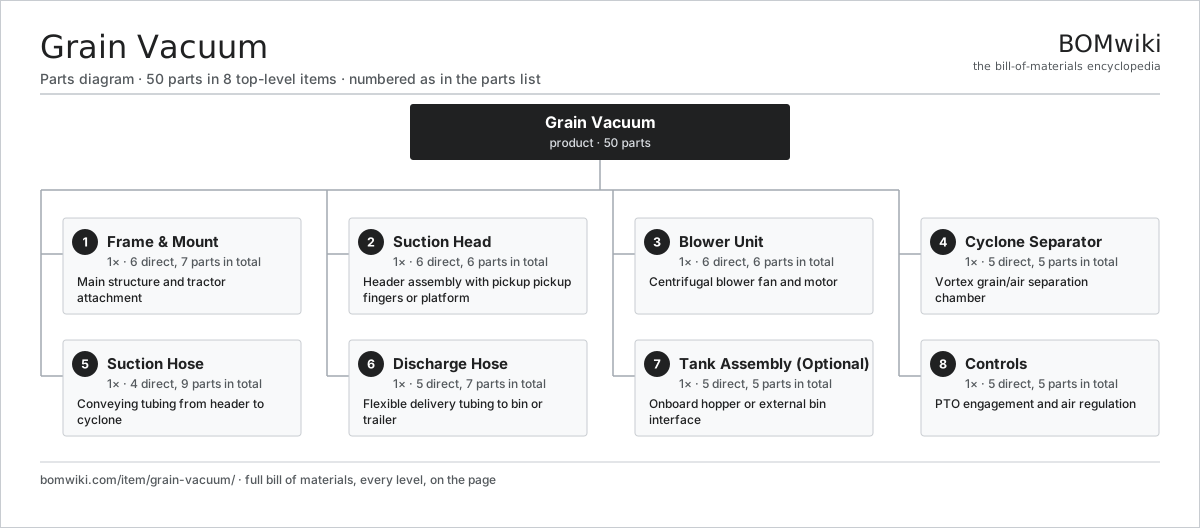
| # | Part | Qty | What it does |
|---|---|---|---|
| 1 | Frame & Mount 6 parts | 1× | Main structure and tractor attachment |
| 2 | Suction Head 6 parts | 1× | Header assembly with pickup pickup fingers or platform |
| 3 | Blower Unit 6 parts | 1× | Centrifugal blower fan and motor |
| 4 | Cyclone Separator 5 parts | 1× | Vortex grain/air separation chamber |
| 5 | Suction Hose 4 parts | 1× | Conveying tubing from header to cyclone |
| 6 | Discharge Hose 5 parts | 1× | Flexible delivery tubing to bin or trailer |
| 7 | Tank Assembly (Optional) 5 parts | 1× | Onboard hopper or external bin interface |
| 8 | Controls 5 parts | 1× | PTO engagement and air regulation |
3D model
No 3D model yet. Have a CAD file of this? Add a 3D model. STL renders right on this page; STEP, FreeCAD, and OpenSCAD sources are welcome too (openly licensed, like all 3D models on BOMwiki).
Build & assembly graph
expand / collapse · shared sub-assemblies converge · links to related products · est. labourTap an assembly to expand/collapse · tap a part to open it · use “Open page” for any node · drag to pan, scroll to zoom.
Bill of materials for Grain Vacuum
8 top-level lines · 50 rows shown · 50 parts total · indented to 3 levels| # | Item / sub-assembly | Part no. | Qty/assy | Ext. qty | Parts | Type |
|---|---|---|---|---|---|---|
| 1 | Frame & Mount 6 parts | grain-vacuum-frame-mount | 1× | 1 | 7 | assembly |
| 1.1 | Main Frame | grain-vacuum-main-frame | 1× | 1 | · | part |
| 1.2 | Hitch Bracket | grain-vacuum-hitch-bracket | 1× | 1 | · | part |
| 1.3 | Blower Mount | grain-vacuum-blower-mount | 1× | 1 | · | part |
| 1.4 | Cyclone Support | grain-vacuum-cyclone-support | 1× | 1 | · | part |
| 1.5 | Sheet Metal Panel | sheet-panel | 2× | 2 | · | part |
| 1.6 | Fastener Set | fastener-set | 1× | 1 | · | part |
| 2 | Suction Head 6 parts | grain-vacuum-suction-head | 1× | 1 | 6 | assembly |
| 2.1 | Pickup Fingers | grain-vacuum-pickup-fingers | 1× | 1 | · | part |
| 2.2 | Cutterbar | grain-vacuum-cutterbar | 1× | 1 | · | part |
| 2.3 | Finger Motor | grain-vacuum-finger-motor | 1× | 1 | · | part |
| 2.4 | Header Tube | grain-vacuum-header-tube | 1× | 1 | · | part |
| 2.5 | Inlet Screen | grain-vacuum-inlet-screen | 1× | 1 | · | part |
| 2.6 | Fastener Set | fastener-set | 1× | 1 | · | part |
| 3 | Blower Unit 6 parts | grain-vacuum-blower-unit | 1× | 1 | 6 | assembly |
| 3.1 | Blower Motor | grain-vacuum-blower-motor | 1× | 1 | · | part |
| 3.2 | Fan Impeller | grain-vacuum-fan-impeller | 1× | 1 | · | part |
| 3.3 | Fan Housing | grain-vacuum-fan-housing | 1× | 1 | · | part |
| 3.4 | Intake Filter | grain-vacuum-intake-filter | 1× | 1 | · | part |
| 3.5 | PTO Shaft | grain-vacuum-pto-shaft | 1× | 1 | · | part |
| 3.6 | Fastener Set | fastener-set | 1× | 1 | · | part |
| 4 | Cyclone Separator 5 parts | grain-vacuum-cyclone-separator | 1× | 1 | 5 | assembly |
| 4.1 | Cyclone Cone | grain-vacuum-cyclone-cone | 1× | 1 | · | part |
| 4.2 | Cyclone Outlet | grain-vacuum-cyclone-outlet | 1× | 1 | · | part |
| 4.3 | Cyclone Hopper | grain-vacuum-cyclone-hopper | 1× | 1 | · | part |
| 4.4 | Overflow Gate | grain-vacuum-overflow-gate | 1× | 1 | · | part |
| 4.5 | Fastener Set | fastener-set | 1× | 1 | · | part |
| 5 | Suction Hose 4 parts | grain-vacuum-suction-hose | 1× | 1 | 9 | assembly |
| 5.1 | Hose Tubing | grain-vacuum-hose-tubing | 1× | 1 | · | part |
| 5.2 | Hose Clamps | grain-vacuum-hose-clamps | 4× | 4 | · | part |
| 5.3 | Hose Supports | grain-vacuum-hose-supports | 3× | 3 | · | part |
| 5.4 | Fastener Set | fastener-set | 1× | 1 | · | part |
| 6 | Discharge Hose 5 parts | grain-vacuum-discharge-hose | 1× | 1 | 7 | assembly |
| 6.1 | Discharge Tube | grain-vacuum-discharge-tube | 1× | 1 | · | part |
| 6.2 | Discharge Elbow | grain-vacuum-discharge-elbow | 2× | 2 | · | part |
| 6.3 | Discharge Gate | grain-vacuum-discharge-gate | 1× | 1 | · | part |
| 6.4 | Tube Supports | grain-vacuum-tube-supports | 2× | 2 | · | part |
| 6.5 | Fastener Set | fastener-set | 1× | 1 | · | part |
| 7 | Tank Assembly (Optional) 5 parts | grain-vacuum-tank-optional | 1× | 1 | 5 | assembly |
| 7.1 | Tank Shell | grain-vacuum-tank-shell | 1× | 1 | · | part |
| 7.2 | Tank Drain Gate | grain-vacuum-tank-drain-gate | 1× | 1 | · | part |
| 7.3 | Clean Air Filter | grain-vacuum-tank-clean-air-filter | 1× | 1 | · | part |
| 7.4 | Tank Overflow | grain-vacuum-tank-overflow | 1× | 1 | · | part |
| 7.5 | Fastener Set | fastener-set | 1× | 1 | · | part |
| 8 | Controls 5 parts | grain-vacuum-controls | 1× | 1 | 5 | assembly |
| 8.1 | Throttle Cable | grain-vacuum-throttle-cable | 1× | 1 | · | part |
| 8.2 | PTO Clutch | grain-vacuum-pto-clutch | 1× | 1 | · | part |
| 8.3 | Motor Switch | grain-vacuum-motor-switch | 1× | 1 | · | part |
| 8.4 | Fuel Tank | grain-vacuum-fuel-tank | 1× | 1 | · | part |
| 8.5 | Fastener Set | fastener-set | 1× | 1 | · | part |
Something wrong in this list? Report a problem with this BOM.
Related products
same domain, ranked by shared parts Bale Accumulator
48 parts · shares 1 with this page
Bale Accumulator
48 parts · shares 1 with this page
 Continuous Grain Dryer
254 parts · shares 1 with this page
Continuous Grain Dryer
254 parts · shares 1 with this page
 Feed Grinder Mixer
368 parts · shares 1 with this page
Feed Grinder Mixer
368 parts · shares 1 with this page
 Feed Mixer Wagon
133 parts · shares 1 with this page
Floater Fertilizer Spreader
70 parts · shares 1 with this page
Grain Bag Extractor
179 parts · shares 1 with this page
Feed Mixer Wagon
133 parts · shares 1 with this page
Floater Fertilizer Spreader
70 parts · shares 1 with this page
Grain Bag Extractor
179 parts · shares 1 with this page
Sourcing: possible vendors
Browse the supplier directory → Prices, MOQ, and lead times are algorithmic estimates, not quotes, and not claims about these companies. Company mappings are curated by keyword; est. price band $5k–$800k. How estimates work| Vendor | HQ | Specialty | MOQ | Lead time |
|---|---|---|---|---|
| deere.com ↗ | Moline, US | Agriculture & turf | made to order | 14–24 wks |
| cnh.com ↗ | Basildon, GB | Agriculture (Case IH, New Holland) | made to order | 14–24 wks |
|
🇺🇸AGCO
agcocorp.com ↗
|
Duluth, US | Agriculture (Fendt, Massey Ferguson) | made to order | 14–24 wks |
|
🇩🇪Claas
claas.com ↗
|
Harsewinkel, DE | Harvesters & tractors | made to order | 14–24 wks |
|
🇯🇵Kubota
kubota.com ↗
|
Osaka, JP | Compact tractors & equipment | made to order | 14–24 wks |
1,617-word article