Hydrapulper
ProductOverview
The hydrapulper is a mixing and fiber separation vessel used in recycling mills to convert shredded waste paper, newspaper, and magazines into pulp suitable for papermaking. The machine operates via a high-shear rotor-stator assembly that disintegrates fiber bundles, breaks down ink agglomerates, and suspends fibers in water. Unlike mechanical pulping (which grinds virgin wood), hydrapulping is purely mechanical disintegration, no chemicals are consumed, making it energy-efficient and cost-effective for recycled fiber recovery.
A typical hydrapulper vat is 2–6 m diameter and 2–4 m tall, holding 5–80 m³ of pulp slurry. The rotor-stator operates at 600–1500 rpm (3–5 m/s tip velocity), creating intense turbulence and shear. A single batch cycle (typically 10–30 minutes for newspaper) disperses 2–5 tonnes of shredded paper into approximately 80–100 tonnes of dilute pulp slurry (4–8% solids). The discharged pulp then flows to screening and cleaning stages to remove plastic, ink, and incompletely separated fibers (shive) before use in the paper machine.
How It Works
Material Charging and Disintegration
Shredded recycled paper (typically 50–100 mm flakes, 1–3% consistency) is fed into the Pulping Vat along with water from the Water Supply Pump. The Consistency Controller float valve maintains pulp density at target level (typically 4–8% solids). As water is added, the Rotor Drive System (motor and gearbox) spins the Rotor Impeller at controlled speed, usually ramped from 0 to full speed over 30–60 seconds via Motor Starter soft-start.
The Rotor and Stator Assembly system comprises a rotating Rotor Impeller (cast iron or steel disc, 1–2 m diameter, with 4–6 radial vanes) and a fixed Stator Ring (ring of vertical or angled pins surrounding the rotor with 10–30 mm gap). As the rotor spins, its vanes accelerate fiber flakes toward the stator pins. Fibers collide with pins at high velocity (3–5 m/s tip speed), causing:
- Fiber bundle separation: Weak hydrogen bonds between fiber walls break; bundles defibrillate into individual fibers.
- Ink detachment: Ink particles, liberated from fiber surfaces by mechanical shock, form fine agglomerates suspended in water.
- Water-holding capacity increase: Fibrillation increases specific surface area; pulp swells and absorbs more water (freeness decreases from 700 mL CSF as-received to 200–400 mL CSF after hydrapulping).
Consistency and Level Management
The Level and Operation Control maintains safe vat fill via High Level Sensor (overfill cutoff) and Low Level Sensor (underfill alarm). The Dilution and Water Supply continuously supplies water at 50–150 m³/h; Consistency Controller float-type valve meters water to hold target solids concentration. If slurry density drifts above 8% (too thick, high motor load), the valve opens wider; if below 4% (too dilute, inefficient), the valve closes slightly.
Rags and Reject Removal
During disintegration, incompletely separated fibers (shive), plastic films, and abrasive particles damage the rotor and stator if circulation continues. The Ragger Unit removes these contaminants. Coarse Ragger Screen (5–8 mm slots) at the vat bottom allows pulp slurry to pass while catching plastic, long fibers, and rag bundles. A Ragger Blade (rotating or reciprocating blade) continuously scrapes the screen face, moving collected rags onto a Rag Discharge Conveyor screw or belt that ejects them into a Rag Collection Bin for disposal or combustion.
Discharge and Downstream Screening
Once disintegration is complete (typically 15–30 minutes for newspaper, 20–40 minutes for magazines with glossy fiber), the Discharge Pump and Screening (centrifugal, 50–200 m³/h) extracts pulp slurry through a Static Screen (100–200 micron basket or curved surface). This secondary screen removes fine shive and dirt particles before the pulp enters the cleaning/screening section. The Screen Backwash backwash (0.5–1.0 bar reverse pressure) prevents screen plugging by periodically blowing collected reject material.
The Outlet Pipe directs dispersed pulp slurry to downstream treatment: typically a cleaner-screener system (removes ink and dirt), then bleaching (if needed), and finally the paper machine headbox.
Operational Modes
Batch mode (Traditional): Shredded paper is charged all at once; disintegration occurs for a fixed time (e.g., 20 minutes for newspaper). Discharge pump evacuates slurry; vat is refilled for next batch. Cycle time is 30–45 minutes. Used in mills processing variable-composition waste.
Semi-continuous mode: Shredded paper is continuously fed at controlled rate while discharge pump simultaneously evacuates slurry. Rotor speed and dilution water are adjusted to maintain steady outlet consistency (6–8%). More common in modern mills due to improved throughput consistency.
Energy and Economics
Disintegration energy is approximately 30–80 kWh/tonne of dry pulp, depending on fiber origin and target pulp quality. Newspaper (low lignin, easy separation) requires 30–50 kWh/t; magazine (coated, deinked) requires 60–100 kWh/t. At USD 0.10/kWh, disintegration costs USD 3–10/tonne, significantly lower than virgin pulping (which requires 2–5 tonne/tonne steam at USD 10–30/tonne).
Reject rate (non-fiber material removed by ragger and downstream screens) is typically 5–15% of input; reject is incinerated for energy recovery or sent to landfill. A 50 t/day hydrapulper generates 5–7 t/day of waste, worth approximately USD 50–200/day if energy-recovered in a mill's recovery boiler.
Rotor and stator tip wear is approximately 0.5–1 mm per 1000 operating hours, requiring replacement every 1–2 years at cost USD 20,000–50,000. Most downtime results from rotor jamming (if plastic or rag ball lodges in gap), requiring manual clearing via the Access Hatch (30–120 minutes).
Quality Considerations
Overdisintegration (excessive rotor speed or time) produces fibrillated fiber but can trap ink particles deeper within fiber wall, reducing deinking efficiency in subsequent flotation cells. Underdisintegration leaves fiber bundles; downstream screens reject these as shive, reducing pulp yield. Modern control systems monitor motor torque and adjust rotor speed to optimize disintegration without overdoing it.
Hydrapulper parts and their functions
8 top-level parts · 32 parts in total · full bill of materials below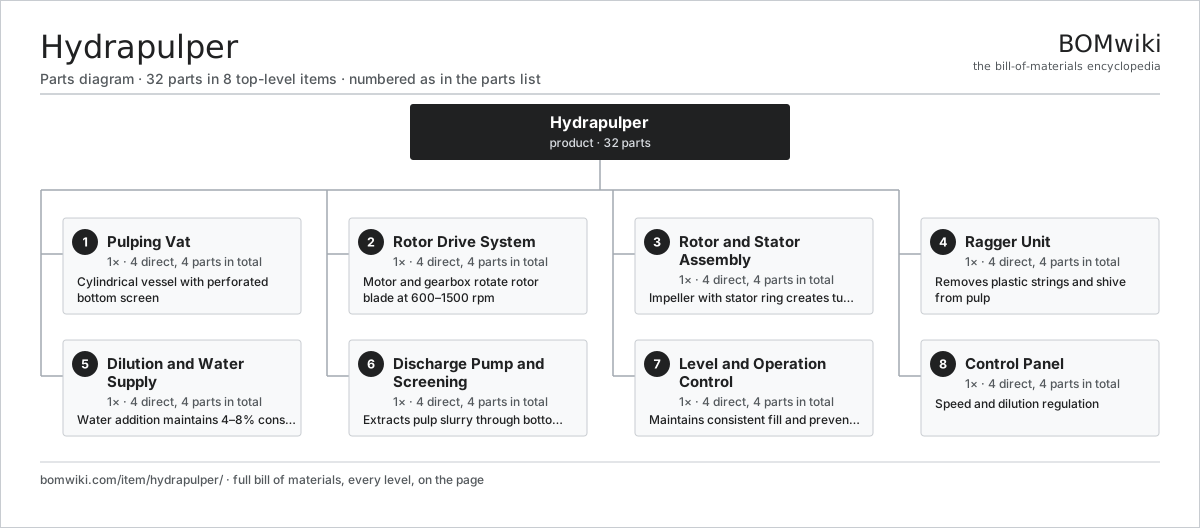
| # | Part | Qty | What it does |
|---|---|---|---|
| 1 | Pulping Vat 4 parts | 1× | Cylindrical vessel with perforated bottom screen |
| 2 | Rotor Drive System 4 parts | 1× | Motor and gearbox rotate rotor blade at 600–1500 rpm |
| 3 | Rotor and Stator Assembly 4 parts | 1× | Impeller with stator ring creates turbulent fiber separation |
| 4 | Ragger Unit 4 parts | 1× | Removes plastic strings and shive from pulp |
| 5 | Dilution and Water Supply 4 parts | 1× | Water addition maintains 4–8% consistency |
| 6 | Discharge Pump and Screening 4 parts | 1× | Extracts pulp slurry through bottom screen |
| 7 | Level and Operation Control 4 parts | 1× | Maintains consistent fill and prevents overflow |
| 8 | Control Panel 4 parts | 1× | Speed and dilution regulation |
3D model
No 3D model yet. Have a CAD file of this? Add a 3D model. STL renders right on this page; STEP, FreeCAD, and OpenSCAD sources are welcome too (openly licensed, like all 3D models on BOMwiki).
Build & assembly graph
expand / collapse · shared sub-assemblies converge · links to related products · est. labourTap an assembly to expand/collapse · tap a part to open it · use “Open page” for any node · drag to pan, scroll to zoom.
Bill of materials for Hydrapulper
8 top-level lines · 40 rows shown · 32 parts total · indented to 3 levels| # | Item / sub-assembly | Part no. | Qty/assy | Ext. qty | Parts | Type |
|---|---|---|---|---|---|---|
| 1 | Pulping Vat 4 parts | hydrapulper-vat | 1× | 1 | 4 | assembly |
| 1.1 | Vat Shell | hydrapulper-vat-shell | 1× | 1 | · | part |
| 1.2 | Bottom Screen | hydrapulper-vat-perforated-screen | 1× | 1 | · | part |
| 1.3 | Internal Baffle | hydrapulper-vat-internal-baffles | 1× | 1 | · | part |
| 1.4 | Access Hatch | hydrapulper-access-hatch | 1× | 1 | · | part |
| 2 | Rotor Drive System 4 parts | hydrapulper-rotor-drive | 1× | 1 | 4 | assembly |
| 2.1 | Motor | hydrapulper-motor | 1× | 1 | · | part |
| 2.2 | Gearbox | hydrapulper-gearbox | 1× | 1 | · | part |
| 2.3 | Shaft Seal | hydrapulper-shaft-seal | 1× | 1 | · | part |
| 2.4 | Bearing Block | hydrapulper-bearing-block | 1× | 1 | · | part |
| 3 | Rotor and Stator Assembly 4 parts | hydrapulper-rotor-blade | 1× | 1 | 4 | assembly |
| 3.1 | Rotor Impeller | hydrapulper-rotor-impeller | 1× | 1 | · | part |
| 3.2 | Stator Ring | hydrapulper-stator-ring | 1× | 1 | · | part |
| 3.3 | Rotor/Stator Wear Faces | hydrapulper-wear-parts | 1× | 1 | · | part |
| 3.4 | Tip Speed | hydrapulper-tip-speed-control | 1× | 1 | · | part |
| 4 | Ragger Unit 4 parts | hydrapulper-ragger-system | 1× | 1 | 4 | assembly |
| 4.1 | Ragger Screen | hydrapulper-ragger-screen | 1× | 1 | · | part |
| 4.2 | Ragger Blade | hydrapulper-ragger-knife | 1× | 1 | · | part |
| 4.3 | Rag Discharge Conveyor | hydrapulper-rag-conveyor | 1× | 1 | · | part |
| 4.4 | Rag Collection Bin | hydrapulper-rag-bin | 1× | 1 | · | part |
| 5 | Dilution and Water Supply 4 parts | hydrapulper-dilution-system | 1× | 1 | 4 | assembly |
| 5.1 | Water Supply Pump | hydrapulper-supply-pump | 1× | 1 | · | part |
| 5.2 | Consistency Controller | hydrapulper-consistency-controller | 1× | 1 | · | part |
| 5.3 | Water Spray Bar | hydrapulper-spray-bar | 1× | 1 | · | part |
| 5.4 | Flow Meter | hydrapulper-flow-meter | 1× | 1 | · | part |
| 6 | Discharge Pump and Screening 4 parts | hydrapulper-discharge-pump | 1× | 1 | 4 | assembly |
| 6.1 | Discharge Pump | hydrapulper-discharge-pump-centrifugal | 1× | 1 | · | part |
| 6.2 | Static Screen | hydrapulper-static-screen | 1× | 1 | · | part |
| 6.3 | Screen Backwash | hydrapulper-screen-cleaning-system | 1× | 1 | · | part |
| 6.4 | Outlet Pipe | hydrapulper-pulp-outlet-pipe | 1× | 1 | · | part |
| 7 | Level and Operation Control 4 parts | hydrapulper-level-control | 1× | 1 | 4 | assembly |
| 7.1 | High Level Sensor | hydrapulper-level-sensor-high | 1× | 1 | · | part |
| 7.2 | Low Level Sensor | hydrapulper-level-sensor-low | 1× | 1 | · | part |
| 7.3 | Overflow Weir | hydrapulper-overflow-weir | 1× | 1 | · | part |
| 7.4 | Discharge Control Valve | hydrapulper-discharge-control-valve | 1× | 1 | · | part |
| 8 | Control Panel 4 parts | hydrapulper-control-panel | 1× | 1 | 4 | assembly |
| 8.1 | Motor Starter | hydrapulper-motor-starter | 1× | 1 | · | part |
| 8.2 | Speed Control | hydrapulper-speed-potentiometer | 1× | 1 | · | part |
| 8.3 | Overload Protection | hydrapulper-overload-relay | 1× | 1 | · | part |
| 8.4 | Alarm Horn | hydrapulper-alarm-horn | 1× | 1 | · | part |
Something wrong in this list? Report a problem with this BOM.
Sourcing: possible vendors
Browse the supplier directory → Prices, MOQ, and lead times are algorithmic estimates, not quotes, and not claims about these companies. Company mappings are curated by keyword; est. price band $5k–$2M. How estimates work| Vendor | HQ | Specialty | MOQ | Lead time |
|---|---|---|---|---|
| atlascopco.com ↗ | Stockholm, SE | Compressors & industrial | 10 units | 12–20 wks |
|
🇦🇹Andritz
andritz.com ↗
|
Graz, AT | Process plants & machinery | 10 units | 12–20 wks |
| buhlergroup.com ↗ | Uzwil, CH | Food & materials processing | 10 units | 12–20 wks |
| gea.com ↗ | Düsseldorf, DE | Process technology | 10 units | 12–20 wks |
| mhi.com ↗ | Tokyo, JP | Heavy machinery | 10 units | 12–20 wks |
991-word article