Ice Cream Truck
ProductOverview
An ice cream truck is a mobile food-service vehicle equipped with soft-serve machinery, frozen-dessert storage, and a serving window mounted on a commercial van chassis. Designed for street vending in residential neighborhoods and parks, the ice cream truck combines mobility with cold-chain food safety, delivering ice cream products directly to customers without a fixed storefront.
The foundation is a commercial van chassis, typically a 2.0–3.5 L four-cylinder gasoline or diesel engine paired with an automatic transmission, rated for 2500 kg gross vehicle weight. The chassis uses heavy-duty leaf springs with air-assist cylinders to handle frequent stop-and-go city driving and the thermal load of refrigeration equipment. Hydraulic ABS brakes with front discs and rear drums meet European and North American safety standards.
Atop the chassis sits a custom-built insulated box body constructed from polyurethane-foam-core panels (R-value 20 per inch) glued to steel or aluminum frames, minimizing heat ingress from ambient air. The box typically measures 5.5 m long × 2.0 m wide × 2.2 m high, providing space for a serving window, soft-serve machine, dip-cabinet, and storage for cones, cups, and napkins. An aluminum roof with drain gutters accommodates mounting for the AC condenser, exhaust fan, and audio speakers.
The freezer heart is a soft-serve ice cream machine: a 20 L stainless steel mixing cylinder surrounded by a tube-and-fin evaporator coil, fed by a 2 hp hermetic reciprocating compressor running on R-134a refrigerant. The cylinder contains a slowly rotating paddle dasher that aerates the ice cream mix, preventing ice crystals and maintaining soft-serve consistency (−5°C to −8°C). A 1.5 hp AC motor drives the dasher and the solenoid valve controlling cone-dispensing flow.
A secondary freezer, the dip-cabinet, stores pre-scooped ice cream at −18°C. It uses a separate evaporator coil in parallel with the soft-serve circuit, sharing the same compressor via a thermostatic expansion valve that meters refrigerant to maintain cabinet temperature. The dip-cabinet has a curved tempered glass sliding cover and a warm-water dipper well at the front, where scoopers are kept at 5°C above ice cream temperature, reducing the mechanical friction that would otherwise freeze scoops to frozen product.
Power comes from a 5–8 kVA onboard generator running continuously whenever the truck operates, supplying 240 V three-phase AC to the compressor, soft-serve motor, AC unit, lighting, and audio amplifier. A separate 12 V auxiliary battery and vehicle alternator power the starter, headlights, and horn. The generator is fuel-efficient at part load, soft-serve machinery draws ~3 kW continuously, allowing eight-hour operating days on a single 50 L fuel tank.
A roof-mounted air-conditioning system (12,000 BTU/h) cools the driver compartment and serving area, essential during summer operation. An exhaust fan vents hot air from around the refrigeration equipment, preventing heat buildup that would force the compressor into inefficient high-pressure operation.
The audio system, a 100 W RMS amplifier with two 60 W coaxial roof speakers, plays the iconic ice cream truck jingles (typically "The Entertainer" or custom melodies). A MIDI sound module provides pre-recorded loops and a dog-whistle frequency (19 kHz) that attracts neighborhood children up to 200 m away. A handheld microphone with volume foot pedal allows the operator to announce specials or greetings.
How it works
The ice cream truck engine starts with the vehicle ignition key, cranking the four-cylinder at 300 rpm until fuel and ignition fire. The engine idles at 600 rpm, driving the alternator and running the hydraulic power-steering pump. The operator starts the onboard generator by pressing an electronic ignition button; the generator warms up over 30 seconds before the compressor is engaged via a soft-start contactor.
Refrigerant in the Refrigerant Compressor is drawn from the low-pressure line at 0.5 bar, compressed to 12 bar at discharge, and pumped into the condenser. There, ambient air (blown across fin-and-tube coils by a variable-speed fan) cools the hot, high-pressure gas, condensing it to liquid at 45°C. The liquid refrigerant flows to a thermostatic expansion valve, which meters flow to both the Evaporator Coil around the soft-serve cylinder and the cabinet evaporator. Refrigerant evaporates at −20°C in both coils, absorbing latent heat from the surrounding metal and lowering temperatures: the soft-serve mix to −6°C and the dip-cabinet to −18°C.
The Mixing Cylinder contains a 15 L batch of ice cream mix fed from a supply tank. As the Soft-Serve Drive Motor rotates the paddle at 18 rpm, it simultaneously:
- Mixes the cooling effect evenly through the batch, preventing ice crystal growth.
- Aerates the product, introducing 20–30% air by volume, reducing density and creating the light, fluffy texture customers expect.
- Maintains pressure in the dispensing nozzle by forcing mix toward the solenoid valve.
When a customer requests a cone, the operator presses a foot valve, opening the solenoid and directing the chilled mix through the cone nozzle. The Dispensing Nozzle has a tapered profile that extrudes the ice cream in a spiral, building the classic soft-serve curl. The dispensing motor maintains back-pressure, so stopping the foot valve immediately halts flow without dripping.
The Freezer Cabinet dip-cabinet operates in parallel: its separate evaporator coil maintains −18°C, and the operator can scoop pre-made flavors (chocolate, mint, strawberry) using the warm-water dipper well. The well is heated to 22°C by a small electric heater; ice cream scoops are slowly recirculated through this bath, keeping them at 17°C and preventing adhesion.
The compressor runs continuously at full displacement while the generator is engaged; a Pressure Sensor at the outlet monitors discharge pressure. If pressure exceeds 16 bar (indicating outdoor temperature above 40°C or insufficient condenser fan speed), a safety switch de-energizes the compressor solenoid, stopping it momentarily to prevent rupture. A Thermal Fuse at the evaporator outlet provides a backup cutoff if liquid refrigerant (indicating compressor failure) tries to reach the motor windings.
The audio system plays looped jingles from the MIDI Sound Module at 85 dB(A) via the roof speakers, announcing the truck's presence. The operator can switch to live microphone mode, allowing neighborhood interaction: "Come get your ice cream!" at 95 dB(A).
Operational constraints
Soft-serve machines require continuous operation at full capacity while dispensing; turning the motor off and on shortens bearing life. Most operators run the compressor 8–10 hours per shift, then defrost the evaporator coils by stopping the compressor and running the exhaust fan to remove accumulated ice (ice buildup reduces heat transfer and forces shutdown after 4–6 hours of operation).
The generator must be sized to handle inrush current: at startup, the soft-serve motor draws 3× rated current (4.5 A peak for 1.5 A continuous), requiring a 6 kVA minimum generator with soft-start capability. Under-sized generators cause voltage sag, tripping the compressor's overload relay and shutting down production mid-shift.
Water supply is critical for the dipper well circulation; on hot days, the 20 L well evaporates ~1 L/hour, requiring the operator to refill from a 50 L fresh-water tank and drain the warm water to an onboard waste tank. Failure to keep the dipper well at proper temperature results in frozen or soft scoops, degrading customer experience.
Route planning is essential: neighborhoods with high foot traffic (parks, beaches, residential streets) generate predictable revenue, while remote industrial zones yield few customers. Most operators follow regular routes and schedules, allowing families to anticipate and plan ice cream purchases. Modern trucks often use GPS tracking and online ordering, allowing customers to locate and pre-order favorites.
Historical and regional variants
Early ice cream trucks (1920s) were horse-drawn carts with insulated boxes and salt-ice cooling. Motorized versions emerged in the 1950s, using dry ice and eventually mechanical refrigeration. The 1970s–1990s saw soft-serve machines become standard, with jingle technology expanding from simple horn horns to electronic synthesizers.
In Europe, the Piaggio Ape (three-wheeled commercial vehicle) and Renault Trafic are common platforms; in Asia, modified motorcycle rickshaws and small delivery vans serve the same function. In the US, surplus Grumman and step-van mail trucks are frequently repurposed as ice cream platforms, maintaining the iconic white-with-red-stripe livery.
Modern variations include gelato trucks (with pasteurized mix reservoirs and different machine architecture), sorbet trucks (dairy-free, with different cooling profiles), and push-carts (unpowered, relying on dry ice or passive cooling for small-scale neighborhood operation). Franchise operations (e.g., ice cream truck networks) use standardized graphics, trained operators, and monitored product sourcing to ensure brand consistency and health compliance across multiple vehicles.
Ice Cream Truck parts and their functions
8 top-level parts · 88 parts in total · full bill of materials below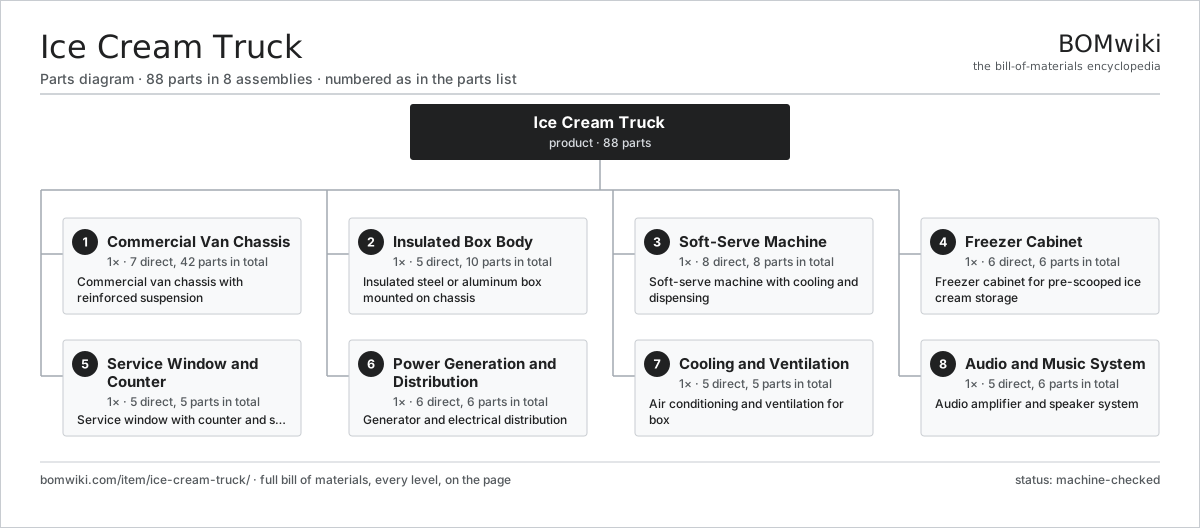
| # | Part | Qty | What it does |
|---|---|---|---|
| 1 | Commercial Van Chassis 7 parts | 1× | Commercial van chassis with reinforced suspension |
| 2 | Insulated Box Body 5 parts | 1× | Insulated steel or aluminum box mounted on chassis |
| 3 | Soft-Serve Machine 8 parts | 1× | Soft-serve machine with cooling and dispensing |
| 4 | Freezer Cabinet 6 parts | 1× | Freezer cabinet for pre-scooped ice cream storage |
| 5 | Service Window and Counter 5 parts | 1× | Service window with counter and security bars |
| 6 | Power Generation and Distribution 6 parts | 1× | Generator and electrical distribution |
| 7 | Cooling and Ventilation 5 parts | 1× | Air conditioning and ventilation for box |
| 8 | Audio and Music System 5 parts | 1× | Audio amplifier and speaker system |
3D model
No 3D model yet. Have a CAD file of this? Add a 3D model — STL renders right on this page; STEP, FreeCAD, and OpenSCAD sources are welcome too (openly licensed, like all 3D models on BOMwiki).
Build & assembly graph
expand / collapse · shared sub-assemblies converge · links to related products · est. labourTap an assembly to expand/collapse · tap a part to open it · use “Open page” for any node · drag to pan, scroll to zoom.
Bill of materials for Ice Cream Truck
8 top-level lines · 60 rows shown · 88 parts total · indented to 3 levels| # | Item / sub-assembly | Part no. | Qty/assy | Ext. qty | Parts | Type |
|---|---|---|---|---|---|---|
| 1 | Commercial Van Chassis 7 parts | ice-cream-truck-chassis | 1× | 1 | 42 | assembly |
| 1.1 | Main Engine | ice-cream-truck-engine | 1× | 1 | · | part |
| 1.2 | Automatic Transmission | ice-cream-truck-transmission | 1× | 1 | · | part |
| 1.3 | Chassis Frame | ice-cream-truck-frame | 1× | 1 | · | part |
| 1.4 | Suspension System | ice-cream-truck-suspension | 1× | 1 | · | part |
| 1.5 | Brake System | ice-cream-truck-brakes | 1× | 1 | · | part |
| 1.6 | Power Steering | ice-cream-truck-steering | 1× | 1 | · | part |
| 1.7 | Wheel Assembly 5 parts | wheel-assembly | 4× | 4 | 9 | assembly |
| 1.7.1 | Alloy Wheel | alloy-wheel | 1× | 4 | · | part |
| 1.7.2 | Tire | tire | 1× | 4 | · | part |
| 1.7.3 | TPMS Sensor | tpms-sensor | 1× | 4 | · | part |
| 1.7.4 | Lug Nut | lug-nut | 5× | 20 | · | part |
| 1.7.5 | Valve Stem | valve-stem | 1× | 4 | · | part |
| 2 | Insulated Box Body 5 parts | ice-cream-truck-body | 1× | 1 | 10 | assembly |
| 2.1 | Chassis Frame | ice-cream-truck-frame | 1× | 1 | · | part |
| 2.2 | Sheet Metal Panel | sheet-panel | 6× | 6 | · | part |
| 2.3 | Roof Panel | ice-cream-truck-roof | 1× | 1 | · | part |
| 2.4 | Floor Assembly | ice-cream-truck-floor | 1× | 1 | · | part |
| 2.5 | Fastener Set | fastener-set | 1× | 1 | · | part |
| 3 | Soft-Serve Machine 8 parts | ice-cream-truck-freezer | 1× | 1 | 8 | assembly |
| 3.1 | Refrigerant Compressor | ice-cream-truck-compressor | 1× | 1 | · | part |
| 3.2 | Condenser Coil | ice-cream-truck-condenser | 1× | 1 | · | part |
| 3.3 | Evaporator Coil | ice-cream-truck-evaporator | 1× | 1 | · | part |
| 3.4 | Mixing Cylinder | ice-cream-truck-cylinder | 1× | 1 | · | part |
| 3.5 | Soft-Serve Drive Motor | ice-cream-truck-motor | 1× | 1 | · | part |
| 3.6 | Dispensing Nozzle | ice-cream-truck-nozzle | 1× | 1 | · | part |
| 3.7 | Pressure Sensor | pressure-sensor | 1× | 1 | · | part |
| 3.8 | Thermal Fuse | thermal-fuse | 1× | 1 | · | part |
| 4 | Freezer Cabinet 6 parts | ice-cream-truck-cabinet | 1× | 1 | 6 | assembly |
| 4.1 | Cabinet Enclosure | ice-cream-truck-cabinet-shell | 1× | 1 | · | part |
| 4.2 | Cabinet Evaporator | ice-cream-truck-cabinet-coil | 1× | 1 | · | part |
| 4.3 | Sliding Glass Top | ice-cream-truck-glass-cover | 1× | 1 | · | part |
| 4.4 | Dipper Well | ice-cream-truck-scooper-rack | 1× | 1 | · | part |
| 4.5 | Cabinet Light | ice-cream-truck-light | 1× | 1 | · | part |
| 4.6 | Pressure Sensor | pressure-sensor | 1× | 1 | · | part |
| 5 | Service Window and Counter 5 parts | ice-cream-truck-window | 1× | 1 | 5 | assembly |
| 5.1 | Window Frame | ice-cream-truck-window-frame | 1× | 1 | · | part |
| 5.2 | Window Glass | ice-cream-truck-window-glass | 1× | 1 | · | part |
| 5.3 | Service Counter | ice-cream-truck-counter | 1× | 1 | · | part |
| 5.4 | Security Gate | ice-cream-truck-security-bars | 1× | 1 | · | part |
| 5.5 | Fastener Set | fastener-set | 1× | 1 | · | part |
| 6 | Power Generation and Distribution 6 parts | ice-cream-truck-power | 1× | 1 | 6 | assembly |
| 6.1 | Power Generator | ice-cream-truck-generator | 1× | 1 | · | part |
| 6.2 | Vehicle Alternator | ice-cream-truck-alternator | 1× | 1 | · | part |
| 6.3 | Auxiliary Battery | ice-cream-truck-battery | 1× | 1 | · | part |
| 6.4 | Electrical Distribution Panel | ice-cream-truck-distribution-panel | 1× | 1 | · | part |
| 6.5 | Main Wiring Harness | wiring-harness | 1× | 1 | · | part |
| 6.6 | DC-to-AC Inverter | ice-cream-truck-inverter | 1× | 1 | · | part |
| 7 | Cooling and Ventilation 5 parts | ice-cream-truck-hvac | 1× | 1 | 5 | assembly |
| 7.1 | Air Conditioning Unit | ice-cream-truck-ac-unit | 1× | 1 | · | part |
| 7.2 | HVAC Ducting | ice-cream-truck-ductwork | 1× | 1 | · | part |
| 7.3 | Roof Exhaust Fan | ice-cream-truck-exhaust-fan | 1× | 1 | · | part |
| 7.4 | Thermostat Control | ice-cream-truck-thermostat | 1× | 1 | · | part |
| 7.5 | Fastener Set | fastener-set | 1× | 1 | · | part |
| 8 | Audio and Music System 5 parts | ice-cream-truck-music | 1× | 1 | 6 | assembly |
| 8.1 | Audio Amplifier | ice-cream-truck-amplifier | 1× | 1 | · | part |
| 8.2 | Speaker Pair | ice-cream-truck-speakers | 2× | 2 | · | part |
| 8.3 | MIDI Sound Module | ice-cream-truck-sound-module | 1× | 1 | · | part |
| 8.4 | Handheld Microphone | ice-cream-truck-microphone | 1× | 1 | · | part |
| 8.5 | Main Wiring Harness | wiring-harness | 1× | 1 | · | part |
Related products
same domain, ranked by shared parts


Sourcing: possible vendors
Prices, MOQ, and lead times are algorithmic estimates, not quotes, and not claims about these companies. Company mappings are curated by keyword; est. price band $8k–$90k. How estimates work| Vendor | HQ | Specialty | MOQ | Lead time |
|---|---|---|---|---|
|
🇯🇵Toyota
global.toyota ↗
|
Toyota City, JP | Automaker | made to order | 16–28 wks |
| volkswagen-group.com ↗ | Wolfsburg, DE | Automaker | made to order | 16–28 wks |
| gm.com ↗ | Detroit, US | Automaker | made to order | 16–28 wks |
| hyundai.com ↗ | Seoul, KR | Automaker | made to order | 16–28 wks |
|
🇨🇳BYD
byd.com ↗
|
Shenzhen, CN | EV & battery manufacturer | made to order | 16–28 wks |
1,491-word article