Injector Cleaning Machine
ProductOverview
The fuel injector cleaning machine is a diagnostic and maintenance system that removes carbon and varnish deposits from fuel injectors without complete engine disassembly. Modern gasoline and diesel engines use fuel injectors to deliver precise metered sprays into combustion chambers. Over time (30,000–100,000 miles depending on fuel quality), carbon deposits accumulate inside injector nozzles, causing irregular spray patterns, incomplete combustion, and driveability problems (rough idle, hesitation, poor fuel economy, increased emissions).
The cleaning machine uses two complementary techniques: ultrasonic cavitation (acoustic bubbles dislodging deposits) and pressure-pulse testing (electrically actuating injectors while monitoring fuel delivery). The Ultrasonic Cavitation Bath vibrates at 40–45 kHz, creating microscopic cavitation bubbles that implode against the injector's internal surfaces, mechanically removing carbon. Simultaneously, the Fuel Injector Pulse Control Module applies rapid electrical pulses to open the injectors, flushing them with clean test fuel. A Fuel Spray Pattern Test Rig with graduated collection tubes verifies restoration of proper spray pattern and fuel delivery volume before reinstalling injectors in the engine.
Ultrasonic Cavitation Mechanism
The Piezo Transducer Array piezoelectric elements are driven by a 40–45 kHz AC signal from the Ultrasonic Driver. This high-frequency vibration creates alternating pressure waves in the cleaning fluid. During compression cycles, molecules cluster together; during expansion cycles, vacuum is created, and cavitation bubbles nucleate. When these bubbles collapse (implode), the pressure spike generated locally can exceed 1,000 psi, releasing enormous mechanical energy. This energy dislodges carbon and varnish particles from the injector nozzle tip and internal metering orifices.
The Bath Immersion Heater maintains the cleaning fluid at 40–60°C (a range where cavitation is most vigorous and cleaning chemistry is activated). Cooler fluid reduces cavitation efficiency; hotter fluid may degrade the cleaning agents or damage injector seals.
Testing and Flow Verification
After the ultrasonic cleaning cycle, the injector is transferred to the Fuel Spray Pattern Test Rig. The injector is installed into the Fuel Injector Mounting Manifold, which distributes clean test fuel from the Low-Pressure Test Fuel Pump at a controlled pressure (typically 35–45 psi, simulating idle and cruise fuel pressure). The Pump Motor drives the Gear Pump Stage at a steady 1,800 rpm, supplying continuous pressure to the manifold.
The Fuel Injector Pulse Control Module then applies high-voltage electrical pulses (typically 12–15V DC, 1–10 millisecond duration, at 10–50 Hz frequency) to the injector solenoid coil, simulating engine firing conditions. With each pulse, the injector's needle valve opens for a few milliseconds, dispensing fuel. The fuel spray is collected in Graduated Collection Tube, six 50 ml graduated cylinders positioned below the injector.
A healthy, clean injector produces a fine cone-shaped mist that fills all six test tubes equally (e.g., 8 ml of fuel per tube, totaling 48 ml per 6-pulse cycle). A dirty injector with clogged nozzles produces an uneven spray pattern: perhaps one side is heavy (15 ml), another side is light (2 ml), and the spray may be asymmetrical or columnar rather than conical. The technician observes the spray pattern and compares volumes across all tubes; a proper spray should be symmetrical, with volumes within 1–2 ml of each other.
If the flow test shows uneven patterns or low delivery volume, the injector is returned to the Ultrasonic Cavitation Bath for another 10–15 minute cycle, then re-tested. This process repeats until the spray pattern is restored.
Fuel System Cleaning vs. On-Vehicle Service
There are two common approaches to fuel injector cleaning:
On-vehicle fuel system cleaner additives: Fuel-soluble detergents added to the gasoline tank, dissolving deposits as the engine runs. Slower (takes hundreds of miles), less aggressive, but convenient.
Off-vehicle ultrasonic cleaning (this machine): Mechanical removal of deposits, faster and more thorough, but requires injector removal and reinstallation. Modern engines with direct fuel injection (DI), where injectors face combustion chamber heat, accumulate deposits more rapidly than port injectors and benefit significantly from off-vehicle cleaning.
Fuel Compatibility and Cleaning Chemistry
The Reservoir Tank is filled with clean, dry test fuel, typically low-sulfur gasoline, diesel, or specialized ultrasonic cleaning fluid (a light naphtha-like fluid). Fuel grade is important: if dirty or contaminated fuel is used, it can clog the test pump and contaminate the injectors being cleaned. Many shops replace the Tank Strainer Filter element and drain the Reservoir Tank after every 5–10 cleaning jobs, ensuring fuel cleanliness.
Some advanced systems add ultrasonic cleaning additives to the bath fluid, surfactants or chelating agents that enhance deposit removal. These additives break down organic carbon films and suspend particles, improving cleaning efficiency.
Safety Considerations
Fuel is flammable; the shop must ensure the Mobile Equipment Cart Drip Containment Pan is clean and free of fuel spills. The machine should be operated in a well-ventilated area away from ignition sources. Electrical wiring should be grounded properly; the Ultrasonic Driver produces high-frequency AC signals that, if improperly shielded, can emit electromagnetic interference affecting nearby shop equipment.
The Fuel Injector Pulse Control Module delivers 12–15V DC to fuel injectors, safe to human contact but capable of inducing electrical noise; proper grounding and shielding of the driver cables prevent noise injection into adjacent electronics.
Maintenance and Consumables
The Bath Immersion Heater element experiences slow degradation; after 500+ hours of operation, heating efficiency may drop, requiring element replacement. The Piezo Transducer Array piezo ceramic discs are durable but eventually degrade; if cavitation noise diminishes or cleaning time elongates, element replacement is needed (rare, typically 10+ years of service).
The Tank Strainer Filter is a consumable, replaced every 30–50 operating hours. The test Graduated Collection Tube can crack or become cloudy from chemical exposure; periodic replacement maintains visual clarity during testing.
The Manifold Relief Valve may require adjustment or replacement if pressure creeps above or below the setpoint (due to valve seat wear); annual calibration using a test gauge is recommended.
Injector Cleaning Machine parts and their functions
7 top-level parts · 33 parts in total · full bill of materials below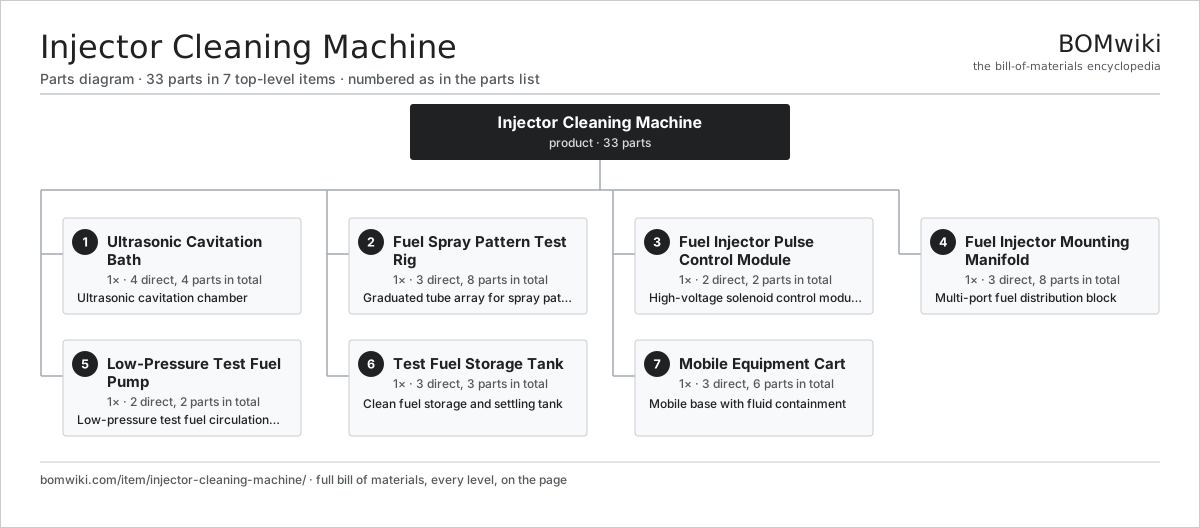
| # | Part | Qty | What it does |
|---|---|---|---|
| 1 | Ultrasonic Cavitation Bath 4 parts | 1× | Ultrasonic cavitation chamber |
| 2 | Fuel Spray Pattern Test Rig 3 parts | 1× | Graduated tube array for spray pattern verification |
| 3 | Fuel Injector Pulse Control Module 2 parts | 1× | High-voltage solenoid control module |
| 4 | Fuel Injector Mounting Manifold 3 parts | 1× | Multi-port fuel distribution block |
| 5 | Low-Pressure Test Fuel Pump 2 parts | 1× | Low-pressure test fuel circulation pump |
| 6 | Test Fuel Storage Tank 3 parts | 1× | Clean fuel storage and settling tank |
| 7 | Mobile Equipment Cart 3 parts | 1× | Mobile base with fluid containment |
3D model
No 3D model yet. Have a CAD file of this? Add a 3D model. STL renders right on this page; STEP, FreeCAD, and OpenSCAD sources are welcome too (openly licensed, like all 3D models on BOMwiki).
Build & assembly graph
expand / collapse · shared sub-assemblies converge · links to related products · est. labourTap an assembly to expand/collapse · tap a part to open it · use “Open page” for any node · drag to pan, scroll to zoom.
Bill of materials for Injector Cleaning Machine
7 top-level lines · 27 rows shown · 33 parts total · indented to 3 levels| # | Item / sub-assembly | Part no. | Qty/assy | Ext. qty | Parts | Type |
|---|---|---|---|---|---|---|
| 1 | Ultrasonic Cavitation Bath 4 parts | injector-cleaning-ultrasonic-bath | 1× | 1 | 4 | assembly |
| 1.1 | Ultrasonic Bath Tank | injector-cleaning-bath-tank | 1× | 1 | · | part |
| 1.2 | Piezo Transducer Array | injector-cleaning-transducer-array | 1× | 1 | · | part |
| 1.3 | Ultrasonic Driver | injector-cleaning-frequency-generator | 1× | 1 | · | part |
| 1.4 | Bath Immersion Heater | injector-cleaning-bath-heater | 1× | 1 | · | part |
| 2 | Fuel Spray Pattern Test Rig 3 parts | injector-cleaning-flow-test-rig | 1× | 1 | 8 | assembly |
| 2.1 | Graduated Collection Tube | injector-cleaning-test-tubes | 6× | 6 | · | part |
| 2.2 | Test Distribution Block | injector-cleaning-test-manifold | 1× | 1 | · | part |
| 2.3 | Test Tube Holder Frame | injector-cleaning-test-rack | 1× | 1 | · | part |
| 3 | Fuel Injector Pulse Control Module 2 parts | injector-cleaning-pulse-driver | 1× | 1 | 2 | assembly |
| 3.1 | Pulse Generator Module | injector-cleaning-driver-module | 1× | 1 | · | part |
| 3.2 | Injector Harness Connectors | injector-cleaning-driver-cables | 1× | 1 | · | part |
| 4 | Fuel Injector Mounting Manifold 3 parts | injector-cleaning-manifold-block | 1× | 1 | 8 | assembly |
| 4.1 | Manifold Block | injector-cleaning-manifold-body | 1× | 1 | · | part |
| 4.2 | Injector Mount Adapter | injector-cleaning-manifold-injector-adapters | 6× | 6 | · | part |
| 4.3 | Manifold Relief Valve | injector-cleaning-manifold-relief-valve | 1× | 1 | · | part |
| 5 | Low-Pressure Test Fuel Pump 2 parts | injector-cleaning-pump | 1× | 1 | 2 | assembly |
| 5.1 | Pump Motor | injector-cleaning-pump-motor | 1× | 1 | · | part |
| 5.2 | Gear Pump Stage | injector-cleaning-pump-gear | 1× | 1 | · | part |
| 6 | Test Fuel Storage Tank 3 parts | injector-cleaning-reservoir | 1× | 1 | 3 | assembly |
| 6.1 | Reservoir Tank | injector-cleaning-reservoir-tank | 1× | 1 | · | part |
| 6.2 | Tank Strainer Filter | injector-cleaning-reservoir-filter | 1× | 1 | · | part |
| 6.3 | Tank Drain Valve | injector-cleaning-reservoir-drain | 1× | 1 | · | part |
| 7 | Mobile Equipment Cart 3 parts | injector-cleaning-fuel-cart | 1× | 1 | 6 | assembly |
| 7.1 | Cart Frame | injector-cleaning-cart-frame | 1× | 1 | · | part |
| 7.2 | Drip Containment Pan | injector-cleaning-cart-drip-pan | 1× | 1 | · | part |
| 7.3 | Caster Wheel | injector-cleaning-cart-casters | 4× | 4 | · | part |
Something wrong in this list? Report a problem with this BOM.
Sourcing: possible vendors
Browse the supplier directory → Prices, MOQ, and lead times are algorithmic estimates, not quotes, and not claims about these companies. Company mappings are curated by keyword; est. price band $5–$2k. How estimates work| Vendor | HQ | Specialty | MOQ | Lead time |
|---|
1,008-word article