Marine Autopilot
ProductOverview
A marine autopilot is a bridge system that automatically steers a ship to a pre-set compass course, compensating for wind, waves, and ocean current without crew input. On long ocean passages, this frees the watch officer from the exhausting task of manual steering and allows the vessel to maintain course accuracy better than any helmsman could. Modern autopilots couple a fluxgate compass, a digital steering computer, and a proportional hydraulic rudder actuator into a closed-loop feedback system that continuously measures heading, compares it to the set course, calculates the needed rudder angle, and commands the hydraulic valve to move the rudder accordingly.
The system integrates four functional subsystems: The fluxgate compass is a solid-state magnetometer mounted above deck that measures the Earth's magnetic field and outputs heading via an NMEA 0183 serial link. The navigation processor runs the steering algorithm (a PID loop) and accepts commands from the bridge control panel where the officer enters the desired course and selects autopilot mode. The hydraulic pump and proportional valve converts the processor's PWM steering commands into proportional hydraulic flow to the rudder actuator. And the rudder position synchro reports the actual rudder angle back to the processor, completing the feedback loop.
In Auto mode, the compass continuously streams heading to the processor. If the ship has drifted 2° to starboard of the set course, the processor increases the error term in the PID equation and commands the solenoid valve to apply hydraulic pressure to the port side of the rudder ram, pushing the rudder 5° to port. As the ship's heading swings back to course, the error decreases, the processor reduces the command, and the rudder returns to amidships. The feedback loop runs at 10–20 Hz, making micro-corrections so smooth that the passengers never sense the steering changes.
How it works
The fluxgate compass is the sensor that sees the world. At its heart is a toroidal excitation coil driven at high frequency (typically 10 kHz) by a reference oscillator in the sensor processor. The ship's heading determines the DC magnetic field component that the coil senses; this modulates the output AC voltage in a way that the processor decodes into a heading angle. Two MEMS accelerometers on the compass card measure roll and pitch in real time; the processor uses these to correct the heading for ship motion. For example, if the ship is pitching bow-down 10°, that fake motion would add 1–2° of false heading error, but the pitch correction algorithm subtracts it out before the heading is sent to the autopilot.
The autopilot processor receives heading updates at 1–10 Hz (depending on compass baud rate, usually 4800 baud NMEA 0183) and samples the current rudder position from the synchro transmitter. It calculates the course error (set course minus actual heading) and feeds this into a PID regulator. The proportional term dominates for fast steering response, the integral term eliminates steady-state error over long timescales, and the derivative term dampens overshoot and oscillation. The PID output is a command voltage (±10 V) that is converted to a PWM pulse-width signal and fed to a solenoid driver on the processor board.
The PWM signal at ~1 kHz frequency pulses the solenoids in the proportional directional valve. This valve is a spool-type, with a solenoid coil on each end that, when energized, shifts the spool to expose pump pressure to either the port or starboard line of the rudder ram. If the processor commands hard-to-port, the port solenoid is fully energized, the spool shifts hard to starboard, pump pressure is applied to the starboard side of the ram piston, and the rod extends, pulling the rudder to port. The gear pump, driven by the electric motor, supplies continuous flow; the proportional valve meters this flow to the ram.
The ram is a double-acting hydraulic cylinder with a return spring that centers the rudder. As the piston moves, its integrated LVDT position sensor generates an analog voltage proportional to ram extension. This voltage is fed back to the autopilot processor via an analog input, allowing closed-loop control of rudder angle. The rudder synchro transmitter, an AC-excited resolver mounted on the ship's rudder stock, provides an independent confirmation of rudder angle; this is also displayed on the bridge panel and logged in the ship's electronic chart display.
The ship's service 230 V AC mains feeds a switching power supply that outputs regulated 24 V DC at 8 A. A sealed lead-acid battery and trickle charger ride on this supply; in normal operation, the charger keeps the battery at float voltage. If the ship loses power due to a generator failure or blackout, the battery supplies the 24 V bus, allowing the autopilot to steer for 30 minutes, enough time for the bridge to restart a diesel generator or manually restore mains power.
The control panel on the bridge is the human interface. A three-position rotary switch selects Standby (compass active but not steering), Auto (closed-loop course-keeping), or Manual (joystick steering). An encoder dial allows the officer to set the desired course in 1° increments, and a small LCD display shows the current heading, set course, rudder angle, and system status. Green and red LEDs indicate running and fault conditions. Steering commands and all course changes are logged to the EEPROM for audit and replay in the ship's voyage data recorder.
Integration and compliance
Ship autopilots must conform to IMO Performance Standard MSC.81(70), which specifies heading accuracy under various conditions, response time to course changes, and redundancy for safety. Modern systems include load-sensing pressure transducers on the rudder, automatic shutdown if the rudder angle exceeds its physical stops, and an electrical watchdog timer that disables the solenoid valve if the processor crashes. The hydraulic relief valve protects the system from overpressure if the rudder hits a hard stop. The autopilot integrates with the ship's ECDIS (electronic chart system) and can accept course commands via the bridge network, updating the course automatically as waypoints are reached during autonomous navigation.
Marine Autopilot parts and their functions
8 top-level parts · 71 parts in total · full bill of materials below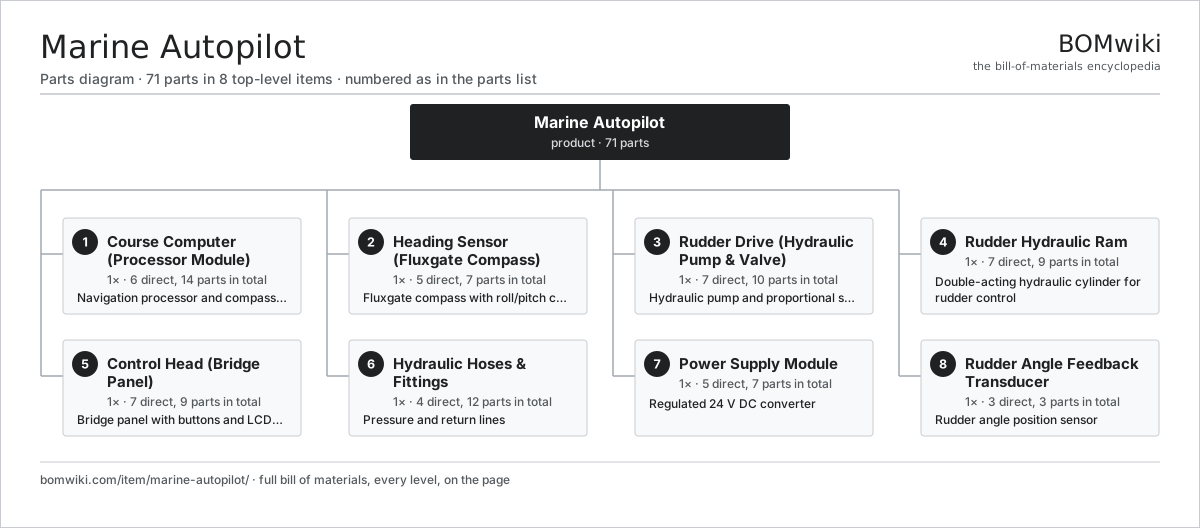
| # | Part | Qty | What it does |
|---|---|---|---|
| 1 | Course Computer (Processor Module) 6 parts | 1× | Navigation processor and compass interface |
| 2 | Heading Sensor (Fluxgate Compass) 5 parts | 1× | Fluxgate compass with roll/pitch compensation |
| 3 | Rudder Drive (Hydraulic Pump & Valve) 7 parts | 1× | Hydraulic pump and proportional solenoid valve |
| 4 | Rudder Hydraulic Ram 7 parts | 1× | Double-acting hydraulic cylinder for rudder control |
| 5 | Control Head (Bridge Panel) 7 parts | 1× | Bridge panel with buttons and LCD display |
| 6 | Hydraulic Hoses & Fittings 4 parts | 1× | Pressure and return lines |
| 7 | Power Supply Module 5 parts | 1× | Regulated 24 V DC converter |
| 8 | Rudder Angle Feedback Transducer 3 parts | 1× | Rudder angle position sensor |
3D model
No 3D model yet. Have a CAD file of this? Add a 3D model. STL renders right on this page; STEP, FreeCAD, and OpenSCAD sources are welcome too (openly licensed, like all 3D models on BOMwiki).
Build & assembly graph
expand / collapse · shared sub-assemblies converge · links to related products · est. labourTap an assembly to expand/collapse · tap a part to open it · use “Open page” for any node · drag to pan, scroll to zoom.
Bill of materials for Marine Autopilot
8 top-level lines · 52 rows shown · 71 parts total · indented to 3 levels| # | Item / sub-assembly | Part no. | Qty/assy | Ext. qty | Parts | Type |
|---|---|---|---|---|---|---|
| 1 | Course Computer (Processor Module) 6 parts | marine-autopilot-course-computer | 1× | 1 | 14 | assembly |
| 1.1 | Main PCB | marine-autopilot-main-board | 1× | 1 | · | part |
| 1.2 | Microcontroller | mcu | 1× | 1 | · | part |
| 1.3 | Memory Module | marine-autopilot-memory | 1× | 1 | · | part |
| 1.4 | Network Interface | marine-autopilot-network-interface | 1× | 1 | · | part |
| 1.5 | Relay Driver Card | marine-autopilot-relay-driver | 2× | 2 | · | part |
| 1.6 | Connector | connector | 8× | 8 | · | part |
| 2 | Heading Sensor (Fluxgate Compass) 5 parts | marine-autopilot-heading-sensor | 1× | 1 | 7 | assembly |
| 2.1 | Fluxgate Coil | marine-autopilot-fluxgate-element | 1× | 1 | · | part |
| 2.2 | Sensor Processor | marine-autopilot-sensor-processor | 1× | 1 | · | part |
| 2.3 | Tilt Inclinometer (MEMS Accelerometer) | marine-autopilot-tilt-inclinometer | 2× | 2 | · | part |
| 2.4 | Sensor Housing | marine-autopilot-sensor-housing | 1× | 1 | · | part |
| 2.5 | Connector | connector | 2× | 2 | · | part |
| 3 | Rudder Drive (Hydraulic Pump & Valve) 7 parts | marine-autopilot-rudder-drive | 1× | 1 | 10 | assembly |
| 3.1 | Drive Motor | marine-autopilot-drive-motor | 1× | 1 | · | part |
| 3.2 | Hydraulic Pump | marine-autopilot-pump | 1× | 1 | · | part |
| 3.3 | Proportional Solenoid Valve | marine-autopilot-solenoid-valve | 1× | 1 | · | part |
| 3.4 | Relief Valve | marine-autopilot-relief-valve | 1× | 1 | · | part |
| 3.5 | Flow Divider / Steering Valve | marine-autopilot-flow-divider | 1× | 1 | · | part |
| 3.6 | Valve Manifold Block | marine-autopilot-manifold-block | 1× | 1 | · | part |
| 3.7 | Connector | connector | 4× | 4 | · | part |
| 4 | Rudder Hydraulic Ram 7 parts | marine-autopilot-rudder-ram | 1× | 1 | 9 | assembly |
| 4.1 | Cylinder Barrel | marine-autopilot-ram-barrel | 1× | 1 | · | part |
| 4.2 | Piston | marine-autopilot-ram-piston | 1× | 1 | · | part |
| 4.3 | Tie Rod | marine-autopilot-ram-rod | 1× | 1 | · | part |
| 4.4 | End Cap | marine-autopilot-ram-head | 2× | 2 | · | part |
| 4.5 | Position Transducer (LVDT) | marine-autopilot-position-transducer | 1× | 1 | · | part |
| 4.6 | O-Ring Set | oring-set | 2× | 2 | · | part |
| 4.7 | Fastener Set | fastener-set | 1× | 1 | · | part |
| 5 | Control Head (Bridge Panel) 7 parts | marine-autopilot-control-head | 1× | 1 | 9 | assembly |
| 5.1 | Panel Enclosure | marine-autopilot-panel-enclosure | 1× | 1 | · | part |
| 5.2 | LCD Display | marine-autopilot-lcd-screen | 1× | 1 | · | part |
| 5.3 | Mode Selector | marine-autopilot-mode-selector | 1× | 1 | · | part |
| 5.4 | Course Adjustment Knob | marine-autopilot-course-knob | 1× | 1 | · | part |
| 5.5 | Keypad | marine-autopilot-button-array | 1× | 1 | · | part |
| 5.6 | Status LED | marine-autopilot-led-status | 2× | 2 | · | part |
| 5.7 | Connector | connector | 2× | 2 | · | part |
| 6 | Hydraulic Hoses & Fittings 4 parts | marine-autopilot-hydraulic-hoses | 1× | 1 | 12 | assembly |
| 6.1 | Pressure Hose | marine-autopilot-hose-pressure | 2× | 2 | · | part |
| 6.2 | Return Hose | marine-autopilot-hose-return | 1× | 1 | · | part |
| 6.3 | Hose Fitting | marine-autopilot-hose-fitting | 8× | 8 | · | part |
| 6.4 | Accumulator | marine-autopilot-accumulator | 1× | 1 | · | part |
| 7 | Power Supply Module 5 parts | marine-autopilot-power-supply | 1× | 1 | 7 | assembly |
| 7.1 | AC/DC Converter | marine-autopilot-ac-dc-converter | 1× | 1 | · | part |
| 7.2 | Backup Battery | marine-autopilot-backup-battery | 1× | 1 | · | part |
| 7.3 | Charger Module | marine-autopilot-charger-module | 1× | 1 | · | part |
| 7.4 | Surge Protector | marine-autopilot-surge-protector | 1× | 1 | · | part |
| 7.5 | Connector | connector | 3× | 3 | · | part |
| 8 | Rudder Angle Feedback Transducer 3 parts | marine-autopilot-feedback-transducer | 1× | 1 | 3 | assembly |
| 8.1 | Synchro Transmitter | marine-autopilot-synchro-transmitter | 1× | 1 | · | part |
| 8.2 | Signal Cable | marine-autopilot-signal-cable | 1× | 1 | · | part |
| 8.3 | Bulkhead Connector | marine-autopilot-connector-bulkhead | 1× | 1 | · | part |
Something wrong in this list? Report a problem with this BOM.
Related products
same domain, ranked by shared parts Anchor Handling Tug
1,196 parts · shares 2 with this page
Anchor Handling Tug
1,196 parts · shares 2 with this page
 Anchor Windlass
79 parts · shares 2 with this page
Aviary Misting System
83 parts · shares 2 with this page
Bass Fishing Boat
306 parts · shares 2 with this page
Anchor Windlass
79 parts · shares 2 with this page
Aviary Misting System
83 parts · shares 2 with this page
Bass Fishing Boat
306 parts · shares 2 with this page
 Bulk Carrier
357,978 parts · shares 2 with this page
Bulk Carrier
357,978 parts · shares 2 with this page
 Cabin Cruiser
158 parts · shares 2 with this page
Cabin Cruiser
158 parts · shares 2 with this page
Sourcing: possible vendors
Browse the supplier directory → Prices, MOQ, and lead times are algorithmic estimates, not quotes, and not claims about these companies. Company mappings are curated by keyword; est. price band $2k–$500M. How estimates work| Vendor | HQ | Specialty | MOQ | Lead time |
|---|---|---|---|---|
| hd.com ↗ | Ulsan, KR | Shipbuilder | made to order | 52–104 wks |
| fincantieri.com ↗ | Trieste, IT | Shipbuilder | made to order | 52–104 wks |
| damen.com ↗ | Gorinchem, NL | Shipbuilder | made to order | 52–104 wks |
| brunswick.com ↗ | Mettawa, US | Marine & boats | made to order | 52–104 wks |
|
🇨🇳CSSC
cssc.net.cn ↗
|
Shanghai, CN | Shipbuilding conglomerate | made to order | 52–104 wks |
1,134-word article