Marine Sewage Treatment Plant
ProductOverview
Modern ocean-going vessels carry 20–100+ crew and passengers. Sanitary waste (sewage) generation is inevitable: 130–150 liters per person per day for toilets, showers, laundry, and galley dishwashing. Without treatment, raw sewage discharged overboard violates IMO MARPOL Annex IV regulations (enforceable by port state control, with fines $5,000–100,000+).
A shipboard Marine Sewage Treatment Plant plant employs activated sludge biological treatment, the same core process used in municipal wastewater plants, scaled and hardened for marine service. The result: treated effluent with <25 mg/L biological oxygen demand (BOD), allowing guilt-free overboard discharge.
Process Flow
Step 1: Screening & Comminution (Screening & Grit): Raw sewage passes through a Comminutor, a rotating cutting mechanism that grinds solids to <6 mm. A Screen Mesh (3 mm perforated plate) removes larger rags. A Grit Chamber allows sand and abrasive particles to settle, preventing pump wear. The screened, ground waste is pumped into the Aeration Chamber.
Step 2: Biological Oxidation (Aeration Chamber): The 20 m³ aeration tank hosts a colony of aerobic microorganisms (bacteria, protozoa) that consume organic matter (fats, proteins, carbohydrates). The Aeration Blower, a 7.5 kW centrifugal blower, supplies 250 m³/hr of air, delivered via a Aeration Diffuser grid that creates fine bubbles. Oxygen saturation drives metabolism: 5–6 hours of aeration converts influent BOD from ~600 mg/L to <50 mg/L.
Step 3: Gravity Settling (Secondary Settler): Biologically treated water flows to a 10 m³ secondary clarifier (settler). Microorganisms, now heavier from synthesized cell material, settle to the bottom. Clean clarified water overflows a Weir Outlet toward disinfection. Settled sludge-thickener (rich in active biomass) is recycled via the Return Pump back to the aeration tank. Excess biomass (waste sludge) is purged to the Sludge Thickener for dewatering.
Step 4: Disinfection (Disinfection Stage): Clarified water, while biochemically clean, still harbors viruses and pathogenic bacteria. A UV Lamp (30 W ultraviolet germicidal lamp at 254 nm wavelength) sterilizes the water in a 5-second residence chamber. Alternatively, a Chlorine Doser adds sodium hypochlorite (2–5 ppm residual chlorine) for continuous microbial inactivation.
Step 5: Discharge (Discharge Pump): Treated, disinfected water is metered overboard via a positive displacement pump at 2 m³/hr.
Activated Sludge Biology
The key to STP performance is the mixed liquor suspended solids (MLSS) population, the billions of microorganisms suspended in the aeration tank. Key species:
- Heterotrophic bacteria: Primary consumers of organic matter, oxidizing proteins, fats, carbohydrates to CO₂ and water.
- Nitrifying bacteria: Convert ammonia (from protein degradation) → nitrite → nitrate, removing a primary pollutant.
- Protozoa: Graze on bacteria, polishing water clarity and consuming slower-growing pathogens.
Operating the aeration tank at elevated dissolved oxygen (DO >2 mg/L) selects for aerobic organisms and excludes anaerobic pathogens. The Dissolved Oxygen Probe probe continuously monitors DO; if it drops <1 mg/L, the Control System PLC triggers alarms because biological degradation slows or stops.
A critical parameter is MLSS concentration (typically 3,000–5,000 mg/L). Too low and insufficient biomass exists to degrade waste; too high and oxygen transfer becomes diffusion-limited. The return sludge pump recirculates 50–100% of settler underflow back to aeration, maintaining optimal MLSS by balancing growth and waste sludge purge.
Operational Control
The Control System PLC monitors:
Aeration blower: On/off based on DO feedback. If DO rises >4 mg/L (oxygen saturated), blower idles; if DO falls <1.5 mg/L, blower idles and warning sounds.
Return sludge pump: Continuous at 50–100% capacity, maintaining settler underflow recirculation.
Waste sludge purge: Automated on a timer (e.g., 15 min/day) to remove excess biomass and prevent sludge age from creeping above 10 days (stale sludge becomes fragile and poorly settling).
Disinfection: UV lamp auto-on when discharge pump starts; chlorine doser paced to effluent flow.
Alarms: High MLSS (clogged settler), low DO, high temperature (bacterial shock), pH drift (acidic influent from food waste), power loss.
The Data Logger records all parameters to a VDR (voyage data recorder), enabling port state control audits.
Challenge: High Organic Load Variation
Ship sewage is highly variable. A 500-passenger cruise ship discharges 65 m³/day raw sewage during sea days but >100 m³/day in port (increased galley ops). The BOD varies 400–1000 mg/L. This load shock stresses the Aeration Chamber: if organic matter suddenly spikes, microorganisms can't consume it fast enough, and BOD rises in the treated effluent, violating discharge standards.
Mitigation strategies:
- Equalization: Pre-treat tank sized to 3–6 hours flow storage, smoothing inlet surges.
- Adaptive aeration: Increase air rate if DO drops >2 mg/L, signaling metabolic surge.
- Batch operation: Some STPs operate intermittently (8 hours on, 8 hours settling/idle), reducing average oxygen demand while still meeting discharge.
Modern cruise ships install sequencing batch reactors (SBR), batch-process variants that treat sewage in timed cycles (fill → aerate → settle → draw), inherently handling load swings better than continuous-flow plants.
Sludge Disposal
Waste sludge from the Sludge Thickener (typically 200–500 L per week on a passenger vessel) must be disposed ashore. Options:
- Pump-out at port: Sludge tanker truck discharges to shore-based treatment facility (~$500 per m³).
- Sludge tank storage: Thickened cake stored until next port call (requires 2–5 m³ tank space).
- Incineration: Some vessels incinerate dewatered sludge via the Marine Incinerator system.
MARPOL prohibits sludge dumping in most waters; only specific deep-ocean dumping areas (>25 nm offshore) permit sludge discharge in limited cases. Modern best practice: all sludge is retained and disposed ashore.
Common Failure Modes
Sludge bulking: If filamentous bacteria (e.g., Nocardia) proliferate, settling worsens dramatically, clarifier becomes turbid and biomass escapes in effluent. Cause: low F/M ratio (too much biomass, too little food). Cure: increase waste sludge purge rate.
Nitrification failure: If aeration temp drops below 10°C (winter ocean in northern latitudes), nitrifying bacteria shut down. Ammonia (toxic to fish) accumulates in effluent, causing port state control fines. Solution: heat influent or upgrade blower power.
UV lamp fouling: Algae and calcium carbonate deposits coat the Quartz Sleeve, reducing light transmission. Annual chemical cleaning or sleeve replacement is mandatory.
Aeration diffuser clogging: Sand from grit chamber or biofilm mat the diffusers, reducing oxygen transfer. Backflushing with compressed air (reverse flow) periodically clears blockages.
System Sizing for Crew Complement
Rule of thumb: 130 L/person/day sewage generation.
- A 50-person crew: 6.5 m³/day → tank residence time 5 hours → aeration volume ≈20 m³ (sufficient).
- A 300-person crew (cruise ship): 39 m³/day → need 2–3 parallel STP units or oversized single plant.
STP capacity is critical, undersizing forces discharge violations. Oversizing adds weight, space, power, but provides margin for fouling and maintenance.
Regulatory Compliance
MARPOL Annex IV requires:
- Sewage from >400 GT vessels must pass through approved STP or hold tank.
- Discharge standards: <25 mg/L BOD (5-day), <35 mg/L suspended solids (measured by Secchi disk transparency: >1 m).
- Disinfection: <100 fecal coliforms per 100 mL (achieved via UV).
- Discharge location: >3 nm offshore (12 nm in some special areas, e.g., Mediterranean).
Port state control boards randomly and inspects STP performance logs. Non-compliance incurs detention and fines.
Future Trends
Advanced STP variants emerging:
- Membrane bioreactors (MBR): Replace secondary settler with ultrafiltration membrane; produces extremely clean water (<5 mg/L BOD, <1 mg/L suspended solids).
- Nutrient recovery: Capture phosphorus and nitrogen for fertilizer, valuable in some ports.
- Water reuse: Treated STP effluent reused for cooling, deck wash, or dilution of ballast water, reducing freshwater consumption.
These technologies reduce environmental footprint but increase capital cost ($200k–500k for >300-person capacity STP).
Marine Sewage Treatment Plant parts and their functions
8 top-level parts · 68 parts in total · full bill of materials below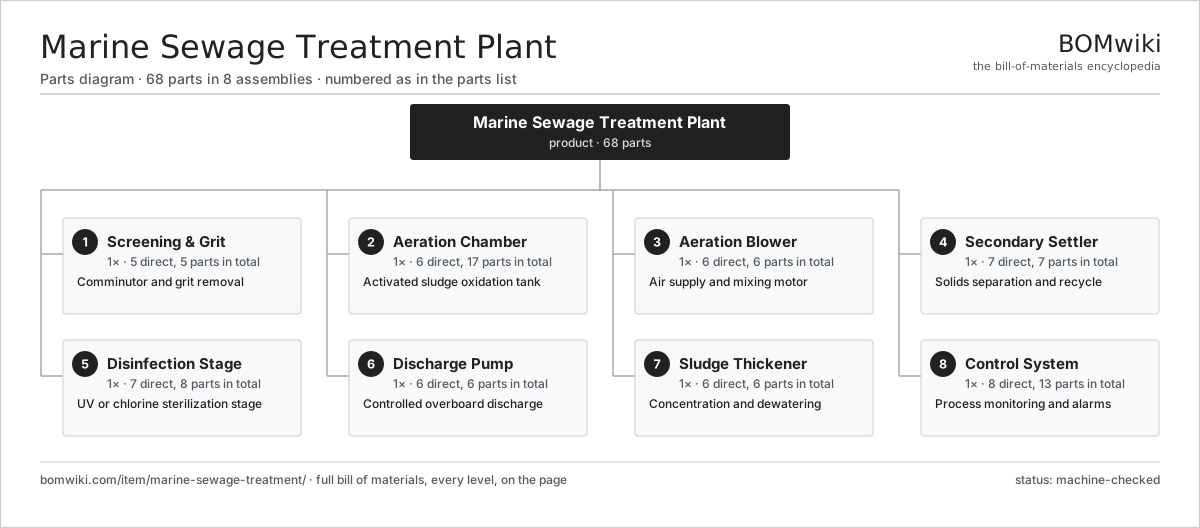
| # | Part | Qty | What it does |
|---|---|---|---|
| 1 | Screening & Grit 5 parts | 1× | Comminutor and grit removal |
| 2 | Aeration Chamber 6 parts | 1× | Activated sludge oxidation tank |
| 3 | Aeration Blower 6 parts | 1× | Air supply and mixing motor |
| 4 | Secondary Settler 7 parts | 1× | Solids separation and recycle |
| 5 | Disinfection Stage 7 parts | 1× | UV or chlorine sterilization stage |
| 6 | Discharge Pump 6 parts | 1× | Controlled overboard discharge |
| 7 | Sludge Thickener 6 parts | 1× | Concentration and dewatering |
| 8 | Control System 8 parts | 1× | Process monitoring and alarms |
3D model
No 3D model yet. Have a CAD file of this? Add a 3D model — STL renders right on this page; STEP, FreeCAD, and OpenSCAD sources are welcome too (openly licensed, like all 3D models on BOMwiki).
Build & assembly graph
expand / collapse · shared sub-assemblies converge · links to related products · est. labourTap an assembly to expand/collapse · tap a part to open it · use “Open page” for any node · drag to pan, scroll to zoom.
Bill of materials for Marine Sewage Treatment Plant
8 top-level lines · 59 rows shown · 68 parts total · indented to 3 levels| # | Item / sub-assembly | Part no. | Qty/assy | Ext. qty | Parts | Type |
|---|---|---|---|---|---|---|
| 1 | Screening & Grit 5 parts | marine-sewage-treatment-screening | 1× | 1 | 5 | assembly |
| 1.1 | Comminutor | marine-sewage-treatment-comminutor | 1× | 1 | · | part |
| 1.2 | Screen Mesh | marine-sewage-treatment-screen-mesh | 1× | 1 | · | part |
| 1.3 | Grit Chamber | marine-sewage-treatment-grit-chamber | 1× | 1 | · | part |
| 1.4 | Inlet Pump | marine-sewage-treatment-pump-inlet | 1× | 1 | · | part |
| 1.5 | Fastener Set | fastener-set | 1× | 1 | · | part |
| 2 | Aeration Chamber 6 parts | marine-sewage-treatment-aeration-chamber | 1× | 1 | 17 | assembly |
| 2.1 | Aeration Tank Shell | marine-sewage-treatment-tank-shell | 1× | 1 | · | part |
| 2.2 | Aeration Diffuser | marine-sewage-treatment-aeration-diffuser | 12× | 12 | · | part |
| 2.3 | Return Sludge Line | marine-sewage-treatment-return-sludge-line | 1× | 1 | · | part |
| 2.4 | Waste Sludge Valve | marine-sewage-treatment-drain-valve | 1× | 1 | · | part |
| 2.5 | Level Sensor | marine-sewage-treatment-level-sensor | 1× | 1 | · | part |
| 2.6 | Fastener Set | fastener-set | 1× | 1 | · | part |
| 3 | Aeration Blower 6 parts | marine-sewage-treatment-aeration-blower | 1× | 1 | 6 | assembly |
| 3.1 | Blower Motor | marine-sewage-treatment-blower-motor | 1× | 1 | · | part |
| 3.2 | Blower Motor | blower-motor | 1× | 1 | · | part |
| 3.3 | Air Filter | marine-sewage-treatment-air-filter | 1× | 1 | · | part |
| 3.4 | Air Flowmeter | marine-sewage-treatment-air-flowmeter | 1× | 1 | · | part |
| 3.5 | Silencer | marine-sewage-treatment-silencer | 1× | 1 | · | part |
| 3.6 | Fastener Set | fastener-set | 1× | 1 | · | part |
| 4 | Secondary Settler 7 parts | marine-sewage-treatment-secondary-settling | 1× | 1 | 7 | assembly |
| 4.1 | Settler Basin | marine-sewage-treatment-settler-basin | 1× | 1 | · | part |
| 4.2 | Settler Baffle | marine-sewage-treatment-settler-baffle | 1× | 1 | · | part |
| 4.3 | Lamella Pack | marine-sewage-treatment-settler-lamella-pack | 1× | 1 | · | part |
| 4.4 | Sludge Rake | marine-sewage-treatment-sludge-rake | 1× | 1 | · | part |
| 4.5 | Return Pump | marine-sewage-treatment-return-pump | 1× | 1 | · | part |
| 4.6 | Weir Outlet | marine-sewage-treatment-weir-outlet | 1× | 1 | · | part |
| 4.7 | Fastener Set | fastener-set | 1× | 1 | · | part |
| 5 | Disinfection Stage 7 parts | marine-sewage-treatment-disinfection | 1× | 1 | 8 | assembly |
| 5.1 | UV Lamp | marine-sewage-treatment-uv-lamp | 1× | 1 | · | part |
| 5.2 | UV Ballast | marine-sewage-treatment-uv-ballast | 1× | 1 | · | part |
| 5.3 | Quartz Sleeve | marine-sewage-treatment-uv-quartz-sleeve | 1× | 1 | · | part |
| 5.4 | UV Chamber | marine-sewage-treatment-uv-chamber | 1× | 1 | · | part |
| 5.5 | Chlorine Doser | marine-sewage-treatment-chlorine-doser | 1× | 1 | · | part |
| 5.6 | Connector | connector | 2× | 2 | · | part |
| 5.7 | Fastener Set | fastener-set | 1× | 1 | · | part |
| 6 | Discharge Pump 6 parts | marine-sewage-treatment-discharge-pump | 1× | 1 | 6 | assembly |
| 6.1 | Discharge Pump | marine-sewage-treatment-discharge-gear-pump | 1× | 1 | · | part |
| 6.2 | Discharge Motor | marine-sewage-treatment-pump-motor | 1× | 1 | · | part |
| 6.3 | Discharge Solenoid | marine-sewage-treatment-discharge-valve | 1× | 1 | · | part |
| 6.4 | Discharge Piping | marine-sewage-treatment-discharge-piping | 1× | 1 | · | part |
| 6.5 | Pressure Sensor | pressure-sensor | 1× | 1 | · | part |
| 6.6 | Fastener Set | fastener-set | 1× | 1 | · | part |
| 7 | Sludge Thickener 6 parts | marine-sewage-treatment-sludge-thickener | 1× | 1 | 6 | assembly |
| 7.1 | Thickener Tank | marine-sewage-treatment-thickener-tank | 1× | 1 | · | part |
| 7.2 | Thickener Rake | marine-sewage-treatment-thickener-rake | 1× | 1 | · | part |
| 7.3 | Overflow Weir | marine-sewage-treatment-overflow-weir | 1× | 1 | · | part |
| 7.4 | Sludge Drain Valve | marine-sewage-treatment-sludge-drain | 1× | 1 | · | part |
| 7.5 | Chemical Doser | marine-sewage-treatment-chemical-doser | 1× | 1 | · | part |
| 7.6 | Fastener Set | fastener-set | 1× | 1 | · | part |
| 8 | Control System 8 parts | marine-sewage-treatment-control-system | 1× | 1 | 13 | assembly |
| 8.1 | PLC | marine-sewage-treatment-plc | 1× | 1 | · | part |
| 8.2 | Temperature Sensor | marine-sewage-treatment-temperature-sensor | 1× | 1 | · | part |
| 8.3 | Dissolved Oxygen Probe | marine-sewage-treatment-dissolved-oxygen | 1× | 1 | · | part |
| 8.4 | pH Sensor | marine-sewage-treatment-ph-sensor | 1× | 1 | · | part |
| 8.5 | Control Panel | marine-sewage-treatment-control-panel | 1× | 1 | · | part |
| 8.6 | Data Logger | marine-sewage-treatment-data-logger | 1× | 1 | · | part |
| 8.7 | Relay | relay | 3× | 3 | · | part |
| 8.8 | Connector | connector | 4× | 4 | · | part |
Related products
same domain, ranked by shared parts Breathing Air Dive Compressor
64 parts · shares 3 with this page
Breathing Air Dive Compressor
64 parts · shares 3 with this page
 Cruise Ship
2,306,635 parts · shares 3 with this page
Cruise Ship
2,306,635 parts · shares 3 with this page
 RAS System
29 parts · shares 2 with this page
RAS System
29 parts · shares 2 with this page
 Hovercraft
138 parts · shares 2 with this page
Hovercraft
138 parts · shares 2 with this page
 Penguin Habitat Chiller
65 parts · shares 2 with this page
Penguin Habitat Chiller
65 parts · shares 2 with this page
 Protein Skimmer
18 parts · shares 1 with this page
Protein Skimmer
18 parts · shares 1 with this page
Sourcing: possible vendors
Prices, MOQ, and lead times are algorithmic estimates, not quotes, and not claims about these companies. Company mappings are curated by keyword; est. price band $2k–$500M. How estimates work| Vendor | HQ | Specialty | MOQ | Lead time |
|---|---|---|---|---|
| hd.com ↗ | Ulsan, KR | Shipbuilder | made to order | 52–104 wks |
| fincantieri.com ↗ | Trieste, IT | Shipbuilder | made to order | 52–104 wks |
| damen.com ↗ | Gorinchem, NL | Shipbuilder | made to order | 52–104 wks |
| brunswick.com ↗ | Mettawa, US | Marine & boats | made to order | 52–104 wks |
|
🇨🇳CSSC
cssc.net.cn ↗
|
Shanghai, CN | Shipbuilding conglomerate | made to order | 52–104 wks |
1,338-word article