Medical Waste Truck
ProductOverview
The medical waste truck is a highly specialized vehicle for the safe, temperature-controlled, and fully-documented collection of hazardous biomedical waste from hospitals, clinics, laboratories, and diagnostic centres. Medical waste (often categorized as non-hazardous, pharmaceutical, pathological, or infectious) requires strict handling to prevent pathogen transmission, cross-contamination, and environmental contamination.
Unlike general refuse or even industrial hazardous waste, medical waste demands refrigeration (0–4 °C) to slow bacterial and viral growth during the interim period between collection and treatment (typically 24–72 hours). The truck combines a sealed, insulated stainless steel tank with compressor-based refrigeration, making it one of the most capital-intensive waste collection vehicles available ($150,000–300,000 base price).
Medical waste collection emerged as a specialized service in the 1980s–1990s, driven by hospital accreditation standards and infectious disease protocols. Today, it is a regulated profession with strict training, licensing, and documentation requirements in most developed nations. Modern trucks integrate GPS tracking, electronic manifests, weight measurement, and temperature logging to provide a complete chain-of-custody record, satisfying regulatory audits and insurance requirements.
How it Works
The medical waste truck arrives at a hospital ward or clinic where medical waste has accumulated in clearly marked, sealed containers (typically red bags or yellow bins for infectious waste, purple for pharmaceutical, clear for general). The containers are staged in a designated holding area (not in patient-facing spaces).
The truck's refrigeration system may be running continuously or activated upon arrival; in hot climates, continuous operation during collection shifts is standard to prevent food-borne pathogen growth and pathogenic microorganism multiplication. The tank is maintained at 0–4 °C, typically 2–3 °C setpoint, throughout collection.
The operator approaches a medical waste cart (typically a mobile bin holding 240–300 L of waste, weight 50–100 kg when loaded) and manually positions it at the truck's rear collection point. A hydraulic cart-lift arm (similar to garbage trucks but more compact and with medical-grade controls) is engaged: the arm's universal gripper secures the cart's handles, and load sensors verify proper engagement.
The operator triggers the lift sequence via a cabin button: the hydraulic system raises the cart 1.5–2.0 meters vertically. A protective contamination shield (partially enclosing the cart-to-tank junction) reduces aerosol dispersal during waste transfer. Once the cart is positioned above the sealed tank's open inlet, the arm inverts the cart, emptying its contents into the refrigerated tank. A second hydraulic motion slowly rights the cart and lowers it to the ground.
Simultaneously, the truck's barcode scanner (handheld or integrated) reads the medical waste cart's unique ID barcode and the facility's identifier code. This data, combined with the waste weight measurement (measured on the truck's integrated scale before and after each collection), is automatically logged into an electronic manifest. The manifest is transmitted in real-time via cellular modem to the receiving facility, hospital administration, and regulatory bodies if required.
Temperature and pressure sensors on the refrigeration circuit continuously monitor system health. If the tank temperature drifts above 4 °C (indicating compressor degradation or refrigerant leak), an audible alarm sounds in the cabin and a message is transmitted to fleet maintenance.
The collection process repeats at multiple healthcare facilities throughout the day. The truck may service 20–30 stops per shift, collecting 1–3 tonnes of medical waste. Throughout transit between stops, the tank remains sealed and refrigerated, preventing pathogen growth and odour emissions.
When the truck's tank approaches capacity or at shift end, the vehicle proceeds to a medical waste treatment facility (typically a licensed incinerator, autoclave sterilization, or chemical disinfection plant). The tank is backed into a unloading bay where a facility operator accesses the sealed tank via a standard connection. Waste is offloaded directly into a treatment vessel; the driver never enters the tank, and contamination risk is minimized.
At day's end, the truck undergoes mandatory decontamination: the exterior is wiped with hospital-grade disinfectant, and the tank interior is rinsed or sprayed (protocols vary by jurisdiction and facility agreement). The truck parks in a designated, secure area until the next collection shift.
Safety and biosafety protocols are paramount:
- Sealed tank preventing accidental operator exposure to waste or aerosols.
- HEPA-filtered, pressurized cabin reducing inhalation exposure.
- Mechanical interlocks preventing tank access while refrigeration is operating.
- Automatic temperature and pressure monitoring with fail-safe alerts.
- Chain-of-custody electronic documentation enabling trace-back of any contamination incident.
- Emergency shutdown procedures for spills or compressor failure.
- Puncture-resistant sharps container on-board for needle stick prevention.
Subsystems
The chassis is a heavy-duty platform: 6-cylinder diesel (150–180 kW) with power-take-off (PTO) capability enabling the engine to drive the refrigeration compressor at high idle during static collection. Automatic transmission with idle-augmentation feature is standard. The frame is stainless or epoxy-coated for corrosion resistance.
The refrigerated tank is the core: a 4–8 m³ stainless steel 304 or 316 vessel with 50–100 mm foam insulation, sealed lid with gasket, integral refrigeration evaporator coil, and drain valve. Stainless construction ensures cleanability and corrosion resistance; high insulation reduces compressor load and fuel consumption.
The cart lift mechanism is a compact hydraulic arm with universal gripper and load-sensing feedback, lifting standard hospital waste carts (240–300 L, 50–100 kg) with controlled vertical motion and protective contamination shielding.
The refrigeration system comprises a 5–8 kW compressor driven by engine PTO, air-cooled condenser, thermostatic expansion valve, and electronic controller maintaining 0–4 °C ±1 °C. Redundant thermostats and pressure sensors provide fail-safe operation.
The tracking and documentation system integrates GPS, barcode scanner, weight scale, and tablet computer running compliance software. Electronic manifests are generated automatically per stop and transmitted via cellular modem in real-time, enabling regulatory compliance and chain-of-custody verification.
The hydraulic system is compact: a 20 cc/rev pump, proportional directional valve with dual pressure relief, accumulator, and filter. Load sensing ensures smooth cart handling and fail-safe descent if pressure is lost.
Safety and biosafety systems include mechanical tank access locks, interlock sensors preventing lift operation while tank is open, HEPA cabin filtration, emergency shutdown switch, and spill kit storage.
The control interface provides real-time temperature, weight, location, and pressure monitoring with automatic alerts for any deviations from safe operating parameters.
Applications and Variants
Medical waste collection serves:
- Acute care hospitals: Emergency departments, surgical suites, intensive care units generating large volumes of sharps, blood products, and pathological waste.
- Clinics and diagnostic labs: Smaller volumes of blood samples, test materials, and pharmaceutical waste.
- Long-term care facilities: Chronic disease management, hospice, and palliative care settings generating infectious and hazardous waste.
- Research institutions: Laboratory-generated biohazardous materials, animal research waste, and experimental compounds.
- Dental and surgical practices: Amalgam waste, extracted teeth, sharps, and sterilization byproducts.
Variants include:
- Dual-compartment trucks: Two separate refrigerated sections (infectious vs. pharmaceutical waste) with independent temperature controls and discharge systems.
- Mobile treatment units: Trucks equipped with on-board autoclave or microwave sterilization systems, enabling waste treatment on-site before final disposal.
- Negative-pressure cabin option: Advanced units with cabin negative pressure relative to exterior, further reducing operator exposure risk.
- Thermal monitoring with data logging: Continuous temperature recording (thermographic or RTD sensors) with on-truck data logger, enabling regulatory audits.
Regulatory Framework and Compliance
Medical waste is regulated under:
- OSHA Bloodborne Pathogen Standard (US): Exposure control plans, training, and documentation.
- EU Medical Devices Directive 93/42/EEC and waste regulations: Proper classification, tracking, and treatment.
- International Health Regulations (IHR): Cross-border medical waste transport protocols.
- National licensing: Most jurisdictions require medical waste collectors to hold special licenses and driver training certifications.
Compliance requires:
- Real-time temperature logging (proof that waste never exceeded 4 °C).
- Electronic manifests with facility, waste type, weight, date, and treatment confirmation.
- Chain-of-custody documentation from collection to final treatment.
- Annual safety audits and equipment certification.
- Driver training in bloodborne pathogen protocols and emergency response.
Modern trucks with automated temperature data logging and electronic manifest systems significantly reduce compliance burden compared to manual documentation.
Occupational Health and Safety
Medical waste collection carries occupational risks: needle stick injuries, exposure to bloodborne pathogens (HIV, Hepatitis B/C), respiratory infection from aerosolized microorganisms, and chemical exposure. Modern trucks minimize these through:
- Sealed tank and HEPA cabin filtration reducing pathogen exposure.
- Automated cart lifting eliminating manual handling and contact.
- Contamination shielding during waste transfer.
- On-board sharps container and biohazard cleanup materials.
- Emergency protocols for spills or exposures.
Drivers and loaders undergo specialized training covering bloodborne pathogen recognition, emergency response, and proper PPE use (gloves, respiratory protection where applicable).
Maintenance and Design Life
Refrigeration systems are complex and subject to seasonal stress. Compressor servicing is required annually; seal replacement every 3–5 years. Refrigerant (R-404A or R-507) is expensive and tightly regulated; recharges are required every 2–3 years as seals naturally weep. The stainless steel tank requires annual inspection for corrosion or weld integrity; repainting with food-grade epoxy every 5–7 years maintains interior cleanliness.
A well-maintained medical waste truck achieves 12–15 years in service, shorter than general refuse trucks due to compressor and stainless steel maintenance demands.
Economic Model
Medical waste collection is a high-margin service: the specialized truck, regulatory compliance burden, and training requirements create barriers to entry. Fees typically range $3–8 per kilogram of waste collected, compared to $0.10–0.50/kg for general refuse. Most hospitals contract with dedicated medical waste services rather than maintain in-house fleets, making specialized operators profitable despite high capital costs.
Environmental and Public Health Impact
Proper medical waste treatment prevents pathogen release into landfills and water systems. Incinerators destroy pathogens but release air emissions; autoclave sterilization is preferred in many jurisdictions as it produces non-hazardous residue suitable for landfill. The refrigerated truck is the first link in a chain: improper collection or storage can undermine downstream treatment, spreading infection and contamination.
Medical Waste Truck parts and their functions
8 top-level parts · 107 parts in total · full bill of materials below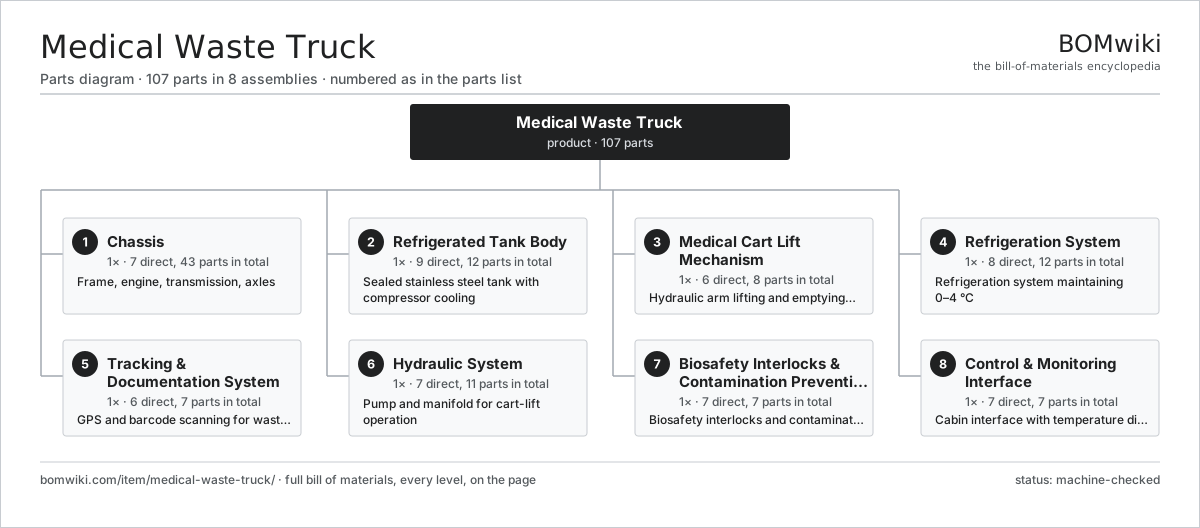
| # | Part | Qty | What it does |
|---|---|---|---|
| 1 | Chassis 7 parts | 1× | Frame, engine, transmission, axles |
| 2 | Refrigerated Tank Body 9 parts | 1× | Sealed stainless steel tank with compressor cooling |
| 3 | Medical Cart Lift Mechanism 6 parts | 1× | Hydraulic arm lifting and emptying medical waste carts |
| 4 | Refrigeration System 8 parts | 1× | Refrigeration system maintaining 0–4 °C |
| 5 | Tracking & Documentation System 6 parts | 1× | GPS and barcode scanning for waste chain-of-custody |
| 6 | Hydraulic System 7 parts | 1× | Pump and manifold for cart-lift operation |
| 7 | Biosafety Interlocks & Contamination Prevention 7 parts | 1× | Biosafety interlocks and contamination prevention |
| 8 | Control & Monitoring Interface 7 parts | 1× | Cabin interface with temperature display and alerts |
3D model
No 3D model yet. Have a CAD file of this? Add a 3D model — STL renders right on this page; STEP, FreeCAD, and OpenSCAD sources are welcome too (openly licensed, like all 3D models on BOMwiki).
Build & assembly graph
expand / collapse · shared sub-assemblies converge · links to related products · est. labourTap an assembly to expand/collapse · tap a part to open it · use “Open page” for any node · drag to pan, scroll to zoom.
Bill of materials for Medical Waste Truck
8 top-level lines · 70 rows shown · 107 parts total · indented to 3 levels| # | Item / sub-assembly | Part no. | Qty/assy | Ext. qty | Parts | Type |
|---|---|---|---|---|---|---|
| 1 | Chassis 7 parts | medical-waste-truck-chassis | 1× | 1 | 43 | assembly |
| 1.1 | Corrosion-Resistant Frame | medical-waste-truck-frame | 1× | 1 | · | part |
| 1.2 | Diesel Engine | medical-waste-truck-engine | 1× | 1 | · | part |
| 1.3 | Transmission | medical-waste-truck-transmission | 1× | 1 | · | part |
| 1.4 | Axles | medical-waste-truck-axles | 2× | 2 | · | part |
| 1.5 | Sealed Pressurized Cabin | medical-waste-truck-cab | 1× | 1 | · | part |
| 1.6 | Wheel Assembly 5 parts | wheel-assembly | 4× | 4 | 9 | assembly |
| 1.6.1 | Alloy Wheel | alloy-wheel | 1× | 4 | · | part |
| 1.6.2 | Tire | tire | 1× | 4 | · | part |
| 1.6.3 | TPMS Sensor | tpms-sensor | 1× | 4 | · | part |
| 1.6.4 | Lug Nut | lug-nut | 5× | 20 | · | part |
| 1.6.5 | Valve Stem | valve-stem | 1× | 4 | · | part |
| 1.7 | Fuel Tank | medical-waste-truck-fuel-tank | 1× | 1 | · | part |
| 2 | Refrigerated Tank Body 9 parts | medical-waste-truck-refrigerated-tank | 1× | 1 | 12 | assembly |
| 2.1 | Tank Shell | medical-waste-truck-tank-shell | 1× | 1 | · | part |
| 2.2 | Tank Insulation | medical-waste-truck-tank-insulation | 1× | 1 | · | part |
| 2.3 | Tank Lid Cover | medical-waste-truck-tank-lid | 1× | 1 | · | part |
| 2.4 | Refrigeration Unit | medical-waste-truck-refrigeration-unit | 1× | 1 | · | part |
| 2.5 | Evaporator Coil | medical-waste-truck-evaporator-coil | 1× | 1 | · | part |
| 2.6 | Temperature Controller | medical-waste-truck-temperature-controller | 1× | 1 | · | part |
| 2.7 | Pressure Relief Valve | medical-waste-truck-pressure-relief-valve | 1× | 1 | · | part |
| 2.8 | Drain Valve | medical-waste-truck-drain-plug | 1× | 1 | · | part |
| 2.9 | O-Ring Set | oring-set | 4× | 4 | · | part |
| 3 | Medical Cart Lift Mechanism 6 parts | medical-waste-truck-cart-lift | 1× | 1 | 8 | assembly |
| 3.1 | Cart Lift Boom | medical-waste-truck-lift-boom | 1× | 1 | · | part |
| 3.2 | Cart Gripper | medical-waste-truck-lift-gripper | 1× | 1 | · | part |
| 3.3 | Lift Cylinders | medical-waste-truck-lift-cylinder | 2× | 2 | · | part |
| 3.4 | Lift Sensors | medical-waste-truck-lift-sensors | 2× | 2 | · | part |
| 3.5 | Contamination Shield | medical-waste-truck-contamination-shield | 1× | 1 | · | part |
| 3.6 | Pressure Sensor | pressure-sensor | 1× | 1 | · | part |
| 4 | Refrigeration System 8 parts | medical-waste-truck-temperature-control | 1× | 1 | 12 | assembly |
| 4.1 | Refrigeration Compressor | medical-waste-truck-compressor | 1× | 1 | · | part |
| 4.2 | Condenser Fan Unit | medical-waste-truck-condenser-fan | 1× | 1 | · | part |
| 4.3 | Evaporator Assembly | medical-waste-truck-evaporator-assembly | 1× | 1 | · | part |
| 4.4 | Expansion Valve | medical-waste-truck-expansion-valve | 1× | 1 | · | part |
| 4.5 | Refrigerant Accumulator | medical-waste-truck-accumulator | 1× | 1 | · | part |
| 4.6 | Defrost Controller | medical-waste-truck-defrost-controller | 1× | 1 | · | part |
| 4.7 | Pressure Sensor | pressure-sensor | 2× | 2 | · | part |
| 4.8 | Connector | connector | 4× | 4 | · | part |
| 5 | Tracking & Documentation System 6 parts | medical-waste-truck-tracking-system | 1× | 1 | 7 | assembly |
| 5.1 | GPS Module | medical-waste-truck-gps-module | 1× | 1 | · | part |
| 5.2 | Barcode Scanner | medical-waste-truck-barcode-scanner | 1× | 1 | · | part |
| 5.3 | Weight Scale | medical-waste-truck-weight-scale | 1× | 1 | · | part |
| 5.4 | Rugged Tablet | medical-waste-truck-tablet-computer | 1× | 1 | · | part |
| 5.5 | Wireless Modem | medical-waste-truck-wireless-modem | 1× | 1 | · | part |
| 5.6 | Connector | connector | 2× | 2 | · | part |
| 6 | Hydraulic System 7 parts | medical-waste-truck-hydraulics | 1× | 1 | 11 | assembly |
| 6.1 | Hydraulic Pump | medical-waste-truck-hydraulic-pump | 1× | 1 | · | part |
| 6.2 | Proportional Valve Block | medical-waste-truck-valve-block | 1× | 1 | · | part |
| 6.3 | Hydraulic Filter | medical-waste-truck-filter | 1× | 1 | · | part |
| 6.4 | Refrigerant Accumulator | medical-waste-truck-accumulator | 1× | 1 | · | part |
| 6.5 | Hydraulic Reservoir | medical-waste-truck-tank | 1× | 1 | · | part |
| 6.6 | Pressure Sensor | pressure-sensor | 2× | 2 | · | part |
| 6.7 | Connector | connector | 4× | 4 | · | part |
| 7 | Biosafety Interlocks & Contamination Prevention 7 parts | medical-waste-truck-safety-systems | 1× | 1 | 7 | assembly |
| 7.1 | Tank Access Lock | medical-waste-truck-tank-access-lock | 1× | 1 | · | part |
| 7.2 | Emergency Shutdown Switch | medical-waste-truck-emergency-shutdown | 1× | 1 | · | part |
| 7.3 | Interlock Safety Sensor | medical-waste-truck-interlock-sensor | 1× | 1 | · | part |
| 7.4 | Contamination Shield | medical-waste-truck-contamination-shield | 1× | 1 | · | part |
| 7.5 | Spill Kit Holder | medical-waste-truck-spill-kit-mount | 1× | 1 | · | part |
| 7.6 | HEPA Filter | medical-waste-truck-cabin-hepa-filter | 1× | 1 | · | part |
| 7.7 | Sharps Container | medical-waste-truck-sharps-container | 1× | 1 | · | part |
| 8 | Control & Monitoring Interface 7 parts | medical-waste-truck-controls | 1× | 1 | 7 | assembly |
| 8.1 | Temperature Display | medical-waste-truck-temperature-display | 1× | 1 | · | part |
| 8.2 | Weight Display | medical-waste-truck-weight-display | 1× | 1 | · | part |
| 8.3 | Location Display | medical-waste-truck-location-display | 1× | 1 | · | part |
| 8.4 | Temperature Alarm | medical-waste-truck-temperature-alarm | 1× | 1 | · | part |
| 8.5 | Refrigeration Pressure Alarm | medical-waste-truck-pressure-alarm | 1× | 1 | · | part |
| 8.6 | Interlock Status Light | medical-waste-truck-interlock-indicator | 1× | 1 | · | part |
| 8.7 | Microcontroller | mcu | 1× | 1 | · | part |
Related products
same domain, ranked by shared parts Coupe Car
1,617 parts · shares 8 with this page
Coupe Car
1,617 parts · shares 8 with this page
 Food Truck
197 parts · shares 8 with this page
Food Truck
197 parts · shares 8 with this page
 Food Waste Collection Truck
95 parts · shares 8 with this page
Food Waste Collection Truck
95 parts · shares 8 with this page
 Front Loader Refuse Truck
131 parts · shares 8 with this page
Front Loader Refuse Truck
131 parts · shares 8 with this page
 Grapple Truck
146 parts · shares 8 with this page
Litter Vacuum Truck
101 parts · shares 8 with this page
Grapple Truck
146 parts · shares 8 with this page
Litter Vacuum Truck
101 parts · shares 8 with this page
Sourcing: possible vendors
Prices, MOQ, and lead times are algorithmic estimates, not quotes, and not claims about these companies. Company mappings are curated by keyword; est. price band $8k–$90k. How estimates work| Vendor | HQ | Specialty | MOQ | Lead time |
|---|---|---|---|---|
|
🇯🇵Toyota
global.toyota ↗
|
Toyota City, JP | Automaker | made to order | 16–28 wks |
| volkswagen-group.com ↗ | Wolfsburg, DE | Automaker | made to order | 16–28 wks |
| gm.com ↗ | Detroit, US | Automaker | made to order | 16–28 wks |
| hyundai.com ↗ | Seoul, KR | Automaker | made to order | 16–28 wks |
|
🇨🇳BYD
byd.com ↗
|
Shenzhen, CN | EV & battery manufacturer | made to order | 16–28 wks |
1,704-word article