Mobile Medical Clinic
ProductOverview
A mobile medical clinic brings primary care services to rural areas, disaster zones, and underserved urban neighborhoods, eliminating transportation barriers to basic healthcare screening and treatment. Mounted on a reinforced commercial van chassis, the clinic integrates examination rooms, diagnostic equipment, medical utilities (oxygen, suction, water), climate control, and power generation into a self-contained medical facility.
The foundation is a commercial van chassis: a turbocharged 2.5–3.5 L diesel engine producing 100–150 hp, paired with a five-speed automatic transmission. The frame and suspension are heavy-duty rated for 5000 kg payload, representing the combined weight of equipment (2000 kg), water tanks (400 kg), and patient load (500 kg). Heavy-duty leaf springs with air-assist cylinders prevent bottoming-out when parked fully loaded on uneven terrain.
The body is custom-built from stainless steel (304 grade) and aluminum, featuring separate exam rooms and a waiting area. The primary exam room (8 m²) contains a hydraulic stretcher table with adjustable height, a diagnostic examination light with articulating arm, and wall-mounted oxygen and suction delivery lines. The secondary exam room (6 m²) is configured for phlebotomy: a blood draw chair, specimen processing counter, and refrigerated cabinet for serum storage.
Medical utilities are integrated throughout: a 200 L fresh-water tank with electric pump delivers pressurized water to both exam rooms at 20 psi. A waste-water tank (150 L) with secondary containment collects gray water, preventing contamination of groundwater at remote clinic sites. Medical gas delivery, oxygen from two M-size cylinders (244 L capacity each) and suction at 65 L/min, is distributed via copper and PVC piping with compression fittings to each exam room, allowing providers to deliver oxygen by nasal cannula or non-rebreather mask and vacuum-assist procedures like wound irrigation or secretion clearance.
Climate control is critical for medication stability and patient comfort: a roof-mounted AC (15,000 BTU/h) maintains 20–24°C. Two HEPA filter cartridges (99.97% at 0.3 micron) prevent airborne pathogens from accumulating in the enclosed space, essential in crowded waiting rooms during flu season. Humidity control maintains 45–55% RH, preventing medication degradation and mold growth.
A 10 kVA diesel generator supplies continuous power to the AC, lighting, and diagnostic equipment while parked. A 200 Ah lithium battery pack with pure-sine inverter provides uninterruptible power for 4 hours if the generator fails, ensuring that patient records and ECG data are not lost mid-examination.
A hydraulic scissor lift platform (300 kg capacity, 400 mm extension) lowers the primary entrance 0.8 m below normal door height, allowing stretcher-borne patients and wheelchair users to access the clinic without manual lifting. The lift is powered by a 1.5 hp pump driven from the engine's PTO shaft, with proportioning valve allowing smooth operation over 8–10 seconds.
How it works
The mobile clinic arrives at a remote community or disaster site. The driver parks on level ground and engages the hydraulic scissor lift, extending it to ground level over 10 seconds. Community health workers set up the waiting area, arranging chairs and infection control signage. A generator is started, supplying power to the AC, lighting, and diagnostic equipment. The fresh-water tank is filled from a community supply; the waste-water tank is emptied if partially full from previous operations.
Patients enter through the lowered lift platform and wait in the climate-controlled (22°C, 45–55% RH) waiting area. A nurse or community health worker takes vital signs at the entrance: temperature via infrared thermometer (non-contact, 1-second read), blood pressure via automated monitor, weight via digital scale. These data are recorded into a mobile-clinic-specific electronic health record (EHR) running on the workstation.
The first patient enters the Exam Room Assembly primary exam room. A clinician uses the Otoscope/Ophthalmoscope to inspect ears and throat, the Electronic Stethoscope (electronic, with amplification for quiet hearts) to assess lung and heart sounds, and the Examination Light for direct visualization of any lesions or skin conditions. If the patient requires oxygen, the clinician connects tubing to the wall Oxygen Regulator, setting flow rate (typically 2–6 L/min for supplemental oxygen).
A second patient or the same patient's follow-up phlebotomy occurs in the Phlebotomy/Secondary Exam Room: the nurse performs a venipuncture, drawing blood into labeled tubes. The specimen is immediately placed in the specimen refrigerator (maintained at 4°C) and will be transported to the nearest hospital or reference lab for formal testing (CBC, metabolic panel, lipid profile, etc.).
The clinic Medical Utilities System are continuously monitored: the Fresh Water Tank supplies cold water to the hand-washing sink (foot-pedal control, preventing contamination during patient care). The Suction Pump (65 L/min capacity) provides vacuum for wound cleaning or aspiration of secretions. Both oxygen cylinders are monitored for pressure; a backup regulator-and-cylinder assembly is kept on-board to prevent downtime.
Climate control operates continuously: the Zone Thermostat maintains 22°C setpoint; if outside temperature exceeds 30°C and the AC cannot maintain setpoint, the HEPA filters restrict volume slightly to reduce cooling load and preserve generator fuel. A Humidifier/Dehumidifier unit dehumidifies on humid days, preventing mold in the enclosed space.
The Power Generation and Distribution system idles the generator at 1500 rpm while the clinic is open, consuming ~2 L/hour of diesel fuel. After 8 hours of operation, the 60 L fuel tank is typically 40–50% depleted. The Lithium Battery Bank has charged throughout the day and provides 4-hour UPS function for the EHR computer and refrigerator, allowing graceful shutdown if the generator fails mid-shift.
At day's end, patient records are uploaded to a central server via 4G LTE cellular modem (if available). The fresh-water tank is emptied or refilled for the next site. The waste-water tank is emptied into approved disposal facilities. The refrigerated blood specimens are hand-carried or shipped overnight to the central lab.
Operational constraints
Fuel logistics are critical: a 60 L tank supports 8–10 hours of operation with AC running. A clinic site must have access to diesel fuel within 100 km or the vehicle cannot operate. Generator maintenance intervals are 500 hours (~3 months of 8-hour operating days), requiring trained technicians and spare parts.
Medical gas supply is non-negotiable: oxygen cylinders (244 L capacity) support ~2 hours of moderate supplemental oxygen (3 L/min × 2 cylinders = 122 minutes per cylinder). Sites requiring prolonged oxygen therapy (e.g., providing respiratory support to multiple patients) must have a backup cylinder pre-positioned or access to local supply.
Water quality and quantity limit patient volume: a 200 L tank supports ~20 hand-washings and 30 toilet flushes. In arid regions or during drought, water access may restrict clinic operations. Some mobile clinics include a portable water treatment system (sand filter + chlorination) to use untreated water sources.
Patient privacy and infection control are challenged by proximity: the primary and secondary exam rooms are separated by a thin partition. Patients in the waiting area can overhear conversations in adjacent exam rooms. Some modern mobile clinics include sound insulation and temporary partitions to improve privacy.
Generator noise (80–90 dB(A)) can be disruptive in quiet neighborhoods. Evening clinics or remote sites may require muffler upgrades or operation at part-load to reduce noise.
Market and variants
Rural mobile clinics operate on rotating schedules, visiting different communities on fixed days (e.g., Monday mornings in Town A, Wednesday afternoons in Town B). Disaster response clinics are rapidly deployed to earthquake, hurricane, or flood zones, providing triage and stabilization until fixed healthcare infrastructure can be restored.
School-based mobile clinics provide immunization, vision screening, and dental exams to children in underserved districts. Some school districts operate multiple mobile clinics on simultaneous routes, reaching 20+ schools per month.
Specialized mobile clinics focus on specific services: maternal and child health (obstetric exams, prenatal screening), mental health (counseling, psychiatric screening), dental (extractions, cleanings), or surgical (minor procedures under local anesthesia).
International variants range from simple supply carts (Sub-Saharan Africa) with limited diagnostic capability to sophisticated units in developed countries equipped with ultrasound machines, ECG systems, and point-of-care labs. The World Health Organization has published standards for mobile clinic staffing, equipment, and sanitation to ensure quality across diverse settings.
Mobile Medical Clinic parts and their functions
8 top-level parts · 98 parts in total · full bill of materials below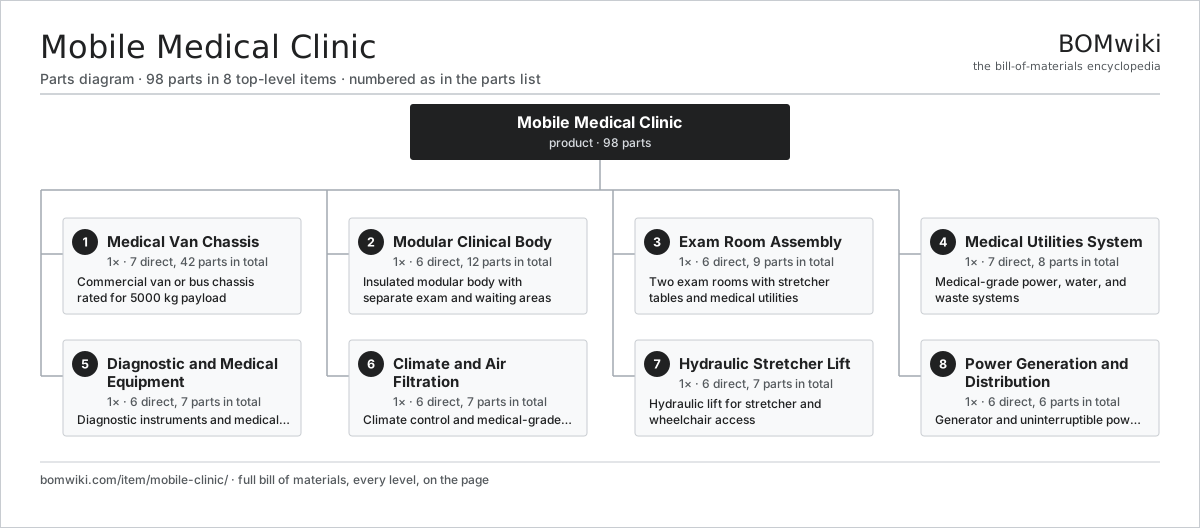
| # | Part | Qty | What it does |
|---|---|---|---|
| 1 | Medical Van Chassis 7 parts | 1× | Commercial van or bus chassis rated for 5000 kg payload |
| 2 | Modular Clinical Body 6 parts | 1× | Insulated modular body with separate exam and waiting areas |
| 3 | Exam Room Assembly 6 parts | 1× | Two exam rooms with stretcher tables and medical utilities |
| 4 | Medical Utilities System 7 parts | 1× | Medical-grade power, water, and waste systems |
| 5 | Diagnostic and Medical Equipment 6 parts | 1× | Diagnostic instruments and medical supplies storage |
| 6 | Climate and Air Filtration 6 parts | 1× | Climate control and medical-grade air filtration |
| 7 | Hydraulic Stretcher Lift 6 parts | 1× | Hydraulic lift for stretcher and wheelchair access |
| 8 | Power Generation and Distribution 6 parts | 1× | Generator and uninterruptible power system |
3D model
No 3D model yet. Have a CAD file of this? Add a 3D model. STL renders right on this page; STEP, FreeCAD, and OpenSCAD sources are welcome too (openly licensed, like all 3D models on BOMwiki).
Build & assembly graph
expand / collapse · shared sub-assemblies converge · links to related products · est. labourTap an assembly to expand/collapse · tap a part to open it · use “Open page” for any node · drag to pan, scroll to zoom.
Bill of materials for Mobile Medical Clinic
8 top-level lines · 63 rows shown · 98 parts total · indented to 3 levels| # | Item / sub-assembly | Part no. | Qty/assy | Ext. qty | Parts | Type |
|---|---|---|---|---|---|---|
| 1 | Medical Van Chassis 7 parts | mobile-clinic-chassis | 1× | 1 | 42 | assembly |
| 1.1 | Diesel Engine | mobile-clinic-engine | 1× | 1 | · | part |
| 1.2 | Automatic Transmission | mobile-clinic-transmission | 1× | 1 | · | part |
| 1.3 | Chassis Frame | mobile-clinic-frame | 1× | 1 | · | part |
| 1.4 | Suspension System | mobile-clinic-suspension | 1× | 1 | · | part |
| 1.5 | Brake System | mobile-clinic-brakes | 1× | 1 | · | part |
| 1.6 | Power Steering | mobile-clinic-steering | 1× | 1 | · | part |
| 1.7 | Wheel Assembly 5 parts | wheel-assembly | 4× | 4 | 9 | assembly |
| 1.7.1 | Alloy Wheel | alloy-wheel | 1× | 4 | · | part |
| 1.7.2 | Tire | tire | 1× | 4 | · | part |
| 1.7.3 | TPMS Sensor | tpms-sensor | 1× | 4 | · | part |
| 1.7.4 | Lug Nut | lug-nut | 5× | 20 | · | part |
| 1.7.5 | Valve Stem | valve-stem | 1× | 4 | · | part |
| 2 | Modular Clinical Body 6 parts | mobile-clinic-body | 1× | 1 | 12 | assembly |
| 2.1 | Aluminum Subframe | mobile-clinic-subframe | 1× | 1 | · | part |
| 2.2 | Stainless Steel Panels | mobile-clinic-panels | 6× | 6 | · | part |
| 2.3 | Roof Assembly | mobile-clinic-roof | 1× | 1 | · | part |
| 2.4 | Sealed Floor | mobile-clinic-floor | 1× | 1 | · | part |
| 2.5 | Swing Door | mobile-clinic-door | 2× | 2 | · | part |
| 2.6 | Fastener Set | fastener-set | 1× | 1 | · | part |
| 3 | Exam Room Assembly 6 parts | mobile-clinic-exam-rooms | 1× | 1 | 9 | assembly |
| 3.1 | Primary Exam Room | mobile-clinic-exam-room-1 | 1× | 1 | · | part |
| 3.2 | Phlebotomy/Secondary Exam Room | mobile-clinic-exam-room-2 | 1× | 1 | · | part |
| 3.3 | Hydraulic Stretcher Table | mobile-clinic-stretcher-table | 2× | 2 | · | part |
| 3.4 | Rolling Instrument Tray | mobile-clinic-instrument-tray | 2× | 2 | · | part |
| 3.5 | Hand-Washing Sink | mobile-clinic-sink | 2× | 2 | · | part |
| 3.6 | Medication Cabinet | mobile-clinic-storage | 1× | 1 | · | part |
| 4 | Medical Utilities System 7 parts | mobile-clinic-utilities | 1× | 1 | 8 | assembly |
| 4.1 | Fresh Water Tank | mobile-clinic-water-tank | 1× | 1 | · | part |
| 4.2 | Waste Water Tank | mobile-clinic-waste-tank | 1× | 1 | · | part |
| 4.3 | Water Pump | mobile-clinic-pump | 1× | 1 | · | part |
| 4.4 | Medical Oxygen Cylinder | mobile-clinic-oxygen-bottle | 2× | 2 | · | part |
| 4.5 | Oxygen Regulator | mobile-clinic-oxygen-regulator | 1× | 1 | · | part |
| 4.6 | Suction Pump | mobile-clinic-suction-unit | 1× | 1 | · | part |
| 4.7 | Medical Gas Piping | mobile-clinic-piping | 1× | 1 | · | part |
| 5 | Diagnostic and Medical Equipment 6 parts | mobile-clinic-equipment | 1× | 1 | 7 | assembly |
| 5.1 | Blood Pressure Monitor | mobile-clinic-blood-pressure | 1× | 1 | · | part |
| 5.2 | Infrared Thermometer | mobile-clinic-thermometer | 1× | 1 | · | part |
| 5.3 | Electronic Stethoscope | mobile-clinic-stethoscope | 2× | 2 | · | part |
| 5.4 | Otoscope/Ophthalmoscope | mobile-clinic-otoscope | 1× | 1 | · | part |
| 5.5 | Digital Weight Scale | mobile-clinic-scale | 1× | 1 | · | part |
| 5.6 | Examination Light | mobile-clinic-light | 1× | 1 | · | part |
| 6 | Climate and Air Filtration 6 parts | mobile-clinic-hvac | 1× | 1 | 7 | assembly |
| 6.1 | Air Conditioning Unit | mobile-clinic-ac-unit | 1× | 1 | · | part |
| 6.2 | HEPA Filter Cartridge | mobile-clinic-hepa-filter | 2× | 2 | · | part |
| 6.3 | Medical HVAC Ducting | mobile-clinic-ductwork | 1× | 1 | · | part |
| 6.4 | Humidifier/Dehumidifier | mobile-clinic-humidity-control | 1× | 1 | · | part |
| 6.5 | Zone Thermostat | mobile-clinic-thermostat | 1× | 1 | · | part |
| 6.6 | Fastener Set | fastener-set | 1× | 1 | · | part |
| 7 | Hydraulic Stretcher Lift 6 parts | mobile-clinic-lift | 1× | 1 | 7 | assembly |
| 7.1 | Lift Platform | mobile-clinic-lift-platform | 1× | 1 | · | part |
| 7.2 | Lift Hydraulic Pump | mobile-clinic-lift-motor | 1× | 1 | · | part |
| 7.3 | Lift Cylinder | mobile-clinic-lift-cylinder | 2× | 2 | · | part |
| 7.4 | Proportioning Valve | mobile-clinic-lift-valve | 1× | 1 | · | part |
| 7.5 | Pressure Sensor | pressure-sensor | 1× | 1 | · | part |
| 7.6 | Safety Rail | safety-rail | 1× | 1 | · | part |
| 8 | Power Generation and Distribution 6 parts | mobile-clinic-power | 1× | 1 | 6 | assembly |
| 8.1 | Diesel Generator | mobile-clinic-generator | 1× | 1 | · | part |
| 8.2 | Lithium Battery Bank | mobile-clinic-battery-bank | 1× | 1 | · | part |
| 8.3 | Pure-Sine Inverter | mobile-clinic-inverter | 1× | 1 | · | part |
| 8.4 | Medical Distribution Panel | mobile-clinic-distribution-panel | 1× | 1 | · | part |
| 8.5 | Chassis Auxiliary Battery | mobile-clinic-chassis-battery | 1× | 1 | · | part |
| 8.6 | Main Wiring Harness | wiring-harness | 1× | 1 | · | part |
Something wrong in this list? Report a problem with this BOM.
Related products
same domain, ranked by shared parts Ice Cream Truck
88 parts · shares 8 with this page
Ice Cream Truck
88 parts · shares 8 with this page
 Kei Truck
86 parts · shares 2 with this page
Kei Truck
86 parts · shares 2 with this page
 Coupe Car
1,617 parts · shares 7 with this page
Coupe Car
1,617 parts · shares 7 with this page
 E-Waste Collection Truck
114 parts · shares 7 with this page
E-Waste Collection Truck
114 parts · shares 7 with this page
 Food Truck
197 parts · shares 7 with this page
Food Truck
197 parts · shares 7 with this page
 Food Waste Collection Truck
95 parts · shares 7 with this page
Food Waste Collection Truck
95 parts · shares 7 with this page
Sourcing: possible vendors
Browse the supplier directory → Prices, MOQ, and lead times are algorithmic estimates, not quotes, and not claims about these companies. Company mappings are curated by keyword; est. price band $8k–$90k. How estimates work| Vendor | HQ | Specialty | MOQ | Lead time |
|---|---|---|---|---|
|
🇯🇵Toyota
global.toyota ↗
|
Toyota City, JP | Automaker | made to order | 16–28 wks |
| volkswagen-group.com ↗ | Wolfsburg, DE | Automaker | made to order | 16–28 wks |
| gm.com ↗ | Detroit, US | Automaker | made to order | 16–28 wks |
| hyundai.com ↗ | Seoul, KR | Automaker | made to order | 16–28 wks |
|
🇨🇳BYD
byd.com ↗
|
Shenzhen, CN | EV & battery manufacturer | made to order | 16–28 wks |
1,406-word article