Penguin Habitat Chiller
ProductOverview
Penguin habitat chillers provide the extreme cold environment necessary for penguin survival and behavioral enrichment in tropical and temperate zoos. Penguins are adapted to polar waters at -5 to +2°C and Antarctic air temperatures below -20°C; when housed in warm climates, they require dedicated refrigeration systems maintaining both pool water and ambient air in the sub-zero range to prevent heat stress, allow natural swimming behavior, and trigger breeding cycles.
The Penguin Habitat Chiller integrates a Refrigeration Cycle Unit sealed refrigeration loop (compressor, condenser, evaporator) with two parallel cooling loops: a Water Chiller Heat Exchanger for pool water and an Air Handling Unit for habitat air circulation. A Snow Maker Assembly nozzle array sprays chilled water into the cold air, producing snow and ice accumulation that penguins use for thermoregulation and behavioral enrichment (sliding, nesting). The Thermal Control & Sequencing PLC coordinates compressor cycling, fan speed modulation, and snow maker sequencing to maintain setpoints while minimizing power consumption and refrigerant charge.
Typical installations chill a 500–2000 m³ pool and 2000–5000 m³ viewing area habitat to -10°C and -5°C respectively, consuming 15–25 kW of electrical power during peak load (summer cooling). The system must handle diurnal thermal loading (solar gain through viewing windows), visitor traffic (heat release), and periodic maintenance (warm water backwashing).
Refrigeration Cycle and Compressor
The Refrigeration Cycle Unit operates on a standard vapor-compression cycle: low-pressure liquid refrigerant (R-404A standard) evaporates in the water and air coils, absorbing heat at -10 to -5°C; the resulting vapor is compressed to 15–20 bar by the Hermetic Compressor (5–15 HP hermetic), raising temperature to 50–70°C; the hot gas condenses in the Air-Cooled Condenser (air-cooled aluminum fin-tube) back to liquid, rejecting heat to the environment; and the liquid is throttled by the Thermostatic Expansion Valve back to low pressure, completing the cycle.
The Hermetic Compressor is a reciprocating type (5–15 HP displacement 15–50 m³/h), selected for high pressure ratio (needed for large temperature lift: outdoor ambient 35°C down to -10°C pool requires ~45°C ΔT and ~20 bar ratio) and good low-temperature efficiency. The compressor oil must be compatible with refrigerant (POE or synthetic mineral oil for R-404A) and kept dry; moisture in the system forms hydrofluoric acid, corroding internal components. The Oil Separator removes refrigerant vapor from the discharge line and returns oil to the compressor, preventing oil loss and flooding of the evaporator.
The Receiver Tank (50–100 L) downstream of the condenser stores liquid refrigerant between cycles. In cold weather (winter), outdoor air becomes cold enough that the condenser can't reject enough heat, so receiver pressure drops and compressor discharge pressure falls below the safe range. A Thermal Control & Sequencing modulates the compressor on and off based on water temperature feedback, preventing compressor starvation.
Water Chilling Loop
The Water Chiller Heat Exchanger Heat Exchanger Plate plate-frame heat exchanger transfers cold refrigerant evaporator outlet to warm pool water. Typically 10–20 stainless steel 316L plates are brazed into a titanium or aluminum frame, creating alternating refrigerant and water channels. Each pass-through plate adds pressure drop and heat transfer area; configurations range from simple counter-flow (5 plates, 5 kW capacity) to complex multi-pass designs (20+ plates, 30 kW).
The pool water enters at ~15°C (initial pool startup or daytime warming), flows through the chiller at 50–100 GPM, and exits at ~5°C. As the loop circulates via the Pool Circulation Pump pump, it cools the pool gradually over 8–12 hours to the target -10°C. Overcooling is prevented by the Thermal Control & Sequencing PLC modulating compressor on/off; once pool reaches -10°C, the compressor stops and the pump circulates at no-load (no temperature change, just mixing).
Plate heat exchangers are sensitive to fouling (algae, biofilm) that reduces cooling capacity. Most installations include periodic chemical cleaning (phosphoric acid solution) on a quarterly schedule. The exchanger outlet includes a check valve preventing thermosiphon backflow (hot water flowing through chiller at night), which would waste compressor energy.
Air Handling and Temperature Control
The Air Handling Unit consists of a Blower Motor EC fan (electronically commutated), an aluminum Air Evaporator Coil fin-tube evaporator, and ductwork with damper valves. The fan draws habitat air through a Air Filter Cartridge MERV 8 filter, then through the evaporator coil where refrigerant boils at -5 to -10°C, cooling air to -5°C setpoint. Chilled air is ducted back to the habitat via motorized Motorized Damper dampers, which proportionally adjust flow to different zones (pool area, nesting area, viewing area).
The Variable Frequency Drive variable frequency drive modulates fan speed (30–100%) to match cooling demand. During light load (night, cool outside air), the VFD reduces fan speed to 40%, cutting power consumption to ~15% of full speed while maintaining -5°C. This is critical for energy efficiency: continuous full-speed operation would cool the habitat to -15°C or below, overshooting the setpoint and wasting 30–40% of compressor work.
The Thermal Control & Sequencing PLC coordinates the air and water loops: if water temperature drifts above -8°C, the compressor is energized and remains on until both water and air reach setpoints (typically 3–5 min). If water temperature drops below -12°C, the compressor is de-energized but the pump and fan continue circulating, using residual cold to prevent rapid temperature rise.
Snow Making and Ice Accumulation
The Snow Maker Assembly produces artificial snow by atomizing chilled water (-10°C) into cold air (-5°C). The Snow Maker Pump recirculates 5–20 GPM from the pool through a Snow Nozzle Manifold with four Atomizing Nozzle atomizing nozzles (0.8–1.2 mm orifice, 45–60 bar spray angle). When nozzles are activated (typically 2–4 hours per day), the spray freezes in the cold air, forming ice particles that accumulate on the habitat floor and artificial landscape.
Snow depth is controlled by:
- Nozzle spray duration: 30–60 min per cycle reduces ice accumulation; 120+ min per cycle builds thick snow
- Nozzle air pressure: Lower pressure (20 bar) produces larger droplets and less surface area, reducing freezing efficiency
- Air temperature setpoint: Colder air (-10°C vs -5°C) freezes spray more completely, increasing snow production per GPM
Penguins use snow for thermoregulation (burrowing into cold snow), nesting (scraping snow to build nests), and behavioral enrichment (sliding and play). Natural behavior studies show penguins that lack snow access become lethargic and fail to breed, so snow makers are often considered essential rather than optional equipment.
The Hot-Gas Defrost Coil hot-gas defrost coil periodically (every 4–8 hours) receives compressor discharge gas at 60°C, melting surface ice to prevent accumulation of ice so thick that it blocks visibility or drainage. Defrost cycles are typically 10–15 minutes, releasing meltwater through drain channels to the Drainage and Melt Collection system.
Thermal Monitoring and Control
The Temperature & Humidity Monitoring array measures:
- Pool temperature: PT100 platinum thermometer (-20 to +50°C) at the chiller outlet
- Air temperature: Upstream and downstream of the air coil to calculate cooling delivered
- Humidity: Capacitive sensor 0–100% RH for condensation and frost control
- Compressor discharge: Optional high-pressure gauge (0–30 bar) for diagnostic purposes
These sensors feed the Thermal Control & Sequencing PLC, which implements a proportional-integral (PI) feedback loop: if water temperature is 2°C above setpoint, compressor is energized; if 1°C below setpoint, compressor is de-energized. This deadband hysteresis (±1°C) prevents compressor short-cycling (repeated on/off every few seconds).
Alarm setpoints include:
- High pool temperature (> 0°C): Compressor fault or capacity loss, alert keeper
- Low air temperature (< -8°C): Air handler damper stuck closed or VFD failure, reduce cooling
- High humidity (> 80%): Risk of excessive frost formation, reduce fan speed or defrost
- Compressor overcurrent: Motor overload during startup, possible refrigerant shortage or restrictions
Most modern systems log these alarms to an SD card or wireless telemetry, allowing remote monitoring by zoo maintenance staff.
Power Distribution and Safety
The Thermal Control & Sequencing power distribution uses a Compressor Contactor 50 A three-phase magnetic contactor for the compressor motor, with thermal overload relay protection. The contactor is controlled by 24 VDC logic from the PLC, allowing soft-start (reduced inrush current) or variable frequency drive (if three-phase power supply is available).
Site electrical supply must deliver 380 VAC three-phase 63 A (typical 15–25 kW) with earth-fault protection. Single-phase power cannot drive a large compressor motor due to voltage regulation issues (large current draw causes 5–10% voltage sag, reducing motor torque and efficiency).
Emergency shutdown is available via a red pushbutton cutting 24 VDC logic supply, which de-energizes the compressor contactor and closes the pool circulation valve. This allows staff to stop the system in case of refrigerant leak (detectable by smell of R-404A, similar to chloroform) or mechanical failure.
Installation and Commissioning
Typical installation for a 2000 m³ penguin habitat:
- Refrigeration unit: Install outdoor condenser on raised platform with >2 m clearance, cooler oil separator and receiver downstream
- Water loop: Route 3/4" insulated hoses from condenser through chiller, filter, and circulation pump back to pool (total ~100 m hose run)
- Air loop: Mount air handler on habitat roof or side, duct 30–50 m of cold air distribution to zones
- Instruments: Install pool, air, and humidity probes with 4–20 mA transmitters to PLC
- Electrical: Dedicated 63 A three-phase circuit, 5 kW UPS for PLC and monitoring during power failure
Commissioning requires:
- Refrigerant charge adjustment: ~95% full by sight glass, adjusted by adding/removing charge if superheat (compressor discharge temperature minus saturation temperature) drifts beyond 5–10°C
- Water loop flushing: Circulate heated water through chiller for 30 min to remove debris, then cool gradually
- Air coil defrost testing: Manually trigger defrost cycle, verify meltwater drains properly
- PLC setpoint tuning: Set water target (-10°C), air target (-5°C), and compressor deadband (±1.5°C)
System cost for a mid-size zoo penguin habitat (2000 m³) is typically $100,000–200,000 USD installed, with annual operating costs (electricity, maintenance, refrigerant top-up) around $15,000–25,000.
Maintenance and Troubleshooting
Common issues:
- Compressor won't start: Check motor overload relay, verify three-phase voltage balance, inspect capacitor bank
- Pool temperature drifts above -8°C: Evaporator frozen (ice blockage) from excess humidity; increase defrost frequency
- Air coil ices over: Humidity too high; reduce fan speed or add desiccant dehumidifier
- Snow maker produces slush instead of dry snow: Air temperature too warm or spray pressure too low; increase refrigeration or reduce nozzle count
Annual maintenance includes:
- Refrigerant charge verification (sight glass inspection)
- Compressor oil change (every 2000 operating hours)
- Condenser fin cleaning (every 6 months in dusty environments)
- Water loop filter backwash (weekly)
- Plate heat exchanger chemical cleaning (every 3–6 months)
System lifespan is typically 10–15 years before major component replacement (compressor, condenser). Penguin habitats often carry a year-round cooling load in tropical zoos, driving continuous demand and accelerating wear compared to seasonal cooling systems.
Penguin Habitat Chiller parts and their functions
8 top-level parts · 65 parts in total · full bill of materials below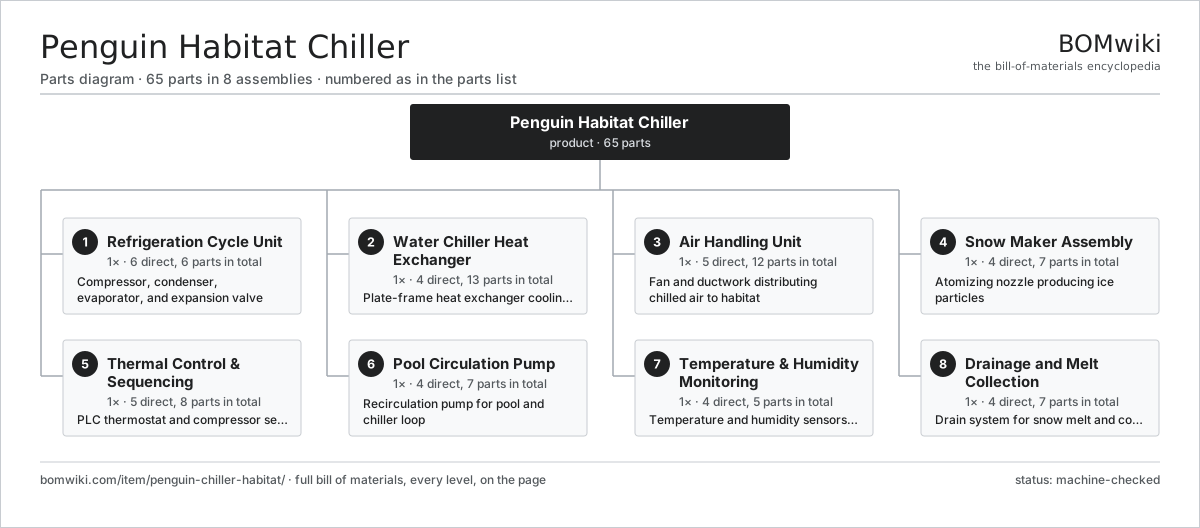
| # | Part | Qty | What it does |
|---|---|---|---|
| 1 | Refrigeration Cycle Unit 6 parts | 1× | Compressor, condenser, evaporator, and expansion valve |
| 2 | Water Chiller Heat Exchanger 4 parts | 1× | Plate-frame heat exchanger cooling pool water |
| 3 | Air Handling Unit 5 parts | 1× | Fan and ductwork distributing chilled air to habitat |
| 4 | Snow Maker Assembly 4 parts | 1× | Atomizing nozzle producing ice particles |
| 5 | Thermal Control & Sequencing 5 parts | 1× | PLC thermostat and compressor sequencing |
| 6 | Pool Circulation Pump 4 parts | 1× | Recirculation pump for pool and chiller loop |
| 7 | Temperature & Humidity Monitoring 4 parts | 1× | Temperature and humidity sensors with alarms |
| 8 | Drainage and Melt Collection 4 parts | 1× | Drain system for snow melt and condensation |
3D model
No 3D model yet. Have a CAD file of this? Add a 3D model — STL renders right on this page; STEP, FreeCAD, and OpenSCAD sources are welcome too (openly licensed, like all 3D models on BOMwiki).
Build & assembly graph
expand / collapse · shared sub-assemblies converge · links to related products · est. labourTap an assembly to expand/collapse · tap a part to open it · use “Open page” for any node · drag to pan, scroll to zoom.
Bill of materials for Penguin Habitat Chiller
8 top-level lines · 44 rows shown · 65 parts total · indented to 3 levels| # | Item / sub-assembly | Part no. | Qty/assy | Ext. qty | Parts | Type |
|---|---|---|---|---|---|---|
| 1 | Refrigeration Cycle Unit 6 parts | penguin-chiller-habitat-refrigeration-plant | 1× | 1 | 6 | assembly |
| 1.1 | Hermetic Compressor | penguin-chiller-habitat-compressor | 1× | 1 | · | part |
| 1.2 | Air-Cooled Condenser | penguin-chiller-habitat-condenser | 1× | 1 | · | part |
| 1.3 | Evaporator Coil | penguin-chiller-habitat-evaporator | 1× | 1 | · | part |
| 1.4 | Thermostatic Expansion Valve | penguin-chiller-habitat-expansion-valve | 1× | 1 | · | part |
| 1.5 | Receiver Tank | penguin-chiller-habitat-receiver-tank | 1× | 1 | · | part |
| 1.6 | Oil Separator | penguin-chiller-habitat-oil-separator | 1× | 1 | · | part |
| 2 | Water Chiller Heat Exchanger 4 parts | penguin-chiller-habitat-water-chiller | 1× | 1 | 13 | assembly |
| 2.1 | Heat Exchanger Plate | penguin-chiller-habitat-chiller-plates | 10× | 10 | · | part |
| 2.2 | Heat Exchanger Frame | penguin-chiller-habitat-chiller-frame | 1× | 1 | · | part |
| 2.3 | Water Inlet | penguin-chiller-habitat-water-inlet | 1× | 1 | · | part |
| 2.4 | Water Outlet | penguin-chiller-habitat-water-outlet | 1× | 1 | · | part |
| 3 | Air Handling Unit 5 parts | penguin-chiller-habitat-air-handler | 1× | 1 | 12 | assembly |
| 3.1 | Blower Motor | blower-motor | 1× | 1 | · | part |
| 3.2 | Air Evaporator Coil | penguin-chiller-habitat-air-coil | 1× | 1 | · | part |
| 3.3 | Sheet Metal Ductwork | penguin-chiller-habitat-ductwork | 6× | 6 | · | part |
| 3.4 | Motorized Damper | penguin-chiller-habitat-damper-valve | 3× | 3 | · | part |
| 3.5 | Air Filter Cartridge | penguin-chiller-habitat-air-filter | 1× | 1 | · | part |
| 4 | Snow Maker Assembly 4 parts | penguin-chiller-habitat-snow-maker | 1× | 1 | 7 | assembly |
| 4.1 | Snow Maker Pump | penguin-chiller-habitat-snow-pump | 1× | 1 | · | part |
| 4.2 | Atomizing Nozzle | penguin-chiller-habitat-snow-nozzle | 4× | 4 | · | part |
| 4.3 | Snow Nozzle Manifold | penguin-chiller-habitat-nozzle-manifold | 1× | 1 | · | part |
| 4.4 | Snow Spray Frame | penguin-chiller-habitat-snow-spray-head | 1× | 1 | · | part |
| 5 | Thermal Control & Sequencing 5 parts | penguin-chiller-habitat-control-system | 1× | 1 | 8 | assembly |
| 5.1 | Microcontroller | mcu | 1× | 1 | · | part |
| 5.2 | Compressor Contactor | penguin-chiller-habitat-compressor-contactor | 1× | 1 | · | part |
| 5.3 | Variable Frequency Drive | penguin-chiller-habitat-vfd-drive | 1× | 1 | · | part |
| 5.4 | Relay | relay | 4× | 4 | · | part |
| 5.5 | Power Supply | power-supply | 1× | 1 | · | part |
| 6 | Pool Circulation Pump 4 parts | penguin-chiller-habitat-sump-circulation | 1× | 1 | 7 | assembly |
| 6.1 | Circulation Pump | penguin-chiller-habitat-circulation-pump | 1× | 1 | · | part |
| 6.2 | Pump Motor | penguin-chiller-habitat-pump-motor | 1× | 1 | · | part |
| 6.3 | Circulation Filter | penguin-chiller-habitat-circulation-filter | 1× | 1 | · | part |
| 6.4 | Connector | connector | 4× | 4 | · | part |
| 7 | Temperature & Humidity Monitoring 4 parts | penguin-chiller-habitat-thermal-monitoring | 1× | 1 | 5 | assembly |
| 7.1 | PT100 Temperature Probe | penguin-chiller-habitat-pool-probe | 1× | 1 | · | part |
| 7.2 | Air Temperature Sensor | penguin-chiller-habitat-air-probe | 2× | 2 | · | part |
| 7.3 | Humidity Probe | penguin-chiller-habitat-humidity-probe | 1× | 1 | · | part |
| 7.4 | Sensor Transmitter | penguin-chiller-habitat-sensor-transmitter | 1× | 1 | · | part |
| 8 | Drainage and Melt Collection 4 parts | penguin-chiller-habitat-ice-recovery | 1× | 1 | 7 | assembly |
| 8.1 | Sheet Metal Panel | sheet-panel | 3× | 3 | · | part |
| 8.2 | Sump Drain Pump | penguin-chiller-habitat-drain-pump | 1× | 1 | · | part |
| 8.3 | Connector | connector | 2× | 2 | · | part |
| 8.4 | Hot-Gas Defrost Coil | penguin-chiller-habitat-ice-melting-coil | 1× | 1 | · | part |
Related products
same domain, ranked by shared parts Cruise Ship
2,306,635 parts · shares 4 with this page
Cruise Ship
2,306,635 parts · shares 4 with this page
 Protein Skimmer
18 parts · shares 2 with this page
Protein Skimmer
18 parts · shares 2 with this page
 Breathing Air Dive Compressor
64 parts · shares 2 with this page
Breathing Air Dive Compressor
64 parts · shares 2 with this page
 Hovercraft
138 parts · shares 2 with this page
Hovercraft
138 parts · shares 2 with this page
Sourcing: possible vendors
Prices, MOQ, and lead times are algorithmic estimates, not quotes, and not claims about these companies. Company mappings are curated by keyword; est. price band $2k–$500M. How estimates work| Vendor | HQ | Specialty | MOQ | Lead time |
|---|---|---|---|---|
| hd.com ↗ | Ulsan, KR | Shipbuilder | made to order | 52–104 wks |
| fincantieri.com ↗ | Trieste, IT | Shipbuilder | made to order | 52–104 wks |
| damen.com ↗ | Gorinchem, NL | Shipbuilder | made to order | 52–104 wks |
| brunswick.com ↗ | Mettawa, US | Marine & boats | made to order | 52–104 wks |
|
🇨🇳CSSC
cssc.net.cn ↗
|
Shanghai, CN | Shipbuilding conglomerate | made to order | 52–104 wks |
1,932-word article