Tablet Deduster
ProductOverview
A tablet deduster is a finishing-stage machine that removes compression dust, loose fragments, and other fines from tablets immediately after pressing or granulation. Compression dust is unavoidable during tablet pressing; as the punch compresses powder, mechanical friction and particle fracture generate a fine-powder cloud that settles on tablet surfaces. This dust degrades tablet appearance, affects moisture uptake, and can trigger allergic reactions in operators if inhaled.
The deduster employs a multi-deck vibratory sieve to separate fines from tablets. A spiral or inclined sieve tower with two or three mesh decks progressively filters out smaller particles. Tablets descend through the top coarse deck (removes large debris), then through a fine-mesh deck (removes compression dust), and exit at the bottom as cleaned tablets. The removed fines are collected in a dust bin beneath the sieves and eventually sent to rework or disposal.
Modern dedusters integrate a metal detector to prevent contaminated tablets from reaching packaging. Ferrous or non-ferrous metal particles (from punch wear, tool breakage, or machine corrosion) are immediately diverted to a waste stream.
Throughput ranges 100–500 kg/hour, dependent on tablet size and dust content. A batch of 1000 tablets typically requires 10–20 minutes on the deduster.
How it works
The dedusting cycle is continuous:
Tablet Loading: Tablets from the tablet press or granulator hopper are gravity-fed into a vibratory feeder bowl. The vibration orients tablets and meters them toward the sieve inlet at a controlled rate (100–500 tablets/minute).
Sieve Separation: Tablets descend through the top sieve deck (typically 500–1000 micron openings). Large debris and loose agglomerates fall through; tablets cannot fall through (they are larger than the openings). Tablets then pass to the second sieve deck (40–120 microns), which captures compression dust and fine fragments. An optional third ultra-fine deck (20–40 microns) may be included for critical formulations.
Dust Removal: The fine dust passing through the sieves is collected in a sealed dust bin below. A small vacuum pump (1–3 kW) maintains slight negative pressure (10–20 cmH₂O) under the sieves, assisting dust extraction and preventing re-suspension of fines.
Metal Detection: As cleaned tablets exit the deduster, they pass through a metal detector, a tuned inductive coil that detects ferrous or non-ferrous metal fragments. If metal is detected, a solenoid valve diverts the affected tablet to a waste chute.
Dust Handling: The dust collected in the bin is periodically emptied. The vacuum system includes a HEPA filter to prevent airborne dust escape. A shaking motor periodically vibrates the filter cartridge to dislodge accumulated powder, maintaining air flow.
Key Subsystems
Sieve Deck Design
The sieves are the core of the deduster. A typical unit has two decks:
- Coarse deck (top): Mesh size 500–1000 microns; removes obvious debris, loose fragments, and large agglomerates. This deck is often omitted if the tablets are already relatively clean.
- Fine deck (main): Mesh size 40–120 microns; removes compression dust and small fines. This is the workhorse deck, responsible for the visual appearance of cleaned tablets.
Some premium units add a third ultra-fine deck (20–40 microns) for formulations with stringent fines requirements (<1% fines). Ultra-fine decks collect significantly more material, requiring frequent mesh cleaning.
Sieve meshes are typically stainless steel woven wire or polyester mesh, stretched tightly across a stainless steel frame and held under tension. Mesh life is 100–500 operating hours depending on tablet composition and fines content. Abrasive tablets (containing talc or silica) wear meshes faster.
Vibration System
A high-frequency vibrator (50–100 Hz) is mounted to the sieve deck frame. The vibration motion must have sufficient amplitude (typically 2–5 mm) to keep tablets moving through the sieves without bridging or jamming. Too much vibration causes tablets to bounce and break; too little causes stagnation.
The vibration frequency is tunable via a variable-frequency drive (VFD). Operators adjust frequency based on tablet size: smaller tablets require higher frequency (80–100 Hz) to prevent stagnation; larger tablets use lower frequency (50–70 Hz) to reduce breakage.
Isolation mounts (springs or elastomeric feet) under the sieve frame decouple vibration from the facility floor and adjacent equipment. Without isolation, vibration transmitted to the floor can be disruptive and damage other machines.
Dust Collection & Filtration
The dust bin is a sealed container mounted below the sieve tower. As fine particles fall through the sieves, they are drawn downward by a small vacuum pump, collecting in the bin. The vacuum prevents fines from dispersing into ambient air and aids sieve cleaning (vacuum pulls dust off the mesh during operation).
A HEPA cartridge filter is integrated into the vacuum exhaust. As air exits the dust collection system, the filter captures any remaining dust particles (<0.3 microns), ensuring clean exhaust air. Filter pressure drop increases over time; a manometer or differential pressure transducer alerts the operator when the filter is saturated (typically after 100–200 operating hours).
A pneumatic shaking motor mounted on the filter housing periodically vibrates the cartridge, dislodging accumulated powder. Shaking is automatic or manual depending on the system design; automatic shaking at programmable intervals (e.g., every 30 minutes) extends filter life.
Metal Detection
The metal detector uses a tuned LC oscillator coil positioned in the tablet stream. As tablets pass through the coil, ferrous or non-ferrous metals disturb the electromagnetic field, generating a detectable signal. The coil is typically located just downstream of the sieve exit, before the cleaned tablets reach the collection bin.
Metal detector sensitivity is adjustable. A typical setting detects ferrous particles >0.5 mm and non-ferrous particles (aluminum, stainless steel) >2 mm. When metal is detected, a relay contact is momentarily energized, triggering a pneumatic solenoid valve. The solenoid diverts the contaminated tablet to a waste chute, preventing it from reaching the output stream.
Tablet Flow Control
Tablets must flow smoothly through the deduster without jamming or backing up. The inlet sieve should have sufficient area to accept the feed rate without bridging. The outlet sieve decks should not accumulate tablet buildup. Adjusting vibration frequency and amplitude helps maintain smooth flow; if tablets jam, reducing feed rate (lowering hopper vibration frequency) often resolves the issue.
Operating Considerations
Sieve Mesh Selection & Changeover
Mesh size selection depends on the final acceptable fines content. Pharmaceutical compendias (USP, EP) specify limits on fines:
- For most tablets: <2% fines <75 microns
- For critical formulations (bitter-taste masked, sustained-release): <1% fines <50 microns
- For hygroscopic or light-sensitive tablets: <0.5% fines <50 microns
Starting with a 40–100 micron coarse fine deck often achieves acceptable fines reduction. If the fines content is still too high, a second pass with a finer deck (20–40 micron ultra-fine) may be required, or the press is re-tuned (punch density adjustment, reduced speed) to minimize fines generation.
Mesh replacement is straightforward: remove the clip or bolt fasteners, lift out the old mesh frame, insert the new frame, and re-tighten. Replacement time is typically 15–20 minutes.
Dust Bin Handling
The dust bin must be emptied periodically. Frequency depends on throughput and tablet composition. A typical deduster generates 1–5 kg of dust per 100 kg of cleaned tablets. For a 1000 kg batch, expect 10–50 kg of dust.
After emptying, the dust bin is sealed and labeled for disposition: rework (if formulation permits), sale to third-party recyclers, or controlled incineration. Some facilities blend recovered dust back into a subsequent batch, reducing waste.
Metal Contamination Sources & Prevention
Metal particles can originate from:
- Punch wear: Tool steel (iron, carbon) from press punch erosion. Inspect punches monthly; replace if worn or nicked.
- Die cavity debris: Trapped metal fragments from tool manufacturing. Clean dies and press cavity before each batch.
- Machine corrosion: Rust particles from ferrous frame or fastener corrosion. Protect exposed steel with corrosion inhibitors or stainless hardware.
- Gravity: Small metal objects (nuts, springs) accidentally falling into the feed hopper during setup. Implement tool control and foreign-object detection protocols.
The metal detector is a safety net, not a primary prevention method. Good maintenance and process discipline minimize contamination.
Throughput Optimization
Deduster throughput depends on tablet size, fines content, and sieve configuration. Typical rates:
- Small tablets (5–8 mm), low fines: 300–500 kg/hour
- Medium tablets (10 mm), moderate fines: 150–300 kg/hour
- Large tablets (15–20 mm), high fines: 100–150 kg/hour
If throughput is insufficient, consider:
- Increasing vibration frequency (faster tablet movement)
- Switching to larger mesh openings (e.g., 120 micron instead of 100 micron) if fines spec permits
- Using a two-pass approach: first pass on coarse deck, second pass on fine deck
Troubleshooting
Tablet breakage in deduster: Cause: vibration frequency too high or amplitude excessive. Solutions: reduce vibration frequency by 10–20 Hz, reduce amplitude slightly.
Tablets jamming in sieve inlet: Cause: feed rate too fast or mesh plugged. Solutions: reduce hopper vibration frequency, clean fine sieve deck of accumulated powder.
Poor fines removal (<80% of compression dust removed): Cause: sieve mesh worn, clogged, or undersized. Solutions: inspect and clean mesh, replace if worn, use finer mesh (smaller openings).
Metal detector false positives: Cause: sensitivity too high, detecting non-contaminating materials. Solutions: recalibrate sensitivity control, ensure detector coil is not near ferrous frame material.
Dust bin overflow: Cause: vacuum system weak or filter clogged. Solutions: check vacuum pump operation (should maintain 10–20 cmH₂O), clean or replace HEPA filter cartridge.
Maintenance
HEPA filter cartridges require replacement every 100–200 operating hours or when pressure drop exceeds 4–5 kPa. Sieve meshes require visual inspection monthly; if mesh holes are visibly enlarged (compared to new mesh), replacement is due.
The vibrator motor should be inspected every 500 operating hours for bearing wear (abnormal noise) or coil degradation (reduced vibration amplitude). Motor bearings should be greased annually.
The dust bin vacuum pump requires oil changes per manufacturer intervals (typically every 500–1000 hours). The pump should be checked for leaks and wear annually.
See Also
- Sieve Tower Assembly – Multi-deck sieve design and mesh selection
- Sieve Vibration Drive – Frequency control and isolation
- Dust Collection System – HEPA filtration and fines handling
- Metal Detection System – Detection sensitivity and rejection
Tablet Deduster parts and their functions
8 top-level parts · 49 parts in total · full bill of materials below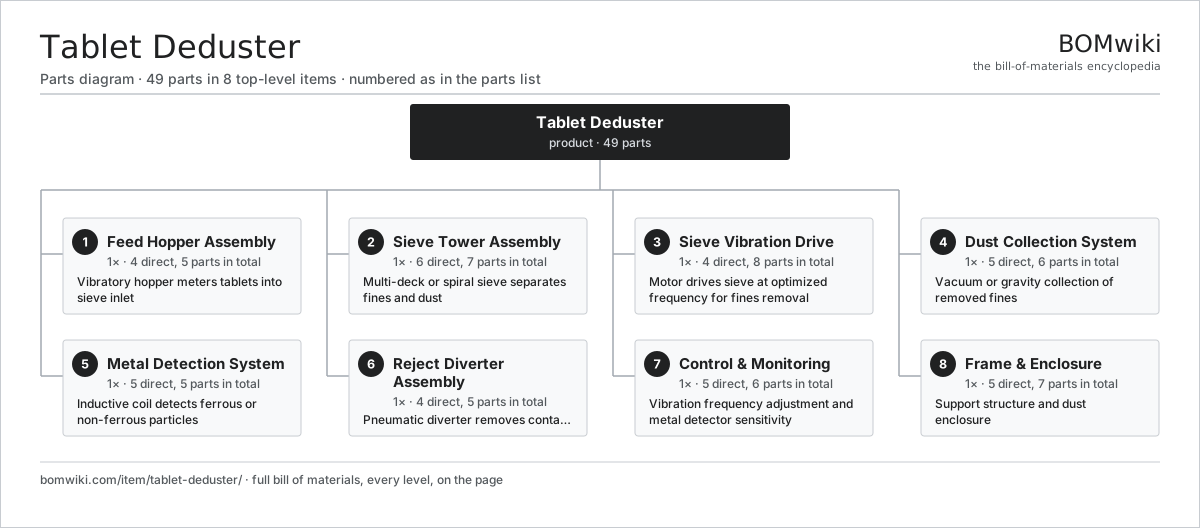
| # | Part | Qty | What it does |
|---|---|---|---|
| 1 | Feed Hopper Assembly 4 parts | 1× | Vibratory hopper meters tablets into sieve inlet |
| 2 | Sieve Tower Assembly 6 parts | 1× | Multi-deck or spiral sieve separates fines and dust |
| 3 | Sieve Vibration Drive 4 parts | 1× | Motor drives sieve at optimized frequency for fines removal |
| 4 | Dust Collection System 5 parts | 1× | Vacuum or gravity collection of removed fines |
| 5 | Metal Detection System 5 parts | 1× | Inductive coil detects ferrous or non-ferrous particles |
| 6 | Reject Diverter Assembly 4 parts | 1× | Pneumatic diverter removes contaminated tablets |
| 7 | Control & Monitoring 5 parts | 1× | Vibration frequency adjustment and metal detector sensitivity |
| 8 | Frame & Enclosure 5 parts | 1× | Support structure and dust enclosure |
3D model
No 3D model yet. Have a CAD file of this? Add a 3D model. STL renders right on this page; STEP, FreeCAD, and OpenSCAD sources are welcome too (openly licensed, like all 3D models on BOMwiki).
Build & assembly graph
expand / collapse · shared sub-assemblies converge · links to related products · est. labourTap an assembly to expand/collapse · tap a part to open it · use “Open page” for any node · drag to pan, scroll to zoom.
Bill of materials for Tablet Deduster
8 top-level lines · 46 rows shown · 49 parts total · indented to 3 levels| # | Item / sub-assembly | Part no. | Qty/assy | Ext. qty | Parts | Type |
|---|---|---|---|---|---|---|
| 1 | Feed Hopper Assembly 4 parts | tablet-deduster-feed-hopper | 1× | 1 | 5 | assembly |
| 1.1 | Hopper Bowl | tablet-deduster-hopper-bowl | 1× | 1 | · | part |
| 1.2 | Hopper Vibration Motor | tablet-deduster-feeder-motor | 1× | 1 | · | part |
| 1.3 | Inlet Guide Chute | tablet-deduster-inlet-chute | 1× | 1 | · | part |
| 1.4 | Fastener Set | fastener-set | 2× | 2 | · | part |
| 2 | Sieve Tower Assembly 6 parts | tablet-deduster-sieve-tower | 1× | 1 | 7 | assembly |
| 2.1 | Sieve Frame | tablet-deduster-sieve-frame | 1× | 1 | · | part |
| 2.2 | Coarse Sieve Deck | tablet-deduster-coarse-sieve | 1× | 1 | · | part |
| 2.3 | Fine Sieve Deck | tablet-deduster-fine-sieve | 1× | 1 | · | part |
| 2.4 | Ultra-Fine Sieve Deck (Optional) | tablet-deduster-ultra-fine-sieve | 1× | 1 | · | part |
| 2.5 | Sieve Mesh Cloth | tablet-deduster-sieve-cloth | 1× | 1 | · | part |
| 2.6 | Fastener Set | fastener-set | 2× | 2 | · | part |
| 3 | Sieve Vibration Drive 4 parts | tablet-deduster-vibration-system | 1× | 1 | 8 | assembly |
| 3.1 | Vibration Motor | tablet-deduster-vibration-motor | 1× | 1 | · | part |
| 3.2 | Frequency Adjuster | tablet-deduster-frequency-control | 1× | 1 | · | part |
| 3.3 | Isolation Feet | tablet-deduster-isolation-feet | 4× | 4 | · | part |
| 3.4 | Fastener Set | fastener-set | 2× | 2 | · | part |
| 4 | Dust Collection System 5 parts | tablet-deduster-dust-collection | 1× | 1 | 6 | assembly |
| 4.1 | Dust Collection Bin | tablet-deduster-dust-bin | 1× | 1 | · | part |
| 4.2 | Dust Vacuum Pump | tablet-deduster-vacuum-source | 1× | 1 | · | part |
| 4.3 | HEPA Cartridge Filter | tablet-deduster-hepa-filter | 1× | 1 | · | part |
| 4.4 | Filter Shake Motor | tablet-deduster-filter-shake-motor | 1× | 1 | · | part |
| 4.5 | Fastener Set | fastener-set | 2× | 2 | · | part |
| 5 | Metal Detection System 5 parts | tablet-deduster-metal-detector | 1× | 1 | 5 | assembly |
| 5.1 | Detection Coil | tablet-deduster-metal-coil | 1× | 1 | · | part |
| 5.2 | Detector Amplifier | tablet-deduster-metal-amplifier | 1× | 1 | · | part |
| 5.3 | Sensitivity Threshold | tablet-deduster-metal-sensitivity | 1× | 1 | · | part |
| 5.4 | Reject Relay Output | tablet-deduster-reject-signal | 1× | 1 | · | part |
| 5.5 | Fastener Set | fastener-set | 1× | 1 | · | part |
| 6 | Reject Diverter Assembly 4 parts | tablet-deduster-reject-system | 1× | 1 | 5 | assembly |
| 6.1 | Reject Gate Valve | tablet-deduster-reject-gate | 1× | 1 | · | part |
| 6.2 | Reject Chute | tablet-deduster-reject-chute | 1× | 1 | · | part |
| 6.3 | Reject Solenoid Valve | tablet-deduster-reject-solenoid | 1× | 1 | · | part |
| 6.4 | Fastener Set | fastener-set | 2× | 2 | · | part |
| 7 | Control & Monitoring 5 parts | tablet-deduster-control-panel | 1× | 1 | 6 | assembly |
| 7.1 | Frequency Variable Drive | tablet-deduster-frequency-vfd | 1× | 1 | · | part |
| 7.2 | Sensitivity Adjuster | tablet-deduster-metal-sensitivity-knob | 1× | 1 | · | part |
| 7.3 | Status Indicator Panel | tablet-deduster-indicator-lights | 1× | 1 | · | part |
| 7.4 | Control Enclosure | tablet-deduster-electrical-enclosure | 1× | 1 | · | part |
| 7.5 | Fastener Set | fastener-set | 2× | 2 | · | part |
| 8 | Frame & Enclosure 5 parts | tablet-deduster-frame | 1× | 1 | 7 | assembly |
| 8.1 | Base Frame | tablet-deduster-base-frame | 1× | 1 | · | part |
| 8.2 | Dust Enclosure Shroud | tablet-deduster-dust-shroud | 1× | 1 | · | part |
| 8.3 | Removable Access Panels | tablet-deduster-access-panels | 1× | 1 | · | part |
| 8.4 | Acoustic Foam (Optional) | tablet-deduster-sound-dampening | 1× | 1 | · | part |
| 8.5 | Fastener Set | fastener-set | 3× | 3 | · | part |
Something wrong in this list? Report a problem with this BOM.
Sourcing: possible vendors
Browse the supplier directory → Prices, MOQ, and lead times are algorithmic estimates, not quotes, and not claims about these companies. Company mappings are curated by keyword; est. price band $5k–$2M. How estimates work| Vendor | HQ | Specialty | MOQ | Lead time |
|---|---|---|---|---|
| atlascopco.com ↗ | Stockholm, SE | Compressors & industrial | 10 units | 12–20 wks |
|
🇦🇹Andritz
andritz.com ↗
|
Graz, AT | Process plants & machinery | 10 units | 12–20 wks |
| buhlergroup.com ↗ | Uzwil, CH | Food & materials processing | 10 units | 12–20 wks |
| gea.com ↗ | Düsseldorf, DE | Process technology | 10 units | 12–20 wks |
| mhi.com ↗ | Tokyo, JP | Heavy machinery | 10 units | 12–20 wks |
1,707-word article