Undercoating Sprayer
ProductOverview
The underside of a vehicle, the frame, suspension, drive shafts, brake lines, and fuel tanks, is exposed to salt, moisture, road spray, and abrasion. In cold climates where roads are salted, rust and corrosion are the primary failure mode, shortening a vehicle's lifespan from 15 years to 8–10 years. Even in dry climates, UV and ozone attack rubber bushings and seals, and moisture trapped in crevices causes slow oxidation. An undercoating is a thick, sticky protective layer applied to the underside, sealing metal surfaces and water-excluding critical areas. Bitumen and polyurea undercoatings are the most common, along with wax-based products for softer protection. An undercoating sprayer is a specialized equipment pushing thick, viscous material through high-pressure hoses and out through an articulating wand, reaching wheel wells, frame rails, and engine compartment cavities.
The system centers on a Pressure Pot Vessel holding 5–20 gallons of undercoating. A Pump and Motor pressurizes the pot to 40–60 psi, pushing material out through high-pressure hose. A Material Heater warms the viscous coating from ambient to 40–60 °C, reducing viscosity for smooth spray. The operator grabs the articulating Spray Wand and Extensions, aims the Spray Gun at the target area, and pulls the trigger. The gun atomizes the material into a fine mist (airless systems) or a wet spray, coating everything it touches with a 0.5–2 mm tacky film. The Hose Reel holds 50–100 feet of hose and retracts automatically when not in use. A Air Drying and Filtration on the air supply ensures compressed air is dry, preventing water spots.
Types of undercoating
Bitumen (asphalt-based): The cheapest and most traditional. A thick black tar-like compound, bitumen flows into crevices and hardens to a rubbery consistency, staying pliable for 5–10 years. Cost is ~$10–20 per gallon. Drawback: bitumen can separate and drip if the vehicle is parked on a warm hillside; it also absorbs water over time.
Polyurea: A two-part elastomer that cures to a rubber-like but tougher surface than bitumen. It adheres well to steel and resists moisture infiltration better. Cost is ~$40–80 per gallon. Polyurea products are often applied over a bitumen base coat for enhanced performance.
Wax-based (cosmetic): A softer, more pliable wax product designed for ease of removal (some owners want to remove undercoating for resale). Wax is the cheapest for touch-ups (~$5–10 per gallon) but offers less long-term protection than bitumen or polyurea.
Asphalt-rubber: A blend of asphalt and crumb rubber, offering noise dampening and flexibility. Often used in automotive OEM factories. Cost is moderate.
Preparation and application
Before spraying, the underbody must be clean and dry. Salt, mud, and oil prevent adhesion. Most shops use a pressure washer to rinse the underside and a compressed-air blow-dry, then allow the vehicle to air-dry for 1–2 hours. Drain holes in the rocker panels and B-pillars should be left open; some shops stuff them with temporary foam plugs to prevent overspray inside the cabin.
The Material Heater is crucial. Cold bitumen or polyurea is too thick to spray; heating it to 40–60 °C reduces viscosity by 50%, allowing the Pump and Motor to push it through the hose without stalling. The Pressure and Flow Control is set to 40–50 psi, a balance between smooth spray and air entrapment (too low pressure, and the material sputters; too high, and excessive air entrainment creates a foamy, weak coating).
The operator uses the articulating Spray Wand and Extensions to spray systematically: frame rails, control arms, shock absorbers, transmission pan, fuel tank, brake lines. The Spray Gun fan width is adjusted, narrow (2 inches) for tight crevices like shock mounts, wide (8–12 inches) for open areas like the undercarriage pan. Each pass deposits 0.5–1 mm; multiple passes (total 1–2 mm) build up coverage without running or dripping. Wheel wells are especially important, they see salt spray from tire contact and benefit from thick, sticky undercoating.
Safety and environmental
Bitumen and polyurea fumes are flammable and acrid. Spraying should be done in a well-ventilated booth or outdoors. Some polyurea products emit isocyanate vapors, which are respiratory irritants; respirators rated for organic vapors are required. Modern eco-conscious shops use water-based undercoatings, which are less toxic but still effective.
The spray gun and wand can clog if material cools during idle time, especially in winter. A common procedure is to purge the system with a light solvent (mineral spirits or acetone) after each job, dissolving any residual material. The Hose Reel motorized retraction helps; leaving hose standing for hours allows thick material to settle and harden inside the hose, requiring hours of warm solvent circulation to clear.
Overspray on glass, trim, and painted surfaces is a concern. Most shops mask windows, headlamps, and side trim with tape and plastic before spraying. The Spray Gun can reach tight spots, but overspray is inevitable; cleanup after each vehicle is standard procedure.
Maintenance and longevity
An undercoating layer degrades over time. Bitumen remains protective for 5–8 years before cracking and absorbing moisture; polyurea lasts 10–15 years. Once breached by cracks or UV damage, water infiltrates underneath and causes "wet" corrosion (darker, more aggressive than surface oxidation). Professional shops recommend re-coating every 3–5 years in cold climates, or at least touching up damaged areas annually. A Pressure Pot Vessel system is easy to maintain: drain and flush after each job, replace the Air Filter and Desiccant Dryer cartridges annually, and inspect hoses for kinks or abrasion quarterly.
Undercoating Sprayer parts and their functions
8 top-level parts · 59 parts in total · full bill of materials below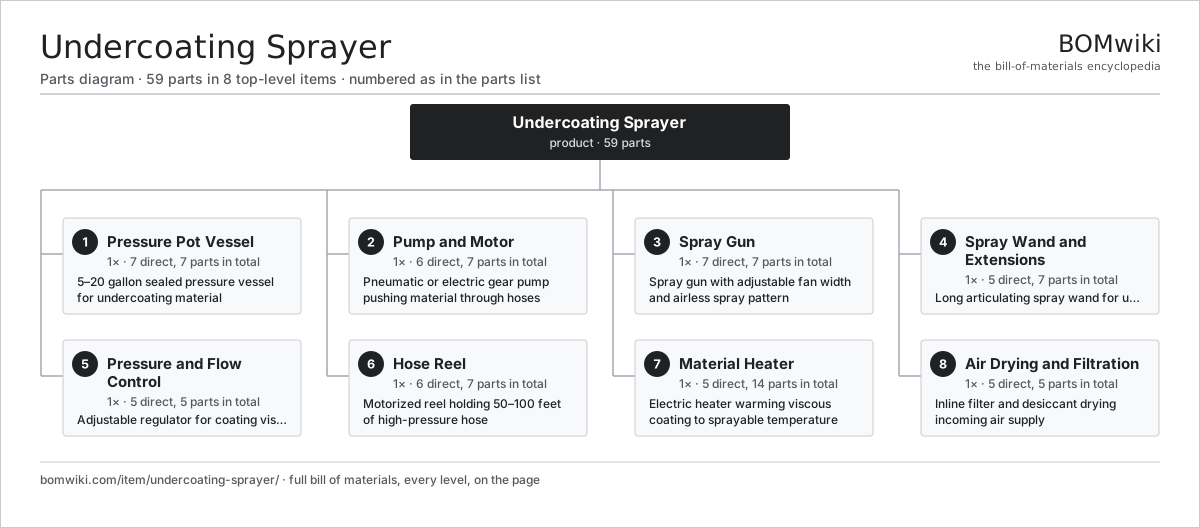
| # | Part | Qty | What it does |
|---|---|---|---|
| 1 | Pressure Pot Vessel 7 parts | 1× | 5–20 gallon sealed pressure vessel for undercoating material |
| 2 | Pump and Motor 6 parts | 1× | Pneumatic or electric gear pump pushing material through hoses |
| 3 | Spray Gun 7 parts | 1× | Spray gun with adjustable fan width and airless spray pattern |
| 4 | Spray Wand and Extensions 5 parts | 1× | Long articulating spray wand for under-vehicle access |
| 5 | Pressure and Flow Control 5 parts | 1× | Adjustable regulator for coating viscosity and spray width |
| 6 | Hose Reel 6 parts | 1× | Motorized reel holding 50–100 feet of high-pressure hose |
| 7 | Material Heater 5 parts | 1× | Electric heater warming viscous coating to sprayable temperature |
| 8 | Air Drying and Filtration 5 parts | 1× | Inline filter and desiccant drying incoming air supply |
3D model
No 3D model yet. Have a CAD file of this? Add a 3D model. STL renders right on this page; STEP, FreeCAD, and OpenSCAD sources are welcome too (openly licensed, like all 3D models on BOMwiki).
Build & assembly graph
expand / collapse · shared sub-assemblies converge · links to related products · est. labourTap an assembly to expand/collapse · tap a part to open it · use “Open page” for any node · drag to pan, scroll to zoom.
Bill of materials for Undercoating Sprayer
8 top-level lines · 54 rows shown · 59 parts total · indented to 3 levels| # | Item / sub-assembly | Part no. | Qty/assy | Ext. qty | Parts | Type |
|---|---|---|---|---|---|---|
| 1 | Pressure Pot Vessel 7 parts | us-pressure-pot | 1× | 1 | 7 | assembly |
| 1.1 | Pot Body | us-pot-body | 1× | 1 | · | part |
| 1.2 | Pot Lid | us-pot-lid | 1× | 1 | · | part |
| 1.3 | Agitator | us-agitator | 1× | 1 | · | part |
| 1.4 | Drain Valve | us-drain-valve | 1× | 1 | · | part |
| 1.5 | Pressure Gauge | us-pressure-gauge | 1× | 1 | · | part |
| 1.6 | Safety Relief | us-safety-relief | 1× | 1 | · | part |
| 1.7 | Pressure Sensor | pressure-sensor | 1× | 1 | · | part |
| 2 | Pump and Motor 6 parts | us-pump-unit | 1× | 1 | 7 | assembly |
| 2.1 | Gear Pump | us-pump-gear | 1× | 1 | · | part |
| 2.2 | Pump Motor | us-pump-motor | 1× | 1 | · | part |
| 2.3 | Pump Coupling | us-pump-coupling | 1× | 1 | · | part |
| 2.4 | Suction Strainer | us-pump-suction-strainer | 1× | 1 | · | part |
| 2.5 | Pump Relief | us-pump-pressure-relief | 1× | 1 | · | part |
| 2.6 | Ball Bearing | ball-bearing | 2× | 2 | · | part |
| 3 | Spray Gun 7 parts | us-spray-gun | 1× | 1 | 7 | assembly |
| 3.1 | Gun Body | us-gun-body | 1× | 1 | · | part |
| 3.2 | Trigger | us-gun-trigger | 1× | 1 | · | part |
| 3.3 | Air Cap | us-air-cap | 1× | 1 | · | part |
| 3.4 | Fluid Tip | us-fluid-tip | 1× | 1 | · | part |
| 3.5 | Needle Valve | us-needle-valve | 1× | 1 | · | part |
| 3.6 | Us Gun Handle | undercoating-sprayer-us-gun-handle | 1× | 1 | · | part |
| 3.7 | Connector | connector | 1× | 1 | · | part |
| 4 | Spray Wand and Extensions 5 parts | us-wand-assembly | 1× | 1 | 7 | assembly |
| 4.1 | Wand Tube | us-wand-tube | 1× | 1 | · | part |
| 4.2 | Ball Joint | us-ball-joint | 1× | 1 | · | part |
| 4.3 | Wand Trigger | us-wand-grip | 1× | 1 | · | part |
| 4.4 | Nozzle Tip | us-nozzle-tips | 3× | 3 | · | part |
| 4.5 | Connector | connector | 1× | 1 | · | part |
| 5 | Pressure and Flow Control 5 parts | us-pressure-regulator | 1× | 1 | 5 | assembly |
| 5.1 | Regulator Body | us-regulator-body | 1× | 1 | · | part |
| 5.2 | Spring | us-regulator-spring | 1× | 1 | · | part |
| 5.3 | Pilot Sense | us-pilot-valve | 1× | 1 | · | part |
| 5.4 | Pressure Dial | us-pressure-dial | 1× | 1 | · | part |
| 5.5 | Us Return Line | undercoating-sprayer-us-return-line | 1× | 1 | · | part |
| 6 | Hose Reel 6 parts | us-hose-reel | 1× | 1 | 7 | assembly |
| 6.1 | Reel Drum | us-reel-drum | 1× | 1 | · | part |
| 6.2 | Reel Motor | us-reel-motor | 1× | 1 | · | part |
| 6.3 | Reel Brake | us-reel-brake | 1× | 1 | · | part |
| 6.4 | Us Reel Bearing | undercoating-sprayer-us-reel-bearing | 2× | 2 | · | part |
| 6.5 | Hose | us-highpressure-hose | 1× | 1 | · | part |
| 6.6 | Swivel Inlet | us-swivel-connector | 1× | 1 | · | part |
| 7 | Material Heater 5 parts | us-material-heater | 1× | 1 | 14 | assembly |
| 7.1 | Heater Element | us-heater-element | 1× | 1 | · | part |
| 7.2 | Thermostat | us-thermostat | 1× | 1 | · | part |
| 7.3 | Temp Sensor | us-temperature-sensor | 1× | 1 | · | part |
| 7.4 | Insulation | us-insulation-jacket | 1× | 1 | · | part |
| 7.5 | SMD Passive (R/C/L) | smd-passives | 10× | 10 | · | part |
| 8 | Air Drying and Filtration 5 parts | us-dryer-filter | 1× | 1 | 5 | assembly |
| 8.1 | Air Filter | us-air-filter | 1× | 1 | · | part |
| 8.2 | Desiccant Dryer | us-desiccant-drier | 1× | 1 | · | part |
| 8.3 | Moisture Trap | us-moisture-separator | 1× | 1 | · | part |
| 8.4 | Pressure Sensor | pressure-sensor | 1× | 1 | · | part |
| 8.5 | Connector | connector | 1× | 1 | · | part |
Something wrong in this list? Report a problem with this BOM.
Related products
same domain, ranked by shared parts ADAS Calibration System
55 parts · shares 3 with this page
ADAS Calibration System
55 parts · shares 3 with this page
 Automotive Paint Booth
59 parts · shares 3 with this page
Tire Tread Scanner
95 parts · shares 3 with this page
Automotive Paint Booth
59 parts · shares 3 with this page
Tire Tread Scanner
95 parts · shares 3 with this page
 Paint Thickness Gauge
88 parts · shares 2 with this page
Diamond-Cut Wheel Lathe
82 parts · shares 2 with this page
Frame Straightening Rack
80 parts · shares 2 with this page
Paint Thickness Gauge
88 parts · shares 2 with this page
Diamond-Cut Wheel Lathe
82 parts · shares 2 with this page
Frame Straightening Rack
80 parts · shares 2 with this page
Sourcing: possible vendors
Browse the supplier directory → Prices, MOQ, and lead times are algorithmic estimates, not quotes, and not claims about these companies. Company mappings are curated by keyword; est. price band $0.50–$100. How estimates work| Vendor | HQ | Specialty | MOQ | Lead time |
|---|
942-word article