Vinyl Pressing Machine
ProductOverview
A vinyl pressing machine is an industrial hydraulic press that melts polyvinyl chloride (PVC) pellets and injects them into precision-machined molds to produce finished phonograph records. The machine operates in automated cycles: heating vinyl to a molten state, injecting it into the mold, applying pressure to imprint the groove pattern from the Vinyl Stampers, cooling the record to solidification, and ejecting the finished product, all in 30–60 seconds per record.
The core components are the Hydraulic Press Assembly (generating the molding pressure), the Heating System (melting vinyl to moldable consistency), the Heated Mold and Stamper Assembly (carrying the audio groove pattern), the Cooling System (solidifying the record quickly), and the Control Panel and Safety (sequencing the entire cycle).
How it works
The operator loads a blank cassette of vinyl pellets into the Vinyl Pellet Hopper and Feeder, a heated bin with a Metering Valve that meters the exact charge (110–150 grams for a 12" record) into the Heated Mold and Stamper Assembly at the start of each cycle. The Programmable Logic Controller triggers the Auger Screw Feeder screw to mix the pellets and heat them to 350–400 °F.
Once the vinyl is molten, the Hydraulic Pump begins to build pressure via the Hydraulic Cylinders (typically one upper and one lower). As the mold halves close, the hydraulic pressure injects the molten vinyl into every cavity and groove defined by the Vinyl Stampers. The Accumulator Vessel ensures smooth pressure ramp-up, preventing shock that would damage the stampers or entrap air bubbles in the record.
The Upper Mold Half and Lower Mold Half both contain Thermal Passages carrying heated fluid from the heating circuit. As the vinyl fills the mold, heat is maintained at the mold surfaces, allowing the vinyl to conform fully to the groove geometry (down to submicron fidelity). Once the mold is fully closed under pressure, the cycle enters the "hold" phase, where pressure is maintained for several seconds to pack the vinyl against the stampers.
Then the Cooling System activates: the Industrial Chiller drives cool water through the Cooling Jacket, rapidly dropping the mold temperature. This solidifies the vinyl in place, locking in the groove pattern and preventing warping. The cooling time is critical; too fast and internal stresses cause the record to warp after ejection, too slow and the cycle time becomes uneconomical.
Once the vinyl is solid (typically 20–40 seconds), the Control Panel and Safety signals the Hydraulic Pump to retract the Hydraulic Cylinders, opening the mold. The finished record, still slightly warm, is ejected. Excess vinyl from the Gate and Sprue (the injection point and runner channels) is trimmed away, and the record is trimmed to final diameter if needed.
Stamper technology
The Vinyl Stamper is a thin (< 0.5 mm) nickel electroplate that carries the negative image of the grooves and is mechanically bonded to the mold. Stampers are made from a master lacquer by electroplating: a conductive layer is deposited on the lacquer, then more nickel is grown on top until it is thick enough to handle the mechanical stress of vinyl molding. A single stamper can produce 1000–3000 records before groove wear becomes audible; afterward, a fresh stamper must be created from the original master.
The groove geometry is microscopically precise: groove pitch (0.16 mm or closer for modern records), depth (15–20 micrometers), and wall angles are all controlled by the original lacquer master cut on a Vinyl Cutting Lathe. Any defect in the stamper, a nick, erosion, or buildup of vinyl, will be replicated on every record pressed from that stamper. Professional pressing plants maintain meticulous stamper cleaning and inspection protocols.
Pressure and temperature control
Modern presses use a Programmable Logic Controller to maintain precise pressure and temperature profiles. Too low a temperature and the vinyl will not flow fully into the grooves (resulting in incomplete fill, especially in fine details). Too high a temperature and the vinyl begins to decompose (releasing noxious gases and darkening the final record). Pressure profiles vary: many cycles use a two-stage pressure (rapid initial pressure to fill the mold, then a lower "dwell" pressure to pack the vinyl and prevent excessive flash).
The Hydraulic Pressure Gauge monitors hydraulic system pressure in real-time. Advanced systems use closed-loop feedback from cavity pressure sensors mounted in the mold itself, allowing the Programmable Logic Controller to adjust pump flow on-the-fly to maintain the target pressure profile.
Cycle time and throughput
A modern automatic press completes one cycle every 30–60 seconds, depending on vinyl type, record size, and cooling circuit efficiency. This translates to 60–120 records per hour per press. Small pressing plants (indie labels) may operate 1–2 presses; large facilities (major labels) operate 20–40 presses simultaneously. The Cooling System capacity is often the bottleneck: if cooling water cannot remove heat fast enough, cycle time extends and throughput drops.
Quality and defects
Common pressing defects include:
- Flash: Excess vinyl that escapes the mold gaps; requires trimming.
- Burn marks: Overheating or friction marks on the vinyl surface.
- Bubbles: Air trapped in the mold, creating pop, crackle, or skip-inducing voids.
- Warp: Uneven cooling or internal stress causing the record to bend.
- Wilt: Sagging of the record label area due to insufficient rigidity.
Professional plants employ vision systems, listening tests on sample records, and feedback control loops to minimize defects and maintain consistency across tens of thousands of records.
Environmental and health considerations
Vinyl pressing generates fumes from vinyl decomposition (releasing hydrogen chloride and other irritants), requiring industrial exhaust ventilation. The Hydraulic Press Assembly and Industrial Chiller consume significant electrical power (100+ kW peak), and the thermal load from Heating System elements can raise ambient temperature in the plant. Modern facilities include heat recovery systems, closed-loop coolant recycling, and fume scrubbers to address environmental impact.
Vinyl Pressing Machine parts and their functions
5 top-level parts · 30 parts in total · full bill of materials below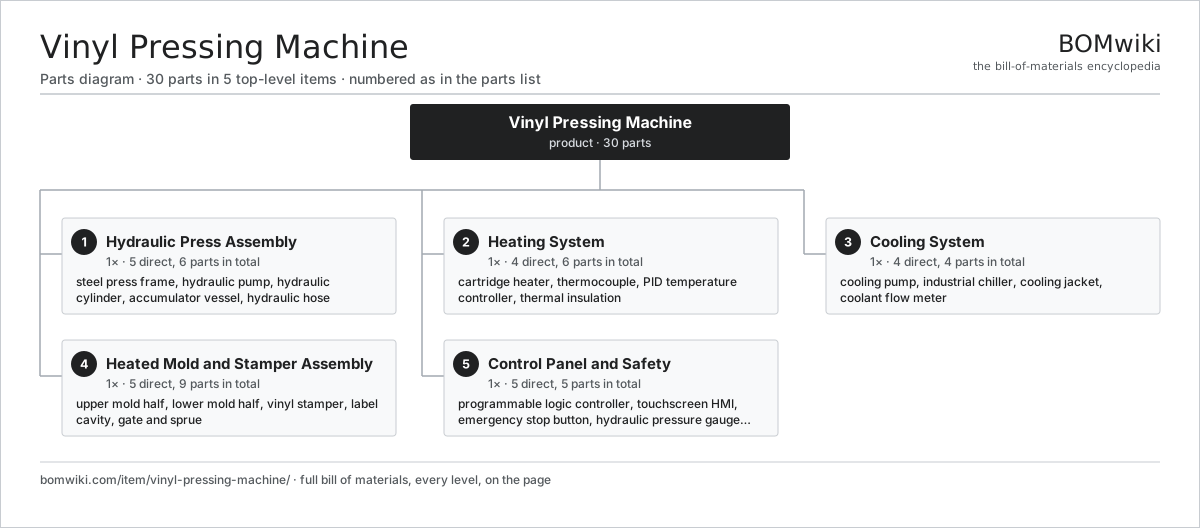
| # | Part | Qty | What it does |
|---|---|---|---|
| 1 | Hydraulic Press Assembly 5 parts | 1× | Heavy-duty steel frame with hydraulic cylinders applying 500–2000 psi pressure for vinyl molding. |
| 2 | Heating System 4 parts | 1× | Electric heating elements and thermal control maintaining [[vinyl-pressing-machine-heated-mold]] at 350–400 °F for vinyl flow. |
| 3 | Cooling System 4 parts | 1× | Circulating chilled water or liquid rapidly cooling pressed records for ejection, reducing cycle time. |
| 4 | Heated Mold and Stamper Assembly 5 parts | 1× | Upper and lower mold cavities, each with etched or embossed vinyl stamper (negative of the record groove pattern). |
| 5 | Control Panel and Safety 5 parts | 1× | PLC or computer-based press controller managing heating, cooling, pressure sequencing, and cycle timing. |
3D model
No 3D model yet. Have a CAD file of this? Add a 3D model. STL renders right on this page; STEP, FreeCAD, and OpenSCAD sources are welcome too (openly licensed, like all 3D models on BOMwiki).
Build & assembly graph
expand / collapse · shared sub-assemblies converge · links to related products · est. labourTap an assembly to expand/collapse · tap a part to open it · use “Open page” for any node · drag to pan, scroll to zoom.
Bill of materials for Vinyl Pressing Machine
5 top-level lines · 31 rows shown · 30 parts total · indented to 3 levels| # | Item / sub-assembly | Part no. | Qty/assy | Ext. qty | Parts | Type |
|---|---|---|---|---|---|---|
| 1 | Hydraulic Press Assembly 5 parts | vinyl-pressing-machine-hydraulic-press | 1× | 1 | 6 | assembly |
| 1.1 | Steel Press Frame | vinyl-pressing-machine-frame | 1× | 1 | · | part |
| 1.2 | Hydraulic Pump | vinyl-pressing-machine-hydraulic-pump | 1× | 1 | · | part |
| 1.3 | Hydraulic Cylinder | vinyl-pressing-machine-cylinder | 2× | 2 | · | part |
| 1.4 | Accumulator Vessel | vinyl-pressing-machine-accumulator | 1× | 1 | · | part |
| 1.5 | Hydraulic Hose | vinyl-pressing-machine-hose | 1× | 1 | · | part |
| 2 | Heating System 4 parts | vinyl-pressing-machine-heating-system | 1× | 1 | 6 | assembly |
| 2.1 | Cartridge Heater | vinyl-pressing-machine-heater | 2× | 2 | · | part |
| 2.2 | Thermocouple | vinyl-pressing-machine-thermocouple | 2× | 2 | · | part |
| 2.3 | PID Temperature Controller | vinyl-pressing-machine-pid-controller | 1× | 1 | · | part |
| 2.4 | Thermal Insulation | vinyl-pressing-machine-thermal-insulation | 1× | 1 | · | part |
| 3 | Cooling System 4 parts | vinyl-pressing-machine-cooling-system | 1× | 1 | 4 | assembly |
| 3.1 | Cooling Pump | vinyl-pressing-machine-cooling-pump | 1× | 1 | · | part |
| 3.2 | Industrial Chiller | vinyl-pressing-machine-chiller | 1× | 1 | · | part |
| 3.3 | Cooling Jacket | vinyl-pressing-machine-cooling-jacket | 1× | 1 | · | part |
| 3.4 | Coolant Flow Meter | vinyl-pressing-machine-flow-meter | 1× | 1 | · | part |
| 4 | Heated Mold and Stamper Assembly 5 parts | vinyl-pressing-machine-molds-stampers | 1× | 1 | 9 | assembly |
| 4.1 | Upper Mold Half 3 parts | vinyl-pressing-machine-upper-mold | 1× | 1 | 3 | assembly |
| 4.1.1 | Mold Body | vinyl-pressing-machine-mold-body | 1× | 1 | · | part |
| 4.1.2 | Vinyl Stamper | vinyl-pressing-machine-stamper | 1× | 1 | · | part |
| 4.1.3 | Thermal Passage | vinyl-pressing-machine-thermal-passage | 1× | 1 | · | part |
| 4.2 | Lower Mold Half | vinyl-pressing-machine-lower-mold | 1× | 1 | 1 | assembly |
| 4.3 | Vinyl Stamper | vinyl-pressing-machine-stamper | 2× | 2 | · | part |
| 4.4 | Label Cavity | vinyl-pressing-machine-label-cavity | 2× | 2 | · | part |
| 4.5 | Gate and Sprue | vinyl-pressing-machine-gate-sprue | 1× | 1 | · | part |
| 5 | Control Panel and Safety 5 parts | vinyl-pressing-machine-control-panel | 1× | 1 | 5 | assembly |
| 5.1 | Programmable Logic Controller | vinyl-pressing-machine-plc | 1× | 1 | · | part |
| 5.2 | Touchscreen HMI | vinyl-pressing-machine-touchscreen | 1× | 1 | · | part |
| 5.3 | Emergency Stop Button | vinyl-pressing-machine-emergency-button | 1× | 1 | · | part |
| 5.4 | Hydraulic Pressure Gauge | vinyl-pressing-machine-pressure-gauge | 1× | 1 | · | part |
| 5.5 | Mold Position Sensor | vinyl-pressing-machine-mold-position-sensor | 1× | 1 | · | part |
Something wrong in this list? Report a problem with this BOM.
Sourcing: possible vendors
Browse the supplier directory → Prices, MOQ, and lead times are algorithmic estimates, not quotes, and not claims about these companies. Company mappings are curated by keyword; est. price band $50–$3k. How estimates work| Vendor | HQ | Specialty | MOQ | Lead time |
|---|---|---|---|---|
|
🇯🇵Sony
sony.com ↗
|
Tokyo, JP | Consumer electronics | 1,000 units | 8–12 wks |
| samsung.com ↗ | Suwon, KR | Electronics & displays | 1,000 units | 8–12 wks |
|
🇺🇸Harman
harman.com ↗
|
Stamford, US | Audio (JBL, AKG) | 1,000 units | 8–12 wks |
|
🇺🇸Bose
bose.com ↗
|
Framingham, US | Audio | 1,000 units | 8–12 wks |
| yamaha.com ↗ | Hamamatsu, JP | Audio & instruments | 1,000 units | 8–12 wks |
1,042-word article