Electric Citrus Juicer
ProductOverview
An electric citrus juicer is a kitchen appliance that extracts juice from citrus fruit (oranges, lemons, limes, grapefruit) using a motorized reamer cone that presses fruit halves against its ribbed surface. The rotating cone (60–150 rpm) tears the fruit flesh and forces juice into grooves that direct the liquid toward a strainer. The strainer blocks pulp, seeds, and fiber, allowing only clear juice to flow into a collection container. Most home models are compact, affordable ($30–$80), and achieve 85–95% juice extraction efficiency.
Electric citrus juicers replaced manual hand-squeezers by the 1950s–1960s as electric motors became affordable. They are faster than hand pressing (10–20 seconds per fruit vs. 30–60 seconds), less tiring, and produce more juice from each fruit due to consistent pressure and longer contact time.
The design is simple: a motor rotates a reamer cone at speeds chosen to balance extraction speed (higher rpm is faster but hotter) with juice quality (lower speed produces less pulp and heat damage to ascorbic acid). Most home juicers operate at 100–120 rpm, a compromise that yields 15–25 mL of juice per lemon or small orange in 8–12 seconds.
How It Works
The user cuts a citrus fruit in half and manually presses one half against the rotating reamer cone. The cone surface, textured with radial ridges, grips the fruit flesh. As the cone rotates, the ridges tear open cell membranes and force juice toward the center, where a circular ridge guides it into grooves radiating outward. These grooves channel juice toward the strainer rim.
The juice flows through the mesh filter (0.5–2 mm perforations) which blocks pulp, seeds, and fiber while allowing juice (liquid, sugars, acids, vitamins) to pass through into the collection container below. The strainer works passively by gravity and centrifugal force from the rotating cone; no active pumping is needed.
As the fruit half is pressed against the cone, it slowly sinks, rolling on the ribbed surface. Pressure from the user's hand determines extraction intensity. Light pressure (100–200 g force) is sufficient for juicy fruits like oranges; firmer pressure (400–600 g) is needed for dry lemons. Most users extract 60–80% of available juice and discard the spent peel after 8–15 seconds.
Reamer Cone Design
The reamer cone is the heart of the juicer. Cone geometry affects extraction efficiency and juice quality:
Cone angle: Typical cones are 90–120° (half-cone to full cone). Steeper angles (120°) are easier to press fruit onto but offer less surface area; gentler angles (90°) provide more contact area but can be awkward to use.
Ridge geometry: Radial ridges (typically 8–12 per cone, 1–2 mm tall) create grip and tear the fruit flesh without crushing it into pulp. Ridge sharpness matters: dull ridges slip off the fruit; sharp ridges cut efficiently but can split seeds, introducing bitter oils.
Surface material: Cast polyethylene (common, affordable, food-safe to 80 °C) or natural rubber (more durable, better grip, eco-friendly). Some premium reamers are coated with silicon carbide (abrasive, grips very well but wears faster).
The cone rotates at 60–150 rpm. Slower speeds (60–80 rpm) produce juice with less foam and more clarity, better for fresh juice that will be stored. Faster speeds (120–150 rpm) extract juice faster (more throughput) but generate heat (friction raises temperature by 2–5 °C) and slightly more foam (air incorporation). Most home juicers run at ~100 rpm as a compromise.
Juice Extraction Physiology
Citrus cells contain juice sacs (vacuoles) filled with water, citric acid (~5–8 g/100 mL), sugars (~10–12 g/100 mL), and ascorbic acid (vitamin C, ~20–60 mg/100 mL). The cell walls contain pectin (a polysaccharide) that gives the cell structural integrity.
When the reamer ridges tear the cell walls, juice is released. The speed of extraction affects juice quality:
Slow extraction (low rpm, short time): Juice is expressed before oxidation begins. Ascorbic acid is preserved. Juice is clear and stays fresh for 6+ hours in the refrigerator.
Fast extraction (high rpm, long time): More air is incorporated into the juice during tearing and flow, causing rapid oxidation of ascorbic acid and browning (Maillard reaction between sugars and amino acids). The juice tastes flatter and less tart within 2–3 hours.
Temperature also affects extraction: cold juice (refrigerated fruit, ~4 °C) flows more slowly but with less oxidation; warm juice (room temperature, ~20 °C) flows faster but oxidizes faster. Most citrus juices are kept refrigerated before use to slow oxidation and maintain flavor.
Strainer and Pulp Control
The strainer mesh, typically 0.5–2 mm perforations, is a passive separator. Juice is strained by gravity and centrifugal force from the rotating cone. Some juice naturally carries fine pulp and mist through the mesh; this produces a slightly cloudy but flavorful juice. For clear juice, a second finer strainer (cheese cloth or 0.1 mm mesh) can be used to strain the collected juice further.
Pulp buildup on the mesh can slow extraction. The mesh should be rinsed immediately after use to prevent dried pulp from clogging the perforations. Over time (50–100 juicing sessions), the mesh can wear or accumulate permanent residue; replacement is inexpensive ($5–$15).
Motor and Reliability
The motor is typically a small AC induction motor (60–150 W), rated for intermittent duty (5–10 minutes on, cool-down, repeat). The motor draws 0.5–1.5 amperes at 120V AC (US) and can run continuously for 30–60 minutes before thermal protection kicks in. A Thermal Fuse at 100–110 °C stops the motor if friction or jam occurs.
Most home citrus juicers are used 2–5 minutes per day (2–3 fruits), so the motor rarely reaches thermal limits. The bearing, brushes (if DC motor), and winding can last 8–12 years of residential use, with the strainer mesh being the most frequent wear item.
Usage and Maintenance Tips
For best results:
- Use room-temperature fruit (20–25 °C) for faster juicing. Cold fruit takes 20–30% longer.
- Cut fruit in half, not quarters. A halved fruit fits the cone best and is easier to press onto.
- Juice firmer citrus first (lemons, limes). Juice softer citrus second (oranges). The reamer is warm from the first batch, aiding extraction.
- Let the motor reach full speed before pressing the fruit. Premature pressing against a slow cone can stall the motor.
- Apply steady, moderate pressure (200–400 g for oranges, 400–600 g for lemons). Excessive force strains the motor and produces more pulp and heat.
Cleaning: Rinse all removable parts (reamer cone, strainer, collection container) immediately after use with cool water. The motor housing should never be submerged; wipe with a damp cloth if spill occurs.
With proper use and maintenance, a home electric citrus juicer can function reliably for 8–15 years.
Electric Citrus Juicer parts and their functions
7 top-level parts · 67 parts in total · full bill of materials below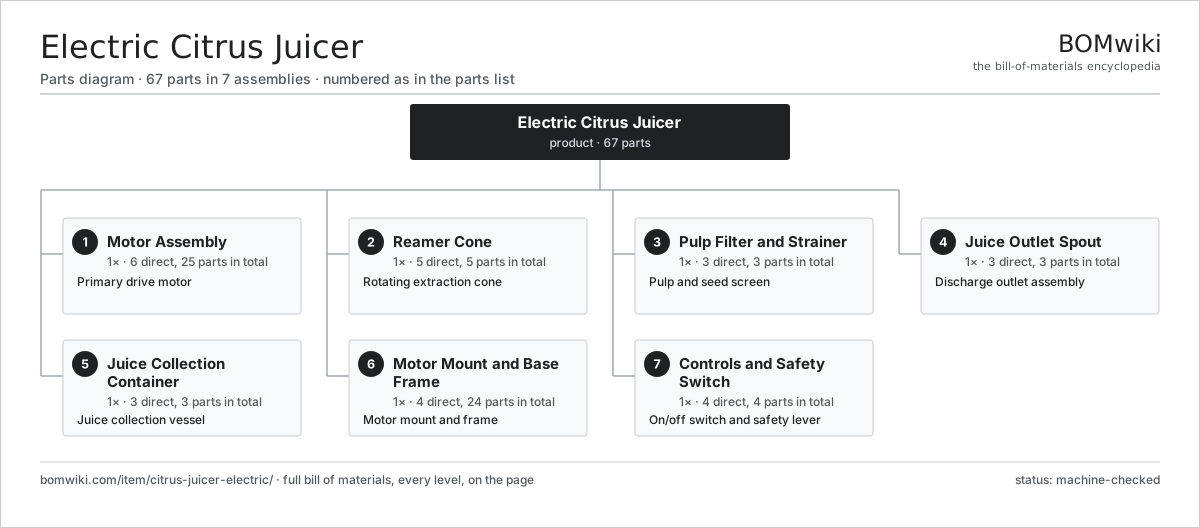
| # | Part | Qty | What it does |
|---|---|---|---|
| 1 | Motor Assembly 6 parts | 1× | Primary drive motor |
| 2 | Reamer Cone 5 parts | 1× | Rotating extraction cone |
| 3 | Pulp Filter and Strainer 3 parts | 1× | Pulp and seed screen |
| 4 | Juice Outlet Spout 3 parts | 1× | Discharge outlet assembly |
| 5 | Juice Collection Container 3 parts | 1× | Juice collection vessel |
| 6 | Motor Mount and Base Frame 4 parts | 1× | Motor mount and frame |
| 7 | Controls and Safety Switch 4 parts | 1× | On/off switch and safety lever |
3D model
No 3D model yet. Have a CAD file of this? Add a 3D model — STL renders right on this page; STEP, FreeCAD, and OpenSCAD sources are welcome too (openly licensed, like all 3D models on BOMwiki).
Build & assembly graph
expand / collapse · shared sub-assemblies converge · links to related products · est. labourTap an assembly to expand/collapse · tap a part to open it · use “Open page” for any node · drag to pan, scroll to zoom.
Bill of materials for Electric Citrus Juicer
7 top-level lines · 44 rows shown · 67 parts total · indented to 3 levels| # | Item / sub-assembly | Part no. | Qty/assy | Ext. qty | Parts | Type |
|---|---|---|---|---|---|---|
| 1 | Motor Assembly 6 parts | citrus-juicer-electric-motor | 1× | 1 | 25 | assembly |
| 1.1 | Motor Housing | motor-housing | 1× | 1 | · | part |
| 1.2 | Copper Winding | copper-winding | 1× | 1 | · | part |
| 1.3 | Rotor Assembly 4 parts | rotor-assembly | 1× | 1 | 19 | assembly |
| 1.3.1 | Rotor Shaft | rotor-shaft | 1× | 1 | · | part |
| 1.3.2 | Rotor Core | rotor-core | 1× | 1 | · | part |
| 1.3.3 | Neodymium Magnet | neodymium-magnet | 16× | 16 | · | part |
| 1.3.4 | Ball Bearing | ball-bearing | 1× | 1 | · | part |
| 1.4 | Ball Bearing | ball-bearing | 2× | 2 | · | part |
| 1.5 | Thermal Fuse | thermal-fuse | 1× | 1 | · | part |
| 1.6 | Fastener Set | fastener-set | 1× | 1 | · | part |
| 2 | Reamer Cone 5 parts | citrus-juicer-electric-reamer-cone | 1× | 1 | 5 | assembly |
| 2.1 | Reamer Cone Surface | citrus-juicer-electric-cone-body | 1× | 1 | · | part |
| 2.2 | Reamer Drive Shaft | citrus-juicer-electric-cone-shaft | 1× | 1 | · | part |
| 2.3 | Juice Collection Grooves | citrus-juicer-electric-groove-channels | 1× | 1 | · | part |
| 2.4 | Ball Bearing | ball-bearing | 1× | 1 | · | part |
| 2.5 | Connector | connector | 1× | 1 | · | part |
| 3 | Pulp Filter and Strainer 3 parts | citrus-juicer-electric-pulp-filter | 1× | 1 | 3 | assembly |
| 3.1 | Filter Screen Mesh | citrus-juicer-electric-screen-mesh | 1× | 1 | · | part |
| 3.2 | Strainer Ring Assembly | citrus-juicer-electric-strainer-ring | 1× | 1 | · | part |
| 3.3 | Connector | connector | 1× | 1 | · | part |
| 4 | Juice Outlet Spout 3 parts | citrus-juicer-electric-juice-spout | 1× | 1 | 3 | assembly |
| 4.1 | Connector | connector | 1× | 1 | · | part |
| 4.2 | Spout Discharge Lip | citrus-juicer-electric-spout-lip | 1× | 1 | · | part |
| 4.3 | Fastener Set | fastener-set | 1× | 1 | · | part |
| 5 | Juice Collection Container 3 parts | citrus-juicer-electric-container | 1× | 1 | 3 | assembly |
| 5.1 | Collection Pitcher | citrus-juicer-electric-pitcher-body | 1× | 1 | · | part |
| 5.2 | Measurement Scale | citrus-juicer-electric-measurement-scale | 1× | 1 | · | part |
| 5.3 | Connector | connector | 1× | 1 | · | part |
| 6 | Motor Mount and Base Frame 4 parts | citrus-juicer-electric-base | 1× | 1 | 24 | assembly |
| 6.1 | Sheet Metal Panel | sheet-panel | 1× | 1 | · | part |
| 6.2 | Seat Assembly 5 parts | seat-assembly | 3× | 3 | 7 | assembly |
| 6.2.1 | Seat Frame | seat-frame | 1× | 3 | · | part |
| 6.2.2 | Seat Foam | seat-foam | 2× | 6 | · | part |
| 6.2.3 | Seat Cover | seat-cover | 1× | 3 | · | part |
| 6.2.4 | Seat Motor | seat-motor | 2× | 6 | · | part |
| 6.2.5 | Seat Heater Mat | seat-heater | 1× | 3 | · | part |
| 6.3 | Fastener Set | fastener-set | 1× | 1 | · | part |
| 6.4 | Connector | connector | 1× | 1 | · | part |
| 7 | Controls and Safety Switch 4 parts | citrus-juicer-electric-controls | 1× | 1 | 4 | assembly |
| 7.1 | Relay | relay | 1× | 1 | · | part |
| 7.2 | Bare PCB | pcb-bare | 1× | 1 | · | part |
| 7.3 | Connector | connector | 1× | 1 | · | part |
| 7.4 | Fastener Set | fastener-set | 1× | 1 | · | part |
Related products
same domain, ranked by shared parts Home Pasta Extruder
82 parts · shares 15 with this page
Home Pasta Extruder
82 parts · shares 15 with this page
 Electric Meat Grinder
73 parts · shares 14 with this page
Electric Meat Grinder
73 parts · shares 14 with this page
 Electric Fondue Pot
43 parts · shares 9 with this page
Electric Fondue Pot
43 parts · shares 9 with this page
 Crepe Maker
49 parts · shares 9 with this page
Crepe Maker
49 parts · shares 9 with this page
 Home Deep Fryer
53 parts · shares 7 with this page
Home Deep Fryer
53 parts · shares 7 with this page
Sourcing: possible vendors
Prices, MOQ, and lead times are algorithmic estimates, not quotes, and not claims about these companies. Company mappings are curated by keyword; est. price band $20–$600. How estimates work| Vendor | HQ | Specialty | MOQ | Lead time |
|---|---|---|---|---|
|
🇦🇺Breville
breville.com ↗
|
Sydney, AU | Kitchen appliances | 2,000 units | 6–10 wks |
| groupeseb.com ↗ | Écully, FR | Cookware & small appliances | 2,000 units | 6–10 wks |
| hamiltonbeach.com ↗ | Glen Allen, US | Small appliances | 2,000 units | 6–10 wks |
| panasonic.com ↗ | Osaka, JP | Electronics & appliances | 2,000 units | 6–10 wks |
|
🇨🇳Midea
midea.com ↗
|
Foshan, CN | Home appliances | 2,000 units | 6–10 wks |
1,190-word article