Crepe Maker
ProductAlso known as: Electric Crepe Maker
Overview
An electric crepe maker is a tabletop appliance consisting of a flat, heated griddle (300–400 mm diameter) maintained at 180–250 °C by an embedded electric heater and thermostat. Crepe batter (a thin, milk-based mixture of flour, egg, and liquid) is poured onto the hot plate, spread to uniform thickness using a wooden or plastic spreader, and cooked briefly (30–60 seconds per side) until the bottom is light golden and the top is dry.
Crepes are a French culinary classic, traditionally cooked on hot griddles or crepe pans heated over gas flames. Electric crepe makers emerged in the 1960s–1970s as affordable electric appliances, bringing consistent, hands-free temperature control to home cooking.
The design is elegantly simple: a large, flat, even-heating surface with user-adjustable temperature. Unlike a stovetop pan (which has hot spots and uneven temperature), the electric crepe maker maintains steady temperature across the entire plate, ensuring uniform crepe thickness and color.
How It Works
The user plugs in the crepe maker and sets the temperature dial to 200–220 °C (a typical temperature for flour-based crepes). The thermostat cycles the heating element on/off to reach and maintain the setpoint. Preheating takes 5–10 minutes.
Once hot, a small amount of crepe batter (50–100 mL per 300 mm diameter plate) is poured onto the center of the hotplate. The batter is thin (consistency of heavy cream), so it spreads under its own weight and the action of gravity. The user uses the wooden spreader to gently nudge and distribute the batter, moving in a circular motion from the center outward, creating an even layer 1–2 mm thick.
Within 30–40 seconds, the bottom of the crepe sets (proteins denature, starches gelatinize) and the surface loses its wet sheen, indicating the first side is cooked. The user flips the crepe using a plastic spatula or fork and cooks the other side for 10–20 seconds. The completed crepe is light golden, tender, and slightly browned at the edges.
The cooked crepe is transferred to a plate and kept warm while the next batch is made. One crepe is completed every 1–2 minutes once the cook reaches rhythm, allowing a cook to prepare 20–30 crepes in 30 minutes.
Crepe Batter Chemistry
A standard crepe batter recipe includes:
- 1 cup (120 g) all-purpose flour
- 2 tablespoons sugar
- 1/4 teaspoon salt
- 2 large eggs
- 1 cup (240 mL) whole milk
- 1/2 cup (120 mL) water
- 2 tablespoons melted butter or oil
The flour provides structure (gluten development). The eggs add protein (binds) and fat (tenderness). The milk and water provide liquid to hydrate the flour and create the thin batter consistency. Sugar adds slight browning (Maillard reaction) and subtle sweetness. Butter adds fat for richness and aids browning.
Mixing: Combine dry ingredients, then wet ingredients separately, then combine the two with minimal stirring (overmixing develops gluten, making crepes tough). The batter is allowed to rest 15–30 minutes before cooking, allowing flour hydration to equilibrate.
The resulting batter has ~75–80% water content and flows easily. When poured onto the hot griddle:
Hydration and protein denaturation (0–10 seconds): The bottom of the batter contacts the hot plate (200 °C). Water at the interface instantly flashes to steam, creating slight loft. Proteins in the flour and eggs denature, setting the structure.
Starch gelatinization and browning (10–30 seconds): Starch granules in the flour absorb water and swell, thickening the batter. Maillard reactions between proteins and reducing sugars create light brown color.
Final setting (30–40 seconds): The entire crepe is set but still slightly moist. The user flips.
Second side cooking (10–20 seconds): The already-cooked bottom is now on top, insulating the batter. The second side sets quickly due to residual heat in the batter.
Hotplate Design and Material
The hotplate must be flat and smooth to ensure even contact with batter. Most electric crepe makers use aluminum (lightweight, conducts heat well, easy to coat with non-stick) or cast iron (heavier, retains heat better, traditional). Cast-iron plates must be seasoned (oil coating) before first use to create a non-stick surface; aluminum plates are typically coated with PTFE (Teflon) or ceramic at the factory.
The heating element is embedded beneath the plate, either cast together with the aluminum or bonded with high-temperature adhesive. The element is a nichrome wire coil that radiates heat into the aluminum or iron, which conducts the heat uniformly across the surface.
Plate thickness (3–5 mm) is important for thermal mass and even heating. A thin plate (1–2 mm) heats quickly but has hot spots and cold spots; a thick plate (5–8 mm) distributes heat more evenly but takes longer to preheat. Most home crepe makers use 4–5 mm aluminum as a compromise.
Thermostat and Temperature Control
The thermostat is a simple bimetallic or electronic switch that cycles the heating element on/off to maintain the user's setpoint. A typical home crepe maker uses a 0–250 °C dial with marked zones:
- Low (100–150 °C): Gentle warming, used to keep cooked crepes warm without browning.
- Medium (180–210 °C): Standard crepe cooking. Most recipes work in this zone.
- High (220–250 °C): Fast, dark-brown crepes. Some dessert crepes (with butter or chocolate) use this temperature for quick caramelization.
The hysteresis (on/off temperature band) is typically ±5 °C, so the actual temperature swings 5 °C around the setpoint. This is acceptable for crepe cooking, as the batter is forgiving.
Some premium crepe makers include an indicator light that changes color when the plate reaches the setpoint, aiding the user's timing.
Cooking Technique and Variations
The key to thin, even crepes is proper spreading. After pouring batter onto the center of the hot plate, the spreader is used in a quick circular motion from the center outward, lifting slightly as it moves to encourage the thin, even layer. Circular crepes result from circular spreading; rectangular spreads yield crepes that fit easily on square plates.
Batter thickness affects cooking time and texture:
- Thin (1 mm): Cooks in 20–30 seconds, very delicate and tender, prone to tearing when flipped.
- Standard (1.5–2 mm): Cooks in 30–50 seconds, sturdy enough to flip easily, good for both sweet and savory fillings.
- Thick (2.5–3 mm): Cooks in 50–70 seconds, crepe-like pancake texture, good for hearty fillings.
Savory crepes (vegetable, meat fillings) use plain batter and are cooked at 200–210 °C. Sweet crepes (fruit, chocolate, jam fillings) often include a touch of sugar or butter in the batter and are cooked at the same temperature or slightly lower to avoid excessive browning that would mask delicate fillings.
Maintenance and Care
The hotplate should never be submerged. After cooling, wipe with a damp cloth and dry thoroughly. For stubborn residue, use a soft scouring pad with a small amount of oil or butter on the surface.
Non-stick coating (PTFE) degrades if overheated above 280 °C or scraped with metal utensils. Wooden or plastic spreaders and spatulas should be used exclusively. Replacement non-stick plates are available from manufacturers if the coating eventually wears (after 5–10 years of regular use).
The heating element has a typical lifespan of 10–15 years of home use (1–2 times per week). Once it fails, the entire appliance usually must be retired or professionally serviced.
With proper care and typical residential use (1–4 times per month), an electric crepe maker can function well for 15–20 years.
Crepe Maker parts and their functions
5 top-level parts · 49 parts in total · full bill of materials below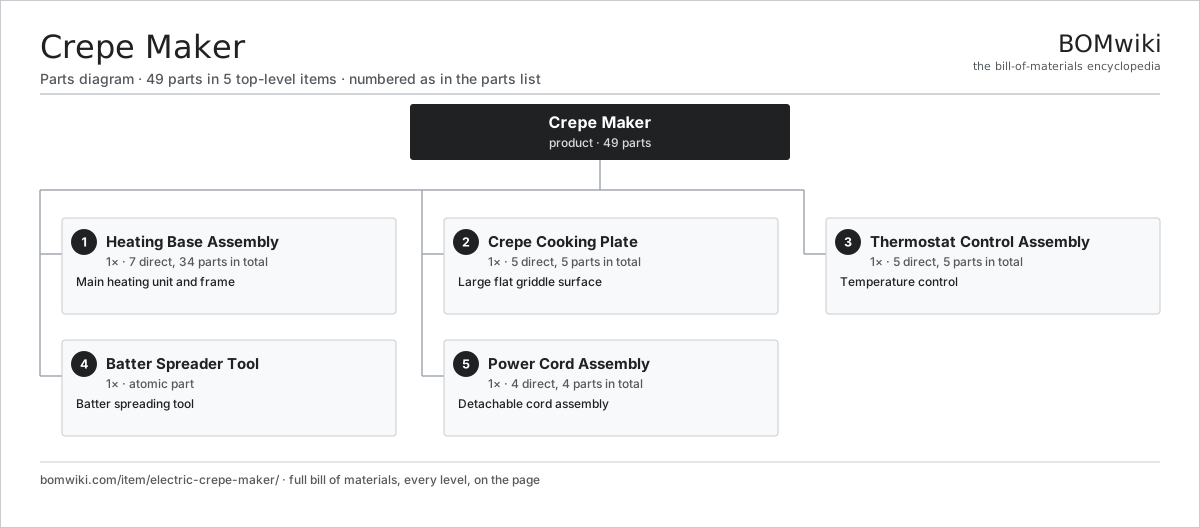
| # | Part | Qty | What it does |
|---|---|---|---|
| 1 | Heating Base Assembly 7 parts | 1× | Main heating unit and frame |
| 2 | Crepe Cooking Plate 5 parts | 1× | Large flat griddle surface |
| 3 | Thermostat Control Assembly 5 parts | 1× | Temperature control |
| 4 | Batter Spreader Tool | 1× | Batter spreading tool |
| 5 | Power Cord Assembly 4 parts | 1× | Detachable cord assembly |
3D model
No 3D model yet. Have a CAD file of this? Add a 3D model. STL renders right on this page; STEP, FreeCAD, and OpenSCAD sources are welcome too (openly licensed, like all 3D models on BOMwiki).
Build & assembly graph
expand / collapse · shared sub-assemblies converge · links to related products · est. labourTap an assembly to expand/collapse · tap a part to open it · use “Open page” for any node · drag to pan, scroll to zoom.
Bill of materials for Crepe Maker
5 top-level lines · 31 rows shown · 49 parts total · indented to 3 levels| # | Item / sub-assembly | Part no. | Qty/assy | Ext. qty | Parts | Type |
|---|---|---|---|---|---|---|
| 1 | Heating Base Assembly 7 parts | electric-crepe-maker-heating-base | 1× | 1 | 34 | assembly |
| 1.1 | Heating Element | heating-element | 1× | 1 | · | part |
| 1.2 | Base Housing Case | electric-crepe-maker-base-housing | 1× | 1 | · | part |
| 1.3 | Motor Housing | motor-housing | 1× | 1 | · | part |
| 1.4 | Bare PCB | pcb-bare | 1× | 1 | · | part |
| 1.5 | Thermal Fuse | thermal-fuse | 1× | 1 | · | part |
| 1.6 | Seat Assembly 5 parts | seat-assembly | 4× | 4 | 7 | assembly |
| 1.6.1 | Seat Frame | seat-frame | 1× | 4 | · | part |
| 1.6.2 | Seat Foam | seat-foam | 2× | 8 | · | part |
| 1.6.3 | Seat Cover | seat-cover | 1× | 4 | · | part |
| 1.6.4 | Seat Motor | seat-motor | 2× | 8 | · | part |
| 1.6.5 | Seat Heater Mat | seat-heater | 1× | 4 | · | part |
| 1.7 | Fastener Set | fastener-set | 1× | 1 | · | part |
| 2 | Crepe Cooking Plate 5 parts | electric-crepe-maker-hotplate | 1× | 1 | 5 | assembly |
| 2.1 | Griddle Plate Surface | electric-crepe-maker-plate-surface | 1× | 1 | · | part |
| 2.2 | Heating Element Jacket | electric-crepe-maker-heating-jacket | 1× | 1 | · | part |
| 2.3 | Ball Bearing | ball-bearing | 1× | 1 | · | part |
| 2.4 | Connector | connector | 1× | 1 | · | part |
| 2.5 | Fastener Set | fastener-set | 1× | 1 | · | part |
| 3 | Thermostat Control Assembly 5 parts | electric-crepe-maker-thermostat | 1× | 1 | 5 | assembly |
| 3.1 | Temperature Sensor Probe | electric-crepe-maker-temp-probe | 1× | 1 | · | part |
| 3.2 | Relay | relay | 1× | 1 | · | part |
| 3.3 | Bare PCB | pcb-bare | 1× | 1 | · | part |
| 3.4 | Connector | connector | 1× | 1 | · | part |
| 3.5 | Fastener Set | fastener-set | 1× | 1 | · | part |
| 4 | Batter Spreader Tool | electric-crepe-maker-spreader | 1× | 1 | · | part |
| 5 | Power Cord Assembly 4 parts | electric-crepe-maker-power-cord | 1× | 1 | 4 | assembly |
| 5.1 | Wire Bundle | wire-bundle | 1× | 1 | · | part |
| 5.2 | Connector | connector | 1× | 1 | · | part |
| 5.3 | Relay | relay | 1× | 1 | · | part |
| 5.4 | Fastener Set | fastener-set | 1× | 1 | · | part |
Something wrong in this list? Report a problem with this BOM.
Related products
same domain, ranked by shared parts Electric Citrus Juicer
67 parts · shares 9 with this page
Home Ice Cream Maker
75 parts · shares 9 with this page
Electric Citrus Juicer
67 parts · shares 9 with this page
Home Ice Cream Maker
75 parts · shares 9 with this page
 Home Pasta Extruder
82 parts · shares 9 with this page
Home Pasta Extruder
82 parts · shares 9 with this page
 Electric Fondue Pot
43 parts · shares 8 with this page
Electric Fondue Pot
43 parts · shares 8 with this page
 Electric Meat Grinder
73 parts · shares 8 with this page
Electric Meat Grinder
73 parts · shares 8 with this page
 Home Deep Fryer
53 parts · shares 6 with this page
Home Deep Fryer
53 parts · shares 6 with this page
Sourcing: possible vendors
Browse the supplier directory → Prices, MOQ, and lead times are algorithmic estimates, not quotes, and not claims about these companies. Company mappings are curated by keyword; est. price band $20–$600. How estimates work| Vendor | HQ | Specialty | MOQ | Lead time |
|---|---|---|---|---|
|
🇦🇺Breville
breville.com ↗
|
Sydney, AU | Kitchen appliances | 2,000 units | 6–10 wks |
| groupeseb.com ↗ | Écully, FR | Cookware & small appliances | 2,000 units | 6–10 wks |
| hamiltonbeach.com ↗ | Glen Allen, US | Small appliances | 2,000 units | 6–10 wks |
| panasonic.com ↗ | Osaka, JP | Electronics & appliances | 2,000 units | 6–10 wks |
|
🇨🇳Midea
midea.com ↗
|
Foshan, CN | Home appliances | 2,000 units | 6–10 wks |
1,299-word article