Hot Lather Machine
ProductOverview
Hot lather machines warm and aerate shaving soap solution, dispensing it as warm, fluffy foam directly onto a client's face or body. The technology combines heated storage (40–50°C), gear pump circulation, and aerating nozzles to deliver a superior shaving experience compared to canned foam or cold cream. Originally introduced in barber shops during the mid-20th century, hot lather machines remain popular in luxury grooming facilities, spas, and upscale barber shops worldwide.
The Console Assembly houses a pressurized Lather Chamber (2–3 L stainless steel vessel), an electric Heating Element heater, and a Pump System gear pump. The Pressure System air pump maintains positive pressure in the chamber to assist lather delivery. A flexible hose connects to the Nozzle Handpiece aerating handpiece, which the barber triggers to dispense warm, foamy lather.
How it works
The operator fills the Lather Chamber vessel (via the removable Fill Cap) with concentrated shaving soap solution, typically a liquid concentrate (e.g., menthol-infused, glycerin-rich formulas) mixed 1:1 or 1:2 with water. The Main Control PCB microcontroller senses power-on and begins heating: the Heating Element (1–2 kW electric resistance heater) spiraled around the Vessel Body generates Joule heat, raising the lather temperature to a setpoint (typically 40–50°C).
The Thermostat Control monitors temperature via the Temperature Probe (RTD or thermistor mounted inside the vessel). Once the lather reaches setpoint, the Thermostat Relay modulates heater on/off cycles to maintain temperature ±2°C.
In parallel, the Pressure System activates: the Blower Motor brushless motor (12–24V DC, 50 W) drives the Air Pump Head diaphragm pump at low displacement (0.5–1 L/min). Air passes through the Regulator Valve (pressure-reducing valve, 0–2 bar adjustable setpoint) and enters the sealed Lather Chamber via a one-way Check Valve air valve. This positive pressure (0.5–1 bar inside the vessel) assists lather delivery without requiring a powerful pump motor.
When the barber squeezes the trigger on the Nozzle Handpiece handpiece, a solenoid or mechanical valve opens, allowing pressurized lather to flow from the chamber through the hose to the nozzle. The Pump Motor (0.25 HP AC induction or DC brushless, 180–200 W) simultaneously activates, driving the Gear Pump (10–20 mL/rev displacement). The gear pump pressurizes the lather solution (2–3 bar), forcing it through the Check Valve and down the hose.
At the nozzle, the pressurized warm lather enters the Aerator Chamber internal cavity, where it meets air (drawn via venturi action or auxiliary air inlet). The lather and air mix turbulently, then exit through the Mixing Screen (fine mesh, 200–400 microns), which breaks the mixture into uniform foam bubbles. The output is light, airy lather (density ~0.1 g/mL) rather than liquid soap, optimal for brush application and client comfort.
Design rationale
Warm lather (40–50°C) softens whiskers and facial hair, reducing pulling and irritation during shaving; it also opens pores and hydrates skin. The pressure-assisted design allows use of lower-viscosity concentrates (lower cost per liter) while maintaining adequate flow rate. Gear pump displacement is sized to deliver 50–100 mL of aerated lather per 10–15 second trigger pull, sufficient for a full face application.
The Pressure Relief spring-loaded valve (2–3 bar setpoint) protects the pump and hose from overpressure if the aerating nozzle is accidentally blocked.
Maintenance and operational details
Barbers typically use pre-mixed liquid concentrate or powder dissolves (e.g., Barbicide, Williams Shaving Cream concentrate). The concentrate is stored in the Lather Chamber and diluted with hot water from a kettle before use. Some facilities fill the vessel twice daily (morning and afternoon refill) to ensure fresh lather throughout the day.
The Lather Chamber vessel is easily accessible for cleaning: unbolt the Fill Cap and rinse with hot water, swabbing interior surfaces with a bottle brush. Monthly deep cleaning involves filling with a mixture of hot water and vinegar (1:1 ratio), running the pump for 5 minutes to flush hoses, then draining and rinsing.
The Nozzle Handpiece handpiece is disassembled and soaked in hot soapy water after each client; the Mixing Screen mesh is carefully cleaned with a soft brush to prevent clogging. If foam output becomes weak or spits liquid (signs of nozzle blockage), the screen is soaked in warm water or replaced (screens are inexpensive consumables).
The Heating Element heater is rated for 10,000+ operating hours (~10 years with continuous use). After extended periods, mineral deposits from hard water may reduce heating efficiency; descaling with citric acid solution (1 part acid, 4 parts water, heated and circulated through the system) restores performance.
The Pump Motor and Gear Pump are robust, rated for 5000+ operating hours. The gear pump is oil-lubricated internally; no external lubrication is required. If the pump develops a noise (squealing or grinding), internal bearings are worn and the pump requires replacement.
The Thermostat Control relay and Temperature Probe are long-lasting; after 10+ years, the sensor may drift slightly (±2–3°C error), but most barbers do not notice. Replacement is inexpensive (<$30) and requires unscrewing a probe from the vessel interior.
Consumables and cost
Lather concentrate costs $5–$15 per liter; a typical 2 L vessel holds enough for 100–150 client applications (assuming ~15 mL per application). A barber serving 10–15 clients per day refills 1–2 times weekly. Annual lather cost is typically $100–$300 per machine depending on concentrate brand and usage.
Hoses and nozzle screens are replaced annually or as needed (~$50–$100/year).
The machine's utility is mainly customer experience; barbers report that clients appreciate the warmth and comfort of hot lather, and modern machines project a professional image in upscale shops. Cost of entry is $600–$1,500 for a professional-grade unit, amortized over 10+ years.
Hot Lather Machine parts and their functions
6 top-level parts · 32 parts in total · full bill of materials below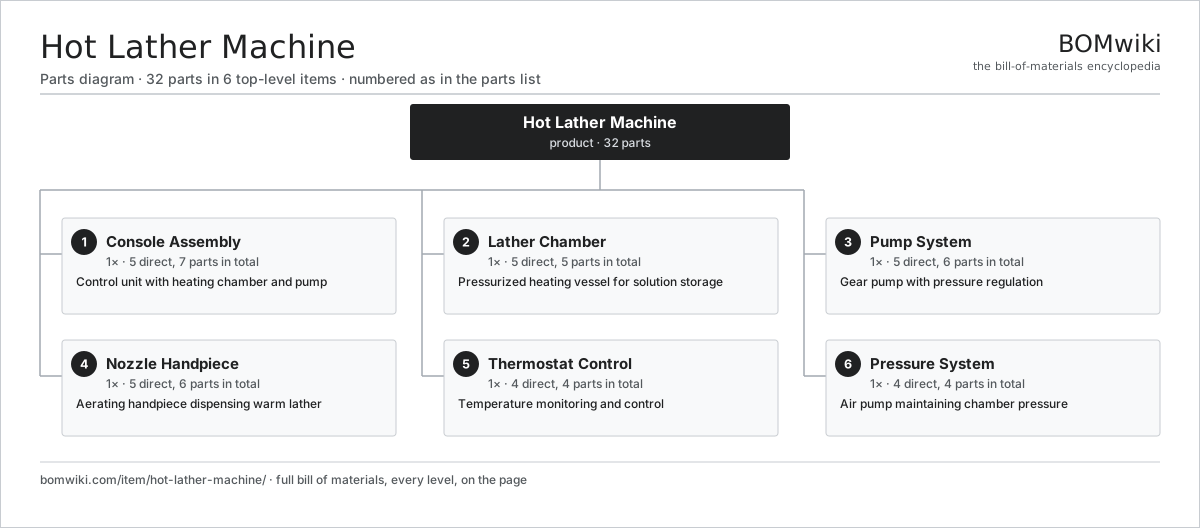
| # | Part | Qty | What it does |
|---|---|---|---|
| 1 | Console Assembly 5 parts | 1× | Control unit with heating chamber and pump |
| 2 | Lather Chamber 5 parts | 1× | Pressurized heating vessel for solution storage |
| 3 | Pump System 5 parts | 1× | Gear pump with pressure regulation |
| 4 | Nozzle Handpiece 5 parts | 1× | Aerating handpiece dispensing warm lather |
| 5 | Thermostat Control 4 parts | 1× | Temperature monitoring and control |
| 6 | Pressure System 4 parts | 1× | Air pump maintaining chamber pressure |
3D model
No 3D model yet. Have a CAD file of this? Add a 3D model. STL renders right on this page; STEP, FreeCAD, and OpenSCAD sources are welcome too (openly licensed, like all 3D models on BOMwiki).
Build & assembly graph
expand / collapse · shared sub-assemblies converge · links to related products · est. labourTap an assembly to expand/collapse · tap a part to open it · use “Open page” for any node · drag to pan, scroll to zoom.
Bill of materials for Hot Lather Machine
6 top-level lines · 34 rows shown · 32 parts total · indented to 3 levels| # | Item / sub-assembly | Part no. | Qty/assy | Ext. qty | Parts | Type |
|---|---|---|---|---|---|---|
| 1 | Console Assembly 5 parts | hot-lather-machine-console | 1× | 1 | 7 | assembly |
| 1.1 | Power Supply | power-supply | 1× | 1 | · | part |
| 1.2 | Main Control PCB | hot-lather-machine-main-pcb | 1× | 1 | · | part |
| 1.3 | Microcontroller | mcu | 1× | 1 | · | part |
| 1.4 | Relay | relay | 2× | 2 | · | part |
| 1.5 | Sheet Metal Panel | sheet-panel | 2× | 2 | · | part |
| 2 | Lather Chamber 5 parts | hot-lather-machine-lather-chamber | 1× | 1 | 5 | assembly |
| 2.1 | Vessel Body | hot-lather-machine-vessel-body | 1× | 1 | · | part |
| 2.2 | Heating Jacket | hot-lather-machine-heating-jacket | 1× | 1 | · | part |
| 2.3 | Vessel Gasket | hot-lather-machine-vessel-gasket | 1× | 1 | · | part |
| 2.4 | Fill Cap | hot-lather-machine-fill-cap | 1× | 1 | · | part |
| 2.5 | Pressure Sensor | pressure-sensor | 1× | 1 | · | part |
| 3 | Pump System 5 parts | hot-lather-machine-pump-system | 1× | 1 | 6 | assembly |
| 3.1 | Pump Motor | hot-lather-machine-pump-motor | 1× | 1 | · | part |
| 3.2 | Gear Pump | hot-lather-machine-gear-pump | 1× | 1 | · | part |
| 3.3 | Pressure Relief | hot-lather-machine-pressure-relief | 1× | 1 | · | part |
| 3.4 | Check Valve | hot-lather-machine-check-valve | 1× | 1 | · | part |
| 3.5 | Connector | connector | 2× | 2 | · | part |
| 4 | Nozzle Handpiece 5 parts | hot-lather-machine-nozzle-head | 1× | 1 | 6 | assembly |
| 4.1 | Nozzle Body | hot-lather-machine-nozzle-body | 1× | 1 | · | part |
| 4.2 | Aerator Chamber | hot-lather-machine-aerator-chamber | 1× | 1 | · | part |
| 4.3 | Mixing Screen | hot-lather-machine-mixing-screen | 1× | 1 | · | part |
| 4.4 | Wire Bundle | wire-bundle | 1× | 1 | · | part |
| 4.5 | Fastener Set | fastener-set | 2× | 2 | · | part |
| 5 | Thermostat Control 4 parts | hot-lather-machine-thermostat | 1× | 1 | 4 | assembly |
| 5.1 | Temperature Probe | hot-lather-machine-temperature-probe | 1× | 1 | · | part |
| 5.2 | Heating Element | hot-lather-machine-heating-element | 1× | 1 | · | part |
| 5.3 | Thermostat Relay | hot-lather-machine-thermostat-relay | 1× | 1 | · | part |
| 5.4 | Bare PCB | pcb-bare | 1× | 1 | · | part |
| 6 | Pressure System 4 parts | hot-lather-machine-pressure-system | 1× | 1 | 4 | assembly |
| 6.1 | Blower Motor | blower-motor | 1× | 1 | · | part |
| 6.2 | Air Pump Head | hot-lather-machine-air-pump-head | 1× | 1 | · | part |
| 6.3 | Regulator Valve | hot-lather-machine-regulator-valve | 1× | 1 | · | part |
| 6.4 | Check Valve | hot-lather-machine-check-valve | 1× | 1 | · | part |
Something wrong in this list? Report a problem with this BOM.
Related products
same domain, ranked by shared parts Ultrasonic Cavitation Machine
42 parts · shares 4 with this page
Ultrasonic Cavitation Machine
42 parts · shares 4 with this page
Sourcing: possible vendors
Browse the supplier directory → Prices, MOQ, and lead times are algorithmic estimates, not quotes, and not claims about these companies. Company mappings are curated by keyword; est. price band $15–$500. How estimates work| Vendor | HQ | Specialty | MOQ | Lead time |
|---|---|---|---|---|
| philips.com ↗ | Amsterdam, NL | Grooming & care | 2,000 units | 6–10 wks |
|
🇩🇪Braun
braun.com ↗
|
Kronberg, DE | Grooming (P&G) | 2,000 units | 6–10 wks |
|
🇺🇸Conair
conair.com ↗
|
Stamford, US | Personal care appliances | 2,000 units | 6–10 wks |
|
🇬🇧Dyson
dyson.com ↗
|
Malmesbury, GB | Vacuums & hair care | 2,000 units | 6–10 wks |
| panasonic.com ↗ | Osaka, JP | Electronics & appliances | 2,000 units | 6–10 wks |
1,080-word article